Home
Class 12
CHEMISTRY
Aldehydes and ketones react with NH2 OH ...

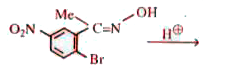
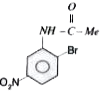
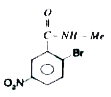
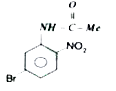
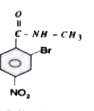
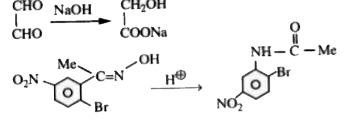
Aldehydes and ketones react with `NH_2 OH` under slightly acidic condition, to give oximes. The oximes undergo rearrangement in acid medium togive amides. The migrating group does not lose its configuration as it is intramoleculon migration. The migrating group is always the one which is anti to the leaving group.

A

B

C

D

Text Solution

Verified by Experts

The correct Answer is:
A

Promotional Banner

Topper's Solved these Questions

  • ALDEHYDES AND KETONES

    AAKASH SERIES|Exercise PRACTICE SHEET-2|30 Videos
  • ALDEHYDES AND KETONES

    AAKASH SERIES|Exercise PRACTICE SHEET-3|34 Videos
  • ALDEHYDES AND KETONES

    AAKASH SERIES|Exercise LEVEL-II LECTURE SHEET (EXERCISE-V)|16 Videos
  • ALCOHOLS, PHENOLS AND ETHERS

    AAKASH SERIES|Exercise ETHERS (OBJECTIVE EXERCISE-4)|50 Videos
  • ALKYL AND ARYL HALIDES

    AAKASH SERIES|Exercise OBJECTIVE EXERCISE - 4 (ASSERTION (A) & REASON (R) TYPE QUESTIONS)|19 Videos

Similar Questions

Explore conceptually related problems

Amines are less reactive in substitution reactions. Their reactivity is much lesser than alcohols and alkylflourides towards substitution. Protonation of the amino group makes it a better leaving group, but not nearly as good a leaving group as a protonated alcohol. Protonated amino groups cannot be displaced by OH^(-) because it would react immediately with the acidic hydrogen which would convert it in to a poor nucleophile. The leaving group in quartenary ammonium ion has about the same leaving tendency as a protonated amino group but does not have acidic hydrogen. The reaction of a quartenary ammonium ion with hydroxide ion is known as Hoffmann elimination reaction. The leaving group is tertiary amine. Since a tertiary amine is only a moderately good leaving group, the reaction requires heat. The carbon to which the tertiary amine is attached is designated as alpha carbon. When the hydroxide ion starts to remove a beta H from a quartenary ammonium ion, the leaving group does not immediately start to leave because a tertiary amine is not a good leaving group. As a result, a partial negative charge builds up on the carbon from which the proton is removed. The compounds 'C' in question number 31 on heating with moist silver oxide gives

Amines are less reactive in substitution reactions. Their reactivity is much lesser than alcohols and alkylflourides towards substitution. Protonation of the amino group makes it a better leaving group, but not nearly as good a leaving group as a protonated alcohol. Protonated amino groups cannot be displaced by OH^(-) because it would react immediately with the acidic hydrogen which would convert it in to a poor nucleophile. The leaving group in quartenary ammonium ion has about the same leaving tendency as a protonated amino group but does not have acidic hydrogen. The reaction of a quartenary ammonium ion with hydroxide ion is known as Hoffmann elimination reaction. The leaving group is tertiary amine. Since a tertiary amine is only a moderately good leaving group, the reaction requires heat. The carbon to which the tertiary amine is attached is designated as alpha carbon. When the hydroxide ion starts to remove a beta H from a quartenary ammonium ion, the leaving group does not immediately start to leave because a tertiary amine is not a good leaving group. As a result, a partial negative charge builds up on the carbon from which the proton is removed. Which of the following statements is correct?

Amines are less reactive in substitution reactions. Their reactivity is much lesser than alcohols and alkylflourides towards substitution. Protonation of the amino group makes it a better leaving group, but not nearly as good a leaving group as a protonated alcohol. Protonated amino groups cannot be displaced by OH^(-) because it would react immediately with the acidic hydrogen which would convert it in to a poor nucleophile. The leaving group in quartenary ammonium ion has about the same leaving tendency as a protonated amino group but does not have acidic hydrogen. The reaction of a quartenary ammonium ion with hydroxide ion is known as Hoffmann elimination reaction. The leaving group is tertiary amine. Since a tertiary amine is only a moderately good leaving group, the reaction requires heat. The carbon to which the tertiary amine is attached is designated as alpha carbon. When the hydroxide ion starts to remove a beta H from a quartenary ammonium ion, the leaving group does not immediately start to leave because a tertiary amine is not a good leaving group. As a result, a partial negative charge builds up on the carbon from which the proton is removed. Which of the following statements are true regarding Hoffmann elimination ?

All titration which involves the direct titration of Iodine with a reducing agent are grouped under lodimetry. Iodimetry is employed to determine the strength of reducing agent such as sodium thio sulphate I_(2) + 2Na_(2)S_(2)O_(3) rarr 2I^(-)+S_(4)O_(6)^(-) If iodine is liberated as a result of chemical reaction involving oxidation of an idodide ion by a strong oxidizing agent in neutral or acidic medium the liberated iodine is then titrated with reducing agent. This titration is called lodometry. Todometry is used to estimate the strength of oxidizing agent. For example the estimation of Cu^(++) with thiosulphate. Cu^(+ +) +I^(-) Cu_(2)I_(2)+I_(2) , I_(2) +S_(2)O_(3)^(-) rarrS_(4)O_(6)^(-) +I^(-) Starch used as indicator near the end point which form blue colour complex with I_(3)^(-) . The blue colour disappears when When 159.50g of CuSO_4 in a solution is reacted with KI, then the liberated iodine required 100 ml 1 M Na_(2)S_(2)O_3 for complete reaction, then what is the percentage purity of sample used in making the solution.

All titration which involves the direct titration of Iodine with a reducing agent are grouped under lodimetry. Iodimetry is employed to determine the strength of reducing agent such as sodium thio sulphate I_(2) + 2Na_(2)S_(2)O_(3) rarr 2I^(-)+S_(4)O_(6)^(-) If iodine is liberated as a result of chemical reaction involving oxidation of an idodide ion by a strong oxidizing agent in neutral or acidic medium the liberated iodine is then titrated with reducing agent. This titration is called lodometry. Todometry is used to estimate the strength of oxidizing agent. For example the estimation of Cu^(++) with thiosulphate. Cu^(+ +) +I^(-) Cu_(2)I_(2)+I_(2) , I_(2) +S_(2)O_(3)^(-) rarrS_(4)O_(6)^(-) +I^(-) Starch used as indicator near the end point which form blue colour complex with I_(3)^(-) . The blue colour disappears when In the reaction, 2CuSO_(4) +4KI rarr Cu_(2)I_(2) + 2K_(2)SO_(4)+I_2 the ratio of equivalent weight of CuSO_4 to its molecular weight is:

Carbonyl compounds give different oxidation products with different reagents .Several oxidising agents can be used to oxidise carbonyy compounds .Ammonical silver nitate (tollens reagent ) oxidises aliphatic as well as aromatic aldehydes . R-CHO overset("Tollens reagents ") to R-COOh +Ag (silver mirror ) strong oxidatising agents like KMnO_4 //H^+ ,HNO_3 ,K_2 Cr_2 O_7 //H^+ oxidise Aldehydes as well as ketons . open chain ketons in oxidation give mixture of two carbonylic acids . oxidation as well as ketons of unsymmetrical ketons takes place according to popoff's rule .According to this rule alpha - carbon whose bond breaks in oxidation always belongs to the alkyl group which has more number of carbons the reagent which oxidise only aliphatic ketone is :

Carbonyl compounds give different oxidation products with different reagents .Several oxidising agents can be used to oxidise carbonyy compounds .Ammonical silver nitate (tollens reagent ) oxidises aliphatic as well as aromatic aldehydes . R-CHO overset("Tollens reagents ") to R-COOh +Ag (silver mirror ) strong oxidatising agents like KMnO_4 //H^+ ,HNO_3 ,K_2 Cr_2 O_7 //H^+ oxidise Aldehydes as well as ketons . open chain ketons in oxidation give mixture of two carbonylic acids . oxidation as well as ketons of unsymmetrical ketons takes place according to popoff's rule .According to this rule alpha - carbon whose bond breaks in oxidation always belongs to the alkyl group which has more number of carbons 2 methyl cyclohexanone in oxidation wil give

Carbonyl compounds give different oxidation products with different reagents .Several oxidising agents can be used to oxidise carbonyy compounds .Ammonical silver nitate (tollens reagent ) oxidises aliphatic as well as aromatic aldehydes . R-CHO overset("Tollens reagents ") to R-COOh +Ag (silver mirror ) strong oxidatising agents like KMnO_4 //H^+ ,HNO_3 ,K_2 Cr_2 O_7 //H^+ oxidise Aldehydes as well as ketons . open chain ketons in oxidation give mixture of two carbonylic acids . oxidation as well as ketons of unsymmetrical ketons takes place according to popoff's rule .According to this rule alpha - carbon whose bond breaks in oxidation always belongs to the alkyl group which has more number of carbons Tollens reagent gives positive test with

AAKASH SERIES-ALDEHYDES AND KETONES-PRACTICE SHEET-1
  1. In the reaction sequence : C6H5 COCH3 overset( NH2 OH //H^+) to (X )...

    Text Solution

    |

  2. Which statements is/are correct ?

    Text Solution

    |

  3. Which of the following structures represent an acetal

    Text Solution

    |

  4. The product obtained in which of the following reactions is same

    Text Solution

    |

  5. Which of the following reagents is useful to distinguish between propo...

    Text Solution

    |

  6. Aldehydes undergo disproportionation reaction in presence of aqueous N...

    Text Solution

    |

  7. Aldehydes undergo disproportionation reaction in presence of aqueous N...

    Text Solution

    |

  8. Aldehydes undergo disproportionation reaction in presence of aqueous N...

    Text Solution

    |

  9. Aldehydes and ketones react with NH2 OH under slightly acidic conditio...

    Text Solution

    |

  10. Aldehydes and ketones react with NH2 OH under slightly acidic conditio...

    Text Solution

    |

  11. Aldehydes and ketones react with NH2 OH under slightly acidic conditio...

    Text Solution

    |

  12. Match the following columns

    Text Solution

    |

  13. Match the following columns

    Text Solution

    |

  14. Butanone & propanone were allowed to react is presence of OH,total ald...

    Text Solution

    |

  15. Among the following, the compounds which gives iodoform reaction with ...

    Text Solution

    |

  16. The number of aldehydes with formula C5 H(10) O is

    Text Solution

    |

  17. The number of ketone isomers containing benzene ring with formula C9 H...

    Text Solution

    |

  18. The disubstituted aldehyde derivatives with formula C9 H(1) O

    Text Solution

    |

  19. Total aldol products of reaction between CH3 CHO & CH3 CH2 CHO is

    Text Solution

    |

  20. Total number of Grignard reagent molecules which can react with

    Text Solution

    |

