
Home
Class 11
PHYSICS
Among the four graphs shown in the figur...

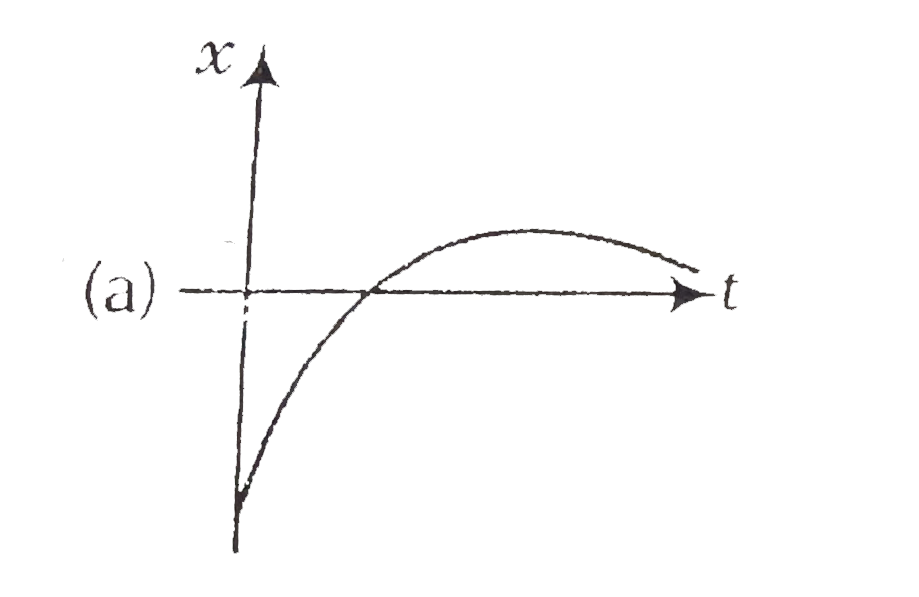
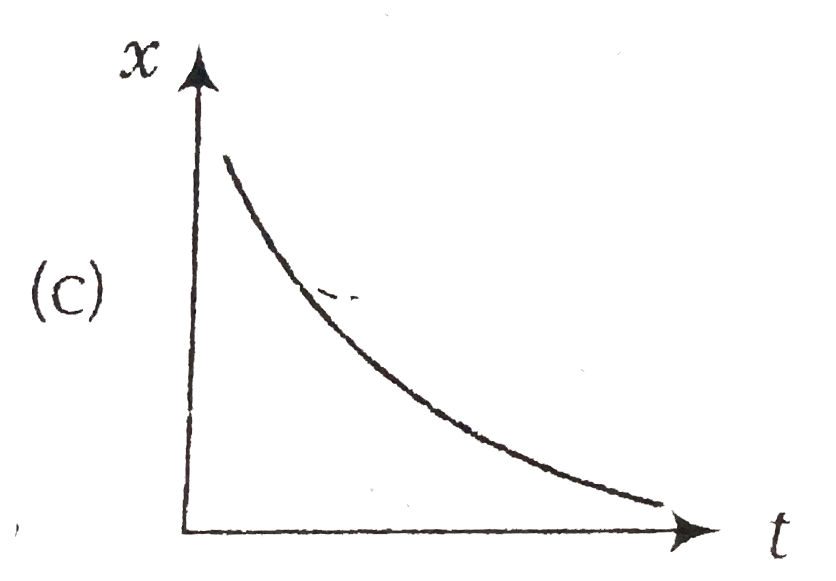
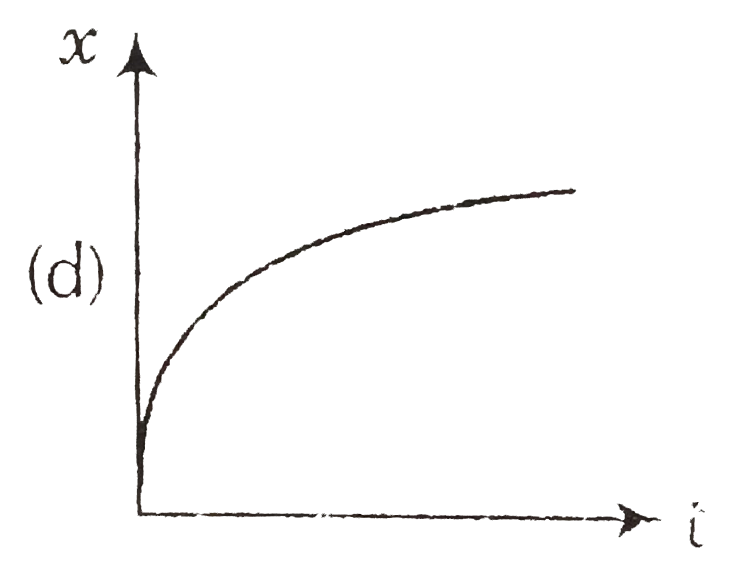
Among the four graphs shown in the figure there is only one graph for which average velocity over the time interval (0,T) can vanish for a suitably chosen `T`. Which one is it ?

A

B

C

D

Text Solution

AI Generated Solution

The correct Answer is:

To determine which graph allows for the average velocity over the time interval (0, T) to vanish for a suitably chosen T, we can follow these steps: ### Step-by-Step Solution: 1. **Understanding Average Velocity**: The average velocity (V_avg) over a time interval is defined as the total displacement divided by the total time taken. Mathematically, it can be expressed as: \[ V_{\text{avg}} = \frac{\Delta x}{\Delta t} \] where \(\Delta x\) is the change in position and \(\Delta t\) is the change in time. 2. **Condition for Average Velocity to be Zero**: For the average velocity to be zero, the total displacement (\(\Delta x\)) must be zero over the chosen time interval. This means that the object must return to its starting position. 3. **Analyzing the Graphs**: We need to analyze the four graphs provided (not shown here) to see which one allows for a situation where the object returns to its starting position after some time T. 4. **Identifying Graph B**: Upon examining the graphs, we focus on Graph B. In this graph, we can observe that there are two points in time (let’s call them A and B) where the object has the same displacement. This means that if we choose a time interval that starts at time 0 and ends at time T, where T corresponds to either point A or point B, the object will have returned to its original position. 5. **Calculating the Average Velocity**: Since the displacement at both points A and B is the same, the average velocity can be calculated as: \[ V_{\text{avg}} = \frac{x_B - x_A}{T} = \frac{0}{T} = 0 \] This confirms that the average velocity can indeed vanish for a suitably chosen T. 6. **Conclusion**: Therefore, the graph for which the average velocity over the time interval (0, T) can vanish is **Graph B**.

To determine which graph allows for the average velocity over the time interval (0, T) to vanish for a suitably chosen T, we can follow these steps: ### Step-by-Step Solution: 1. **Understanding Average Velocity**: The average velocity (V_avg) over a time interval is defined as the total displacement divided by the total time taken. Mathematically, it can be expressed as: \[ V_{\text{avg}} = \frac{\Delta x}{\Delta t} ...
Promotional Banner

Topper's Solved these Questions

  • MOTION IN A STRAIGHT LINE

    NCERT EXEMPLAR ENGLISH|Exercise Multiple Choice Question (More Than One Qns)|6 Videos
  • MOTION IN A STRAIGHT LINE

    NCERT EXEMPLAR ENGLISH|Exercise Very Short Answer Type Qns|14 Videos
  • MOTION IN A PLANE

    NCERT EXEMPLAR ENGLISH|Exercise Multiple Choice Questions|37 Videos
  • OSCILLATIONS

    NCERT EXEMPLAR ENGLISH|Exercise All Questions|36 Videos

Similar Questions

Explore conceptually related problems

The x-t graph shown in figure represents

The x-t graph shown in figure represents.

In the V-T graph shown in figure match the following.

In the rho -T graph shown in figure, match the following.

A particle obeys the following v - t graph as shown. The average velocity over 30 s is

s-t graph of a particle in motion is shown in Fig. Calculate Average velocity

The a -t graph is shown in the figure. The maximum velocity attained by the body from rest will be

An object starts at the origin in a straight line. Its velocity versus time graph is shown in the figure. Which one of the following choices best gives the proper intervals (s) of time for which the object is moving away from the origin?

For which of the following graphs the average velocity of a particl moving along a straight line for time interval (0,t) must be negative -

For which of the following graphs the average velocity of a particle moving along a straight line for time interval (0,t) must be negative -
