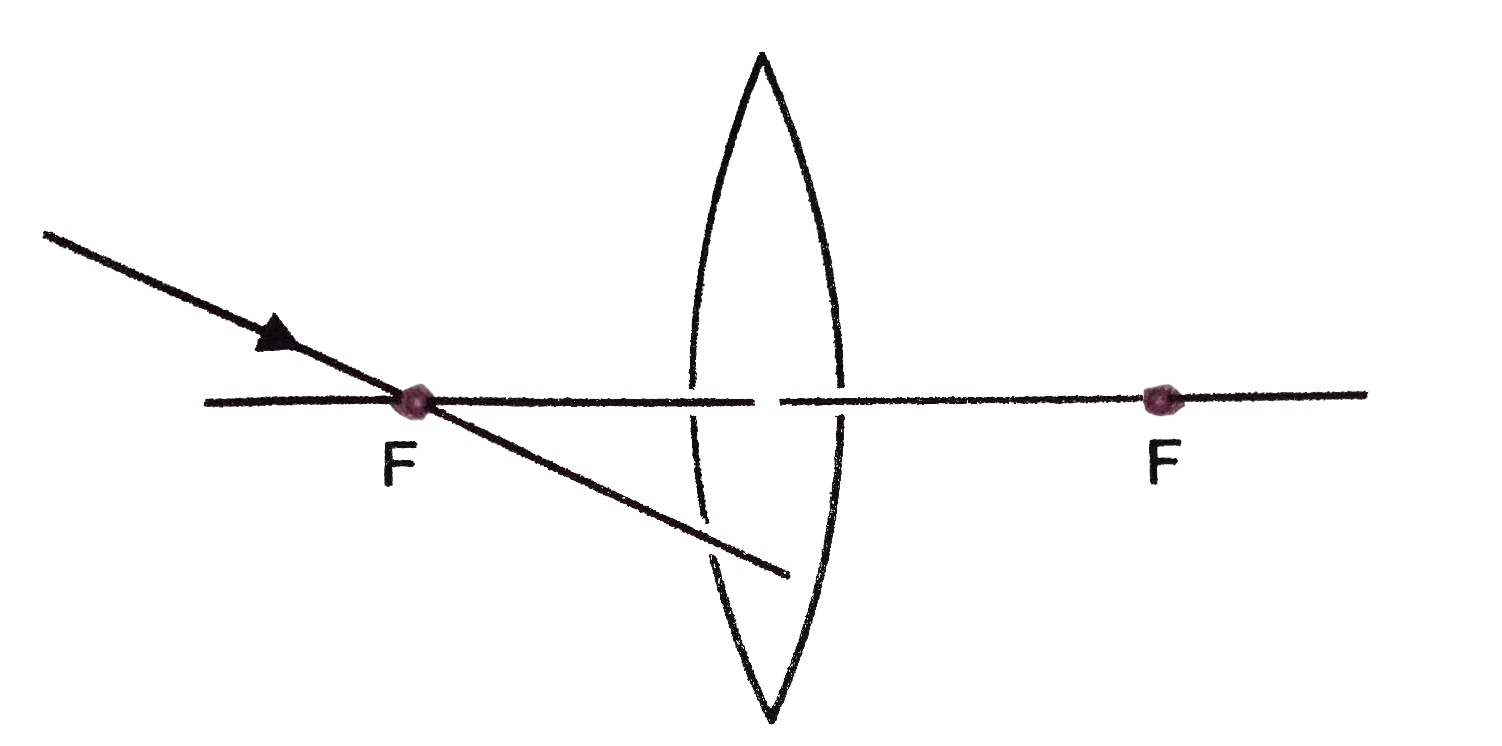
A
B
C
D
Text Solution
Verified by Experts
The correct Answer is:



Topper's Solved these Questions
LIGHT : REFLECTION AND REFRACTION
NCERT EXEMPLAR ENGLISH|Exercise Short Answer Type Questions|10 VideosLIGHT : REFLECTION AND REFRACTION
NCERT EXEMPLAR ENGLISH|Exercise Long Answer Type Questions|9 VideosELECTRICITY
NCERT EXEMPLAR ENGLISH|Exercise Short Answer Type Questions|17 VideosMAGNETIC EFFECTS OF ELECTRIC CURRENT
NCERT EXEMPLAR ENGLISH|Exercise LONG ANSWER TYPE QUESTIONS|8 Videos
Similar Questions
Explore conceptually related problems
NCERT EXEMPLAR ENGLISH-LIGHT : REFLECTION AND REFRACTION-Long Answer Type Questions
- Which of the following ray diagrams is correct for the ray of light in...
Text Solution
|
- Draw ray diagrams showing the image formation by a concave mirror when...
Text Solution
|
- Draw ray diagrams showing the image formation by a convex lens when an...
Text Solution
|
- Write laws of refraction. Explain the same with the help of ray diagra...
Text Solution
|
- Draw ray diagrams showing the image formation by a concave lens when a...
Text Solution
|
- Draw ray diagrams showing the image formation by a convex mirror when ...
Text Solution
|
- The image of a candle flame formed by a lens is obtained on a screen p...
Text Solution
|
- Size of image of an object by a mirror having a focal length of 20 cm ...
Text Solution
|
- Define power of a lens. What is its unit ? One student uses a lens of ...
Text Solution
|
- A student focussed the image of a candle flame on a white screen using...
Text Solution
|