Text Solution
Verified by Experts
The correct Answer is:




Topper's Solved these Questions
HEAT TRANSFER
HC VERMA ENGLISH|Exercise OBJECTIVE II|6 VideosHEAT TRANSFER
HC VERMA ENGLISH|Exercise EXERCIESE|55 VideosHEAT TRANSFER
HC VERMA ENGLISH|Exercise worked out examples|20 VideosHEAT AND TEMPERATURE
HC VERMA ENGLISH|Exercise Objective 2|6 VideosINTRODUCTION TO PHYSICS
HC VERMA ENGLISH|Exercise Question for short Answer|4 Videos
Similar Questions
Explore conceptually related problems
HC VERMA ENGLISH-HEAT TRANSFER-OBJECTIVE I
- The thermal conductivity of a rod depends on
Text Solution
|
- In a room containing air,, heat can go from one place to anther
Text Solution
|
- A solid at temperature T(1) is kept in an evacuated chamber at tempera...
Text Solution
|
- The thermal radiation emitted by a body is proportional to T^(n) where...
Text Solution
|
- Two bodies A and B having equal surface areas are maintained at temper...
Text Solution
|
- One end of a metal rod is kept in a furnace. In steady state, the temp...
Text Solution
|
- Newton's law of cooling is a special case of
Text Solution
|
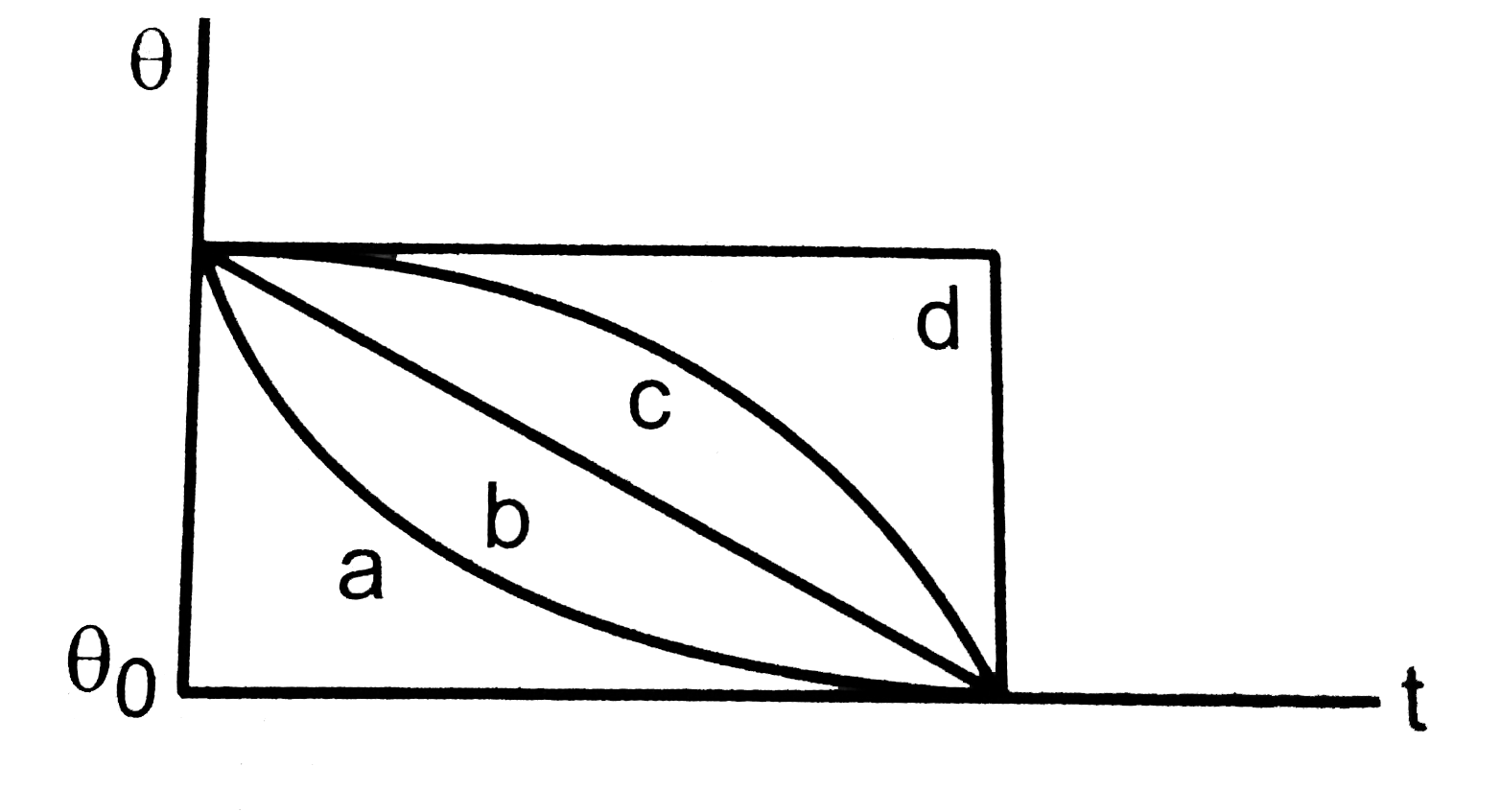
- A hot liquid is kept in a big room. Its temperature is plotted as a fu...
Text Solution
|
- A hot liquid is kept in a big room. The logarithm of the numerical val...
Text Solution
|
- A body cools down from 65^(@)C to 60^(@)C in 5minutes. It will cool do...
Text Solution
|