Home
Class 11
PHYSICS
A block of mass m is on an inclined plan...

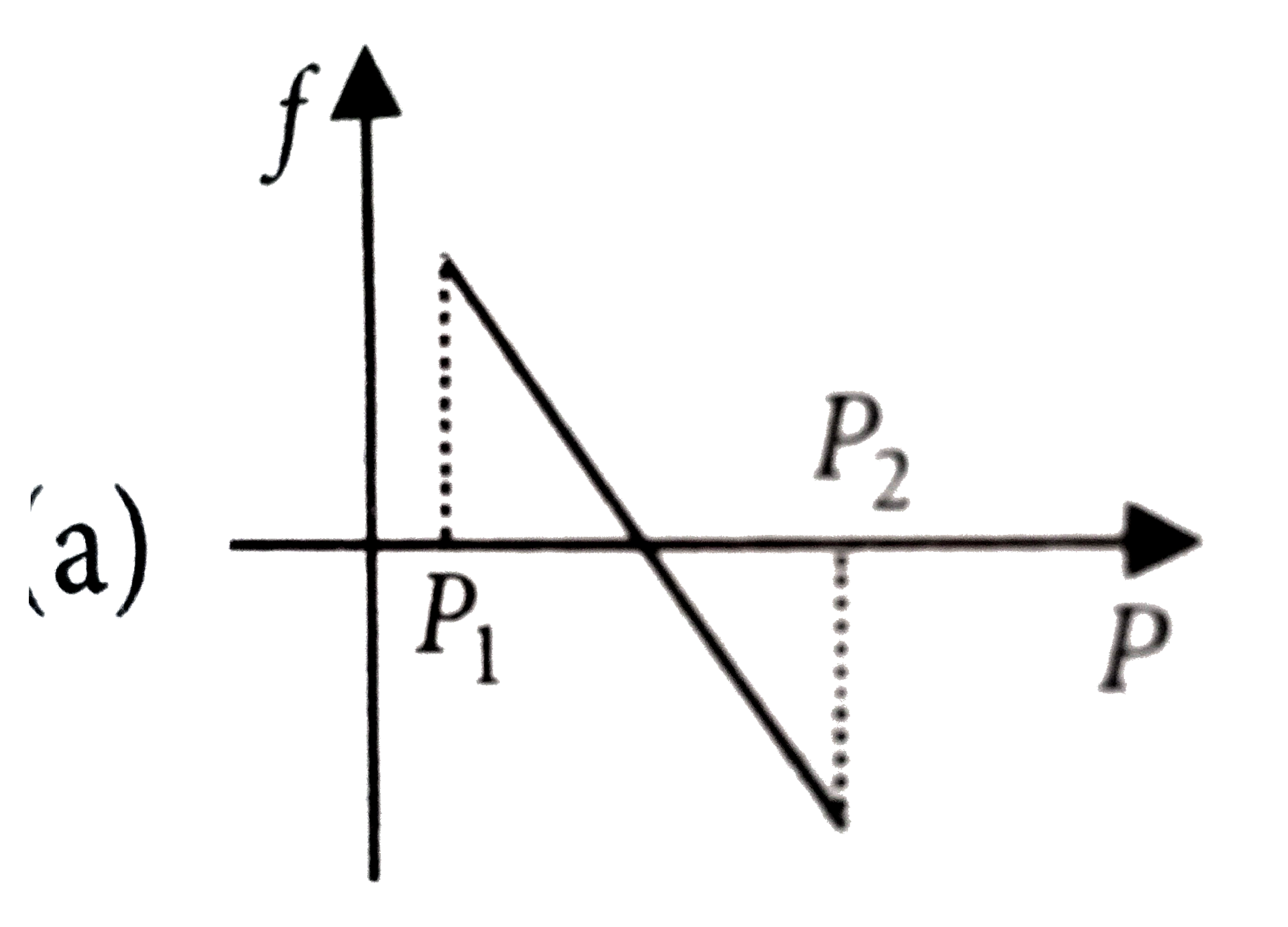
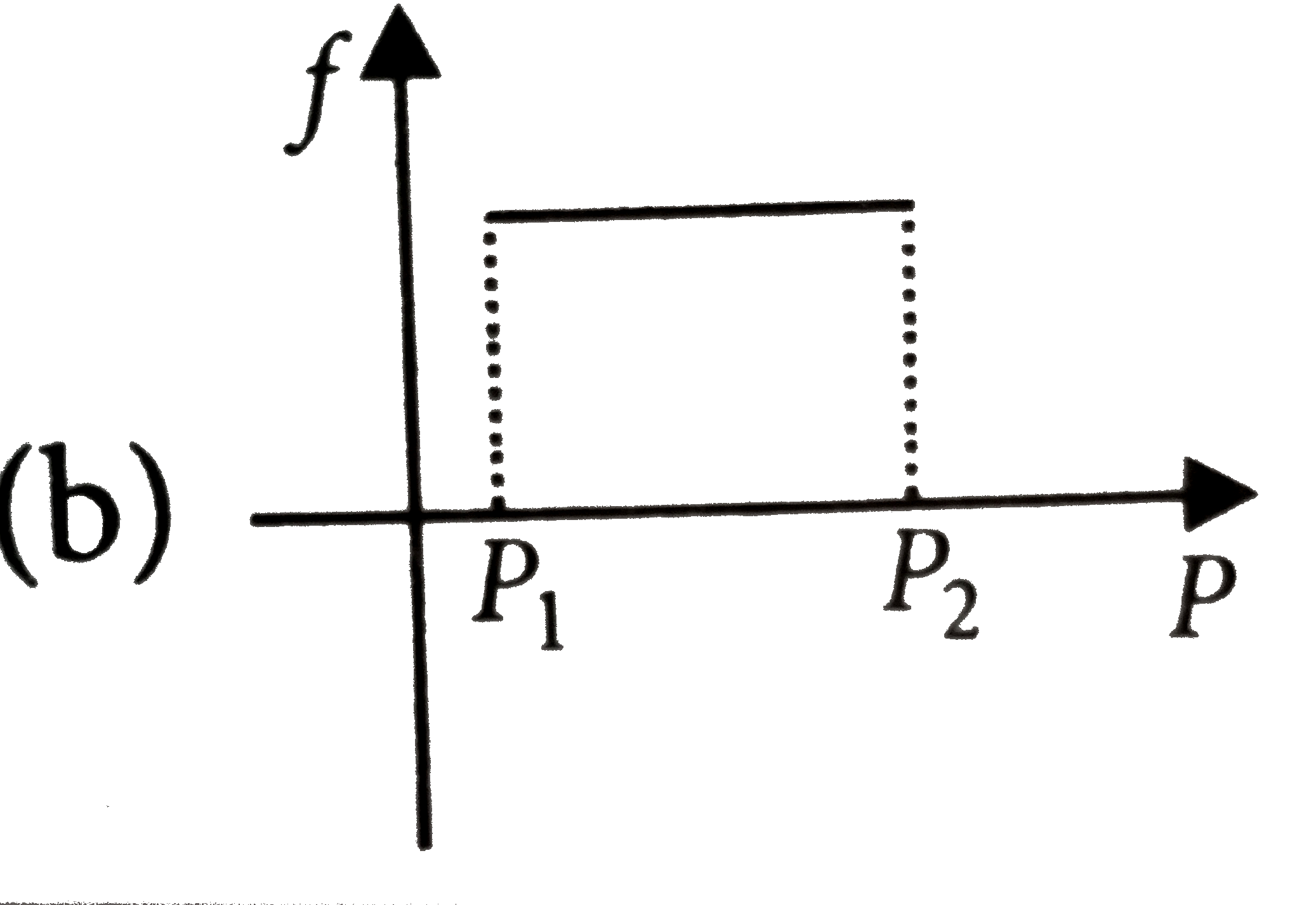
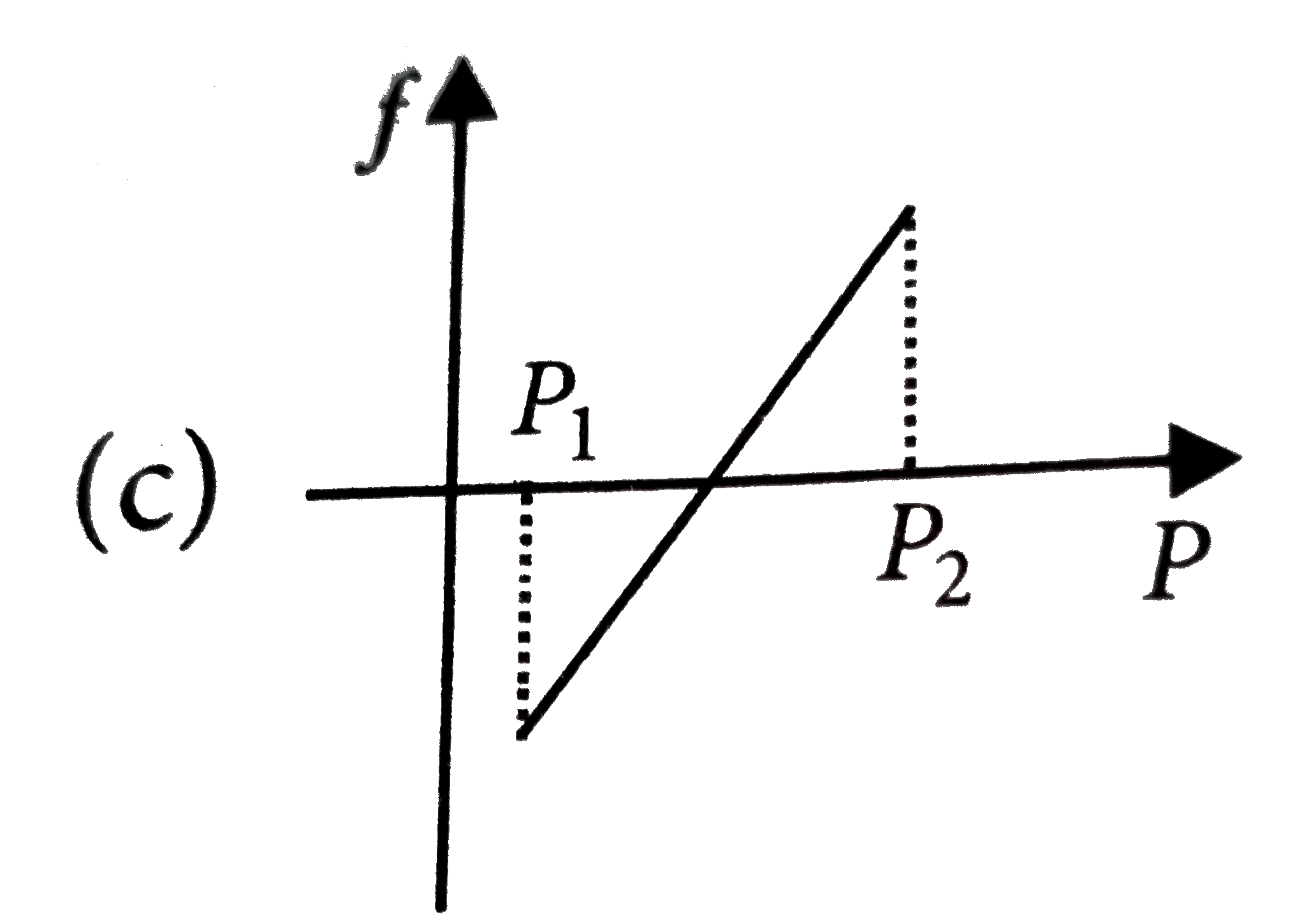
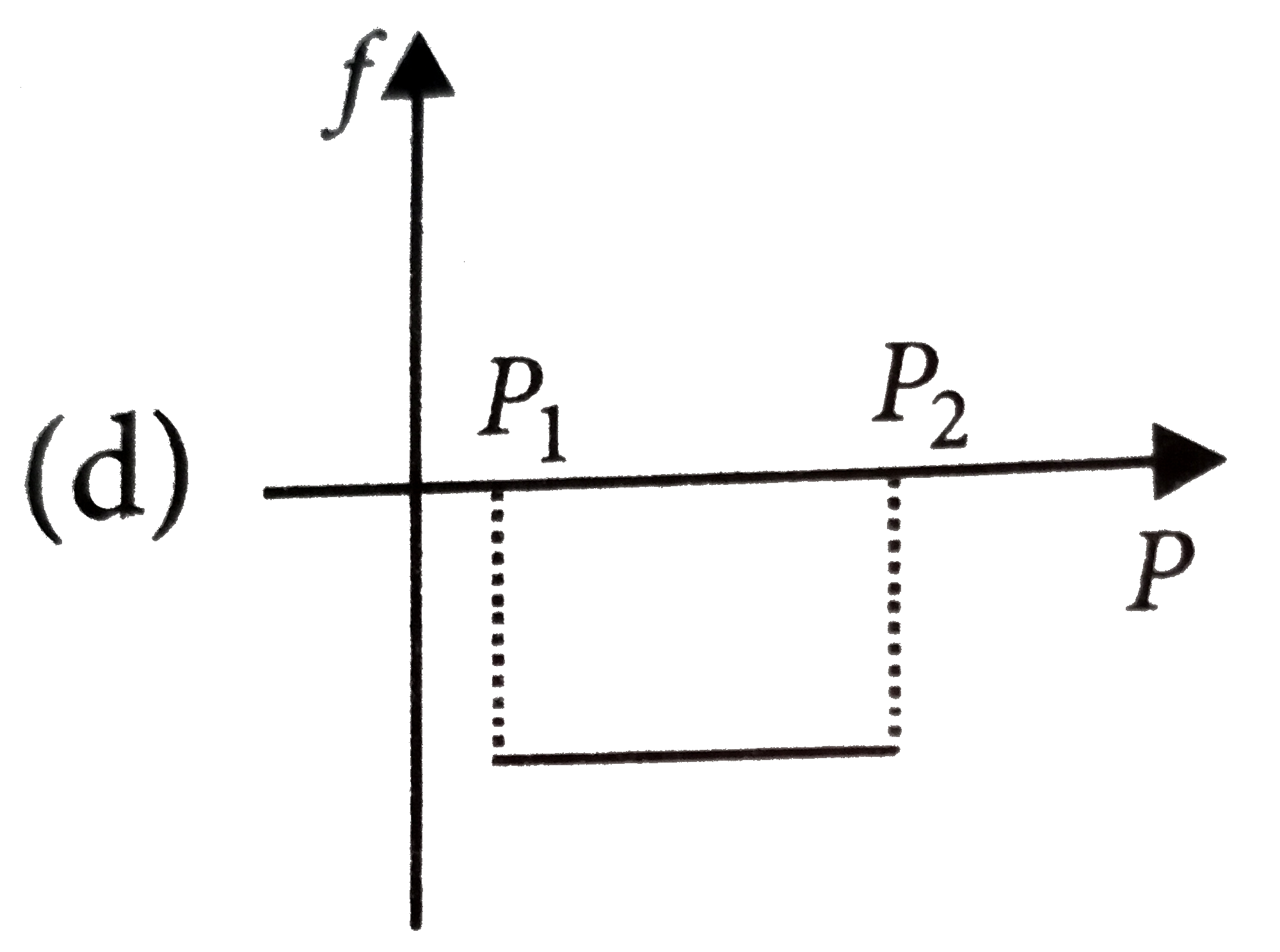
A block of mass m is on an inclined plane of angle `theta`. The coefficient of friction between the block and the plane is `mu` and `tanthetagtmu`. The block is held stationary by applying a force P parallel to the plane. The direction of force pointing up the plane is taken to be positive. As P is varied from `P_1=mg(sintheta-mucostheta)` to `P_2=mg(sintheta+mucostheta)`, the frictional force f versus P graph will look like

A

B

C

D

Text Solution

AI Generated Solution

The correct Answer is:

To solve the problem, we need to analyze the forces acting on the block on the inclined plane and how the frictional force varies with the applied force \( P \). ### Step-by-Step Solution: 1. **Identify the Forces Acting on the Block**: - The weight of the block \( mg \) acts downward. - This weight can be resolved into two components: - Parallel to the incline: \( mg \sin \theta \) - Perpendicular to the incline: \( mg \cos \theta \) - The normal force \( N \) acts perpendicular to the surface of the incline. - The frictional force \( f \) acts opposite to the direction of motion (or impending motion). 2. **Establish the Conditions**: - The block is held stationary by the applied force \( P \) parallel to the incline. - The coefficient of friction is \( \mu \), and we know that \( \tan \theta > \mu \). 3. **Determine the Frictional Force**: - When the applied force \( P \) is less than \( mg \sin \theta - \mu mg \cos \theta \) (denoted as \( P_1 \)), the frictional force \( f \) will act up the incline to prevent the block from sliding down. - The equation for equilibrium in this case is: \[ P + f = mg \sin \theta \] Rearranging gives: \[ f = mg \sin \theta - P \] 4. **Frictional Force at Maximum Static Friction**: - When \( P \) is increased to \( P_1 \), the frictional force reaches its maximum static value: \[ f = \mu mg \cos \theta \] 5. **Increasing the Applied Force \( P \)**: - As \( P \) increases beyond \( P_1 \), the frictional force will decrease linearly until it reaches zero at \( P_2 = mg \sin \theta + \mu mg \cos \theta \). - At this point, the block will start moving up the incline, and the frictional force will act downwards. 6. **Graph of Frictional Force \( f \) vs. Applied Force \( P \)**: - The graph will start from \( f = mg \sin \theta - P \) when \( P < P_1 \) and will decrease linearly. - When \( P \) exceeds \( P_1 \), the frictional force will decrease until it reaches zero at \( P_2 \). - After \( P_2 \), the frictional force will act in the opposite direction (down the incline) and can be represented as \( f = P - mg \sin \theta \). ### Final Graph Description: - The graph of frictional force \( f \) versus applied force \( P \) will be a linear decreasing line starting from the maximum static friction value at \( P_1 \) and reaching zero at \( P_2 \). After \( P_2 \), the graph will represent a constant downward frictional force as \( P \) continues to increase.

To solve the problem, we need to analyze the forces acting on the block on the inclined plane and how the frictional force varies with the applied force \( P \). ### Step-by-Step Solution: 1. **Identify the Forces Acting on the Block**: - The weight of the block \( mg \) acts downward. - This weight can be resolved into two components: - Parallel to the incline: \( mg \sin \theta \) ...
Promotional Banner

Topper's Solved these Questions

  • LAWS OF MOTION

    NCERT FINGERTIPS ENGLISH|Exercise Exemplar Problems|9 Videos
  • LAWS OF MOTION

    NCERT FINGERTIPS ENGLISH|Exercise Assertion & Reason|15 Videos
  • LAWS OF MOTION

    NCERT FINGERTIPS ENGLISH|Exercise Assertion And Reason|15 Videos
  • KINETIC THEORY

    NCERT FINGERTIPS ENGLISH|Exercise Assertion And Reason|10 Videos
  • MECHANICAL PROPERTIES OF FLUIDS

    NCERT FINGERTIPS ENGLISH|Exercise NCERT Exemplar|5 Videos

Similar Questions

Explore conceptually related problems

A block of mass m slides down an inclined plane of inclination theta with uniform speed. The coefficient of friction between the block and the plane is mu . The contact force between the block and the plane is

A block of mass m slides down an inclined plane which makes an angle theta with the horizontal. The coefficient of friction between the block and the plane is mu . The force exerted by the block on the plane is

A block of mass m sides down an inclined right angled trough .If the coefficient of friction between block and the trough is mu_(k) acceleration of the block down the plane is

A block of mass 2 kg slides down an incline plane of inclination 30°. The coefficient of friction between block and plane is 0.5. The contact force between block and plank is :

A block of mass m is at rest on a rough inclined plane of angle of inclination theta . If coefficient of friction between the block and the inclined plane is mu , then the minimum value of force along the plane required to move the block on the plane is

A block of mass m is placed at rest on an inclination theta to the horizontal. If the coefficient of friction between the block and the plane is mu , then the total force the inclined plane exerts on the block is

A block of mass 2kg rests on a rough inclined plane making an angle of 30^@ with the horizontal. The coefficient of static friction between the block and the plane is 0.7. The frictional force on the block is

A block of mass 2kg rests on a rough inclined plane making an angle of 30^@ with the horizontal. The coefficient of static friction between the block and the plane is 0.7. The frictional force on the block is

A block of mass m is lying on an inclined plane. The coefficient of friction between the plane and the block is mu . The force (F_(1)) required to move the block up the inclined plane will be:-

A block of weight 1 N rests on a inclined plane of inclination theta with the horizontal. The coefficient of friction between the block and the inclined plane is mu . The minimum force that has to be applied parallel to the inclined plane to make the body just move up the plane is
