Home
Class 12
CHEMISTRY
Consider the reaction A to B. The conce...

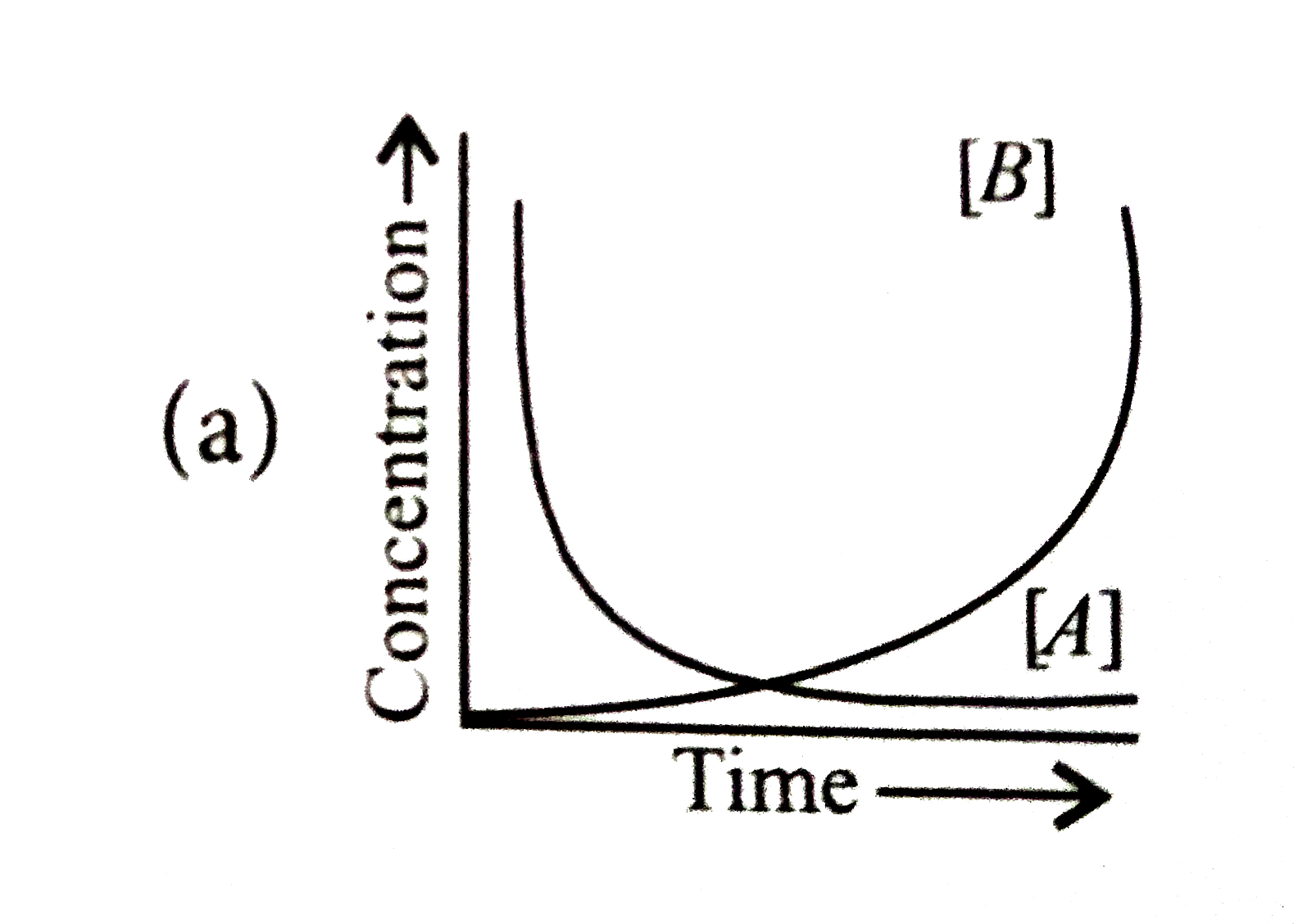
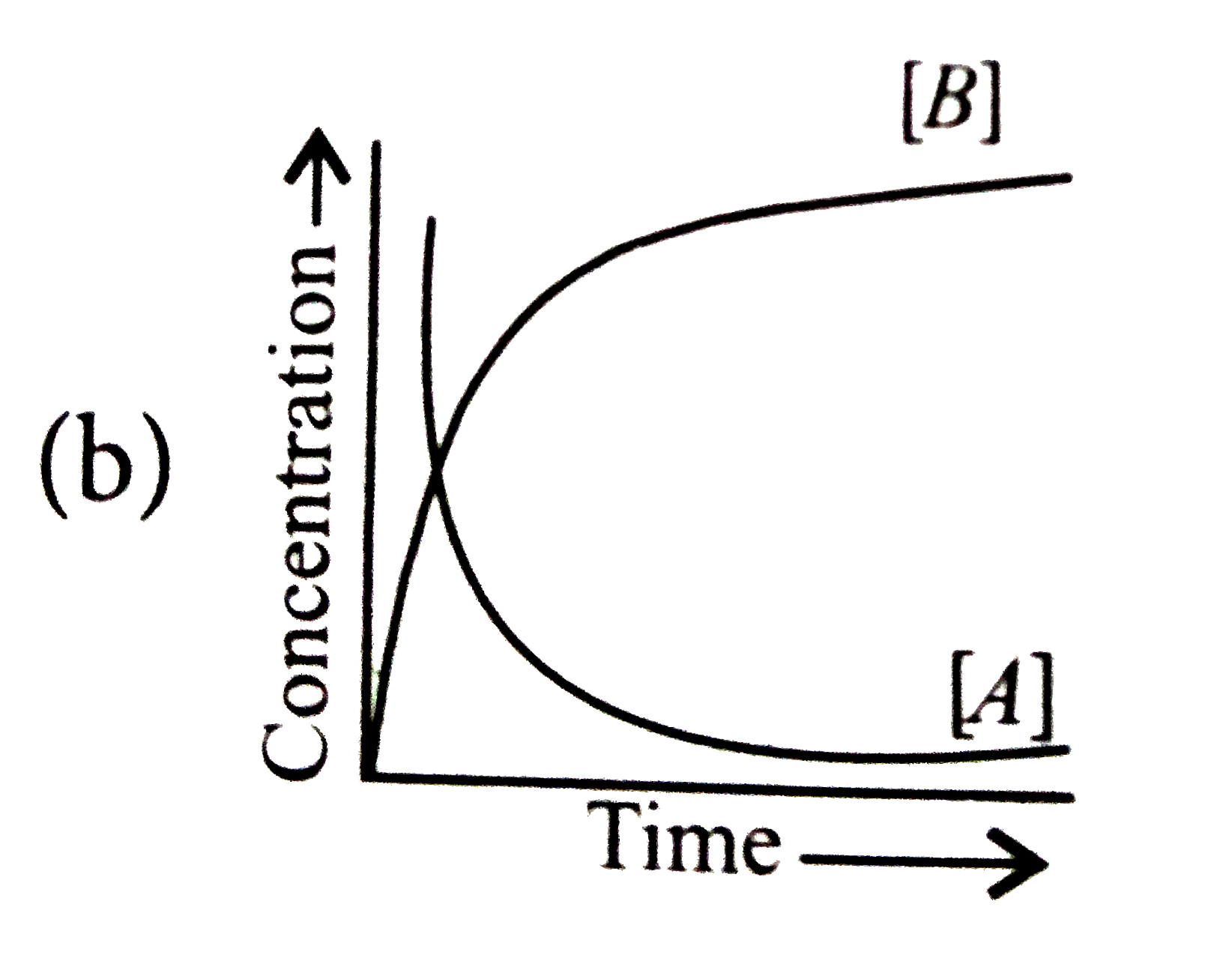
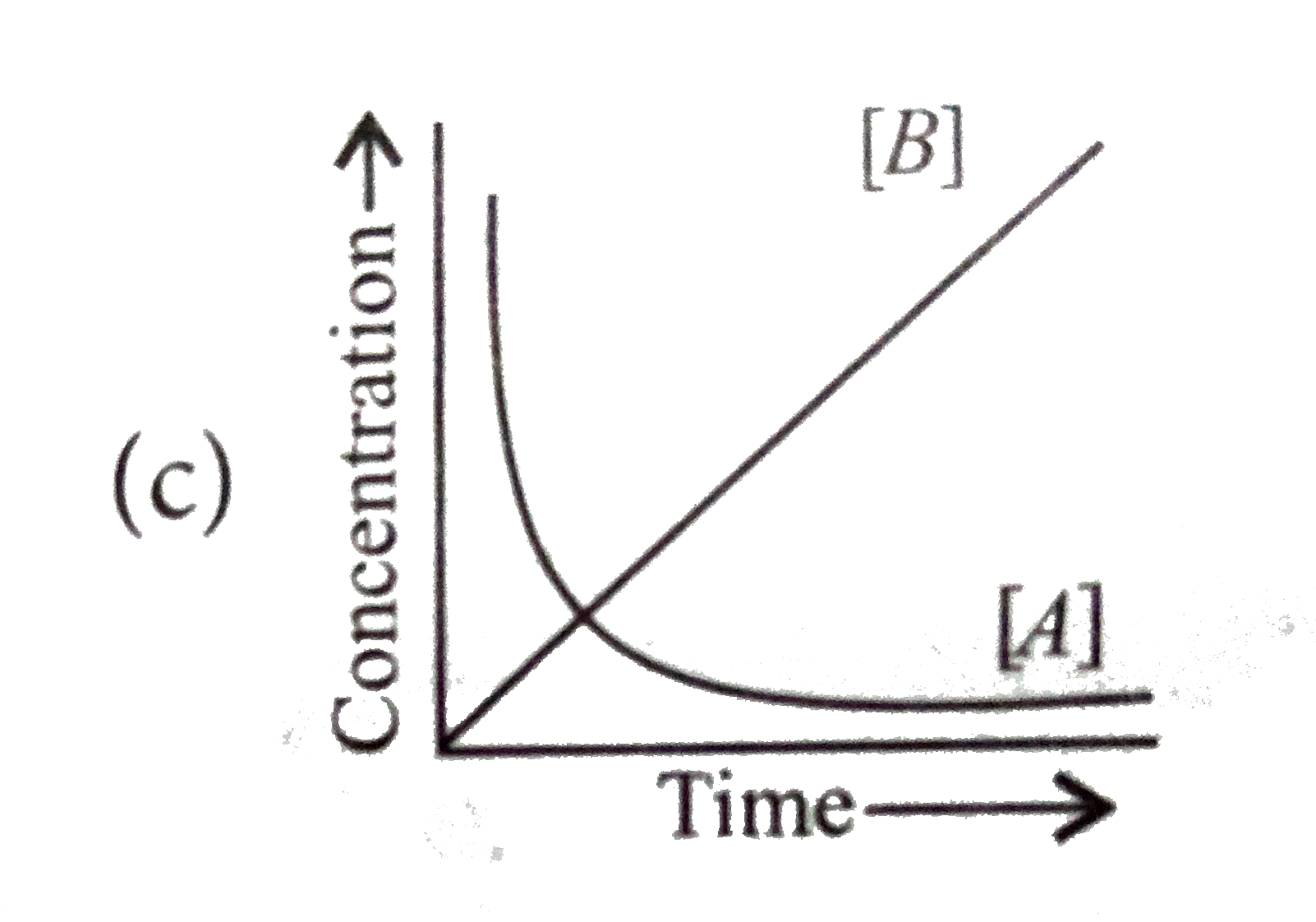
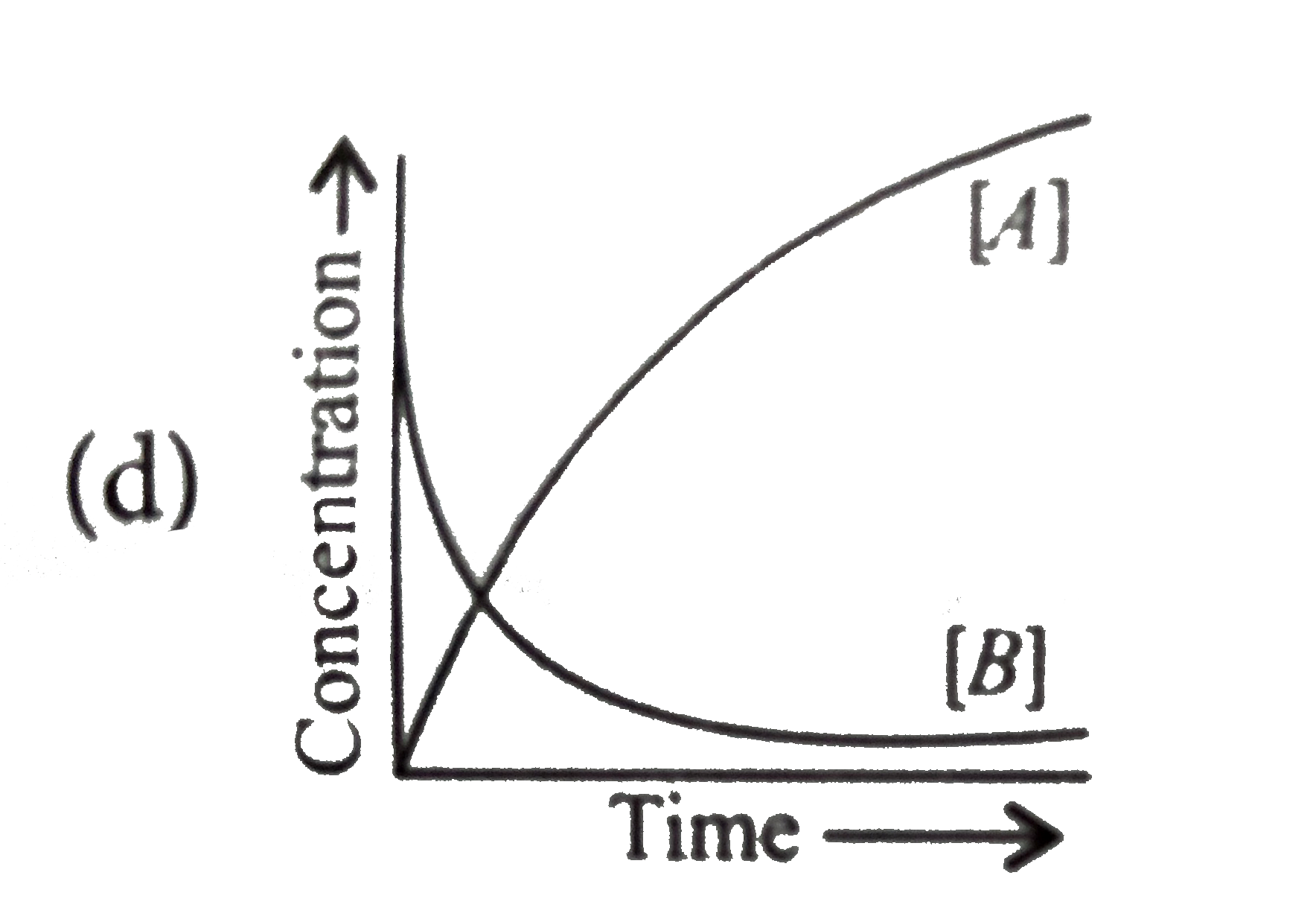
Consider the reaction `A to B`. The concentration of both the reactants and the products varies exponentially with time. Which of the following figure correctly describes the change in concentration of reactants and products with time ?

A

B

C

D

Text Solution

AI Generated Solution

The correct Answer is:

To solve the question regarding the reaction `A to B` and the change in concentration of reactants and products over time, we can follow these steps: ### Step-by-Step Solution: 1. **Understand the Reaction**: The reaction is represented as `A → B`, where `A` is the reactant and `B` is the product. As the reaction proceeds, `A` is converted into `B`. 2. **Concentration Changes**: - Initially, the concentration of reactant `A` is at its maximum. - As the reaction progresses, the concentration of `A` decreases while the concentration of `B` increases. 3. **Graphical Representation**: - The x-axis represents time, while the y-axis represents concentration. - The concentration of reactant `A` will show a decreasing exponential trend as the reaction proceeds. - Conversely, the concentration of product `B` will show an increasing exponential trend. 4. **Rate of Reaction**: - The rate of reaction is directly proportional to the concentration of the reactant. Therefore, as the concentration of `A` decreases, the rate of reaction also decreases. - This means that the slope of the graph for `A` will become less steep over time. 5. **Identifying the Correct Graph**: - We need to look for a graph where: - The concentration of `A` starts high and decreases over time. - The concentration of `B` starts low and increases over time. - The correct graph will depict these trends accurately. 6. **Conclusion**: - After analyzing the provided graphs, we determine that Graph B correctly represents the change in concentration of reactants and products with time.

To solve the question regarding the reaction `A to B` and the change in concentration of reactants and products over time, we can follow these steps: ### Step-by-Step Solution: 1. **Understand the Reaction**: The reaction is represented as `A → B`, where `A` is the reactant and `B` is the product. As the reaction proceeds, `A` is converted into `B`. 2. **Concentration Changes**: ...
Promotional Banner

Topper's Solved these Questions

  • CHEMICAL KINETICS

    NCERT FINGERTIPS ENGLISH|Exercise ASSERTION & REASON|15 Videos
  • CHEMICAL KINETICS

    NCERT FINGERTIPS ENGLISH|Exercise Rate Of A Chemical Reaction|17 Videos
  • CHEMICAL KINETICS

    NCERT FINGERTIPS ENGLISH|Exercise Higher Order Thinking Skills|9 Videos
  • BIOMOLECULES

    NCERT FINGERTIPS ENGLISH|Exercise Assertion And Reason|15 Videos
  • CHEMISTRY IN EVERYDAY LIFE

    NCERT FINGERTIPS ENGLISH|Exercise NCERT Exemplar|15 Videos

Similar Questions

Explore conceptually related problems

At equilibrium ,the concentrations of all reactants and products become ………..

At chemical equilibrium , the concentration of all reactants and products are equal

An increse in the concentration of the reactants of a reaction leads to change in:

Which of the following expression is correct for first order reaction? Ao refers to initial concentration of reactant

Assertion (A) : For a first order, the concentration of a reaction decreases exponentially with time. Reason (R ): The rate of reaction at any time depends upon the concentration of the reactant at that time.

If concentration of reactant is increased by 2 times then K becomes :-

NCERT FINGERTIPS ENGLISH-CHEMICAL KINETICS-NCERT EXEMPLAR PROBLEMS
  1. The role of a catalyst is to change

    Text Solution

    |

  2. In the presence of a catalyst, the heat evolved or absorbed during the...

    Text Solution

    |

  3. Activation energy of a chemical reaction can be determined by

    Text Solution

    |

  4. Consider a first order gas phase decomposition reaction given below: ...

    Text Solution

    |

  5. According to Arrhenius equation rate constant k is equal to Ae^(-E(a)/...

    Text Solution

    |

  6. Consider the Arrhenius equation given below and mark the correct op...

    Text Solution

    |

  7. Which of the following statement is not correct about order of a ...

    Text Solution

    |

  8. Consider the graph given in Q.9 Which of the following options does n...

    Text Solution

    |

  9. Which of the following statements is correct?

    Text Solution

    |

  10. Which of the following expression is correct for the rate of reac...

    Text Solution

    |

  11. Rate law for the reaction, A + 2B to C is found to be Rate = k [A] [...

    Text Solution

    |

  12. Which of the following statements is incorrect about the collison theo...

    Text Solution

    |

  13. A first order reaction is 50% completed in 1.26 xx 10^(14)s. How much ...

    Text Solution

    |

  14. Compound 'A' and B react according to the following chemical equation....

    Text Solution

    |

  15. Which of the following statements is not correct for the catalyst?

    Text Solution

    |

  16. The value of rate constant of a pseudo first order reaction

    Text Solution

    |

  17. Consider the reaction A to B. The concentration of both the reactan...

    Text Solution

    |
