Home
Class 11
PHYSICS
A particle is projected at t=0 from a po...

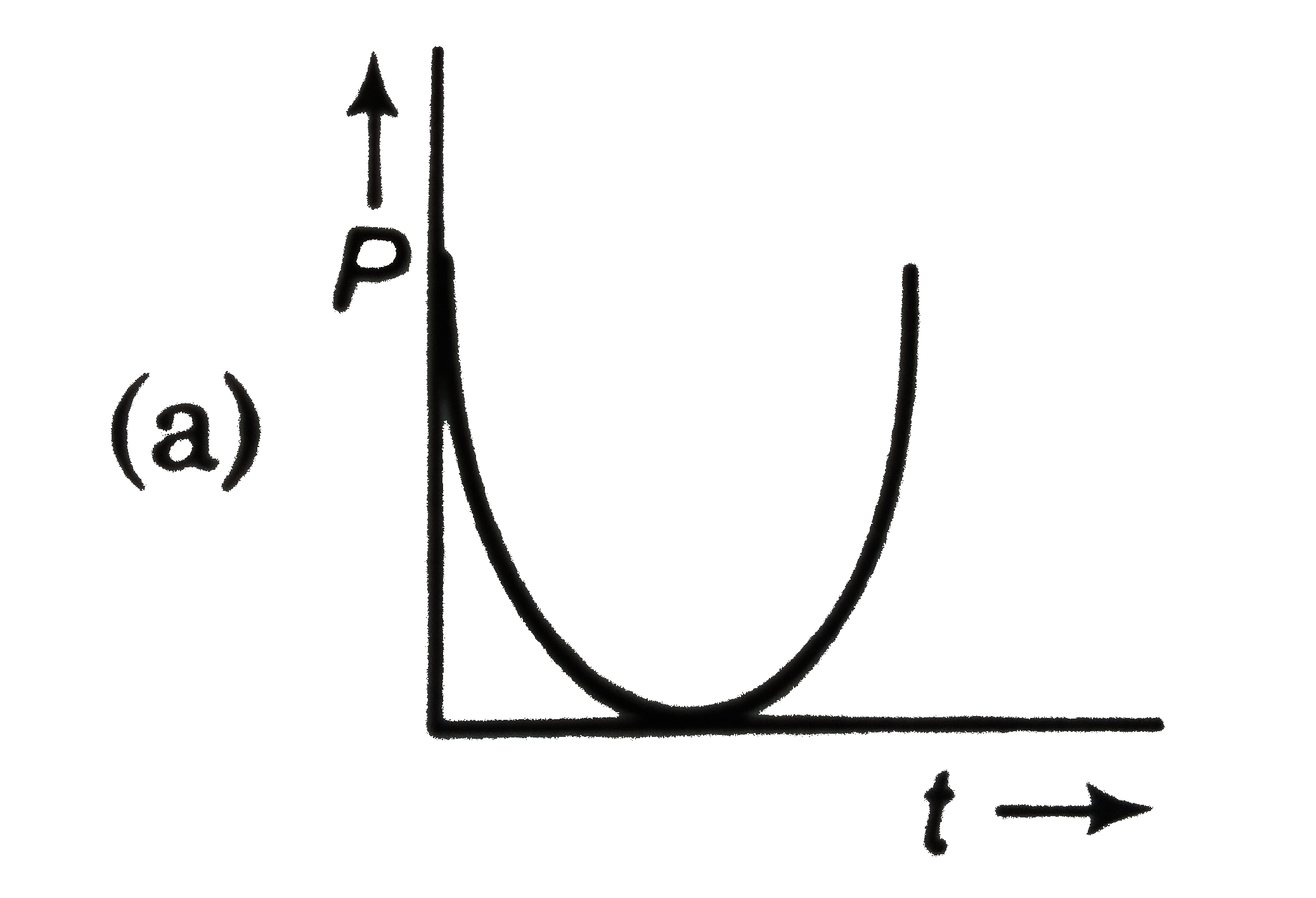
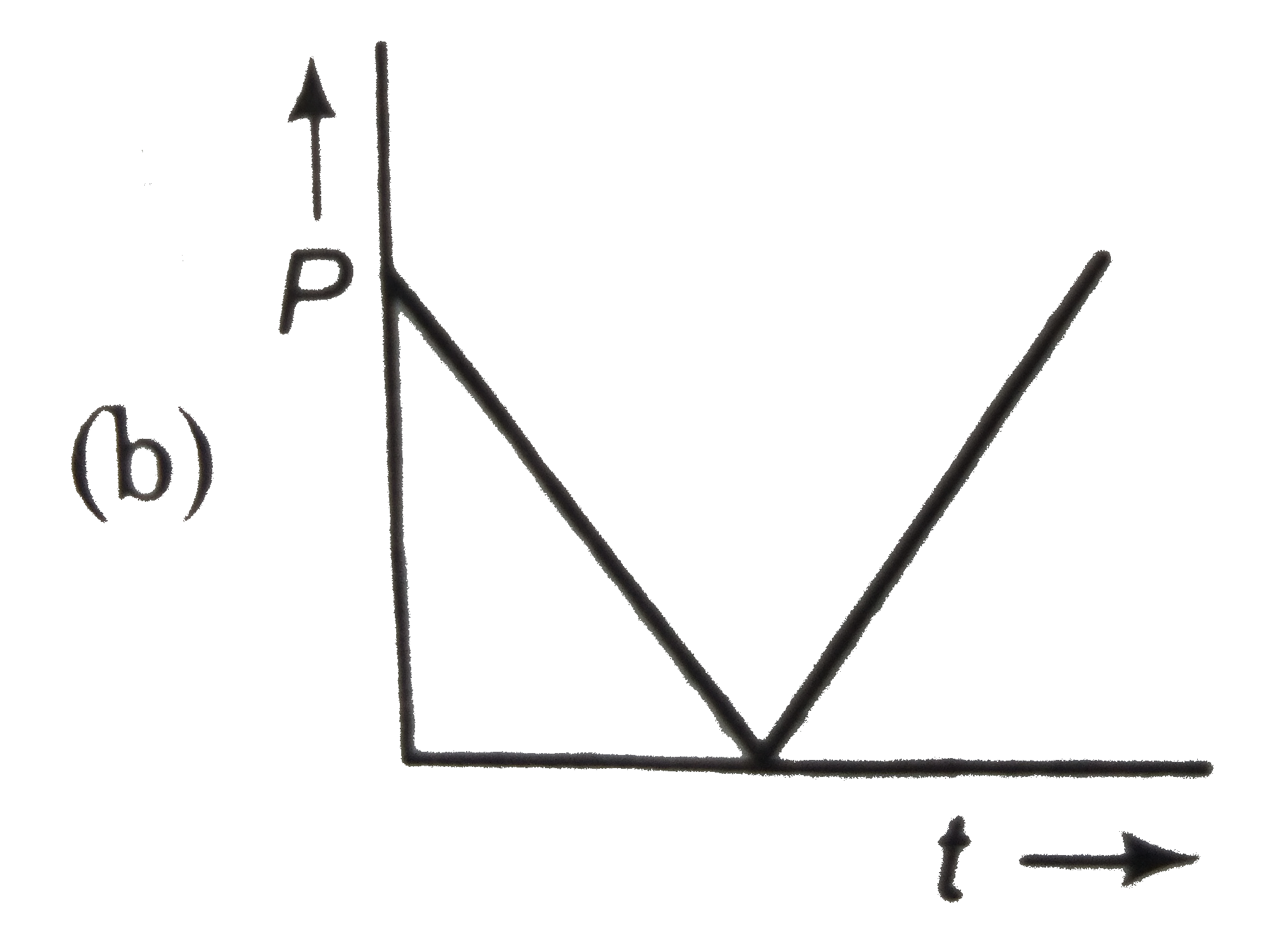
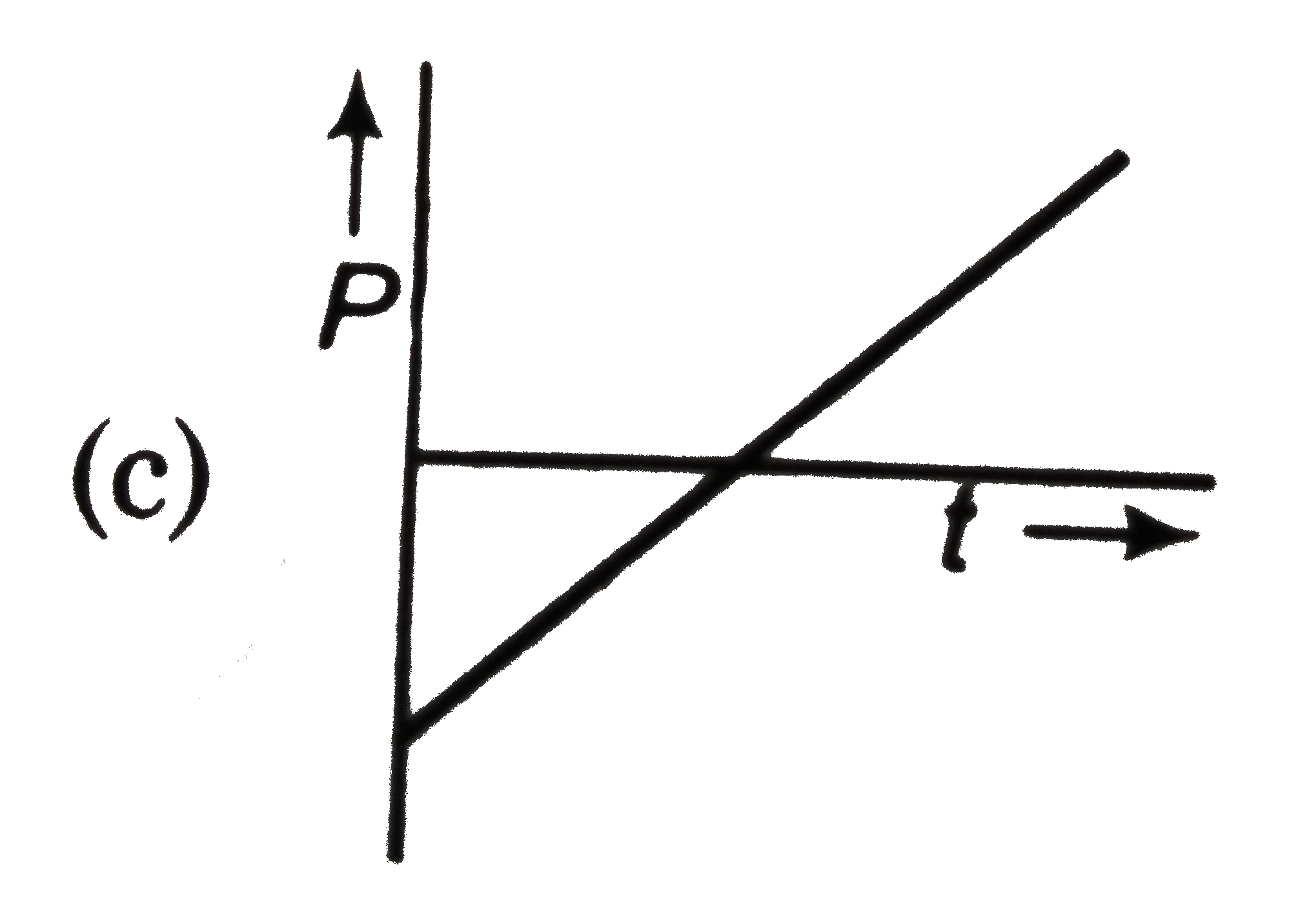
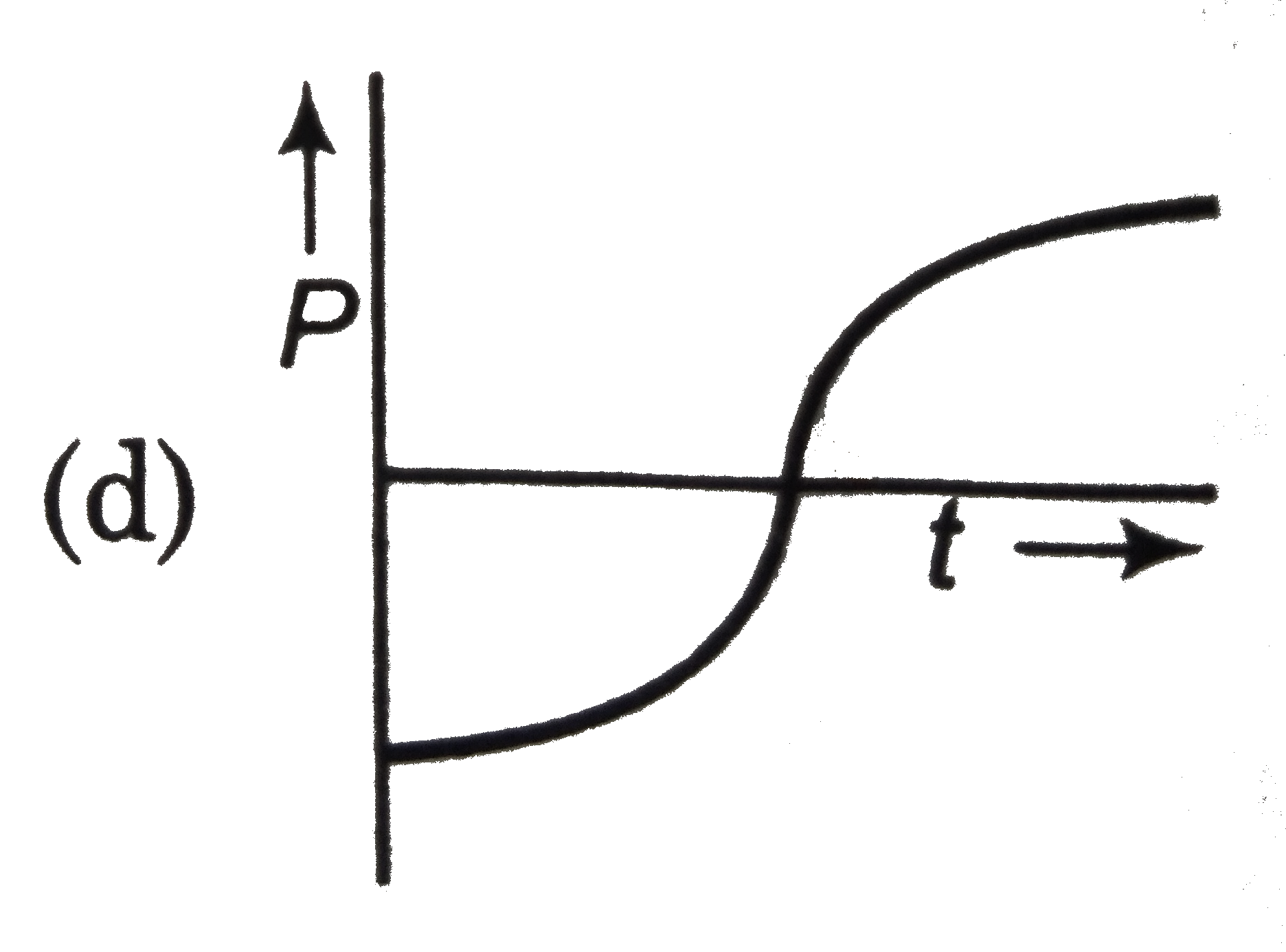
A particle is projected at `t=0` from a point on the ground with certain velocity at an angle with the horizontal. The power of gravitation force is plotted against time. Which of the following is the best representation?

A

B

C

D

Text Solution

AI Generated Solution

The correct Answer is:

To solve the problem step by step, we need to analyze the power of the gravitational force acting on a particle projected at an angle. Here’s how we can break it down: ### Step 1: Understand the scenario A particle is projected from the ground at an angle θ with an initial velocity u. The motion of the particle will follow a projectile path under the influence of gravity. ### Step 2: Resolve the initial velocity The initial velocity can be resolved into two components: - Horizontal component: \( u_x = u \cos \theta \) - Vertical component: \( u_y = u \sin \theta \) ### Step 3: Identify the force acting on the particle The only force acting on the particle after projection is the gravitational force, which is directed downward: - Gravitational force, \( F_g = -mg \hat{j} \) ### Step 4: Write the velocity vector at any time t At any time t, the velocity vector \( \vec{v} \) can be expressed as: \[ \vec{v} = u \cos \theta \hat{i} + (u \sin \theta - gt) \hat{j} \] Here, \( -gt \) accounts for the downward acceleration due to gravity. ### Step 5: Calculate the power at any instant Power \( P \) is defined as the dot product of the force and velocity: \[ P = \vec{F} \cdot \vec{v} \] Substituting the values: \[ P = (-mg \hat{j}) \cdot (u \cos \theta \hat{i} + (u \sin \theta - gt) \hat{j}) \] This simplifies to: \[ P = -mg (u \sin \theta - gt) \] Thus, we can express the power as: \[ P = -mg u \sin \theta + mg gt \] ### Step 6: Analyze the power with respect to time From the equation \( P = -mg u \sin \theta + mg gt \), we see that: - The term \( mg gt \) indicates that power increases linearly with time. - The initial power will be negative (when the particle is moving upwards against gravity) and will become positive after reaching the peak (when the particle starts moving downwards). ### Step 7: Conclusion The power of the gravitational force plotted against time will show a linear relationship. Initially, the power will be negative and will increase to positive as time progresses. ### Final Representation The best representation of the power of gravitational force against time is a linear graph that starts below the time axis (negative power) and crosses to above the time axis (positive power).

To solve the problem step by step, we need to analyze the power of the gravitational force acting on a particle projected at an angle. Here’s how we can break it down: ### Step 1: Understand the scenario A particle is projected from the ground at an angle θ with an initial velocity u. The motion of the particle will follow a projectile path under the influence of gravity. ### Step 2: Resolve the initial velocity The initial velocity can be resolved into two components: - Horizontal component: \( u_x = u \cos \theta \) ...
Promotional Banner

Topper's Solved these Questions

  • WORK, ENERGY & POWER

    DC PANDEY ENGLISH|Exercise Level 2 More Than One Correct|9 Videos
  • WORK, ENERGY & POWER

    DC PANDEY ENGLISH|Exercise Level 2 Subjective|15 Videos
  • WORK, ENERGY & POWER

    DC PANDEY ENGLISH|Exercise Level 1 subjective|27 Videos
  • WAVE MOTION

    DC PANDEY ENGLISH|Exercise Integer Type Question|11 Videos
  • WORK, ENERGY AND POWER

    DC PANDEY ENGLISH|Exercise MEDICAL ENTRACES GALLERY|33 Videos
DC PANDEY ENGLISH-WORK, ENERGY & POWER-Level 2 Objective
  1. A body is moving is down an inclined plane of slope 37^@ the coefficie...

    Text Solution

    |

  2. The given plot shows the variation of U, the potential energy of inter...

    Text Solution

    |

  3. A particle is projected at t=0 from a point on the ground with certain...

    Text Solution

    |

  4. A block of mass m is attached to one end of a mass less spring of spri...

    Text Solution

    |

  5. A block of mass (m) slides along the track with kinetic friction mu. A...

    Text Solution

    |

  6. The potential energy phi in joule of a particle of mass 1 kg moving in...

    Text Solution

    |

  7. The force acting on a body moving along x-axis variation of the partic...

    Text Solution

    |

  8. A small mass slides down an inclined plane of inclination theta with t...

    Text Solution

    |

  9. Two light vertical springs with equal natural length and spring consta...

    Text Solution

    |

  10. A block of mass 1kg slides down a curved track which forms one quadran...

    Text Solution

    |

  11. The potential energy function for a diatomic molecule is U(x) =(a)/(x^...

    Text Solution

    |

  12. A rod mass (M) hinged at (O) is kept in equilibrium with a spring of s...

    Text Solution

    |

  13. In the figure. (m2) (< m(1)) are joined together by a pulley. When the...

    Text Solution

    |

  14. A particle free to move along x-axis is acted upon by a force F=-ax+b...

    Text Solution

    |

  15. Equal net forces act on two different block (A) and (B) masses (m) and...

    Text Solution

    |

  16. The potential energy function of a particle in the x-y plane is given ...

    Text Solution

    |

  17. A vertical spring is fixed to one of its end and a massless plank plan...

    Text Solution

    |

  18. A uniform chain of length of length pir lies inside a smooth semicircu...

    Text Solution

    |

  19. A block of mass m is connected to a spring of force constant k. Initia...

    Text Solution

    |

  20. Two blocks are connected to an ideal spring of stiffness 200 N//m. At ...

    Text Solution

    |
