Home
Class 11
PHYSICS
From amongst the following curves, which...

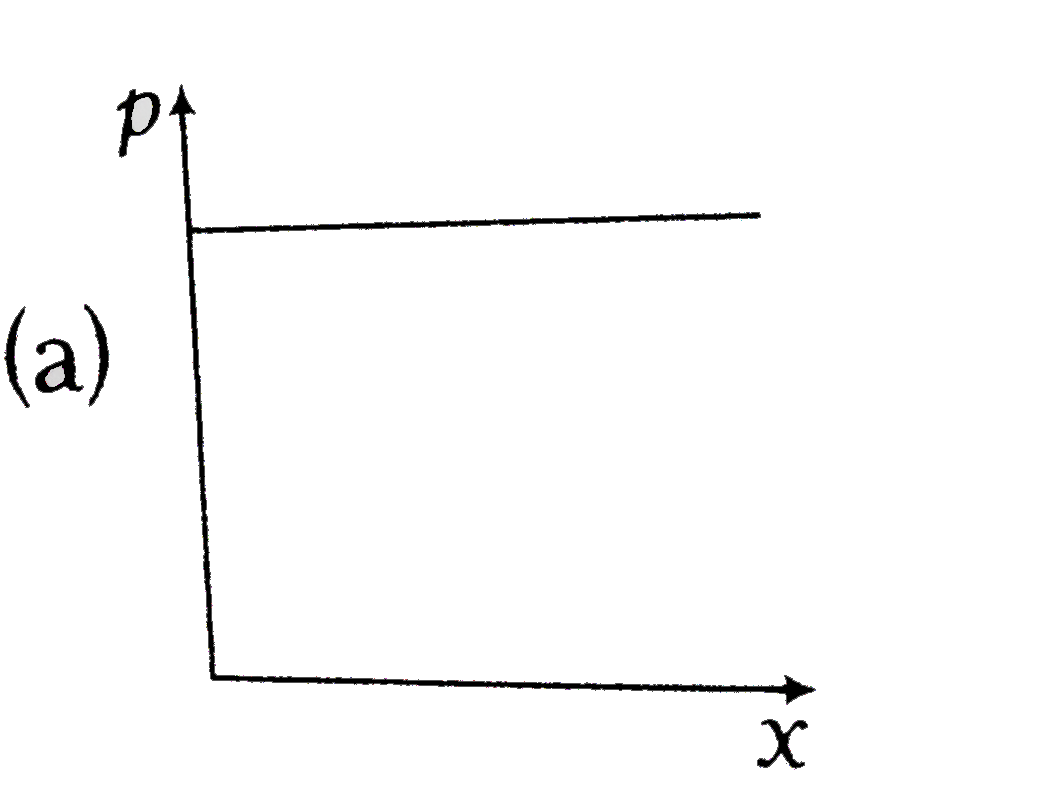
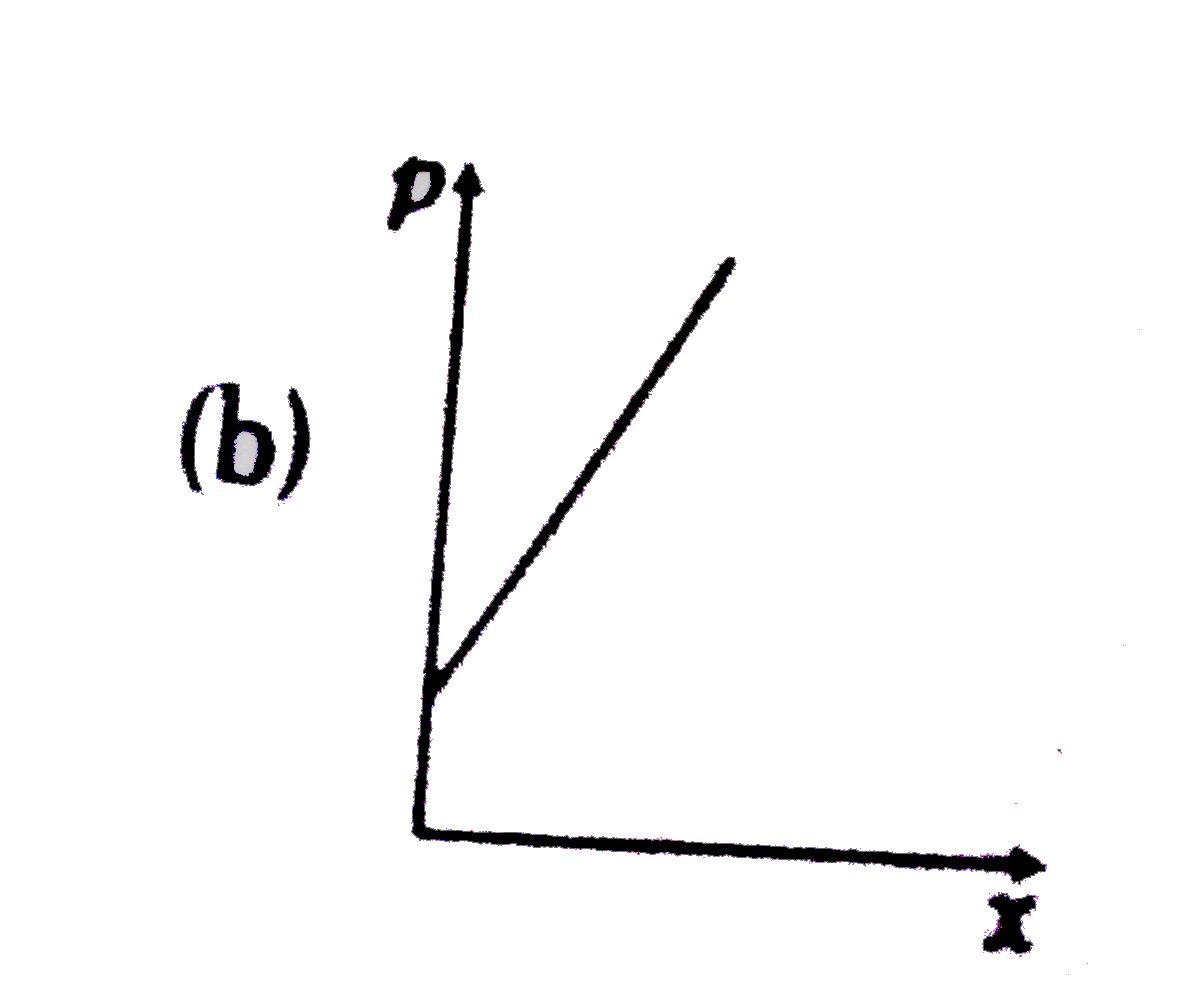
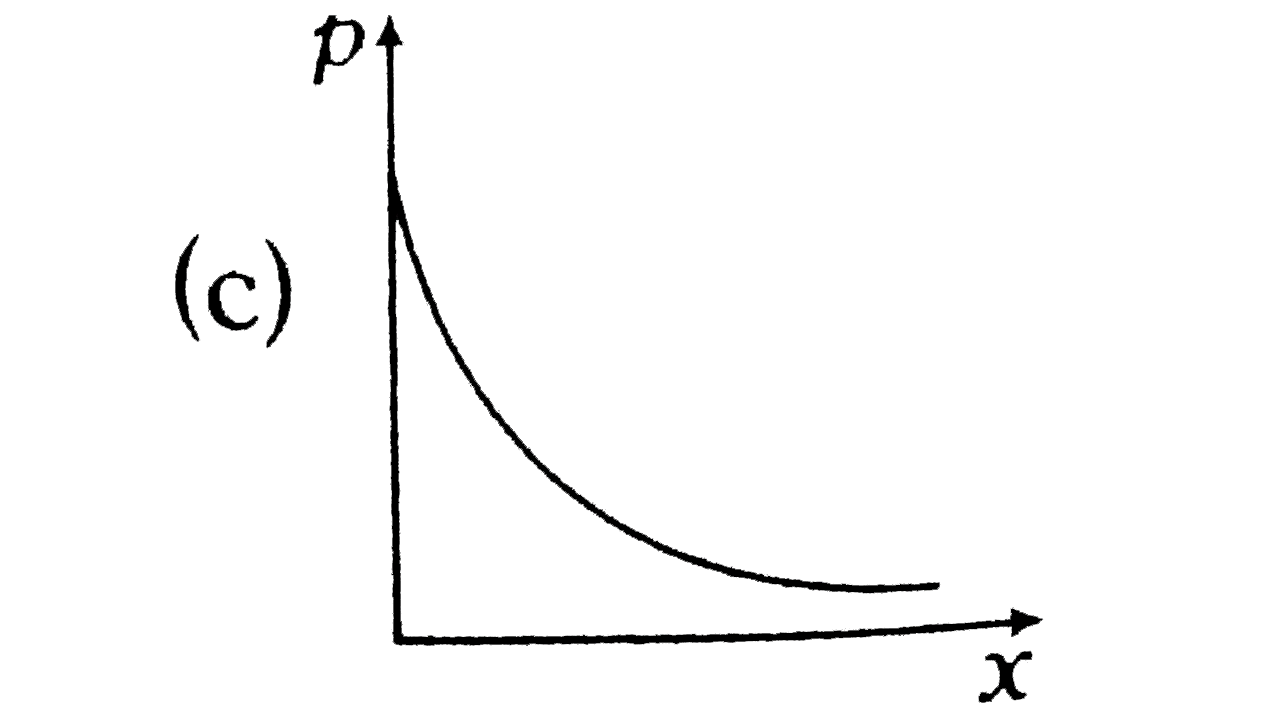
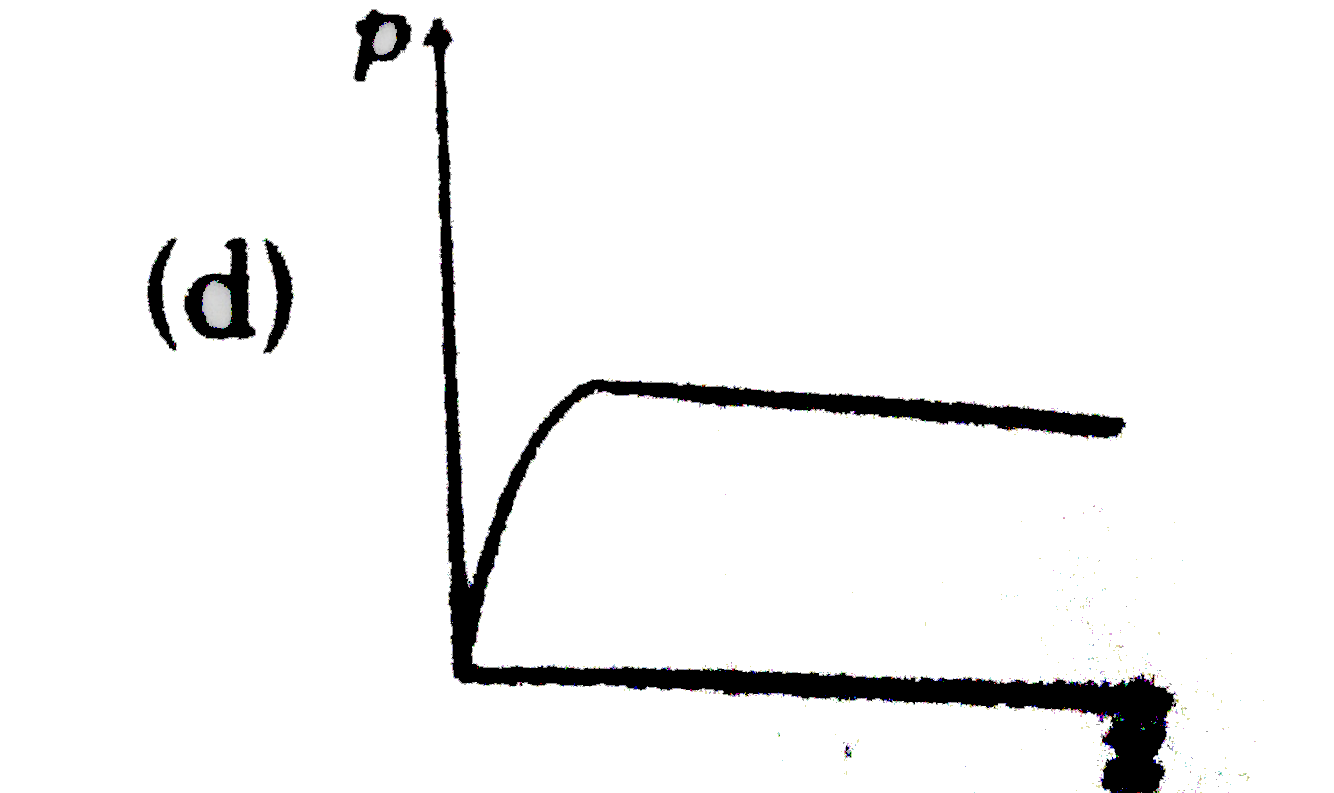
From amongst the following curves, which one shows the variation of the velocity v with time t for a small sized spherical body falling vertically in a long column of a viscous liquid

A

B

C

D

Text Solution

AI Generated Solution

The correct Answer is:

To determine the variation of the velocity \( v \) with time \( t \) for a small-sized spherical body falling vertically in a long column of a viscous liquid, we can analyze the motion of the body under the influence of gravity and viscous drag. ### Step-by-Step Solution: 1. **Understanding the Forces Acting on the Body**: - When a small spherical body is released in a viscous liquid, two main forces act on it: - The gravitational force \( F_g = mg \) (downward). - The viscous drag force \( F_d \) (upward), which opposes the motion. 2. **Newton's Second Law**: - According to Newton's second law, the net force acting on the body is given by: \[ F_{net} = F_g - F_d \] - This net force causes the body to accelerate. 3. **Initial Acceleration**: - Initially, when the body is released, the gravitational force is much greater than the drag force, leading to a net downward force. Therefore, the body accelerates downward. 4. **Increasing Velocity**: - As the body falls, its velocity increases, and consequently, the drag force \( F_d \) (which is proportional to the velocity) also increases. This can be expressed as: \[ F_d = kv \quad \text{(where \( k \) is a constant)} \] 5. **Reaching Terminal Velocity**: - Eventually, the drag force will equal the gravitational force: \[ mg = kv_t \] - At this point, the net force becomes zero, and the body stops accelerating. The velocity at this point is called the terminal velocity \( v_t \). 6. **Graphical Representation**: - The graph of velocity \( v \) versus time \( t \) will show: - An initial increase in velocity (which may appear parabolic due to acceleration). - A plateau where the velocity becomes constant (terminal velocity). 7. **Conclusion**: - The correct curve that represents this behavior is one that starts from zero, increases initially, and then levels off to a constant value. This corresponds to option B. ### Final Answer: The curve that shows the variation of the velocity \( v \) with time \( t \) for a small-sized spherical body falling vertically in a long column of a viscous liquid is **option B**.

To determine the variation of the velocity \( v \) with time \( t \) for a small-sized spherical body falling vertically in a long column of a viscous liquid, we can analyze the motion of the body under the influence of gravity and viscous drag. ### Step-by-Step Solution: 1. **Understanding the Forces Acting on the Body**: - When a small spherical body is released in a viscous liquid, two main forces act on it: - The gravitational force \( F_g = mg \) (downward). - The viscous drag force \( F_d \) (upward), which opposes the motion. ...
Promotional Banner

Topper's Solved these Questions

  • FLUID MECHANICS

    DC PANDEY ENGLISH|Exercise Check point 13.4|10 Videos
  • FLUID MECHANICS

    DC PANDEY ENGLISH|Exercise Taking it together|157 Videos
  • FLUID MECHANICS

    DC PANDEY ENGLISH|Exercise Check point 13.2|10 Videos
  • EXPERIMENTS

    DC PANDEY ENGLISH|Exercise Subjective|15 Videos
  • GENERAL PHYSICS

    DC PANDEY ENGLISH|Exercise INTEGER_TYPE|2 Videos

Similar Questions

Explore conceptually related problems

The terminal velocity of small sized spherical body of radius r falling veertically in a viscous liquid is given by a following proportionality

A body is thrown vertically upwards which graph represents variation of velocity w.r.t time

Which one of the following graphs shows the variation of magnetic induction B which distance r from a long wire carrying a current ?

Which one of the following graphs represents the variation of electric field with distance r from the centre of a charged spherical conductor of radius R?

The terminal velocity v of a spherical ball of lead of radius R falling through a viscous liquid varies with R such that

Which of the following option correctly describes the variation of the speed and acceleration 'a' of a point mass falling vertically in a viscous medium that applies a force F=-kv , where 'k' is constant, on the body? (Graphs are schematic and drawn to scale)

A batsman hits a sixes and the ball touches the ground outside the cricket ground. Which of the following graph describes the variation of the cricket ball's vertical velocity v with time between the time t_1 as it hits the bat and time t_2 when it touches the ground?

The curve drawn below shows the variations of P as a function of 1//V for a fixed mass and temperature of an ideal gas. It follows from the curve that:

Which one of the following graphs in figure shows the variation of photoelectric current (I) with voltage (V) between the electrodes in a photoelectric cell?

Which of the following velocity-time graphs shows a realistic situation for a body in motion ?
