

Home
Class 10
PHYSICS
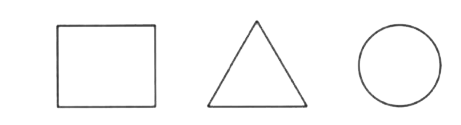
Fig.1.42 shows three pieces of card boar...

Fig.1.42 shows three pieces of card board of uniform thickness cut into three different shapes. On each diagram draw two lines to indicate the position of the centre of gravity G.

Promotional Banner

Topper's Solved these Questions

  • FORCE

    ICSE|Exercise EXERCISE 1(B) Multiple choice questions|2 Videos
  • FORCE

    ICSE|Exercise EXERCISE 1(C )|14 Videos
  • FORCE

    ICSE|Exercise EXERCISE 1(A) Numericals|18 Videos
  • ELECTRO-MAGNETISM

    ICSE|Exercise EXERCISE-10 (C) NUMERICALS |1 Videos
  • HOUSEHOLD CIRCUITS

    ICSE|Exercise EXERCISE -9(B) (MULTIPLE CHOICE TYPE)|2 Videos

Similar Questions

Explore conceptually related problems

A square card board is suspended by passing a pin through a narrow hole at its one corner. Draw a diagram to show its rest position. In the diagram, mark the point of suspension by the letter S and the centre of gravity by the letter G.

A circular ring (centre O) of radius a, and of uniform cross section is made up of three different metallic rods AB, BC and CA (joined together at the points A, B and C in pairs) of thermal conductivityies alpha_1 , alpha_2 and alpha_3 respectively (see diagram). The junction A, B and C are maintained at the temperatures 100^@C , 50^@C and 0^@C , respectively. All the rods are of equal lengths and cross sections. Under steady state conditions, assume that no heat is lost from the sides of the rods. Let Q_1 , Q_2 and Q_3 be the rates of transmission of heat along the three rods AB, BC and CA. Then

A circular ring (centre O) of radius a, and of uniform cross section is made up of three different metallic rods AB, BC and CA (joined together at the points A, B and C in pairs) of thermal conductivityies alpha_1 , alpha_2 and alpha_3 respectively (see diagram). The junction A, B and C are maintained at the temperatures 100^@C , 50^@C and 0^@C , respectively. All the rods are of equal lengths and cross sections. Under steady state conditions, assume that no heat is lost from the sides of the rods. Let Q_1 , Q_2 and Q_3 be the rates of transmission of heat along the three rods AB, BC and CA. Then

A uniform flat circular rim is balanced on a sharp vertical nail by supporting it at a point A, as shown in Fig 1.41 Mark the position of the centre of gravity of the rim in the diagram by the letter G.

The diagram shows the arrangement of three small uniformally charged spheres, A,B and C . The arrow indicate the direction of the electrostatic forces acting between the spheres (for example, the left arrow on sphere A indicates the electronstatic force on sphere A due to sphere B ). At least two of the spheres are positively charged. Which sphere, if any, could be negatively charged?

Look at the drawing given in the figure which has been drawn with ink of uniform line-thickness. The mass of ink used to draw each of the two inner circles, and each of the two line segments is m . The mass of the ink used to draw the outer circle is 6m . The coordinates of the centres of the different parts are: outer circle (0, 0) , left inner circle (-a, a) , right inner circle (a, a) , vertical line (0, 0) and horizontal line (0, -a) . The y -coordinate of the centre of mass of the ink in this drawing is

A uniform plate abcd has a mass of 1 kg. If two point masses each of 20 g are placed at the corners b and c as shown, then centre of mass shifts on the line

Fig. below shows two bulbs with switches and fuse connected to the mains through a three pin socket by means of a three wires cable. Name and state the colour of insulation of each wire 1, 2 and 3.

Two forces each of magnitude 2N act vertically upwards and downwards respectively at the two ends of a uniform rod of length 1m which is pivoted at its centre. Draw a diagram of the arrangement and determine the resultant moment of forces about the mid point of the rod.

Fig. shows some of the electric field lines due to three point charges arranged along the vertical axis. All three charges have the same magnitude. (a) What are the signs of each of the three charges? Explain your reasoning. (b) At what points(s) is the magnitude of the electric field the smallest? Explain your reasoning. Explain how the fields produced by each individual point charge combine to give a small net field at this point or points. (c ) Two point charges q and -q are placed at a distance d apart. What are the points at which the resultant electric field is parallel to the line joining the two charge? .