Home
Class 12
PHYSICS
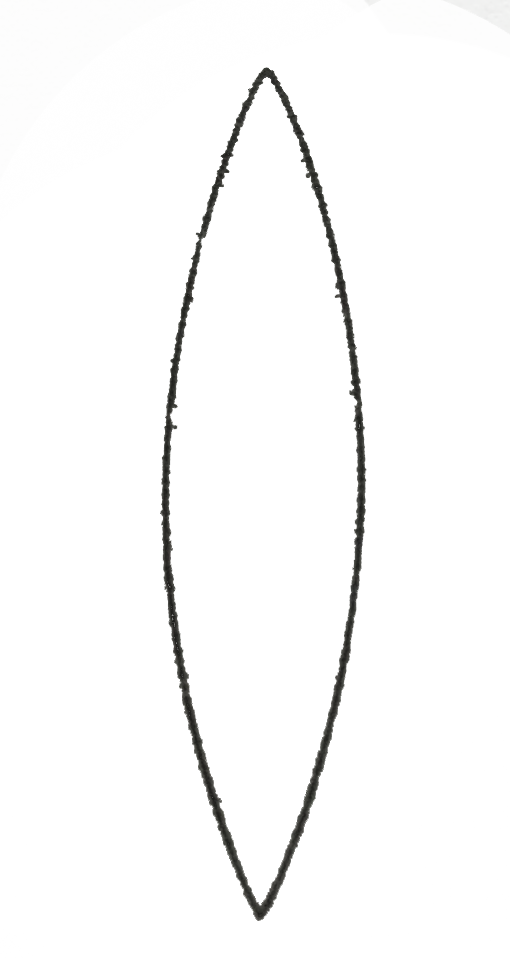
The layered lens shown in Figure. , is m...

The layered lens shown in Figure. , is made of kinds of glasses. How many and what kind of images will be produced by this lens with a point source placed on the optical axis? Neglect the reflection of light at the boundaries between layers.

Text Solution

Verified by Experts

Two images will be formes, one from each type of material.
Promotional Banner

Topper's Solved these Questions

  • GEOMETRICAL OPTICS

    CENGAGE PHYSICS ENGLISH|Exercise Exercise1.7|21 Videos
  • GEOMETRICAL OPTICS

    CENGAGE PHYSICS ENGLISH|Exercise Subjective|26 Videos
  • GEOMETRICAL OPTICS

    CENGAGE PHYSICS ENGLISH|Exercise Exercise1.5|22 Videos
  • ELECTRON,PHONTS,PHOTOELECTRIC EFFECT & X-RAYS

    CENGAGE PHYSICS ENGLISH|Exercise dpp 3.3|15 Videos
  • HEATING EFFECT OF CURRENT

    CENGAGE PHYSICS ENGLISH|Exercise Thermal Power in Resistance Connected in Circuit|27 Videos

Similar Questions

Explore conceptually related problems

A thin plano-convex lens of focal length f is split into two halves. One of the halves is shifted along the optical axis as shown in figure. The separation between object and image planes is 1.8 m. The magnification of the image, formed by one of the ball lens is 2. Find the focal length of the lens and separation between the two halves. Draw the ray diagram for image formation.

An object of size 2cm is placed at a distance of 40cm from a glass lens, close to the principal axis of the lens, and the lens forms an image of size 2cm . What is the size of the image and what type of image is formed if the lens and the object, in the same arrangement, is immersed into water ? The refractive index of the lens 1.5 , and that of the water is 1.33 .

What is the shape of the wavefront in each of the following cases ? Light emerging out of a convex lens when a point source is placed at its focus.

A convex lens of focal length 15cm and a concave mirror of focal length 30cm are kept with their optic axes PQ and RS paralledl but separated in vertical direction by 0.6 cm as shown in Figure. The distance between the lens and mirror is 30cm. An upright object Ab of height 1.2 cm is placed on the optics axis PQ of the lens at a distance of 20 cm from the lens. If A^(')B^(') is the image after refraction from the lens and reflection from the mirror, find the distance of A^(')B^(') from the pole of the mirror and obtain its magnification. Also, locate positions of A^(') and B^(') with respect to the optic axis RS.

A lens with a focal length of f=30 cm produces on a screen a sharp image of an object that is at a distance of a=40 cm from the lens. A plane parallel plate with thickness of d=9 cm is placed between the lens and the object perpendicular to the optical axis of the lens. Through what distance should the screen be shifted for the image of the object to remain distinct? The refractive index of the glass of the plate is mu=1.8.

A lens is made of three thin different mediums. Radius of curvature and refractive index of each medium is shown iin Figure., Surface AB is straight. An object is placed at some distance from the lens by which a real image is formed on the screen placed at a distance of 10cm from the lens. Find the distance of the object from the lens.

What do you mean by linear magnification produced by mirrors ? The power of a lens is +2.5 D . What kind of lens is it and what is its focal length ? Draw a ray diagram of an image when an object is placed on the principal axis of a convex lens between focus and optical centre.

A glass wedge with a small angle of refraction theta is placed at a certain distance from a converging lens with a focal length f ,one surface of the wedge being perpendicular to the optical axis of the lens. A point sources S of light is on the other side of the lens at its focus. The rays reflected from the wedge (not from base) produce, after refraction in the lens , two images of the source displaced with respect to each other by d. Find the refractive index of the wedge glass. [Consider only paraxial rays.]

A convex lens is made up of three different materials as shown in the figure. For a point object placed on its axis, the number of images formed are

A converging lens and a diverging mirror are placed at a separation of 15 cm. The focal length of the lens is 25 cm and that of the mirror is 40 cm. Where should a point source be placed between the lens and the mirror so that the light, after getting reflected by the mirror and then getting transmitted by the lens, comes out parallel to the principal axis ?
