Home
Class 12
PHYSICS
A parallel beam of light falls axially o...

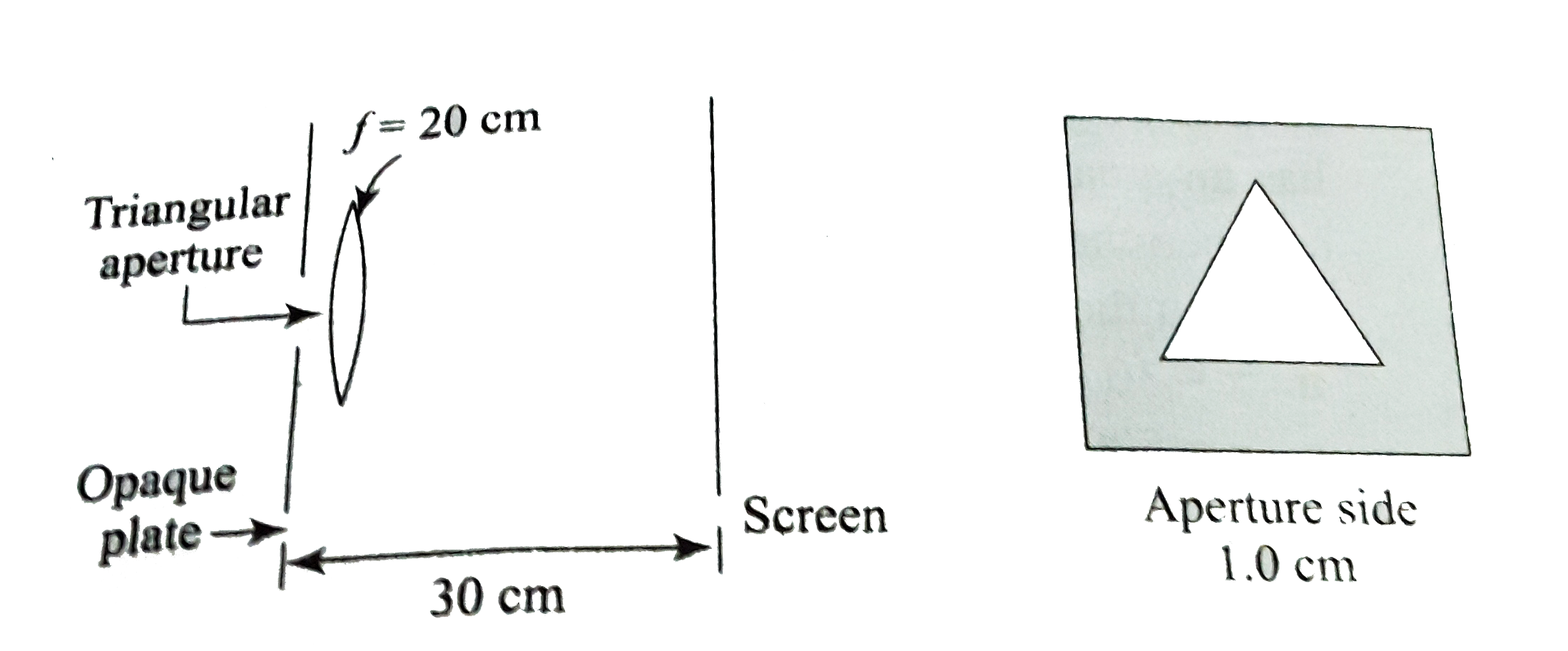
A parallel beam of light falls axially on a thin converging lens of focal length 20cm. The emergent light falls on a screen placed 30cm beyond the lens. An opaque plate with a triangular aperture, side 1 cm, is in contact with the lens
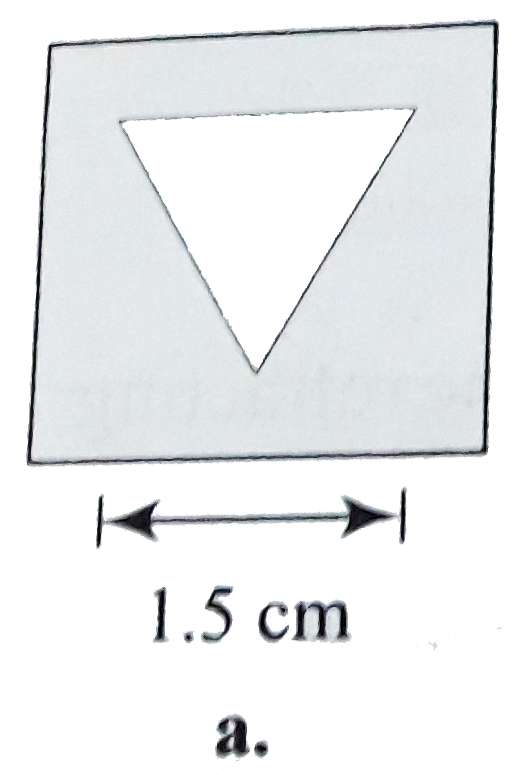
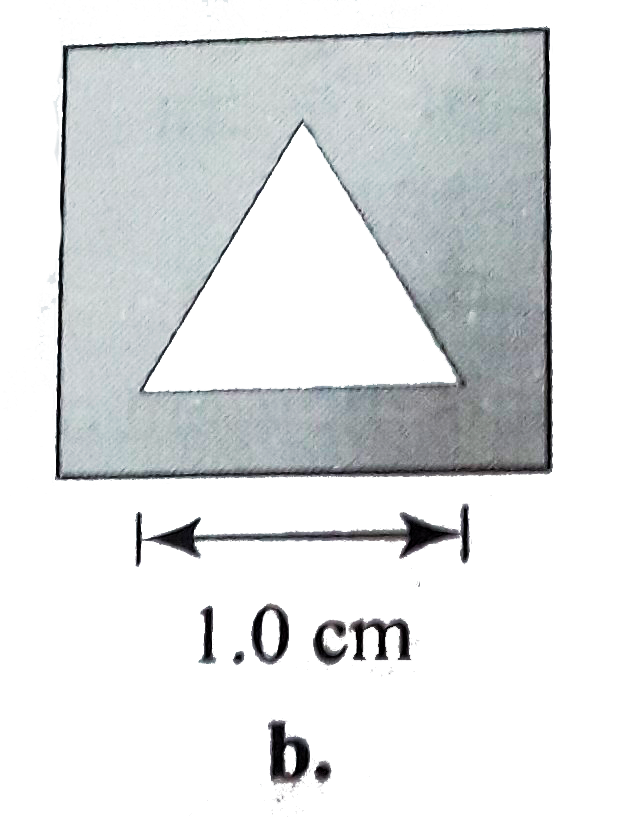
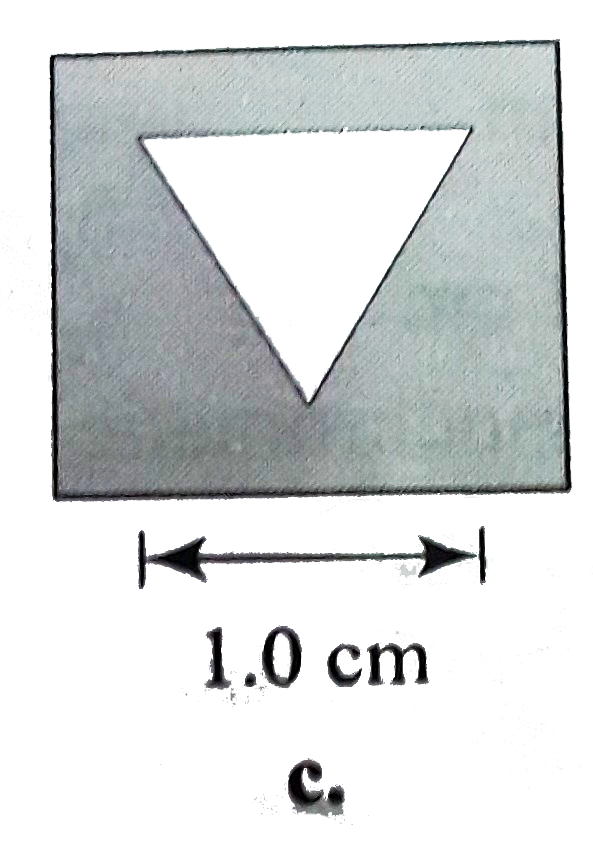
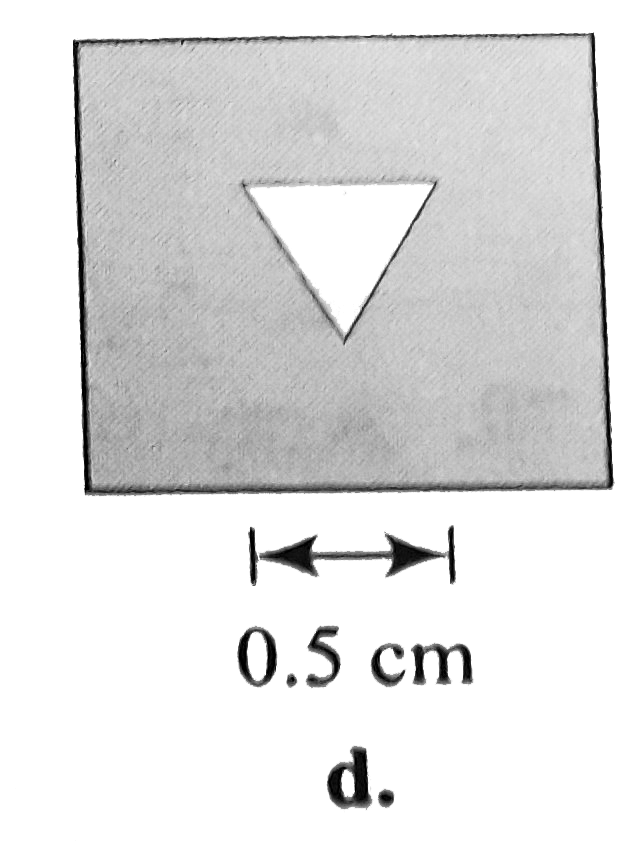
Which one of the following diagrams best shows to appearance of the patch of light seen on the screen?

A

B

C

D

Text Solution

Verified by Experts

The correct Answer is:
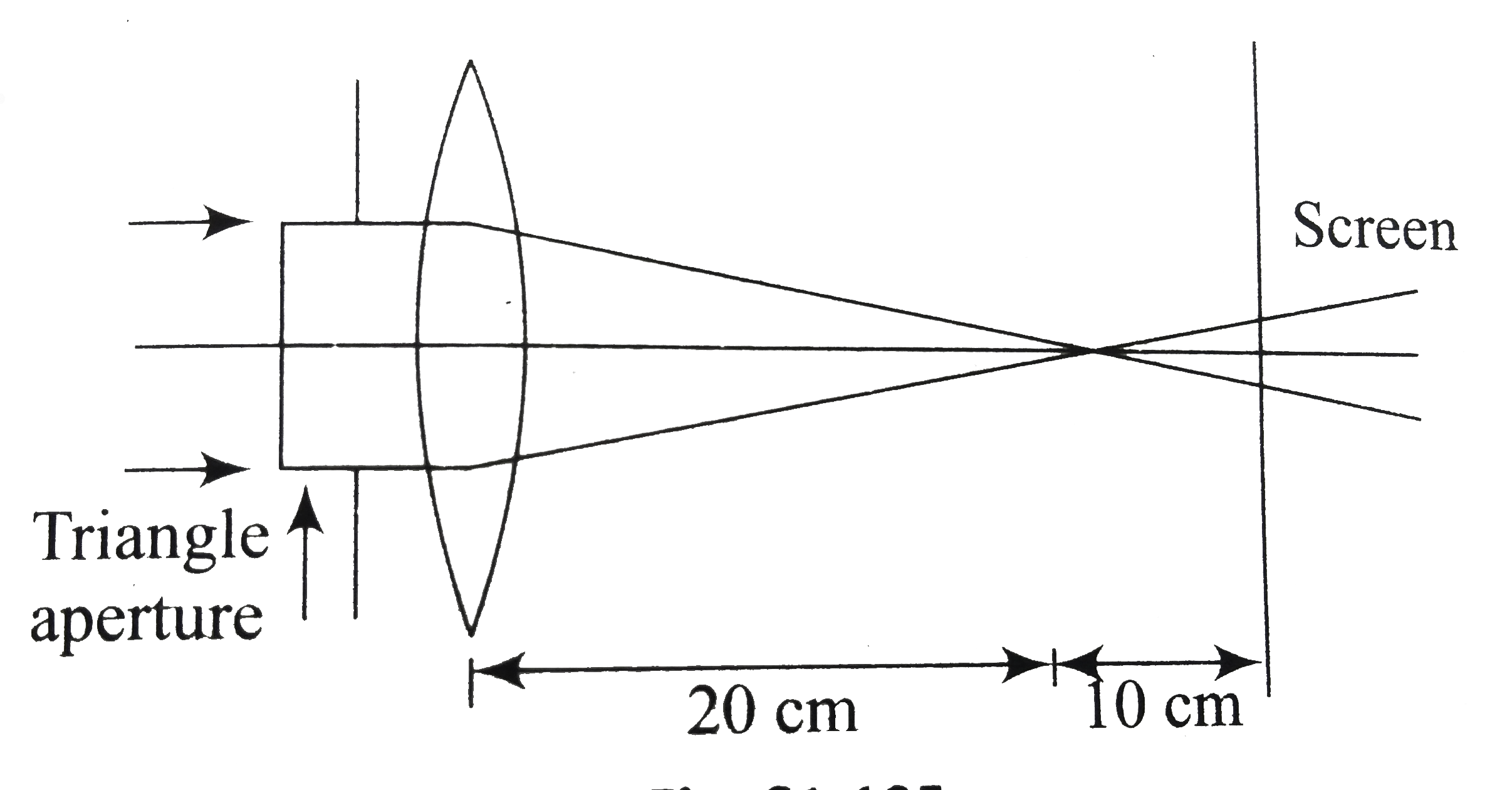
d.

The image on the screen is real and inverted.
The size of the image on the screen has aperture size given by
Size`=1.0((10)/(20))=0.5cm`
Hence, the path of light on the screen is best represented by diagram (d).
Promotional Banner

Topper's Solved these Questions

  • GEOMETRICAL OPTICS

    CENGAGE PHYSICS ENGLISH|Exercise Assertion-Reasoninig|2 Videos
  • GEOMETRICAL OPTICS

    CENGAGE PHYSICS ENGLISH|Exercise Linked Comprehension|51 Videos
  • GEOMETRICAL OPTICS

    CENGAGE PHYSICS ENGLISH|Exercise Subjective|26 Videos
  • ELECTRON,PHONTS,PHOTOELECTRIC EFFECT & X-RAYS

    CENGAGE PHYSICS ENGLISH|Exercise dpp 3.3|15 Videos
  • HEATING EFFECT OF CURRENT

    CENGAGE PHYSICS ENGLISH|Exercise Thermal Power in Resistance Connected in Circuit|27 Videos

Similar Questions

Explore conceptually related problems

A parallel beam of rays is incident on a convergent lens with a focal length of 40 cm. Where should a divergent lens with a focal length of 15 cm be placed for the beam of rays to remain parallel after passing through the two lenses.

A converging beam of light is incident on a concave lens of focal length 20 cm. In the absence of the lens, the beam converges at a point 10 m behind the lens. Find where the beam will converge/diverge after refraction.

A thin converging lens of focal length f = 25 cm forms the image of an object on a screen placed at a distance of 75 cm from the lens. Now the screen in moved closer to the lens by a distance of 25 cm. The distance through which the object has to be shifted so that its image on the screen is sharp again is

A parallel beam of light falls successively on a thin convex lens of focal length 40 cm and then ono a thin convex lens of focal length 10cm as shown in figure. In figure, the second lens is an equi-concave lens of focal length 10cm and made of a material of refractive index 1.5. In both the cases, the second lens has an aperture equal to 1cm. Q. Compare the area illuminated by the beam of light on the screen, which passes through the second lens in the two cases. The ratio (A_(2)//A_(1)) will be

A parallel beam of light is incident on a lens of focal length 10 cm. A parallel slab of refractive index 1.5 and thickness 3 cm is placed on the other side of the lens. Find the distance of the final image from the lens. .

A parallel beam of light falls successively on a thin convex lens of focal length 40 cm and then ono a thini convex lens of focal length 10cm as shown in figure. In figure, the second lens is an equiconcave lens of focal length 10cm and made of a material of refractive index 1.5. In both the cases, the second lens has an aperture equal to 1cm. Q. Now, a liquid of refractive index mu is filled to the right of the second lens in case B such that the area illuminated in both the cases is the same. Determing the refractive index of the liquid.

A square card of side length 1 mm is being seen through a magnifying lens of focal length 10 cm. The card is placed at a distance of 9 cm from the lens. The appaent area of the card thorugh the lens is

A beam of light converges towards a point O, behind a convex mirror of focal length 20cm. Q. Similarly, as in above question when point O is 30cm behind the mirror.

A parallel beam of monochromatic light falls on a combination of a convex lens and a concave lens of focal lengths 15 cm and 5 cm respectively. What is the distance between the two lenses to obtain a parallel beam of light from the concave lens ?

A parallel beam of light is incident on a lens of focal length 10cm. A parallel slab of refractive index 1.5 and thickness 3 cm is placed on the other side of the lens. The nature of the final image from the lens slab combination is: (Assume rays paraxial)

CENGAGE PHYSICS ENGLISH-GEOMETRICAL OPTICS-Single Correct
  1. ACB is right-angled prism with other angles as 60^(@) and 30^(@) . Re...

    Text Solution

    |

  2. The lateral magnification of the lens with an object located at two di...

    Text Solution

    |

  3. A parallel beam of light falls axially on a thin converging lens of fo...

    Text Solution

    |

  4. A liquid of refractive index 1.6 is contained in the cavity of a glass...

    Text Solution

    |

  5. Figure(a) shows two plano-convex lenses in contact as shown. The combi...

    Text Solution

    |

  6. In a slide show programme, the image on the screen has an area 900time...

    Text Solution

    |

  7. A prism having refractive index 1.414 and refracting angle 30^(@) has ...

    Text Solution

    |

  8. In a lake, a fish rising vertically to the surface of water uniformly ...

    Text Solution

    |

  9. A concave lens with unequal radii of curvature made of glass (mu(g)=1....

    Text Solution

    |

  10. The refractive index of material of a prism of angles 45^(@), -45^(@),...

    Text Solution

    |

  11. An object is placed 1m in front of the curved surface of a plano-conve...

    Text Solution

    |

  12. The apparent thickness of a thick plano-convex lens is measured once w...

    Text Solution

    |

  13. An object is placed in front of a convex mirror at a distance of 50cm....

    Text Solution

    |

  14. A concave mirror of focal length 10cm and a convex mirror of focal len...

    Text Solution

    |

  15. A U-shaped wire is placed before a concave having radius of curvature ...

    Text Solution

    |

  16. An object ABED is placed in front of a concave mirror beyond the cente...

    Text Solution

    |

  17. A gun of mass M fires a bullet of mass m with a horizontal speed V. Th...

    Text Solution

    |

  18. The distance between two point sources of light is 24cm. Find out wher...

    Text Solution

    |

  19. Two thin symmetrical lenses of different nature and of different mater...

    Text Solution

    |

  20. A glass sphere of radius R=10cm is kept inside water. A ponit object ...

    Text Solution

    |

