Home
Class 12
PHYSICS
A metal surface in an evacuated tube is ...


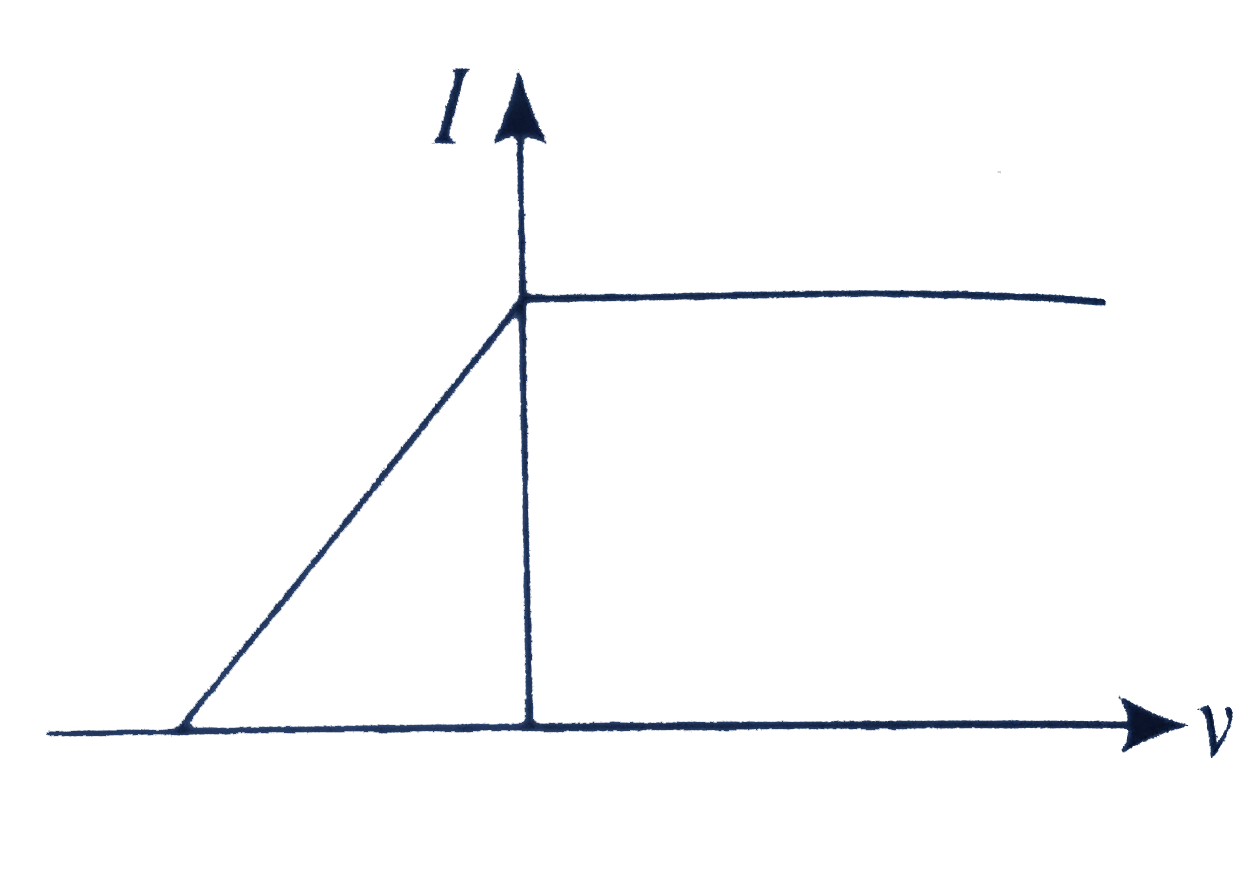
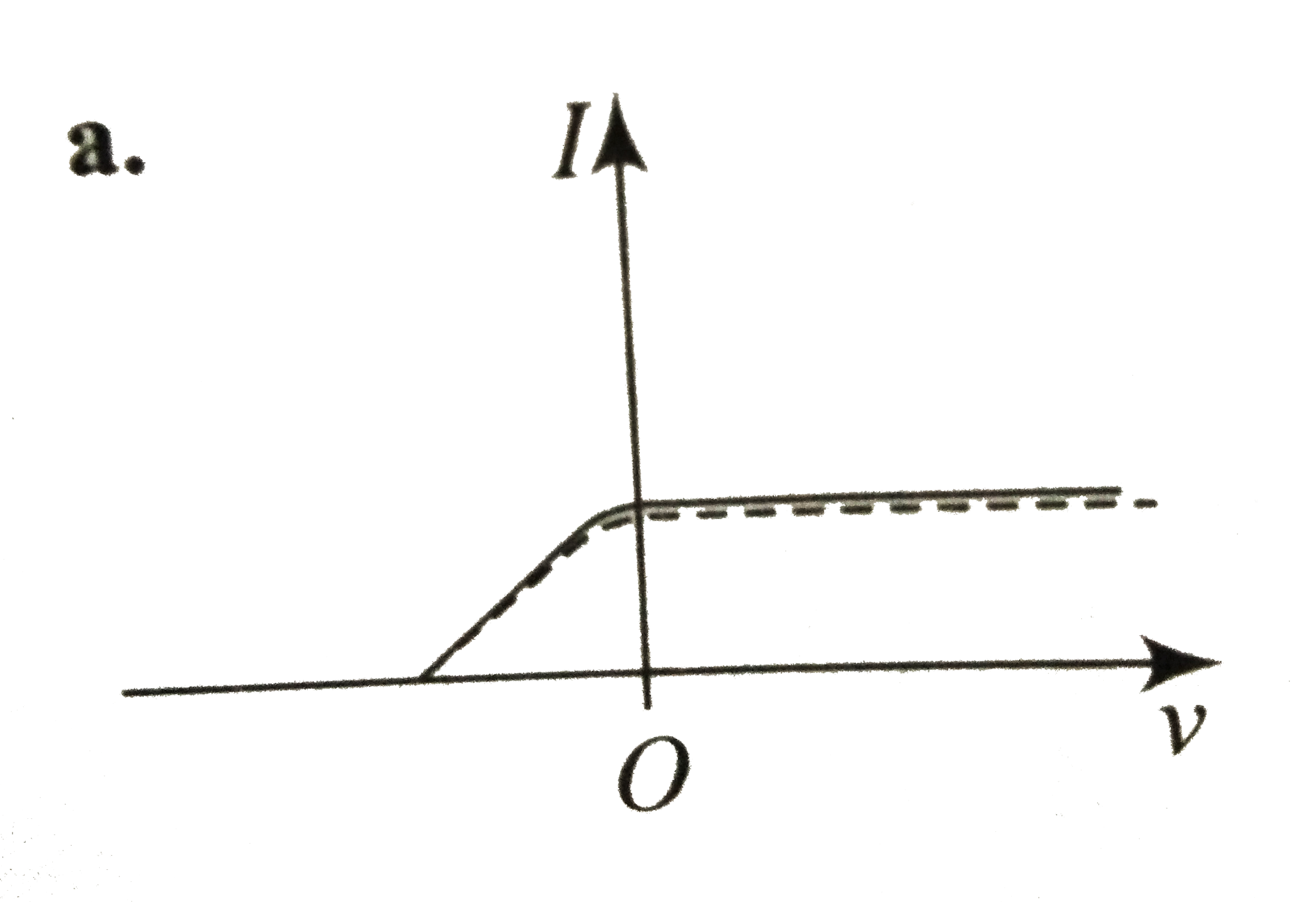
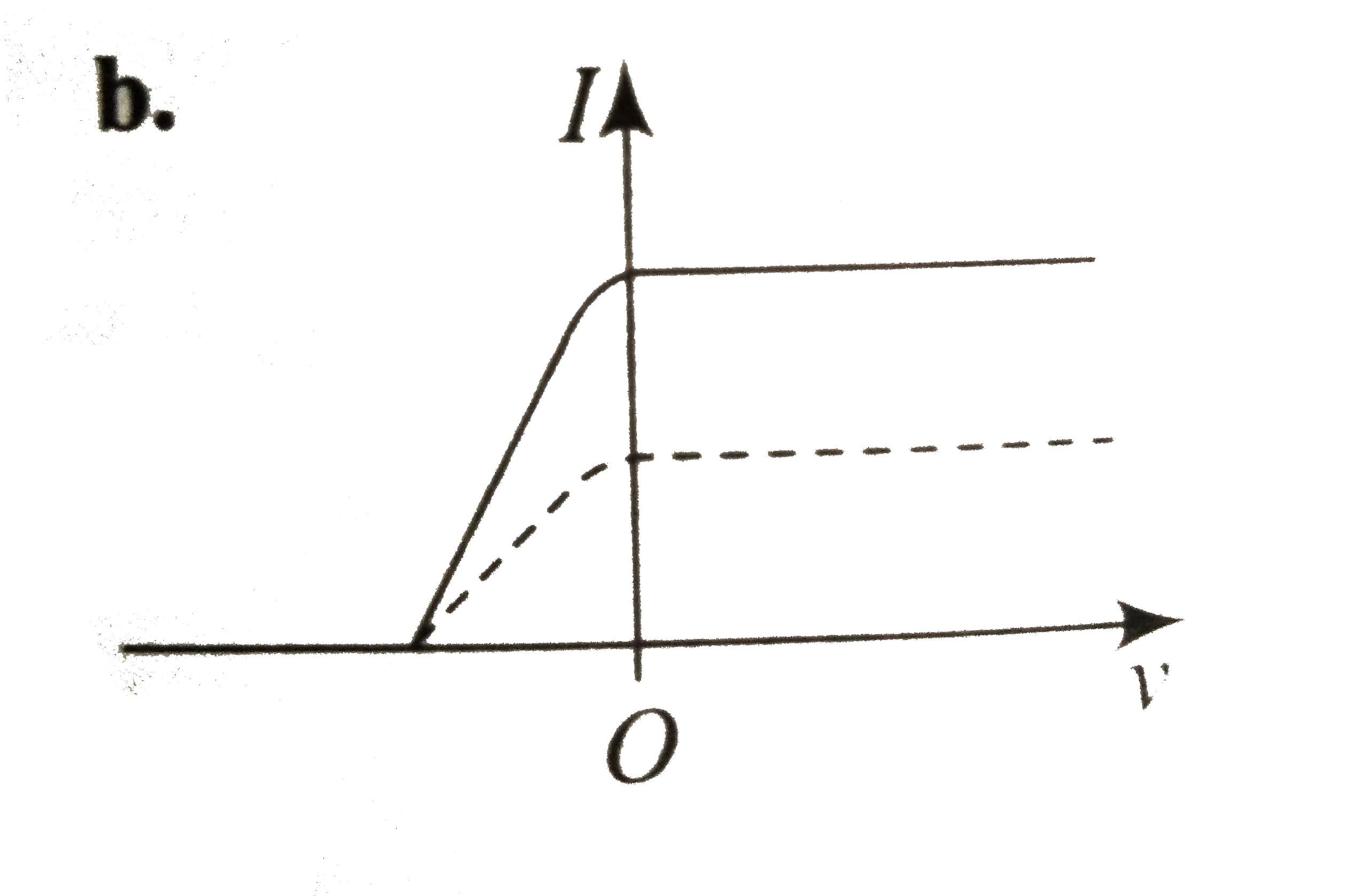
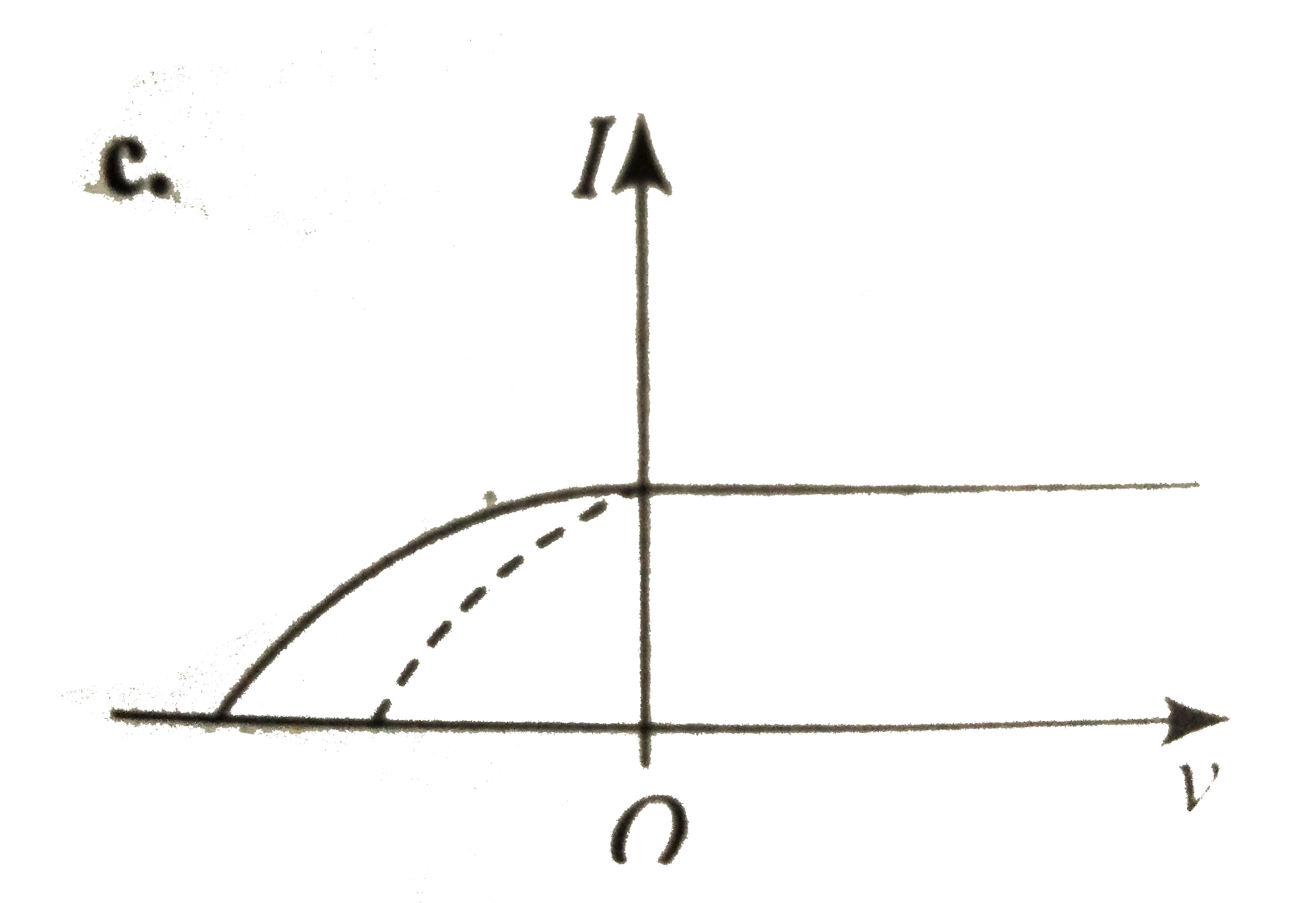
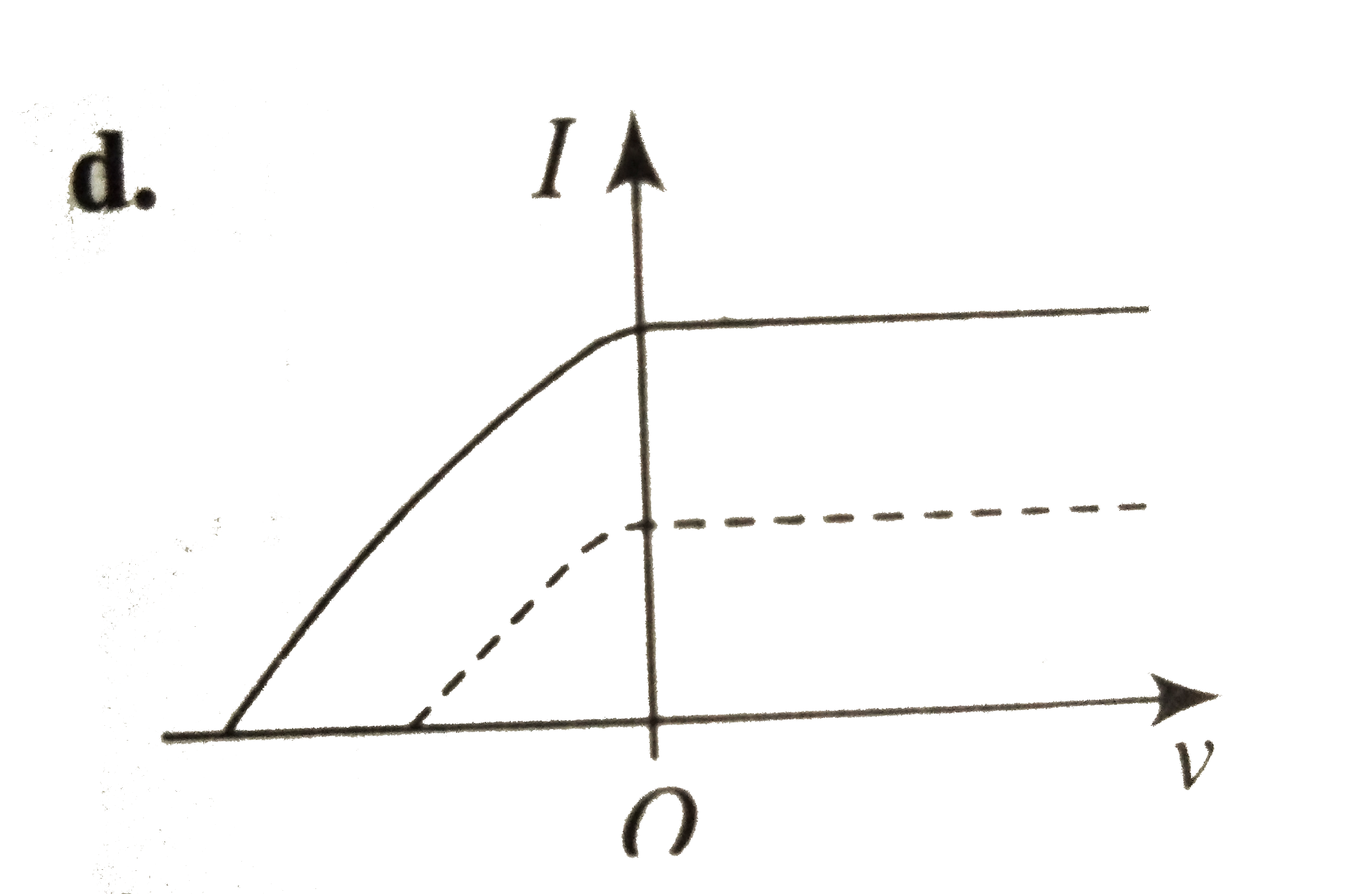
A metal surface in an evacuated tube is illuminated with monochromatic light causing the emission of photoelectrons. For a given intensity of light, a graph between saturation current and potential of the electrode is given in Fig. If the experiment were repeated with light of twice the intensity but the same wavelength, which of the graphs below would best represent the new relation between I and V?(Dotted represents initial condition)

A

B

C

D

Text Solution

Verified by Experts

The correct Answer is:

B

On increaseng intensity, only saturation current increases, whereas retarding potential remains the same because wavelength of lighti s unchanged.
Promotional Banner

Topper's Solved these Questions

  • PHOTOELECTRIC EFFECT

    CENGAGE PHYSICS ENGLISH|Exercise Multiple Correct|10 Videos
  • PHOTOELECTRIC EFFECT

    CENGAGE PHYSICS ENGLISH|Exercise Linked Comprehension|44 Videos
  • PHOTOELECTRIC EFFECT

    CENGAGE PHYSICS ENGLISH|Exercise Subjective|16 Videos
  • NUCLEAR PHYSICS

    CENGAGE PHYSICS ENGLISH|Exercise ddp.5.5|14 Videos
  • RAY OPTICS

    CENGAGE PHYSICS ENGLISH|Exercise DPP 1.6|12 Videos

Similar Questions

Explore conceptually related problems

Which of the graphs shown below does not represent the relationship between incident light and the electron ejected from metal surface ?

Which of the graphs shown below does not represent the relationship between incident light and the electron ejected from metal surface?

Which of the graphs shown below does not represent the relationship between incident light and the electron ejected from metal surface?

For intensity I of a light of wavelength 5000 Å the photoelectron saturation current is 0.40 mu A and stopping potential is 1.36 V , the work function of metal is

A light is incidence on a metallic surface. Graph etween stopping potential V_s and 1/lambda is as shown in figure. when intensity of ligh is increases at given frequency then:

Given in fig. is the graph between frequency v of the incident light and maximum kinetic energy (E_(k)) of the emitted photoelectrons. Find the values of (i) threshold frequency and (ii) work function form the graph.

A photoelectric cell is connected to a source of variable potential difference, connected across it and the photoelectric current resulting (muA) is plotted against the applied potential difference (V). The graph in the broken line represents one for a given frequency and intensity of the incident radiation . If the frequency is increased and the intensity is reduced, which of the following graphs of unbroken line represents the new situation?

In the shown expermiental setup to study photoelectric effect, two conducting electrodes are enclosed in an evacuated glass-tube as shown. A parallel beam of monochromatic light, falls on photosensitive electrodes. The emf of battery shwon is high enough such that all photoelectron ejected from left electrode will reach the right electrode. Under initial conditions photoelectrons are emitted. AS changes are made in each situation of column-I, Match the statements in column-I with results in column-II. {:(,"Column I",,"Column II"),((A),"If frequency of incident light is increased keeping its intensity constant",(p),"magnitude of stopping potential"),((B),"If frequency of incident light is increased and its intensity is decreased",(q),"current through circuit may stop"),((C),"If work function of photo sensitive electrode is increased",(r),"maximum kinetic energy of ejected photoelectrons will increase"),((D),"If intensity of incident light is increased keeping its frequency constant",(s),"saturation current will increase"):}

When light of sufficiently high frequency is incident on a metallic surface, electrons are emitted from the metallic surface. This phenomenon is called photoelectric emission. Kinetic energy of the emitted photoelectrons depends on the wavelength of incident light and is independent of the intensity of light. Number of emitted photoelectrons depends on intensity. (hv-phi) is the maximum kinetic energy of emitted photoelectron (where phi is the work function of metallic surface). Reverse effect of photo emission produces X-ray. X-ray is not deflected by electric and magnetic fields. Wavelength of a continuous X-ray depends on potential difference across the tuve. Wavelength of charasteristic X-ray depends on the atomic number. Q. A monochromatic light is used in a photoelectric experiment on photoelectric effect. The stopping potential

When light of sufficiently high frequency is incident on a metallic surface, electrons are emitted from the metallic surface. This phenomenon is called photoelectric emission. Kinetic energy of the emitted photoelectrons depends on the wavelength of incident light and is independent of the intensity of light. Number of emitted photoelectrons depends on intensity. (hv-phi) is the maximum kinetic energy of emitted photoelectron (where phi is the work function of metallic surface). Reverse effect of photo emission produces X-ray. X-ray is not deflected by electric and magnetic fields. Wavelength of a continuous X-ray depends on potential difference across the tuve. Wavelength of charasteristic X-ray depends on the atomic number. Q. If frequency (upsilongtupsilon_0) of incident light becomes n times the initial frequency (v), then KE of the emitted photoelectrons becomes ( v_0 threshold frequency).

CENGAGE PHYSICS ENGLISH-PHOTOELECTRIC EFFECT-Single Correct
  1. A surface irradiated with light of wavelength 480 nm gives out electro...

    Text Solution

    |

  2. In an experiment on the photoelectric effect, an evecuated photocell w...

    Text Solution

    |

  3. A metal surface in an evacuated tube is illuminated with monochromatic...

    Text Solution

    |

  4. If stopping potentials corresponding to wavelengths 4000A and 4500A ar...

    Text Solution

    |

  5. The photoelectric threshold of a certain metal is 3000A. If the radiat...

    Text Solution

    |

  6. The frequency and the intensity of a beam of light falling on the surf...

    Text Solution

    |

  7. The frequency of incident light falling on a photosensitive metal plat...

    Text Solution

    |

  8. Two radiations of photons energies 1 eV and 2.5 eV, successively illum...

    Text Solution

    |

  9. A proton when accelerated through a potential difference of V volt has...

    Text Solution

    |

  10. Given that a photon of light of wavelength 10,000A has an energy equal...

    Text Solution

    |

  11. In the previous question, if the intensity of light is made 4I0, then ...

    Text Solution

    |

  12. if the intensity of light is made 4I0, then the saturation current wil...

    Text Solution

    |

  13. if the cathode and the anode are kept at the same potential, the emitt...

    Text Solution

    |

  14. if the wavelength is chaged from4000A. to 3000A, then stopping potenti...

    Text Solution

    |

  15. A light source is at a distance d from a photoelectric cell, then the ...

    Text Solution

    |

  16. If 5% of the energy supplied to a bulb is irradiated as visible light,...

    Text Solution

    |

  17. Which of following graphs correctly represents the variation of partic...

    Text Solution

    |

  18. Five volt of stopping potential is needed for the photoelectrons emitt...

    Text Solution

    |

  19. The work function for tungsten and sodium are 4.5 eV and 2.3 eV respec...

    Text Solution

    |

  20. In a series of photoelectric emission experiments on a certain metal s...

    Text Solution

    |
