Home
Class 11
CHEMISTRY
The following are the P-V diagram for cy...

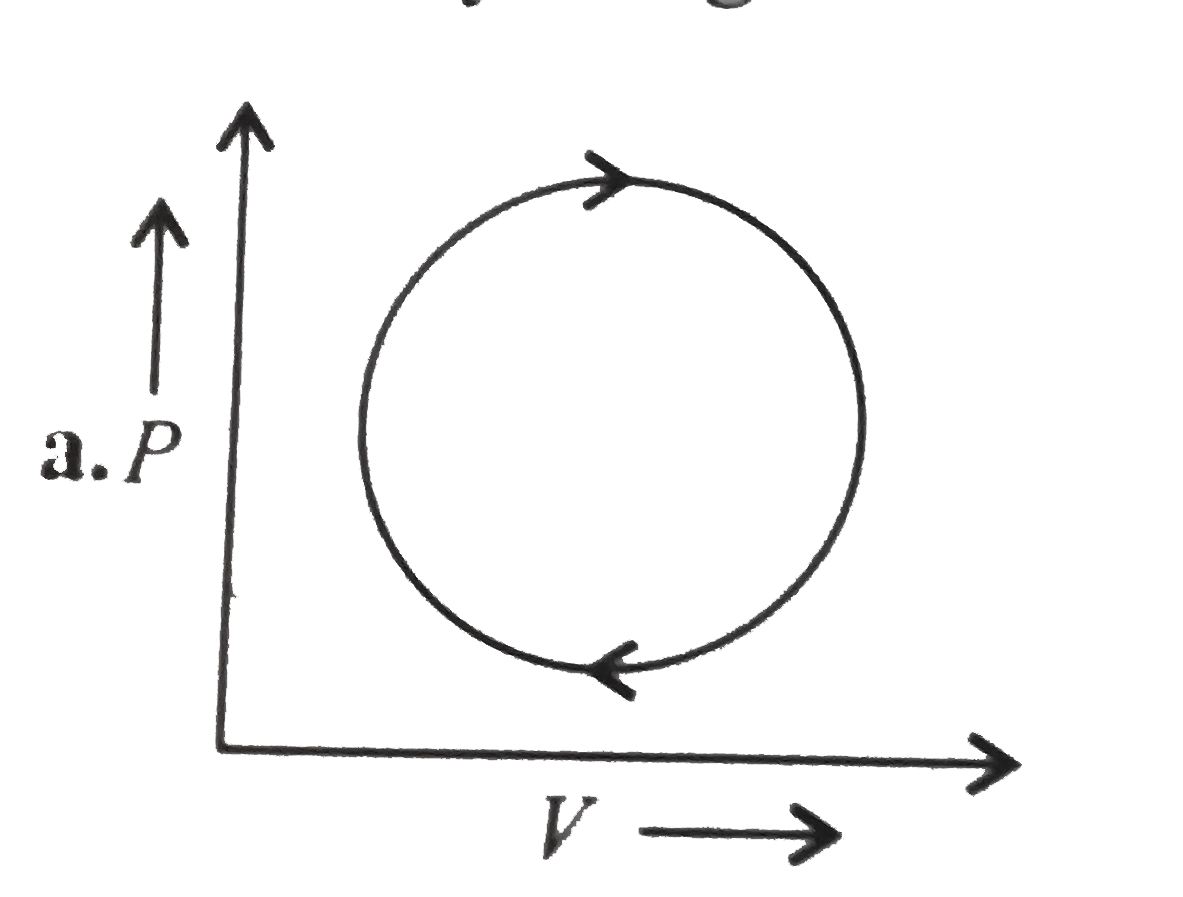
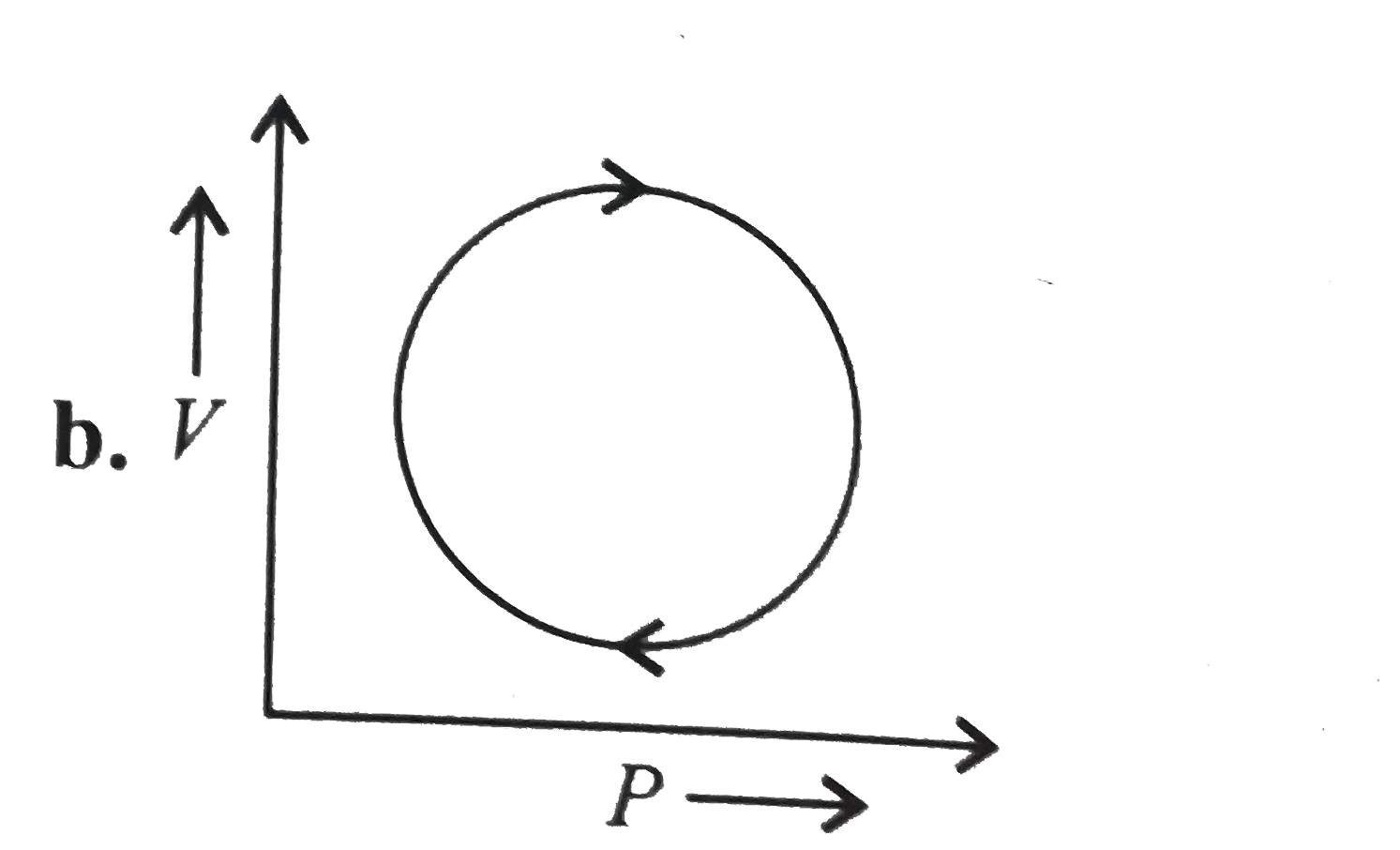
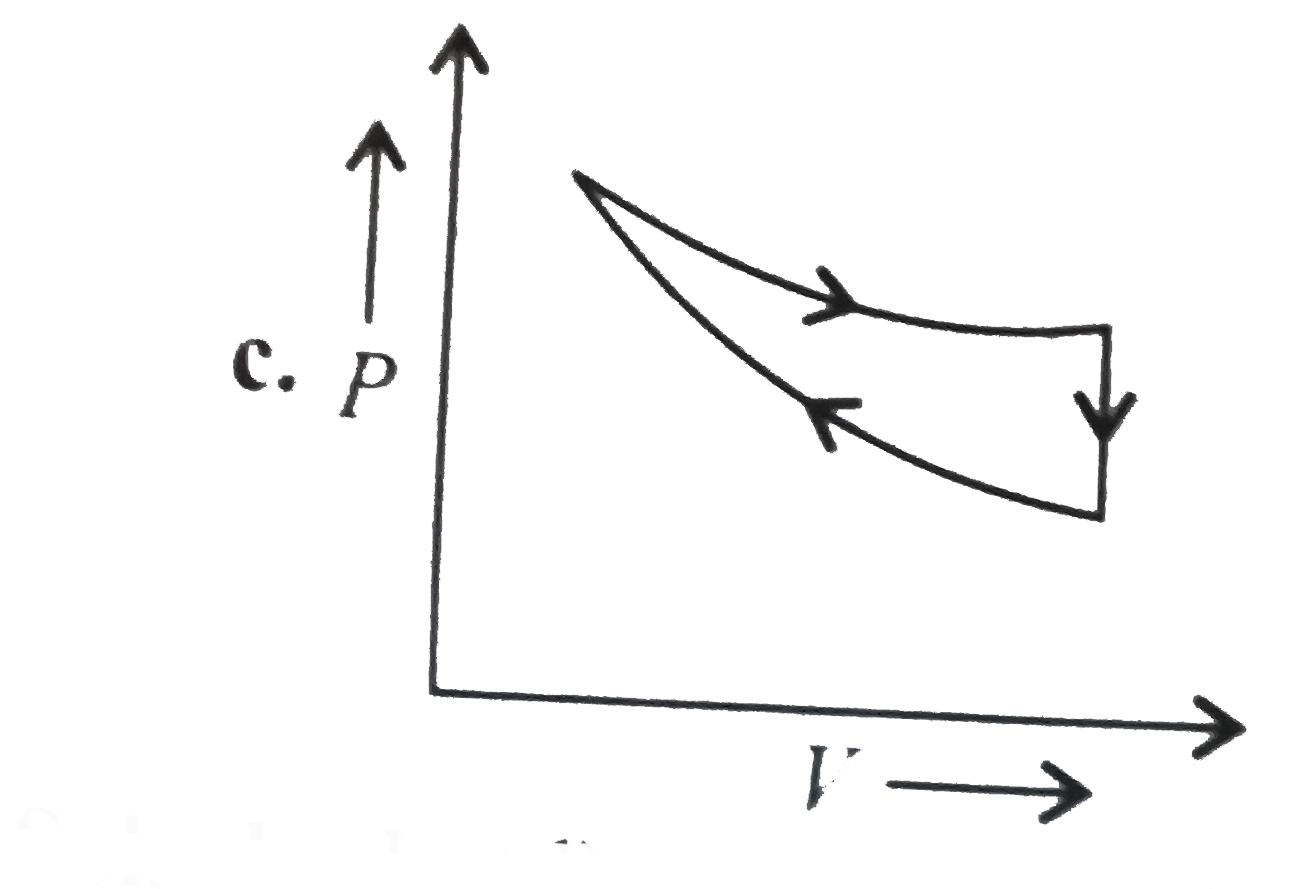
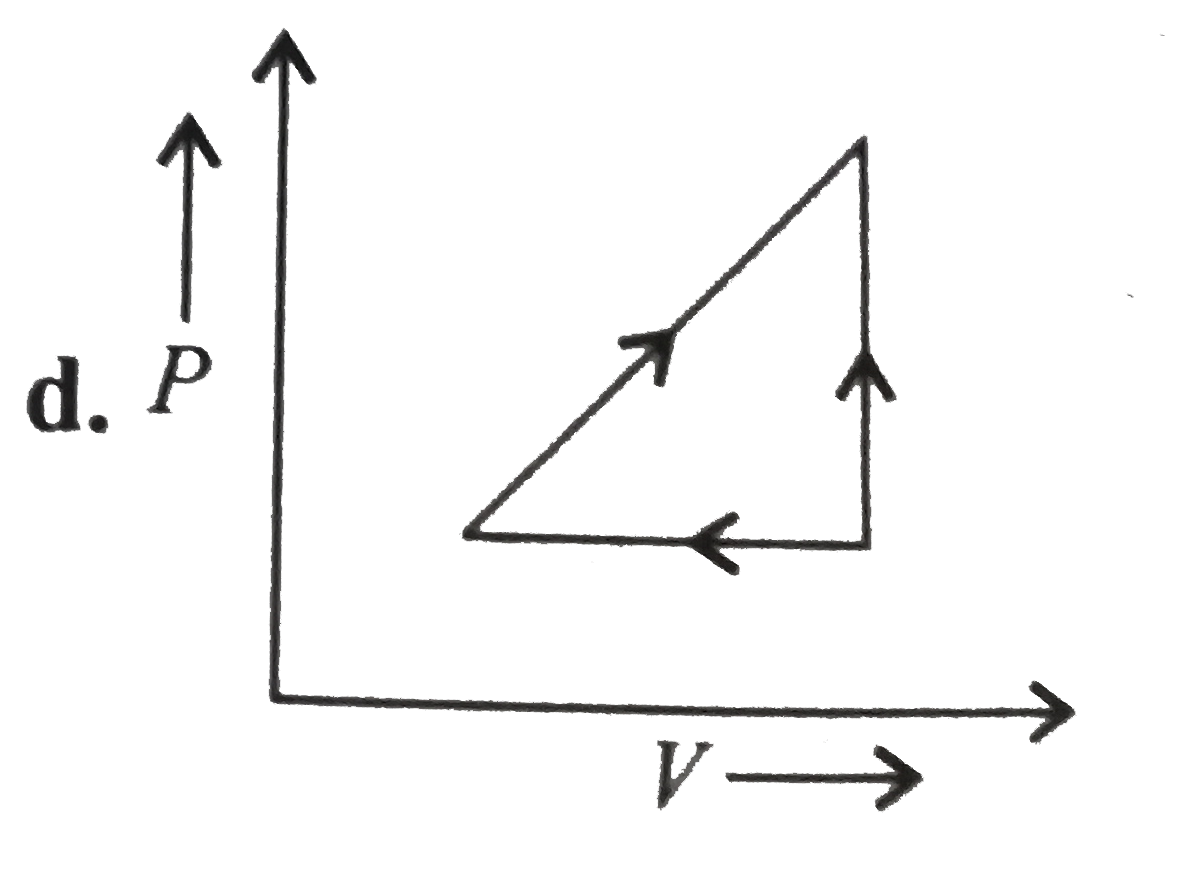
The following are the `P-V` diagram for cyclic process for a gas. In which of these processes, heat is not obsorbed by the gas?

A

B

C

D

Text Solution

AI Generated Solution

To solve the question regarding which of the given P-V diagrams for a cyclic process indicates that heat is not absorbed by the gas, we can analyze the characteristics of cyclic processes in thermodynamics. ### Step-by-Step Solution: 1. **Understanding Cyclic Processes**: In a cyclic process, the system (gas) returns to its initial state after completing a cycle. The net change in internal energy over one complete cycle is zero. 2. **Work Done in Cyclic Processes**: The work done by the gas during a cyclic process can be determined by the area enclosed by the P-V diagram. If the area is positive (the process moves in a clockwise direction), the gas does work on the surroundings, and heat is absorbed by the gas. ...
Promotional Banner

Topper's Solved these Questions

  • THERMODYNAMICS

    CENGAGE CHEMISTRY ENGLISH|Exercise Exercise|1 Videos
  • THERMODYNAMICS

    CENGAGE CHEMISTRY ENGLISH|Exercise Ex 6.1|26 Videos
  • STOICHIOMETRY

    CENGAGE CHEMISTRY ENGLISH|Exercise Archives Subjective|33 Videos

Similar Questions

Explore conceptually related problems

The following are the P-V diagrams for cyclic processes for a gas. In which of these processes is heat absorbed by the gas?

A sample of helium is undergoing a cyclic process ABCA as shown. In which of the following processes heat is a absorbed by the gas?

p-T curve for a cyclic process is as shown P-V graph for this process will be:

The specific heat of a gas in an isothermal process is

A cyclic process ABCA is shown in the V-T diagram process on the P-V

An ideal diatomic gas undergoes a thermodynamic process as shown in the P-V diagram. The process AB is isochoric while the process BC is isothermal. The total heat gein to the gas in the process is nearly (use ln 2=0.7 )

Two moles of an ideal monoatomic gas is taken through a cyclic process as shown in the P-T diagram. In the process BC, PT^(-2)= constant. Then the ratio of heat absorbed and heat released by the gas during the process AB and process BC respectively is.

A gas is taken through a cyclic process ABCA as shown in, if 2.4 cal of heat is given in the process, what is the value of J ?

A gas is taken through a cyclic process ABCA as shown in, if 2.4 cal of heat is given in the process, what is the value of J ?

Two moles of an ideal gas are undergone a cyclic process 1-2-3-1. If net heat exchange in the process is 300J, the work done by the gas in the process 2-3 is

CENGAGE CHEMISTRY ENGLISH-THERMODYNAMICS-Archives (Subjective)
  1. The following are the P-V diagram for cyclic process for a gas. In whi...

    Text Solution

    |

  2. The enthalpies for the following reactions (DeltaH^(Theta)) at 25^(@)C...

    Text Solution

    |

  3. The standared enthalpies of formation at 298K for C C1(g), H(2)O(g), C...

    Text Solution

    |

  4. Given that: i. C(s) + O(2)(g) rarr CO(2)(g) , DeltaH =- 94.05 kcal ...

    Text Solution

    |

  5. The following statement is true only under some specific conditions. W...

    Text Solution

    |

  6. The bond dissociation energies of gaseous H(2),Cl(2), and HCl are 100,...

    Text Solution

    |

  7. The standard molar heat of formation of ethane, carbon dioxide and wat...

    Text Solution

    |

  8. An intimate mixture of ferric oxide and aluminium is used as solid fue...

    Text Solution

    |

  9. The enthalpy of combustion of H(2), cyclohexene (C(6)H(10)) and cycloh...

    Text Solution

    |

  10. CsOH +HCI rarr CsCI +H(2)O, DeltaH =- 13.4 kcal mol^(-1)……….(i) CsOH...

    Text Solution

    |

  11. Determine enthalpy change for, C(3)H(8(g))+H(2(g))rarr C(2)H(6(g))+C...

    Text Solution

    |

  12. Compute the heat of formation of liquid methyl alcohol in kilojoule pe...

    Text Solution

    |

  13. From the following data, calculate the enthalpy change for the combust...

    Text Solution

    |

  14. The standard heat of formation values of SF(6)(g), S(g), and F(g) are ...

    Text Solution

    |

  15. Show that the reaction CO(g) +(1//2)O(2)(g) rarr CO(2)(g) at 300K ...

    Text Solution

    |

  16. A sample of argon gas at 1atm pressure and 27^(@)C expands reversibly ...

    Text Solution

    |

  17. Determine the enthalpy of formation of B(2)H(6)(g) in kJ/mol of the fo...

    Text Solution

    |

  18. The standart potential of the following cell is 0.23 at 15^(@)C and 0....

    Text Solution

    |

  19. When 1pentyne (A) is treated with 4N alcoholic KOH at 175^(@)C, it is ...

    Text Solution

    |

  20. Two moles of a perfect gas undergo the following processes: a. A rev...

    Text Solution

    |

  21. C(v) values of He is always (3R)/(2) but C(v) values of H(2) is (3R)/(...

    Text Solution

    |
