Home
Class 11
CHEMISTRY
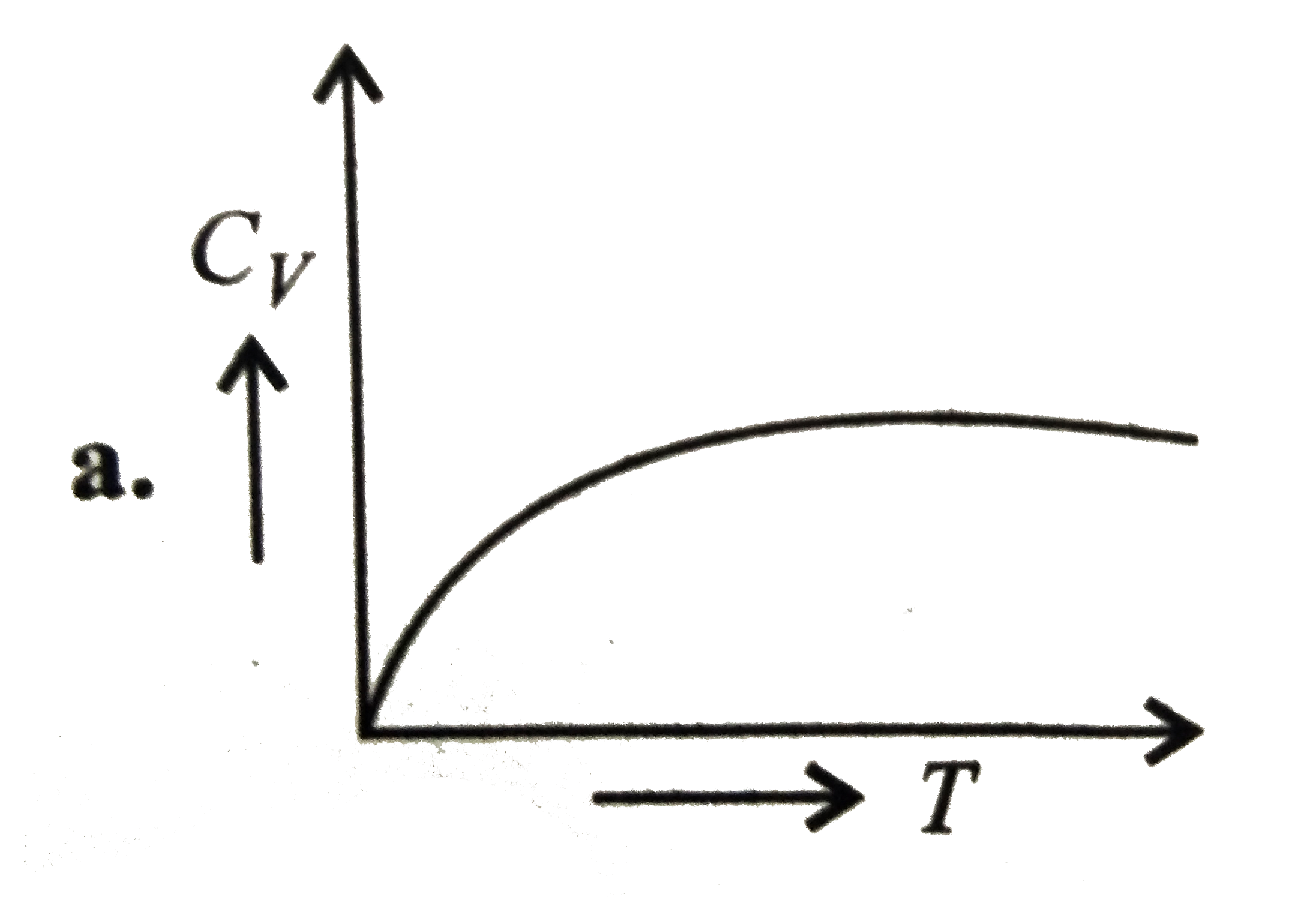
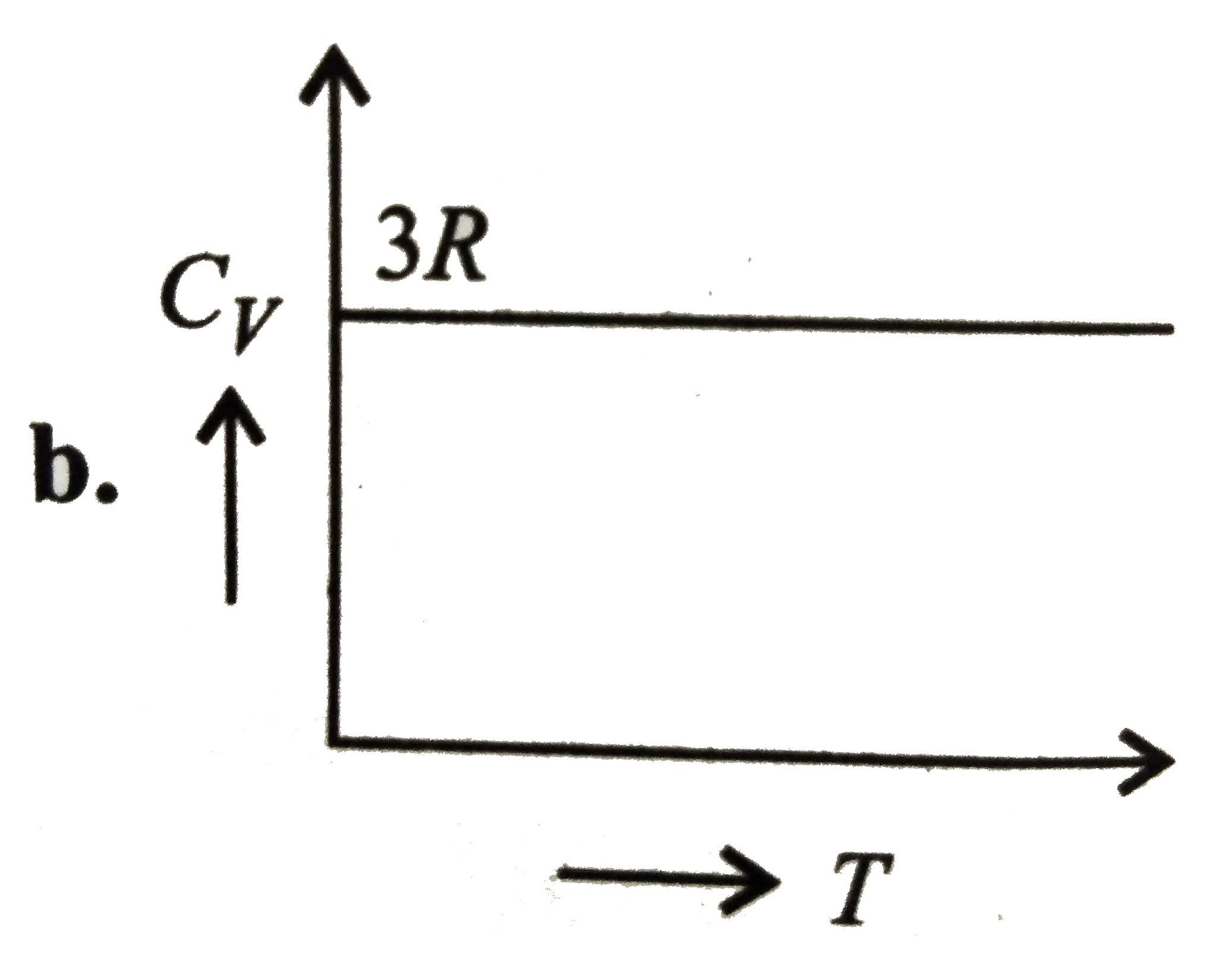
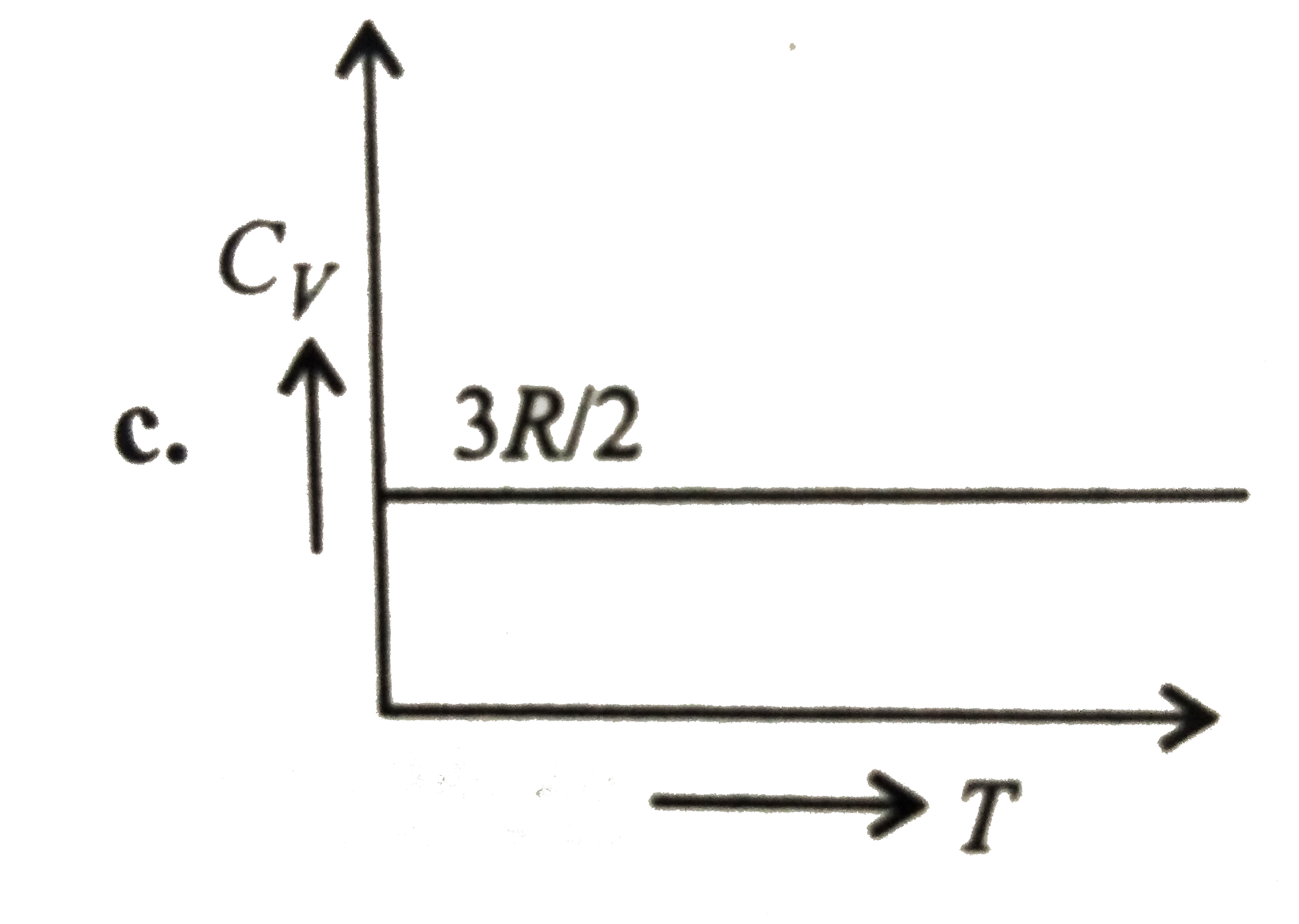
Graph for specific heat at constant volu...

Graph for specific heat at constant volume for a monoatomic gas

A

B

C

D

Text Solution

AI Generated Solution

To solve the question regarding the graph for specific heat at constant volume (Cv) for a monoatomic gas, we can follow these steps: ### Step-by-Step Solution: 1. **Understand the Concept of Specific Heat at Constant Volume (Cv):** - For a monoatomic ideal gas, the specific heat at constant volume (Cv) is defined as the amount of heat required to raise the temperature of the gas by one degree Celsius while keeping the volume constant. 2. **Know the Value of Cv for a Monoatomic Gas:** ...
Promotional Banner

Topper's Solved these Questions

  • THERMODYNAMICS

    CENGAGE CHEMISTRY ENGLISH|Exercise Exercise|1 Videos
  • THERMODYNAMICS

    CENGAGE CHEMISTRY ENGLISH|Exercise Ex 6.1|26 Videos
  • STOICHIOMETRY

    CENGAGE CHEMISTRY ENGLISH|Exercise Archives Subjective|33 Videos

Similar Questions

Explore conceptually related problems

If the molar specific heat at constant pressure for a polyatomic non-linear gas is x and the molar specific heat at constant volume for a diatomic gas is y, find the value of x//y .

The molar specific heat at constant volume, for a non linear triatomic gas is

Calculate the molar specific heat at constant volume of neon gas. (R=8.314J mol^(-1)K^(-1) )

One mole of monoatomic gas and one mole of diatomic gas are mixed together. What is the molar specific heat at constant volume for the mixture ?

The molar specific heat at constant volume of gas mixture is (13R)/(6) . The gas mixture consists of

The heat capacity at constant volume of a monoatomic gas is 35 j//K . Find (a) the number of moles (b) the internal energy at 0^@ C . (c ) the molar heat capacity at constant pressure.

The heat capacity at constant volume of a monoatomic gas is 35 j//K . Find (a) the number of moles (b) the internal energy at 0^@ C . (c ) the molar heat capacity at constant pressure.

A process in which work perfomed by an ideal gas is proportional to the corresponding increment of its internal energy is described as a polytropic process. If we represent work done by a ppolytropic process by W and increase in internal energy as Delta U then W prop Delta U or W=K_(1) DeltaU ...(i) For this process, it can be demonstrated that the relation between pressure and volume is given by the equation PV^( eta)= K_(2) (constant ) .....(ii) We know that a gas can have various values for molar specific heats. The molar specific heat 'C' for an ideal gas in polytropic process can be calculated with the help of first law of thermodynamics. In polytropic process process the variation of molar specific heat 'C' with eta for a monatomic gas is plotted as in the graph shown. For a monoatomic gas, the values of polytropic constant η for which value specific heat is negative.

Find the molar specific heat of the process p=a/T for a monoatomic gas, a being constant.

Supposing the distance between the atoms of a diatomic gas to be constant, its specific heat at constant volume per mole (gram mole) is

CENGAGE CHEMISTRY ENGLISH-THERMODYNAMICS-Archives (Subjective)
  1. Graph for specific heat at constant volume for a monoatomic gas

    Text Solution

    |

  2. The enthalpies for the following reactions (DeltaH^(Theta)) at 25^(@)C...

    Text Solution

    |

  3. The standared enthalpies of formation at 298K for C C1(g), H(2)O(g), C...

    Text Solution

    |

  4. Given that: i. C(s) + O(2)(g) rarr CO(2)(g) , DeltaH =- 94.05 kcal ...

    Text Solution

    |

  5. The following statement is true only under some specific conditions. W...

    Text Solution

    |

  6. The bond dissociation energies of gaseous H(2),Cl(2), and HCl are 100,...

    Text Solution

    |

  7. The standard molar heat of formation of ethane, carbon dioxide and wat...

    Text Solution

    |

  8. An intimate mixture of ferric oxide and aluminium is used as solid fue...

    Text Solution

    |

  9. The enthalpy of combustion of H(2), cyclohexene (C(6)H(10)) and cycloh...

    Text Solution

    |

  10. CsOH +HCI rarr CsCI +H(2)O, DeltaH =- 13.4 kcal mol^(-1)……….(i) CsOH...

    Text Solution

    |

  11. Determine enthalpy change for, C(3)H(8(g))+H(2(g))rarr C(2)H(6(g))+C...

    Text Solution

    |

  12. Compute the heat of formation of liquid methyl alcohol in kilojoule pe...

    Text Solution

    |

  13. From the following data, calculate the enthalpy change for the combust...

    Text Solution

    |

  14. The standard heat of formation values of SF(6)(g), S(g), and F(g) are ...

    Text Solution

    |

  15. Show that the reaction CO(g) +(1//2)O(2)(g) rarr CO(2)(g) at 300K ...

    Text Solution

    |

  16. A sample of argon gas at 1atm pressure and 27^(@)C expands reversibly ...

    Text Solution

    |

  17. Determine the enthalpy of formation of B(2)H(6)(g) in kJ/mol of the fo...

    Text Solution

    |

  18. The standart potential of the following cell is 0.23 at 15^(@)C and 0....

    Text Solution

    |

  19. When 1pentyne (A) is treated with 4N alcoholic KOH at 175^(@)C, it is ...

    Text Solution

    |

  20. Two moles of a perfect gas undergo the following processes: a. A rev...

    Text Solution

    |

  21. C(v) values of He is always (3R)/(2) but C(v) values of H(2) is (3R)/(...

    Text Solution

    |
