Home
Class 11
CHEMISTRY
Which of the following statements are co...

Which of the following statements are correct ?

A

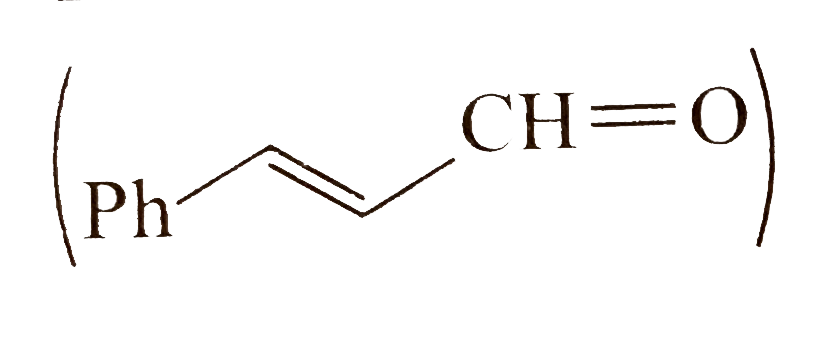
The nucleophilic addition of `HCN` to (I) results in major addition to `(C = O)`.

B

The nucleophilic addition of `HCN` to `(I)` results in major addition `(C = C)`

C

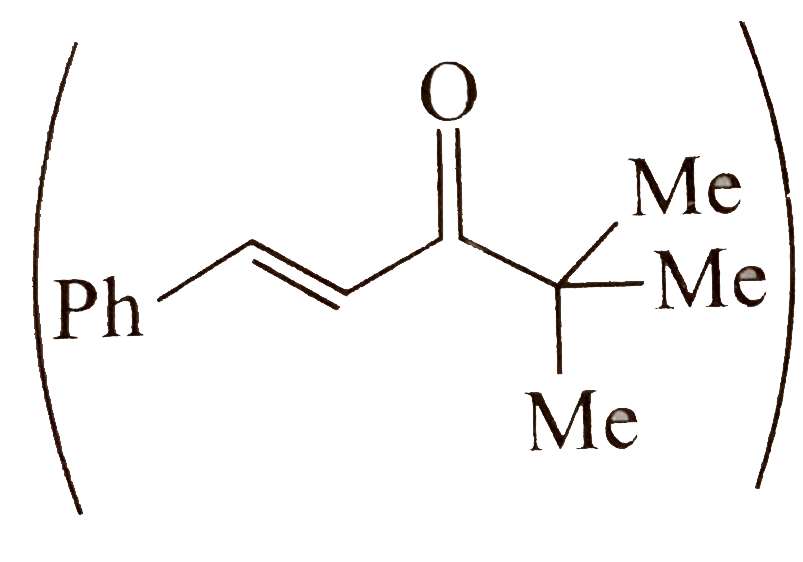
The nucleophilic addition of `PhMgCl` to (II) results of 1,4-addition.

D

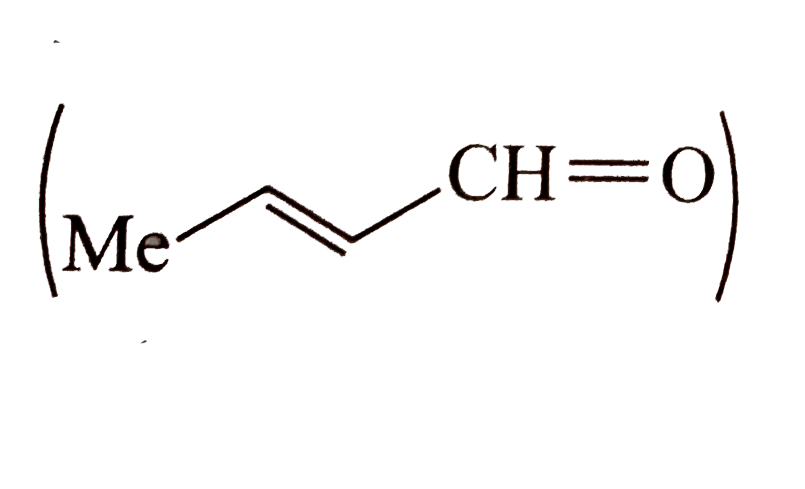
The nucleophilic addition of `PhMgCl` to (III) results in addition to `(C = C)`.

Text Solution

AI Generated Solution

The correct Answer is:

To determine which statements regarding the nucleophilic addition to alpha-beta unsaturated carbonyl compounds are correct, we need to analyze the mechanisms involved in these reactions. Here’s a step-by-step breakdown of the reasoning: ### Step 1: Understanding the Structure - **Identify the compound**: An alpha-beta unsaturated carbonyl compound has a carbonyl group (C=O) and a double bond (C=C) between the alpha and beta carbons. - **Recognize the sites of nucleophilic attack**: The nucleophile can attack either the beta carbon (C=C) or the carbonyl carbon (C=O). ### Step 2: Analyzing Nucleophilic Attack - **Case 1 - Attack on Carbonyl Carbon**: If the nucleophile attacks the carbonyl carbon, it leads to the formation of an intermediate that can undergo tautomerism, resulting in a product that is typically less stable. - **Case 2 - Attack on Beta Carbon**: If the nucleophile attacks the beta carbon, it leads to a 1,4 addition product, which is generally more stable due to the formation of a new C-C bond. ### Step 3: Evaluating Bond Strength - **Bond Strength Considerations**: The carbon-carbon double bond (C=C) is weaker than the carbon-oxygen double bond (C=O). Therefore, it is easier for the nucleophile to attack the beta carbon than the carbonyl carbon. - **Conclusion on Major Product**: The 1,4 addition (attack on the beta carbon) is favored due to the weaker bond and the stability of the resulting product. ### Step 4: Analyzing the Statements - **Statement A**: "In the nucleophilic addition of HCN to this compound, the major addition is to the CO bond." - **Evaluation**: This is false. The major addition occurs at the C=C bond. - **Statement B**: "The nucleophilic addition of HCN to the first compound results in the major addition to the C-C double bond." - **Evaluation**: This is correct. The major product is formed from the attack on the beta carbon. - **Statement C**: "The nucleophilic addition of phenyl magnesium chloride (PhMgCl) results in the 1,4 addition." - **Evaluation**: This is correct. PhMgCl acts as a nucleophile and will favor 1,4 addition due to the reasons discussed. - **Statement D**: "The nucleophilic addition of PhMgCl results in the addition to the C-C bond." - **Evaluation**: This is also correct. Due to steric hindrance and bond strength, PhMgCl will predominantly add to the beta carbon. ### Final Conclusion - **Correct Statements**: B, C, and D are correct. - **Incorrect Statement**: A is incorrect.

To determine which statements regarding the nucleophilic addition to alpha-beta unsaturated carbonyl compounds are correct, we need to analyze the mechanisms involved in these reactions. Here’s a step-by-step breakdown of the reasoning: ### Step 1: Understanding the Structure - **Identify the compound**: An alpha-beta unsaturated carbonyl compound has a carbonyl group (C=O) and a double bond (C=C) between the alpha and beta carbons. - **Recognize the sites of nucleophilic attack**: The nucleophile can attack either the beta carbon (C=C) or the carbonyl carbon (C=O). ### Step 2: Analyzing Nucleophilic Attack - **Case 1 - Attack on Carbonyl Carbon**: If the nucleophile attacks the carbonyl carbon, it leads to the formation of an intermediate that can undergo tautomerism, resulting in a product that is typically less stable. ...
Promotional Banner

Topper's Solved these Questions

  • ORGANIC REACTION MECHANISM

    CENGAGE CHEMISTRY ENGLISH|Exercise Single correct|43 Videos
  • ORGANIC REACTION MECHANISM

    CENGAGE CHEMISTRY ENGLISH|Exercise Assertion-Reasoning|12 Videos
  • ORGANIC REACTION MECHANISM

    CENGAGE CHEMISTRY ENGLISH|Exercise Comprehension|35 Videos
  • NCERT BASED EXERCISE

    CENGAGE CHEMISTRY ENGLISH|Exercise Chemical Equilibrium|73 Videos
  • P-BLOCK GROUP 13 - BORON FAMILY

    CENGAGE CHEMISTRY ENGLISH|Exercise Exercise Archives (Subjecive)|9 Videos

Similar Questions

Explore conceptually related problems

Which of the following statement are correct?

Which of the following statement are correct

Which of the following statements is correct:

Which of the following statements is correct ?

Which of the following statements is correct?

Which of the following statements is correct?

Which of the following statements is correct?

CENGAGE CHEMISTRY ENGLISH-ORGANIC REACTION MECHANISM-Multiple Correct
  1. Which of the following reactions are feasible ?

    Text Solution

    |

  2. Which of the following transformations are feasible ?

    Text Solution

    |

  3. In which of the following reactions, the intermediate species acyl nit...

    Text Solution

    |

  4. Which of the following statements are correct ?

    Text Solution

    |

  5. Which of the following is//are the rate determining step (s) of the gi...

    Text Solution

    |

  6. The products in the given reaction are : .

    Text Solution

    |

  7. Which of the following statements are correct about the addition of HB...

    Text Solution

    |

  8. Which of the following statements are correct ?

    Text Solution

    |

  9. In which of the following reactions, rearrangement is possible ?

    Text Solution

    |

  10. Which of the following is an example of nucleophilic addition to aceta...

    Text Solution

    |

  11. In which of the reactions, there is a migration of alkyl group to carb...

    Text Solution

    |

  12. Which of the following statements are correct ?

    Text Solution

    |

  13. Which of the following statements/reactions are correct ?

    Text Solution

    |

  14. Which of the following statements is//are correct ?

    Text Solution

    |

  15. Consider the following reactions : (I) Me - underset ((A)) -= - Me o...

    Text Solution

    |

  16. Consider the following reactions : Which of the following stateme...

    Text Solution

    |

  17. Consider the following reactions : Which of the following stateme...

    Text Solution

    |

  18. Which of the following statements/reactions are correct ?

    Text Solution

    |

  19. Consider the following compounds Which of the following statements are...

    Text Solution

    |

  20. Which of the following reactions are both stereospecific and regiosele...

    Text Solution

    |