Home
Class 12
CHEMISTRY
Explain: a. alpha-Halocarbonyl compoun...

Explain:
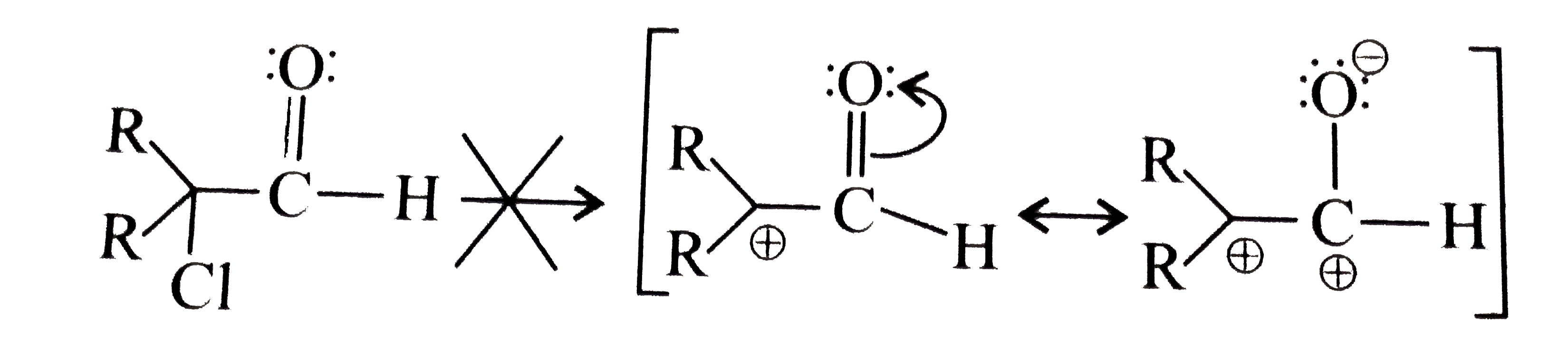
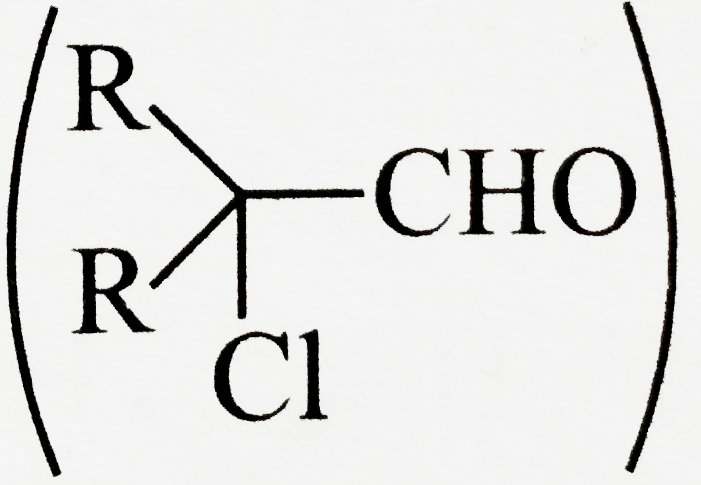
a. `alpha`-Halocarbonyl compounds, even the `3^(@)` types like , do not undergo `SN^(1)` reaction.
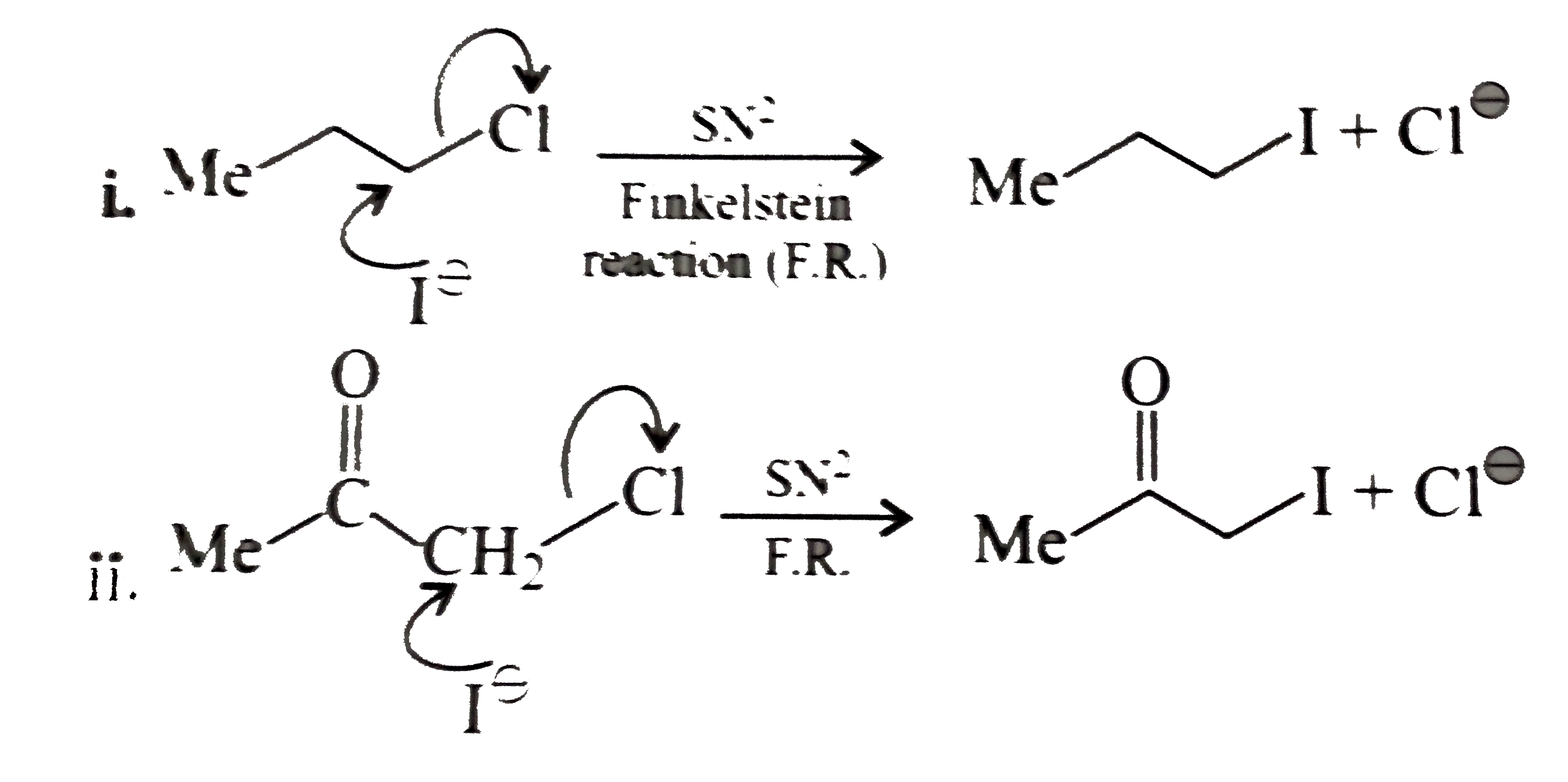
b. Which is more reactive: (i) PrCI or (ii) `MeCOCH_(2)CI` with NaI/acetone ?
c. Acetals and ketals are regenerated back to carbonyl. compounds with `H_(3)O^(o+)` but not with `overset(Θ)(OH)`.
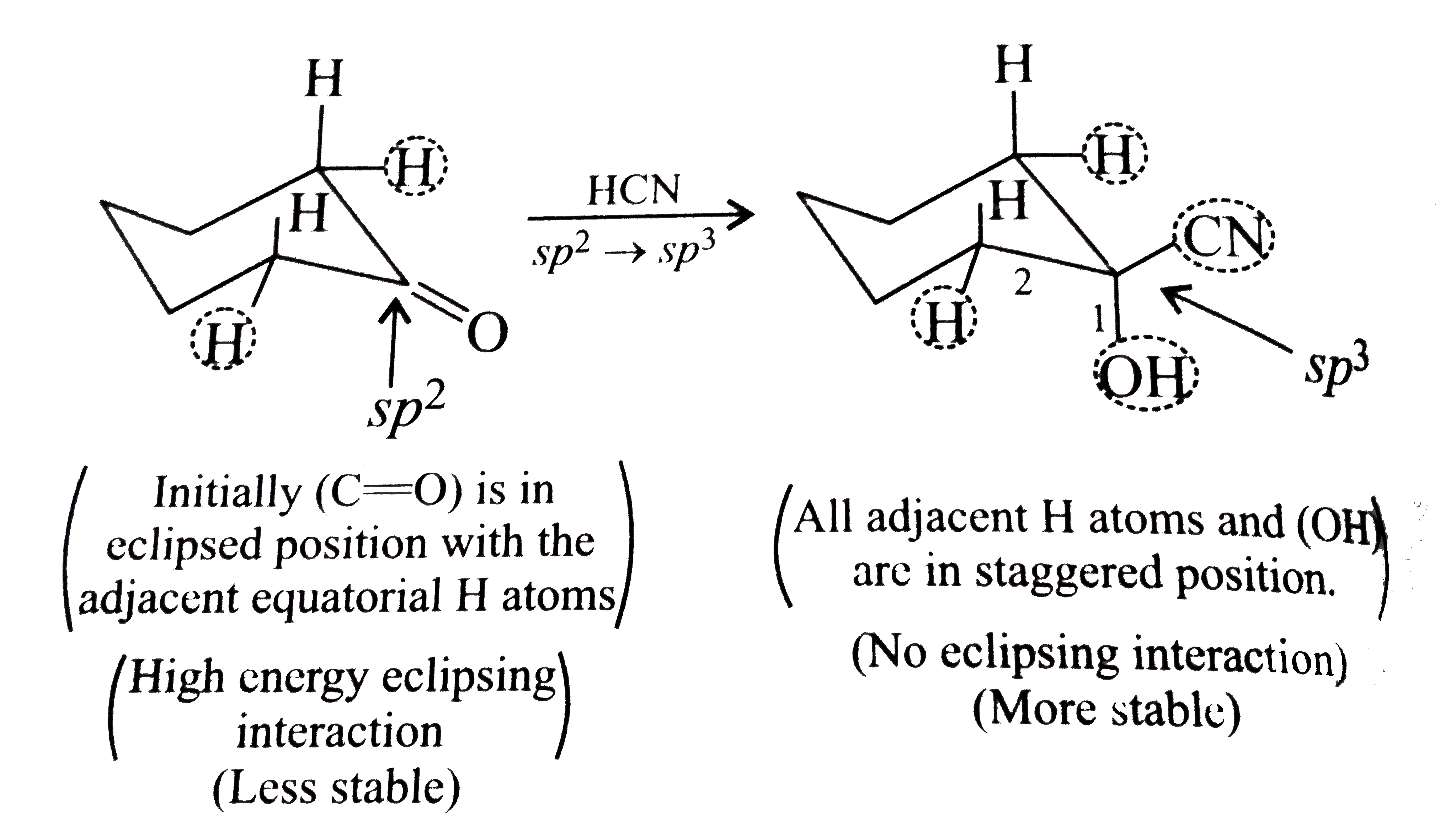
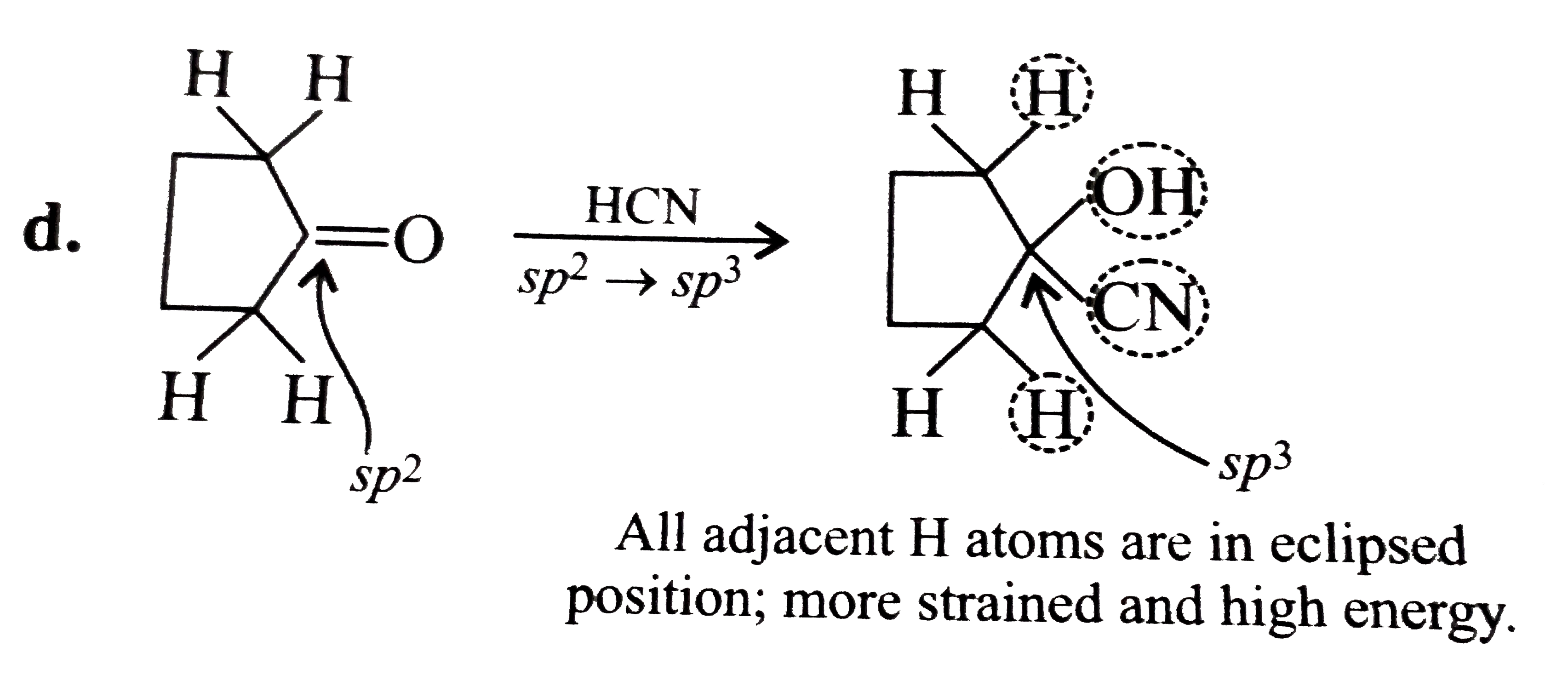
d. Cyclohexane is more reactive than cyclopenatone with HCN.

Text Solution

Verified by Experts
a. In the first step of `SN^(1)` reaction, a carbocation is formed. The carbocation formed is unstable is due to the presence of positive charges on adjacent C atoms.

b. Both are `1^(@)` and undergo `SN^(2)` reaction.
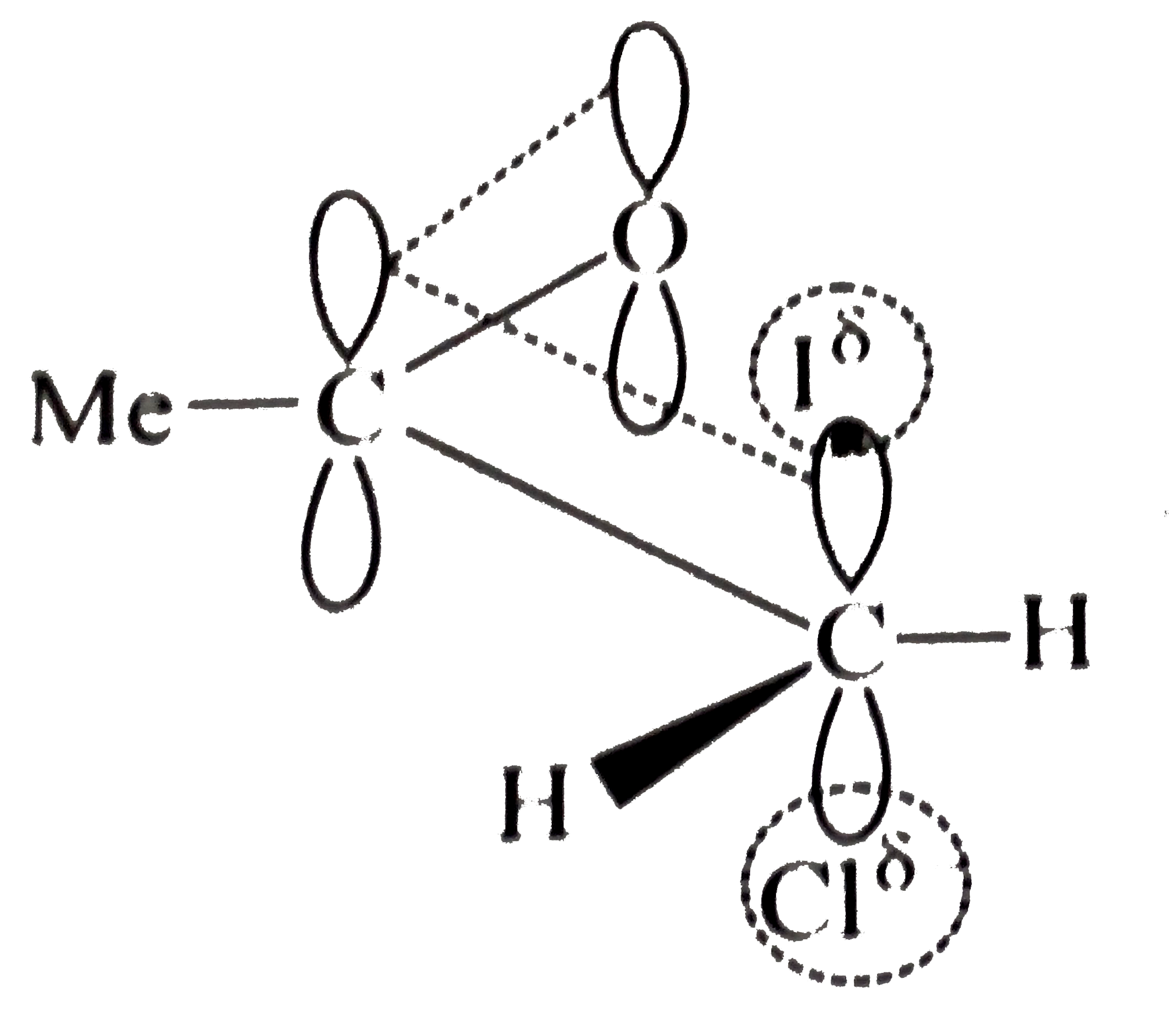
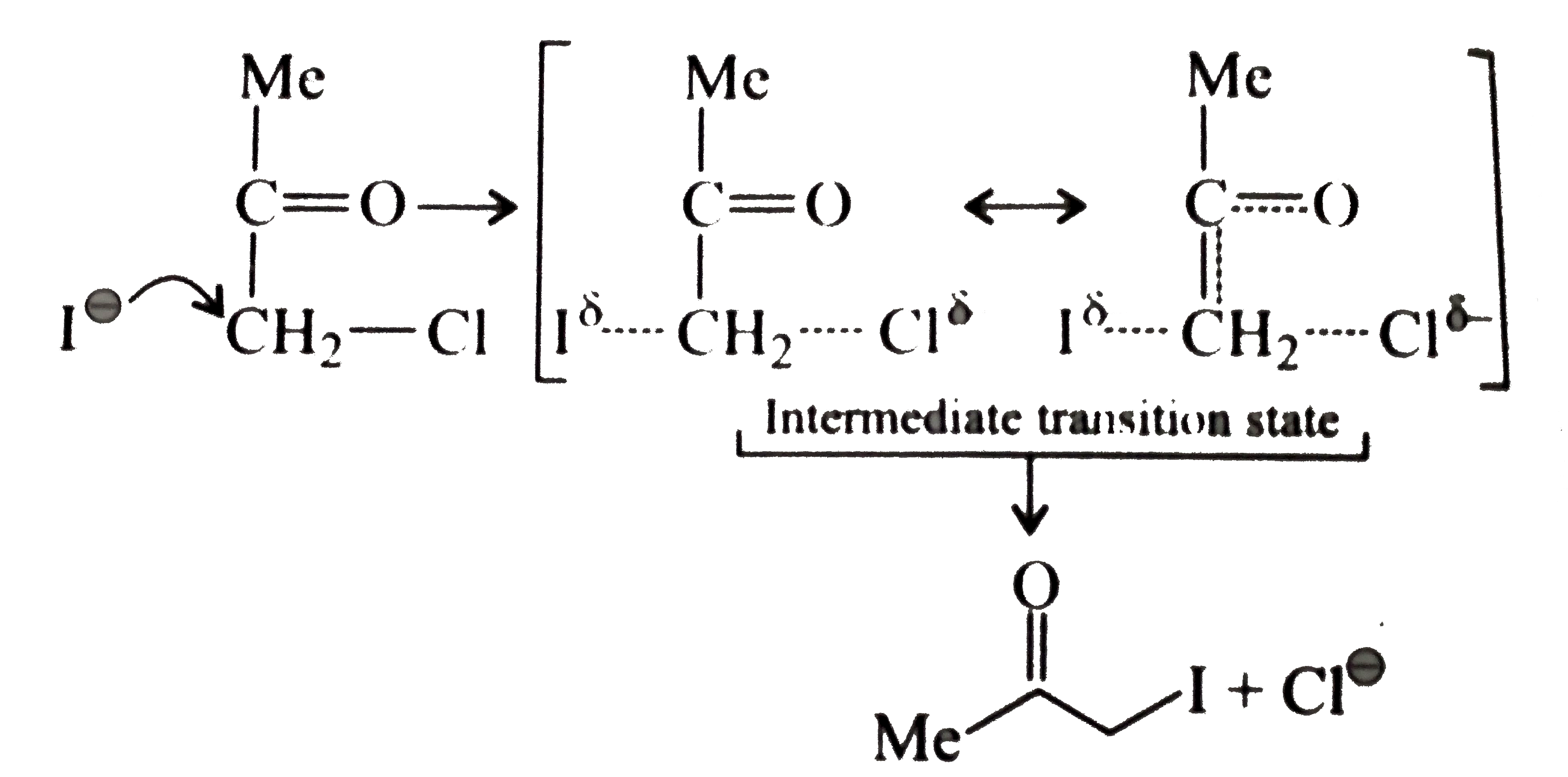
Reactivity of (ii) gtgt (i). The high reactivity of (ii) in `SN^(2)` reaction is due to the stabilising effect produced in the transition state of ketone by the overlap of adjacent `pi`-bond with the p-orbital of the `sp^(2)`-hybridised C atom. This type of overlap is also responsible for the high reactivity of allyl halides in `SN^(2)` reaction.
i.
ii.

c. The formation of hemiacetal or half hydrate takes place in acid only. Its not possible in base because a weaker base `(overset(Θ)(OH))` cannot displace stronger base `(RO^(Θ))`. But the formation of acetal form hemiacetal can take place by both acid and base. So reverse process of hemiacetal to `(C=O)` compound can occur only with acid but not with base.
d.
i. In cyclopentanone, the hybridisation of C atom of `(C=O)` group change form `sp^(2)rarr sp^(3)`, which increases the strain due to eclipsing interaction.
ii. In cyclohexane, the hybridisation of C atom of `(C=O)` group changes form `sp^(2)rarr sp^(3)`, but destabilisation effect is lost as there is no eclipsing interaction.
`|{:(,"Five-membered ring","Six-membered ring"),(i.,"Reaction in which hybridisation changes from" sp^(2) rarr sp^(3) "are unfavorable","Reaction in which hybridisation changes from" sp^(2) rarr sp^(3) "are favourable"),(ii.,"Reaction in which hybridisation changes from" sp^(3) rarr sp^(2) "are favourable","Reaction in which hybridisation changes from" sp^(3)rarr sp^(2) "are unfavourable" ):}|`
Promotional Banner

Topper's Solved these Questions

  • ALIPHATIC AND AROMATIC ALDEHYDES AND KETONES

    CENGAGE CHEMISTRY ENGLISH|Exercise Exercises Subjective|52 Videos
  • ALIPHATIC AND AROMATIC ALDEHYDES AND KETONES

    CENGAGE CHEMISTRY ENGLISH|Exercise Exercises Concept Application|20 Videos
  • ALIPHATIC AND AROMATIC ALDEHYDES AND KETONES

    CENGAGE CHEMISTRY ENGLISH|Exercise Archives Subjective|26 Videos
  • ALCOHOL,PHENOL AND ETHERS

    CENGAGE CHEMISTRY ENGLISH|Exercise Archives Analytical And Descriptive|15 Videos
  • APPENDIX INORGANIC VOLUME 2

    CENGAGE CHEMISTRY ENGLISH|Exercise Short Answer Type|179 Videos

Similar Questions

Explore conceptually related problems

Write structural formulae and IUPAC names of carbonyl compounds with molecular formula C_(3)H_(6)O . Which out of these will be more reactive towards nucleophilic additions?

Statement-1: Ethyne is more reactive than ethene towards hydrogenation Statement-2: H_(2) in presence of Lindlar catalyst is more reactive than H_(2) with Pd in hydrogenation reaction Statement-3: Dipole moment of o-xylene is greater than m-xylene

Which of the compound in each of the following pairs will react faster in SN^2 reaction with overset (Ө) O H (A) MeBr (I) and MeI (II) (B) Me_3 C - Cl (III) and MeCl (IV) .

Which is more reactive in each pair towards S_(N) reaction ? (A) CH_(3)overset(O)overset(||)C Cl or CH_(3)Cl (B) (C) CH_(3)overset(O)overset(||)Cooverset(O)overset(||)C CH_(3) or CH_(3)OCH_(3)

beta- Elimination or anti-eliminination reaction is carried out with base (B^(o-)) as shown below: The following bases are used. I. overset(o-)(O)H II. RO^(o-) III. RCOO^(o-) , IV. overset(o-)(C)N V. NO_(3)^(o-) The decreasing order of reactivity for the above elimination is: