


Home
Class 12
CHEMISTRY
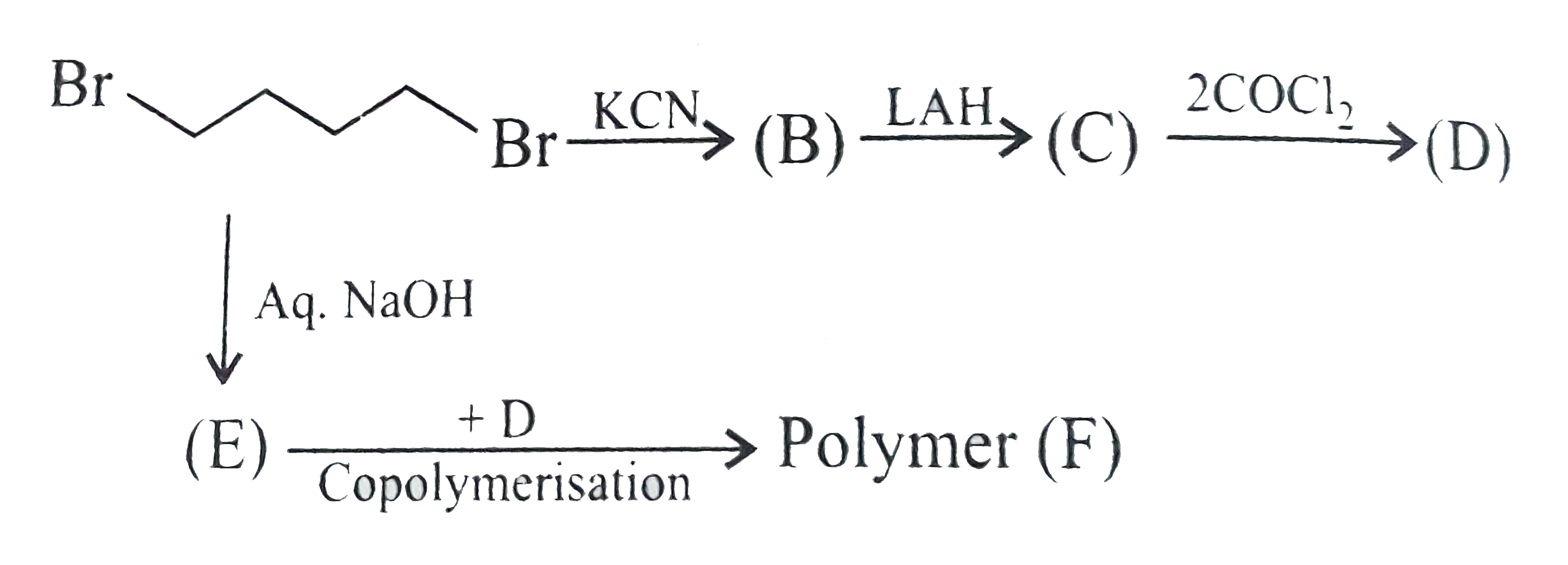
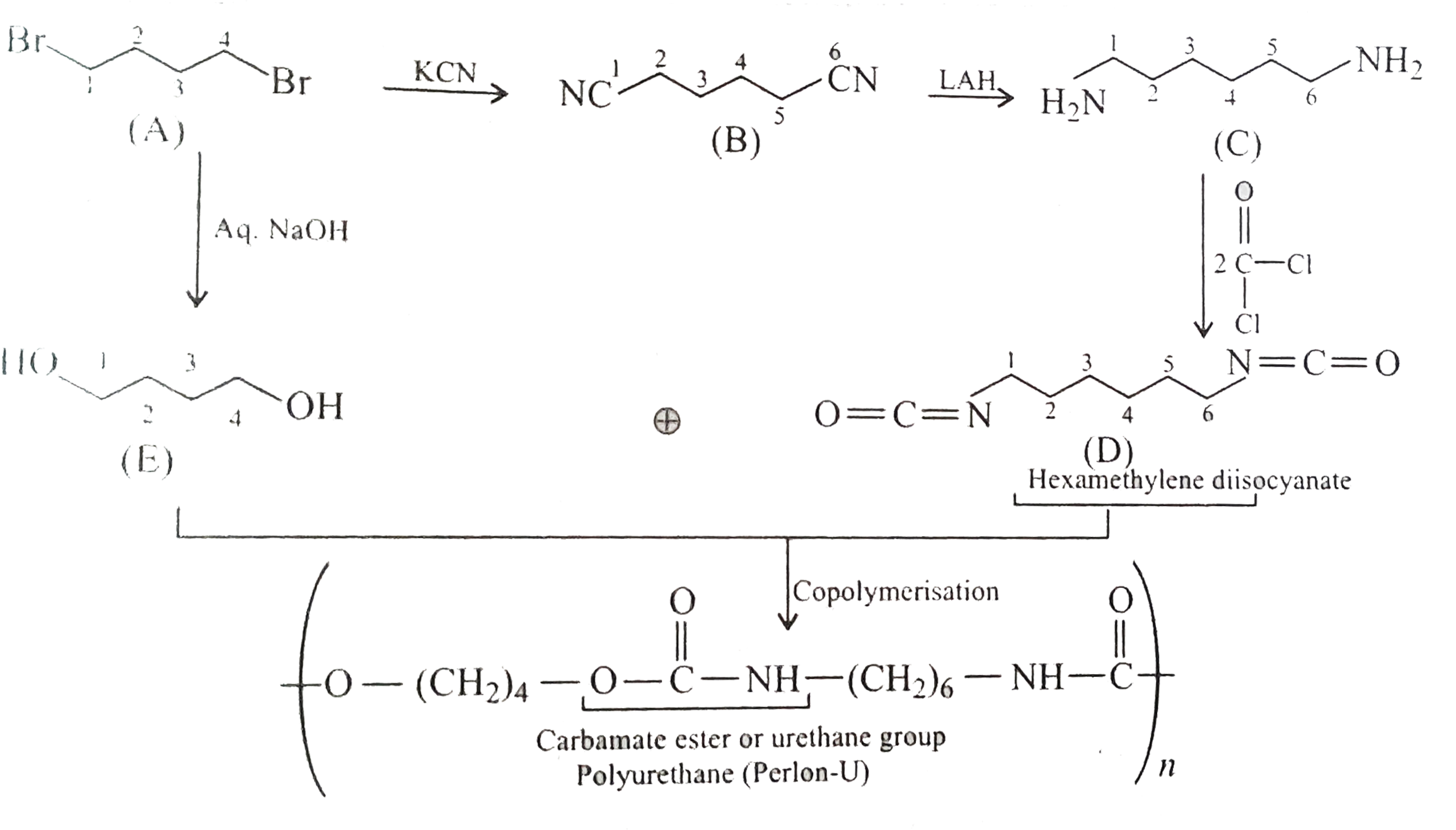
Compound (E)is:...


Compound (E)is:

A

B

`Me- -= - Me`

C

D

Text Solution

Verified by Experts

The correct Answer is:
C

Promotional Banner

Topper's Solved these Questions

  • SYNTHETIC AND NATURAL POLYMERS

    CENGAGE CHEMISTRY ENGLISH|Exercise Exercises Multiple Correct|28 Videos
  • SYNTHETIC AND NATURAL POLYMERS

    CENGAGE CHEMISTRY ENGLISH|Exercise Exercises Single Correct|94 Videos
  • SYNTHETIC AND NATURAL POLYMERS

    CENGAGE CHEMISTRY ENGLISH|Exercise Exercises Concept Application|20 Videos
  • SURFACE CHEMISTRY

    CENGAGE CHEMISTRY ENGLISH|Exercise Archives Subjective|2 Videos

Similar Questions

Explore conceptually related problems

Identify (A) to ( E) . (a) An inorganic iodide (A) on heating with a solution of KOH gives a gas (B) and the solution of a compound ( C) . (b) The gas (B) on ignition air gives a compound (D) and water. ( C) Copper sulphate is reduced to the metal on passing (B) through the solution. (d) A precipitate of the compound ( E) is formed on reaction of ( C) with copper sulphate solution.

(i)A black coloured compound (B) is formed on passing H_(2)S through the solution of a compound (A) in NH_(4)OH (ii) (B) on treatment with HCl and potassium chlorate or aquaregia gives (A) (iii) (A) on treatment with KCN gives a buff/reddish-brown coloured precipitate which dissolves in excess of this reagent forming a compound ( C) . (iv)The compound ( C) is changed into a compound (D) when its aqueous solution is boiled in air. (v)The solution of (A) was treated with excess of NaHCO_(3) & then with bromine water. On cooling & shaking for some time, a green colour of compound (E) is formed.No change is observed on heating. Identify (A) to (E) and give chemical equations.

(i) An aqueous solution of a compound (A) is acidic towards litmus and (A) sublimes at about 300^(@)C . (ii) (A) on treatment with an excess of NH_(4)SCN gives a red coloured compound (B) and on treatment with a solution of K_(4)[Fe(CN)_(6)] gives a blue coloured compound (C). (iii) (A) on heating with excess of K_(2)Cr_(2)O_(7) in the presence of concentrated H_(2)SO_(4) evolves deep red vapours of (D). (iv) On passing the vapour of (D) into a solution of NaOH and then adding the solution of acetic acid and lead acetate, a yellow precipitate of compound (E) is obtained. Identify (A) to (E) and give chemical equations for the reactions.

(i) An aqueous solution of a compound (A) is acidic towards litmus and (A) sublimes at about 300^(@)C . (ii) (A) on treatment with an excess of NH_(4)SCN gives a red coloured compound (B) and on treatment with a solution of K_(4)[Fe(CN)_(6)] gives a blue coloured compound (C). (iii) (A) on heating with excess of K_(2)Cr_(2)O_(7) in the presence of concentrated H_(2)SO_(4) evolves deep red vapours of (D). (iv) On passing the vapour of (D) into a solution of NaOH and then adding the solution of acetic acid and lead acetate, a yellow precipitate of compound (E) is obtained. Identify (A) to (E) and give chemical equations for the reactions.

Four isomeric optically active compounds overset (NaHCO_3) rarr CO_2 (g) (A, B , C, D) (C_4 H_8 O_3) Compound (A) overset (LAH) rarr ( E) (Archiral compound) Compound (B) overset (KMnO_4) underset (or CrO_3) rarr Inert to oxidation. Compound ( C) underset (NaOI//H_3 O^(oplus)) rarr CHI_3 (Yellow ppt.) + Compound (F) . Compound (B) is :

Cyclohexene on ozonolysis followed by reaction with zinc dust and water gives compound E. Compound E on further treatment with aqueous KOH yields compound F. Compound F is

The compound C_8H_9Cl(A) on treatments with KCN followed by hydrolysis gives C_9H_10O_2(B) .Ammonium salt of B on dry distillation yields C.Which reacts with alkaline solution of bromine to gives C_8H_11N .(D)Another compound E is obtained by the action of nitrous acid on D. E on oxidation gives F which gives the inner anhydride G on heating. The Compound A is :

