
Home
Class 11
CHEMISTRY
Which of the following statements is // ...

Which of the following statements is `//` are wrong ?

A

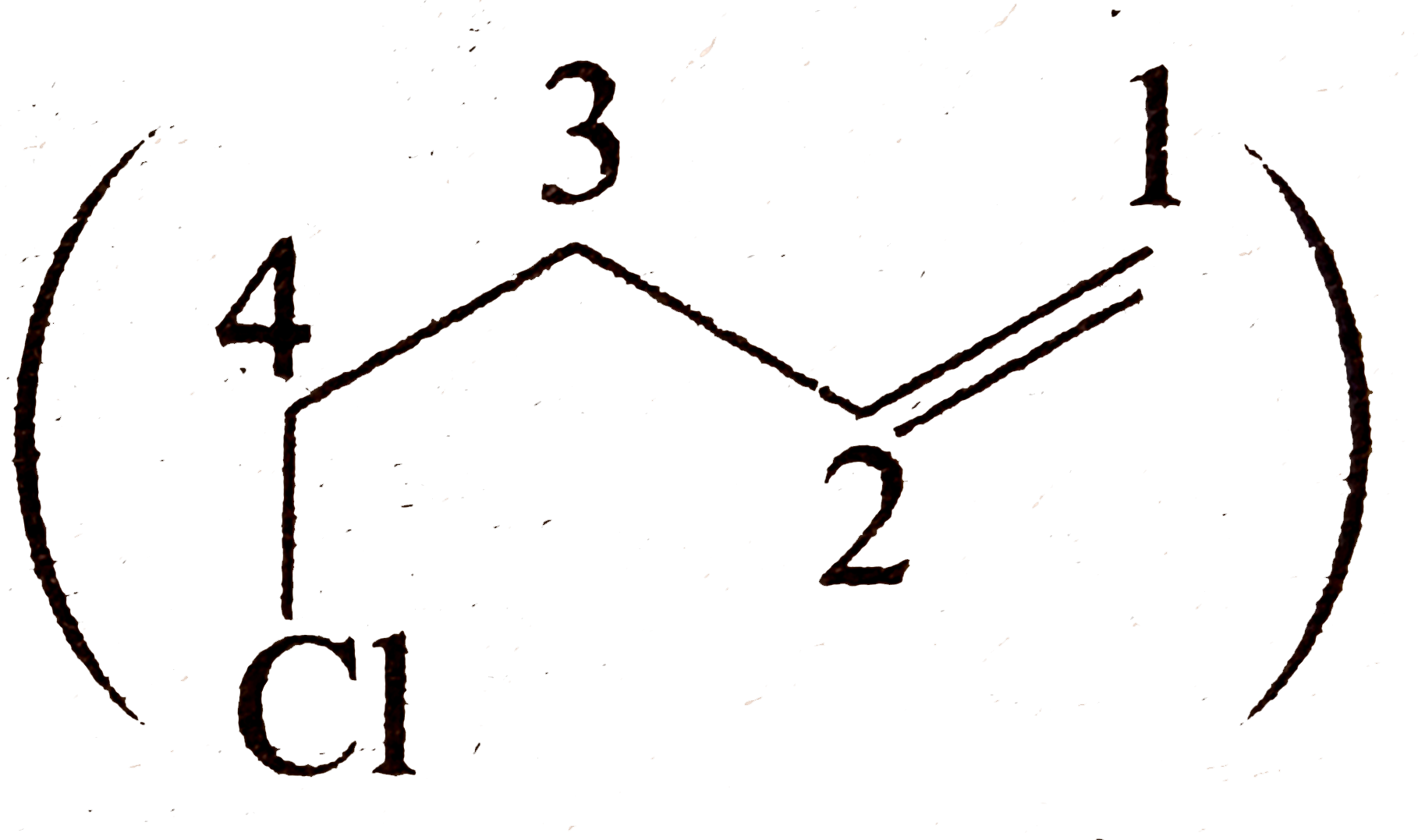
Butyl chloride `(I)` undergoes elimination reaction faster than `4-` chloro`-` but`-1-`ene `(II)`
B

`(I)` gives but`-1-`ene `(III)` on elimination with alc. `NaOH` while `(II)` gives buta `-1,3-`diene `(IV)`.

C

The product `(IV)(` a congregated diene `)` is more stable than the product `(III)`, a monosubstituted alkene.

D

The transition states `(T.S.)` leading the products determing the relative stabilities of the product. Since the `T.S.` leading to buta `-1,3-`diene has lower `Delta G_("activation")` (free energy of the activation), so the elimination reaction of `(I)` will occur more rapidly.

Text Solution

AI Generated Solution

The correct Answer is:

To determine which statements are wrong regarding the elimination reactions of butyl chloride and four chloro-1-butene, we will analyze each statement step by step. ### Step 1: Analyze Statement A **Statement A**: Butyl chloride undergoes elimination reaction faster than four chloro-1-butene. - **Analysis**: - Butyl chloride (1-chlorobutane) undergoes elimination to form butene. - Four chloro-1-butene undergoes elimination to form butadiene (1,3-butadiene). - The product butadiene is more stable than butene due to its conjugated diene structure. - Reactions that yield more stable products tend to occur faster. - **Conclusion**: This statement is **false** because butyl chloride does not undergo elimination faster than four chloro-1-butene. ### Step 2: Analyze Statement B **Statement B**: The first gives butene on elimination with alcoholic NaOH while the second gives 1,3-diene. - **Analysis**: - Butyl chloride does indeed yield butene upon elimination. - Four chloro-1-butene yields 1,3-butadiene upon elimination. - **Conclusion**: This statement is **true**. ### Step 3: Analyze Statement C **Statement C**: The product of a conjugated diene is more stable than that of a mono-substituted alkene. - **Analysis**: - Conjugated dienes (like 1,3-butadiene) are generally more stable than mono-substituted alkenes due to resonance stabilization. - **Conclusion**: This statement is **true**. ### Step 4: Analyze Statement D **Statement D**: The transition state leading to the product determines the relative stability of the product. Since the transition state leading to beta 1,3-diene has lower delta G activation, the elimination reaction of the first will occur more rapidly. - **Analysis**: - The transition state does influence the rate of the reaction, but the statement incorrectly claims that the transition state leading to the conjugated diene (1,3-butadiene) has lower activation energy than that of butene. - In fact, the elimination reaction leading to the more stable product (1,3-butadiene) occurs more rapidly, contradicting the statement's conclusion. - **Conclusion**: This statement is **false**. ### Final Conclusion The wrong statements are **A** and **D**.

To determine which statements are wrong regarding the elimination reactions of butyl chloride and four chloro-1-butene, we will analyze each statement step by step. ### Step 1: Analyze Statement A **Statement A**: Butyl chloride undergoes elimination reaction faster than four chloro-1-butene. - **Analysis**: - Butyl chloride (1-chlorobutane) undergoes elimination to form butene. - Four chloro-1-butene undergoes elimination to form butadiene (1,3-butadiene). ...
Promotional Banner

Topper's Solved these Questions

  • ALKENES AND ALKADIENES

    CENGAGE CHEMISTRY ENGLISH|Exercise Single Correct Answer Type|62 Videos
  • ALKENES AND ALKADIENES

    CENGAGE CHEMISTRY ENGLISH|Exercise Archives(ASSERTION-REASIOING)|4 Videos
  • ALKENES AND ALKADIENES

    CENGAGE CHEMISTRY ENGLISH|Exercise linked Comprehension Type|38 Videos
  • ALKANES AND CYCLOALKANES

    CENGAGE CHEMISTRY ENGLISH|Exercise Archives|13 Videos
  • ALKYNES

    CENGAGE CHEMISTRY ENGLISH|Exercise Exercises (Archives - Analytical and Desriptive Type)|4 Videos

Similar Questions

Explore conceptually related problems

Which of the following statement (s) is // are wrong ?

Which of the following statement is //are wrong ?

Which of the following statement (s) is (are) wrong ?

Which of the following statement(s) is/are wrong ?

Which of the following statements is wrong

Which of the following statement is wrong

Which of the following statement is/are wrong?

Which of the following statement is/are wrong?

Which of the following statement is wrong?

Which of the following statement is wrong ?
