
Home
Class 12
CHEMISTRY
Which among the following is not expecte...

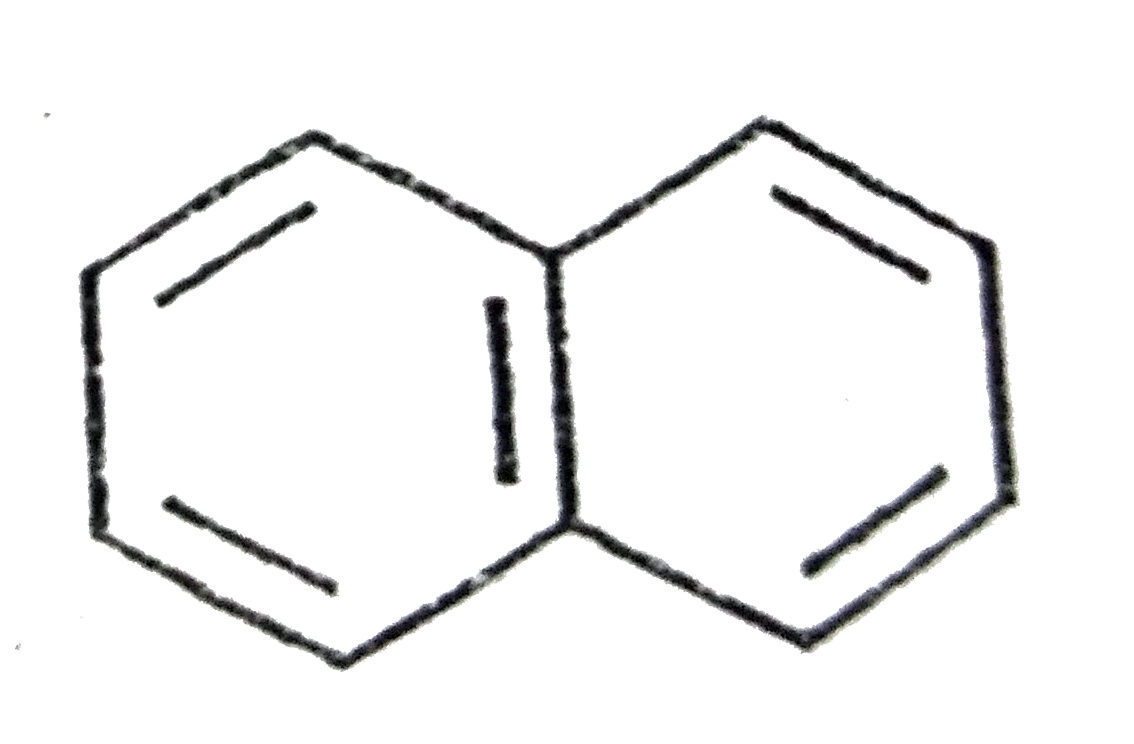
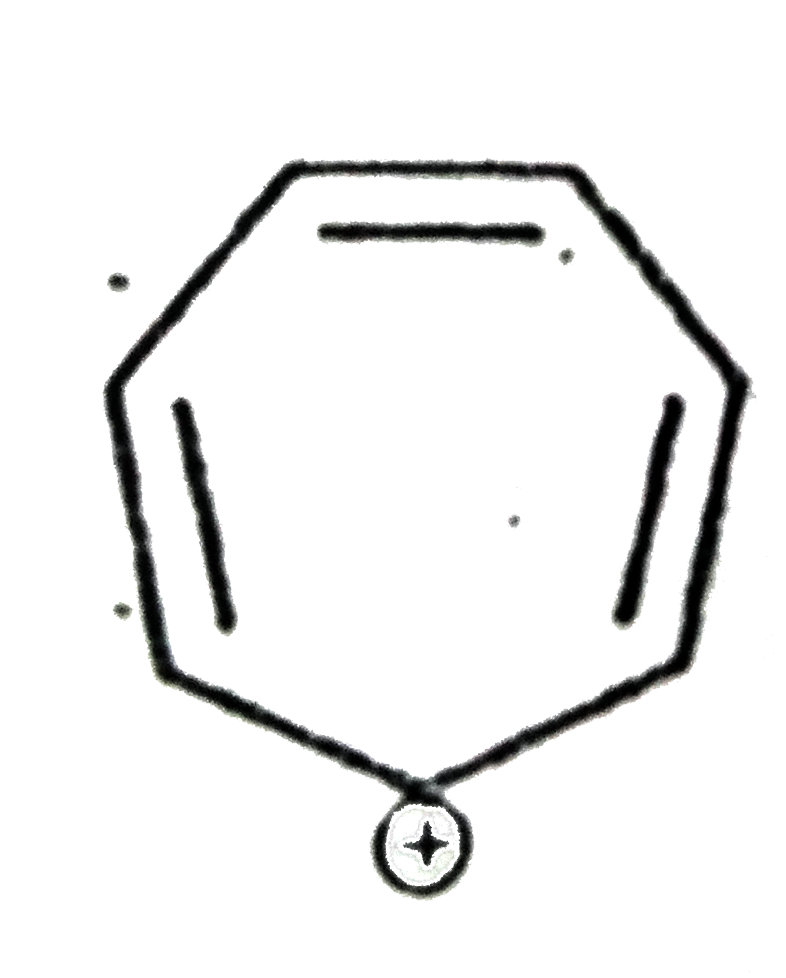
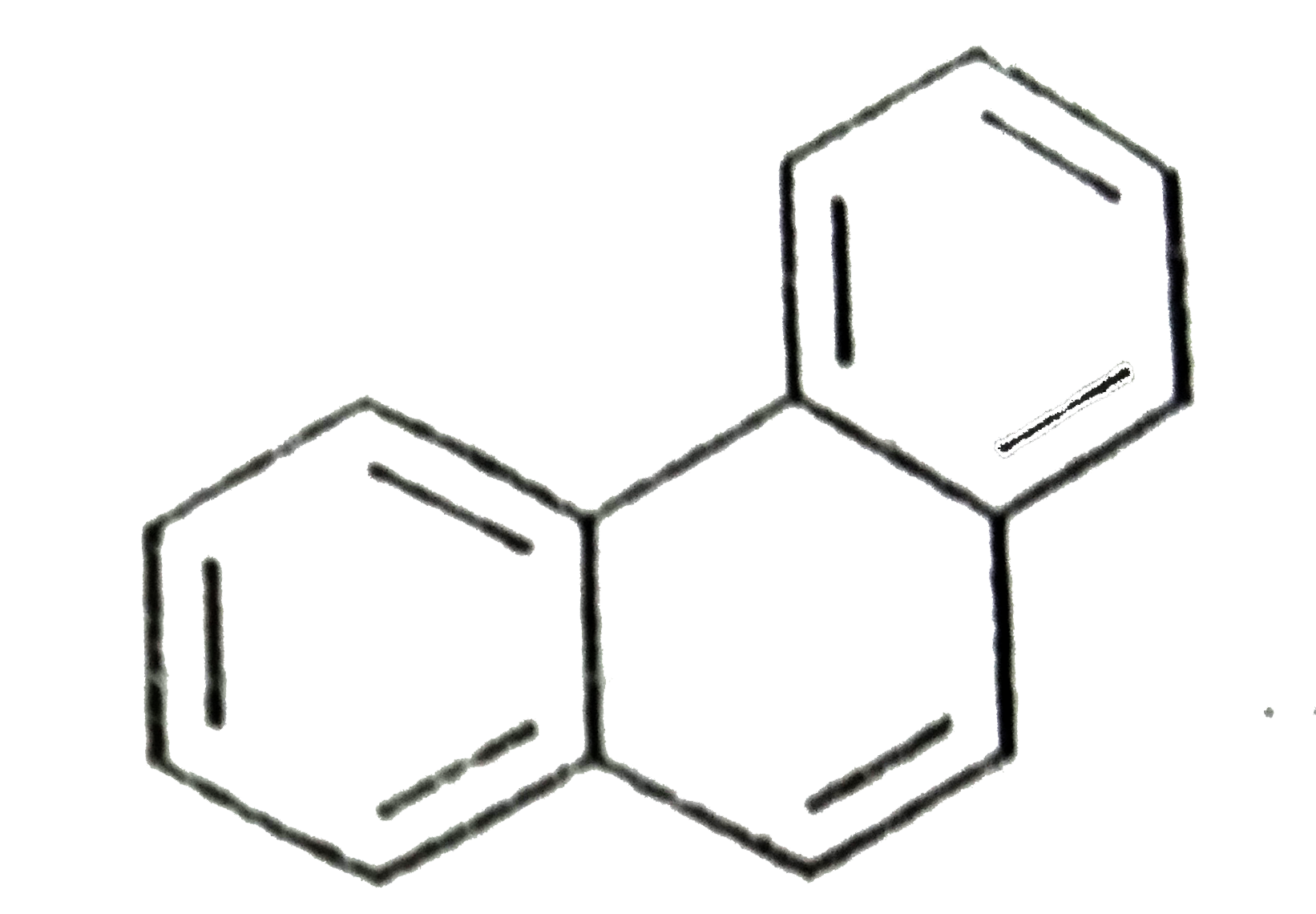
Which among the following is not expected to be an aromatic species?

A

B

C

D

Text Solution

AI Generated Solution

The correct Answer is:

To determine which among the given compounds is not expected to be an aromatic species, we need to evaluate each compound based on the criteria for aromaticity. The four main criteria for a compound to be considered aromatic are: 1. **Cyclic structure**: The compound must be cyclic. 2. **Planarity**: The compound must be planar, allowing for overlap of p-orbitals. 3. **Delocalization of π electrons**: The π electrons must be delocalized over the entire ring structure. 4. **Hückel's rule**: The compound must have a specific number of π electrons, given by the formula \(4n + 2\), where \(n\) is a non-negative integer (0, 1, 2, ...). Now, let's analyze each compound step by step: ### Step 1: Analyze the first compound - **Cyclic**: Yes, it is cyclic. - **Planarity**: All carbons are sp² hybridized, so it is planar. - **Delocalization**: The π electrons can be delocalized. - **Hückel's rule**: Count the number of π electrons. If there are 6 π electrons, it satisfies Hückel's rule (n=1). **Conclusion**: This compound is aromatic. ### Step 2: Analyze the second compound - **Cyclic**: Yes, it is cyclic. - **Planarity**: All carbons are sp² hybridized, so it is planar. - **Delocalization**: The π electrons can be delocalized. - **Hückel's rule**: Count the number of π electrons. If there are 6 π electrons, it satisfies Hückel's rule (n=1). **Conclusion**: This compound is aromatic. ### Step 3: Analyze the third compound - **Cyclic**: Yes, it is cyclic. - **Planarity**: All carbons are sp² hybridized, so it is planar. - **Delocalization**: The π electrons can be delocalized. - **Hückel's rule**: Count the number of π electrons. If there are 14 π electrons, it satisfies Hückel's rule (n=3). **Conclusion**: This compound is aromatic. ### Step 4: Analyze the fourth compound - **Cyclic**: Yes, it is cyclic. - **Planarity**: One carbon is sp³ hybridized, which disrupts planarity. - **Delocalization**: The π electrons cannot be delocalized due to the sp³ hybridization. - **Hückel's rule**: Not applicable since it fails the planarity condition. **Conclusion**: This compound is not aromatic. ### Final Answer: The compound that is not expected to be an aromatic species is the fourth compound. ---
Promotional Banner

Topper's Solved these Questions

  • HYDROCARBONS

    AAKASH INSTITUTE ENGLISH|Exercise SECTION-B OBJECTIVE TYPE QUESTIONS (ONE OPTION IS CORRECT)|25 Videos
  • HYDROCARBONS

    AAKASH INSTITUTE ENGLISH|Exercise SECTION-C OBJECTIVE TYPE QUESTIONS (MORE THAN ONE OPTIONS ARE CORRECT)|12 Videos
  • HYDROCARBONS

    AAKASH INSTITUTE ENGLISH|Exercise ADDITIONAL INFORMATION|3 Videos
  • HALOALKANES AND HALOARENES

    AAKASH INSTITUTE ENGLISH|Exercise ASSIGNMENT SECTION -D|15 Videos
  • HYDROGEN

    AAKASH INSTITUTE ENGLISH|Exercise ASSIGNMENT (SECTION - D) (Assertion-Reason Type question)|15 Videos

Similar Questions

Explore conceptually related problems

Which of the following is expected to be aromatic ?

Which of the following is aromatic ?

Which of the following is aromatic ?

Which of the following is not aromatic?

Which of the following species is not expected to be a ligand?

Which of the following species is not expected to be a ligand?

Which of the following species is not expected to be a ligand?

Which of the following species is not expected to exist ?

Which among the following is not an aromatic species?

AAKASH INSTITUTE ENGLISH-HYDROCARBONS-ASSIGNMENT SECTION-A COMPETITION LEVEL DIFFER BY
  1. Maximum potential energy of the molecule of ethane will be in the case...

    Text Solution

    |

  2. Which among the following is not an activating group of the benzene ri...

    Text Solution

    |

  3. Which among the following is not expected to be an aromatic species?

    Text Solution

    |

  4. In the nitration of benzene with conc. HNO(3) and conc H(2)SO(4) the e...

    Text Solution

    |

  5. Among the following groups, which one is ortho and para directing?

    Text Solution

    |

  6. Which among the following is a meta directing group?

    Text Solution

    |

  7. In the reaction the attacking species is

    Text Solution

    |

  8. Benzene reacts with CH(3)COCl in the presence of anhy AlCl(3) to give

    Text Solution

    |

  9. Baeyer's reagent is used in laboratory for

    Text Solution

    |

  10. Match Column I with Column II and select the correct answer from the g...

    Text Solution

    |

  11. Kolbe's electrolytic method can be applied on

    Text Solution

    |

  12. CH(3)-C-=CHunderset("catalyst")overset("Linddar's")rarr(A)underset(H(2...

    Text Solution

    |

  13. What is the product obtained when ethene reacts with cold, dilute, aqu...

    Text Solution

    |

  14. (A)overset(Alc. KOH)rarrCH(3)-CH=CH(2)underset(("Peroxide"))overset(HB...

    Text Solution

    |

  15. Which among the following represents the correct reaction of general c...

    Text Solution

    |

  16. Which among the following is a non-planar molecule?

    Text Solution

    |

  17. Those groups which activate the benzene ring are generally

    Text Solution

    |

  18. When an aqueous solution of sodium propionate is electrolysed the gas ...

    Text Solution

    |

  19. Which among the following will yield 2,2-dibromo butane?

    Text Solution

    |

  20. On chlorination, nitrobenzene will produce

    Text Solution

    |
