Home
Class 12
CHEMISTRY
Which among the following compounds wil ...

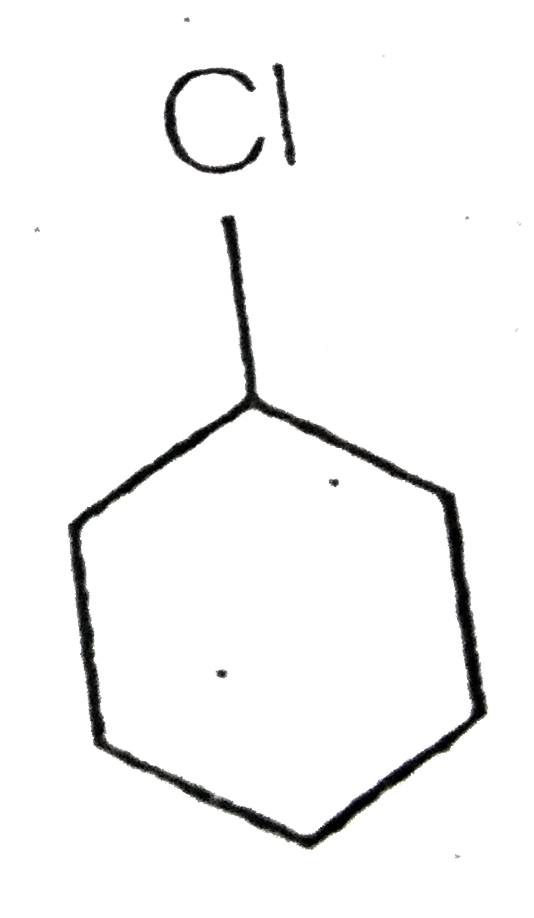
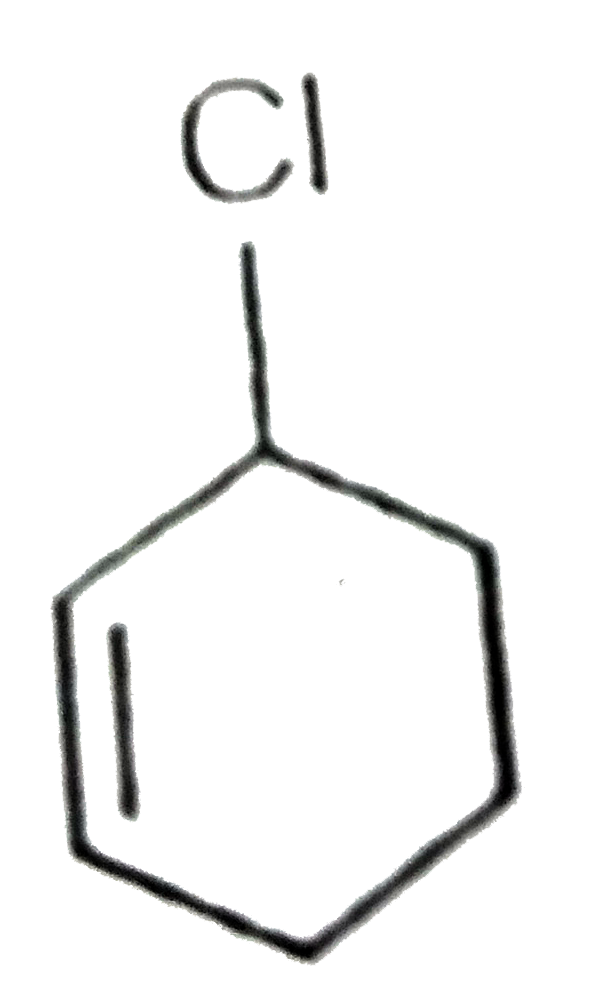
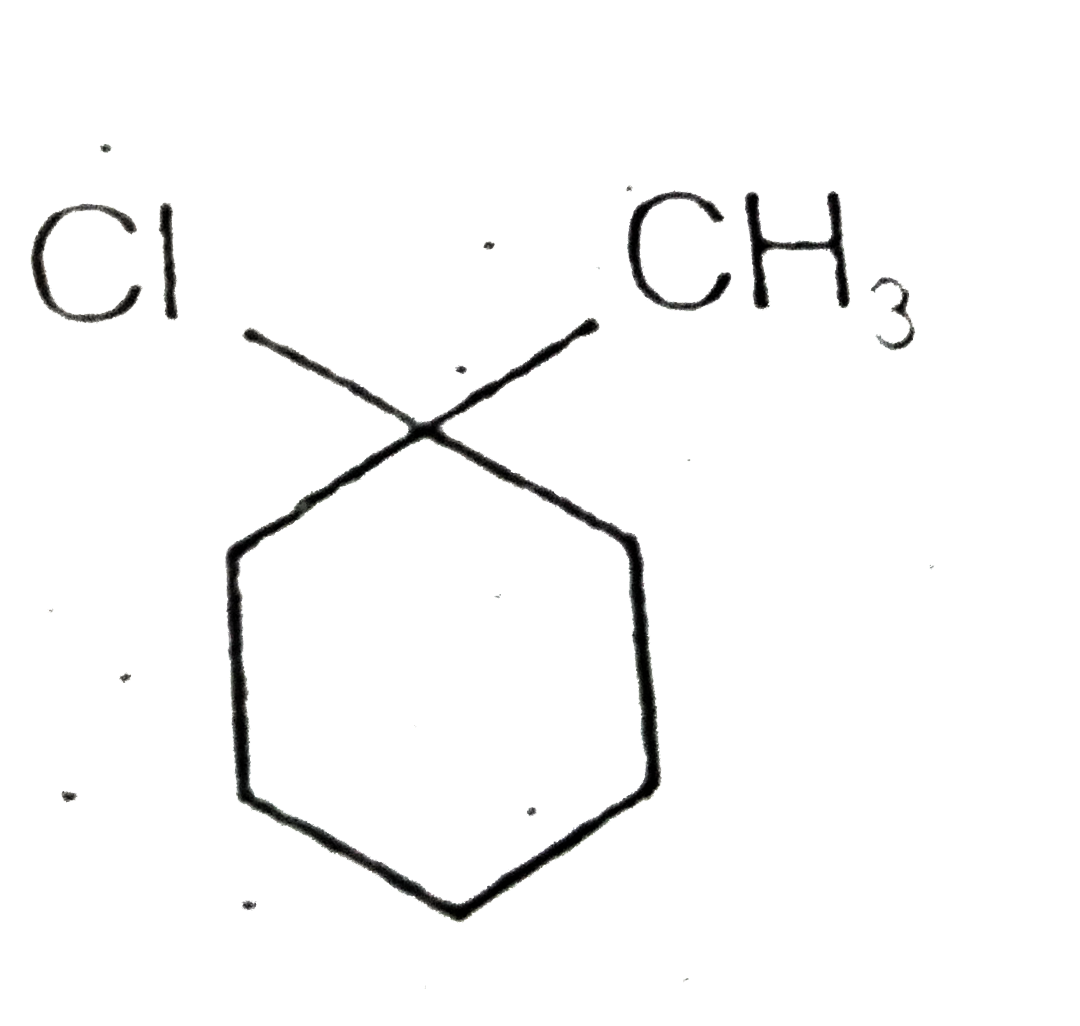
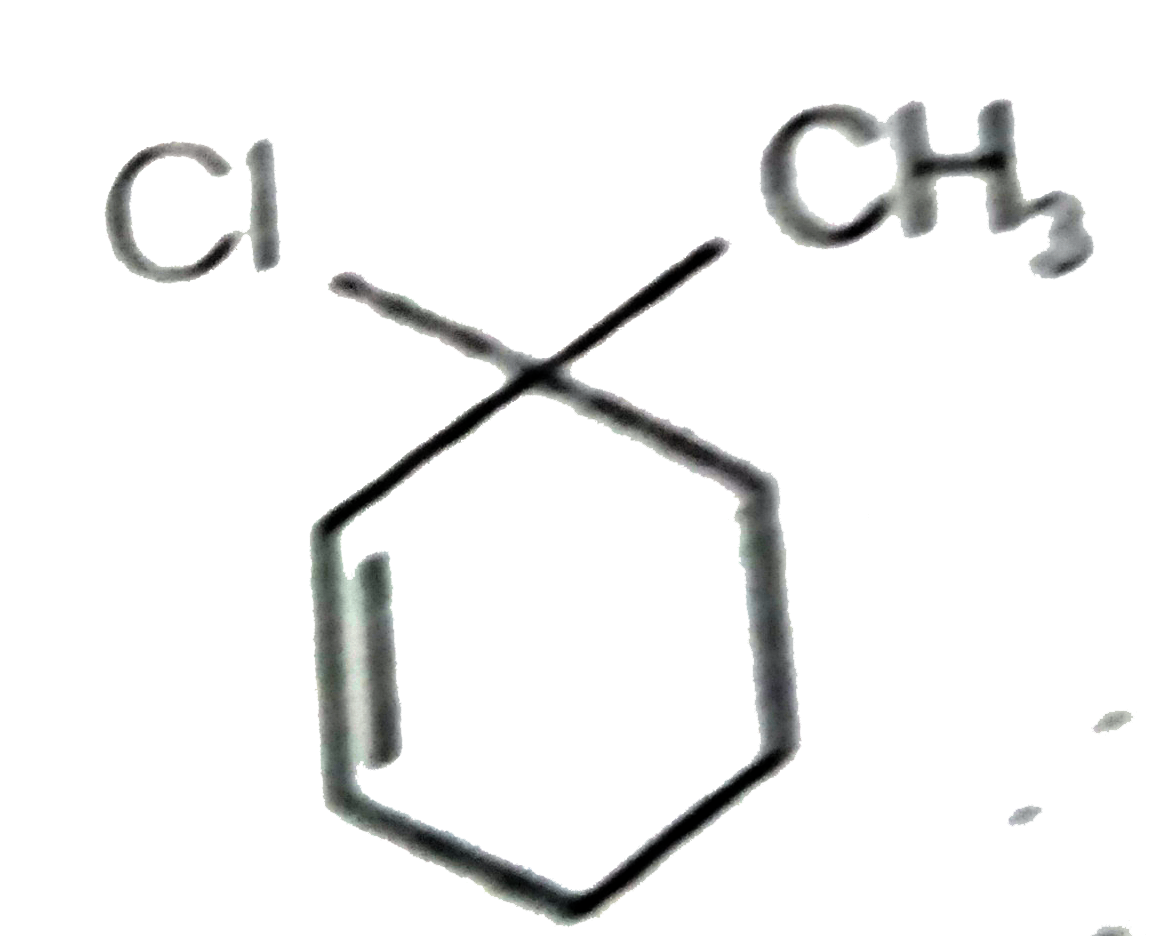
Which among the following compounds wil be most reactive for `S_(N^(1))` reaction ?

A

B

C

D

Text Solution

AI Generated Solution

The correct Answer is:

To determine which compound is most reactive for an SN1 reaction, we need to analyze the stability of the carbocations formed during the reaction. The stability of the carbocation is crucial because the rate of the SN1 reaction depends on the formation of this intermediate. ### Step-by-Step Solution: 1. **Identify the Compounds**: The question provides four compounds. We need to analyze each compound to see which one will form the most stable carbocation upon the departure of the leaving group (halogen). 2. **Understand SN1 Mechanism**: In an SN1 reaction, the reaction proceeds in two steps: - The leaving group (halogen) departs, forming a carbocation. - The nucleophile attacks the carbocation, leading to the formation of the product. 3. **Carbocation Stability**: The stability of carbocations is determined by the degree of substitution: - Tertiary (3°) carbocations are the most stable. - Secondary (2°) carbocations are less stable than tertiary but more stable than primary (1°). - Primary (1°) carbocations are less stable than secondary. - Methyl (0°) carbocations are the least stable. - Resonance can further stabilize carbocations (e.g., allylic and benzylic carbocations). 4. **Analyze Each Compound**: - **Compound 1**: Cyclohexyl chloride → Forms a secondary carbocation (2°). - **Compound 2**: Allylic cyclohexyl chloride → Forms an allylic carbocation, which is stabilized by resonance. - **Compound 3**: Chlorinated cyclohexane with a methyl group → Forms a tertiary carbocation (3°). - **Compound 4**: Allylic cyclohexyl chloride with additional chlorine → Forms a tertiary allylic carbocation, which is also stabilized by resonance. 5. **Determine the Most Reactive Compound**: - The most stable carbocation will lead to the most reactive compound in an SN1 reaction. - Comparing the stability: - Compound 4 has a tertiary allylic carbocation, which is very stable due to both the tertiary nature and resonance. - Compound 3 has a tertiary carbocation but lacks resonance stabilization. - Compound 2 has an allylic carbocation, which is stable but less so than the tertiary ones. - Compound 1 has the least stable secondary carbocation. 6. **Conclusion**: The compound that will be most reactive for an SN1 reaction is **Compound 4**, which forms a tertiary allylic carbocation. ### Final Answer: **The most reactive compound for an SN1 reaction is Compound 4.**
Promotional Banner

Topper's Solved these Questions

  • HALOALKANES AND HALOARENES

    AAKASH INSTITUTE ENGLISH|Exercise Assignment (Section - C ) ( Objective Type Question(More than one options are correct ))|17 Videos
  • HALOALKANES AND HALOARENES

    AAKASH INSTITUTE ENGLISH|Exercise Assignment (Section - D) (Linked Comprehension Type Question )|8 Videos
  • HALOALKANES AND HALOARENES

    AAKASH INSTITUTE ENGLISH|Exercise Assignment (Section - A ) ( Competition Level Question )|50 Videos
  • GENERAL PRINCIPLES AND PROCESSES OF ISOLATION OF ELEMENTS

    AAKASH INSTITUTE ENGLISH|Exercise Try Yourself|33 Videos
  • HYDROCARBONS

    AAKASH INSTITUTE ENGLISH|Exercise Assignment(Section - C) (Previous Years Questions)|60 Videos

Similar Questions

Explore conceptually related problems

Which among the following compounds will give Wurtz reaction ?

Among the following compounds the most acidic is

Which one is most reactive towards S_(N^(1)) reaction?

Which of the following halides will be most reactive in SN^(2) reaction and SN^(1) reaction respectively?

Which one is most reactive towards S_(N)1 reactions ?

Which among the following is the most reactive?

AAKASH INSTITUTE ENGLISH-HALOALKANES AND HALOARENES -Assignment (Section - B ) ( Objective Type Question(One option is correct ))
  1. The compound C(2)FCI Brl has

    Text Solution

    |

  2. Which among the following compounds wil be most reactive for S(N^(1)) ...

    Text Solution

    |

  3. How many chiral carbons are present in following structure ?

    Text Solution

    |

  4. Which of the following can be used to prepare 3-bromo propene ?

    Text Solution

    |

  5. In the S(N)2 reaction of cis -3- methylcyclo pentyl bromide with ...

    Text Solution

    |

  6. Reaction of t-butyl bromide with sodium methoxide produces

    Text Solution

    |

  7. Arrange the following in the increasing order of ease of nucleo...

    Text Solution

    |

  8. Draw the structures of all the eight structural isomers that have the ...

    Text Solution

    |

  9. Which one of the following compounds will give in the presence of pero...

    Text Solution

    |

  10. Which of the following compounds yields only one product on monobromin...

    Text Solution

    |

  11. The principle organic compound formed in the reaction is CH(...

    Text Solution

    |

  12. The reactivity order of alkyl halide is 3^(@) gt 2^(@) gt 1^(@) i...

    Text Solution

    |

  13. The product obtained by reduction of benzyl bromide with LIAIH(4...

    Text Solution

    |

  14. Which of the following statement is incorrect ?

    Text Solution

    |

  15. CH(3) OH overset(PI(3))(to) (A) overset(KCN)(to) (B) overset(H(2)O//H...

    Text Solution

    |

  16. The reaction " Alcohol " +HCl hArr " Alkyl halide " +H(2)O is reve...

    Text Solution

    |

  17. 3 methyl -2- pentene on reaction with HOCI gives

    Text Solution

    |

  18. Among the three possible isomers of dibromo benzenes the highest ...

    Text Solution

    |

  19. Benzal chloride on hydrolysis gives

    Text Solution

    |

  20. For the reaction R- Br to R- O - N =O the suitable reagent is

    Text Solution

    |
