Home
Class 12
CHEMISTRY
A compound (A) has molecular formula...

A compound (A) has molecular formula `C_(5)H_(9)CI` It does not react with bromine in `C CI_(4)` On treatment with a strong base it produces a single compound (B) (B) has a molecular formula `C_(5)H_(8)` and reacts with Baeyer's reagent . Reductive ozonotysis of (B) produces a compound (C ) which has a molecular formula `C_(5)H_(8) O_(2)`
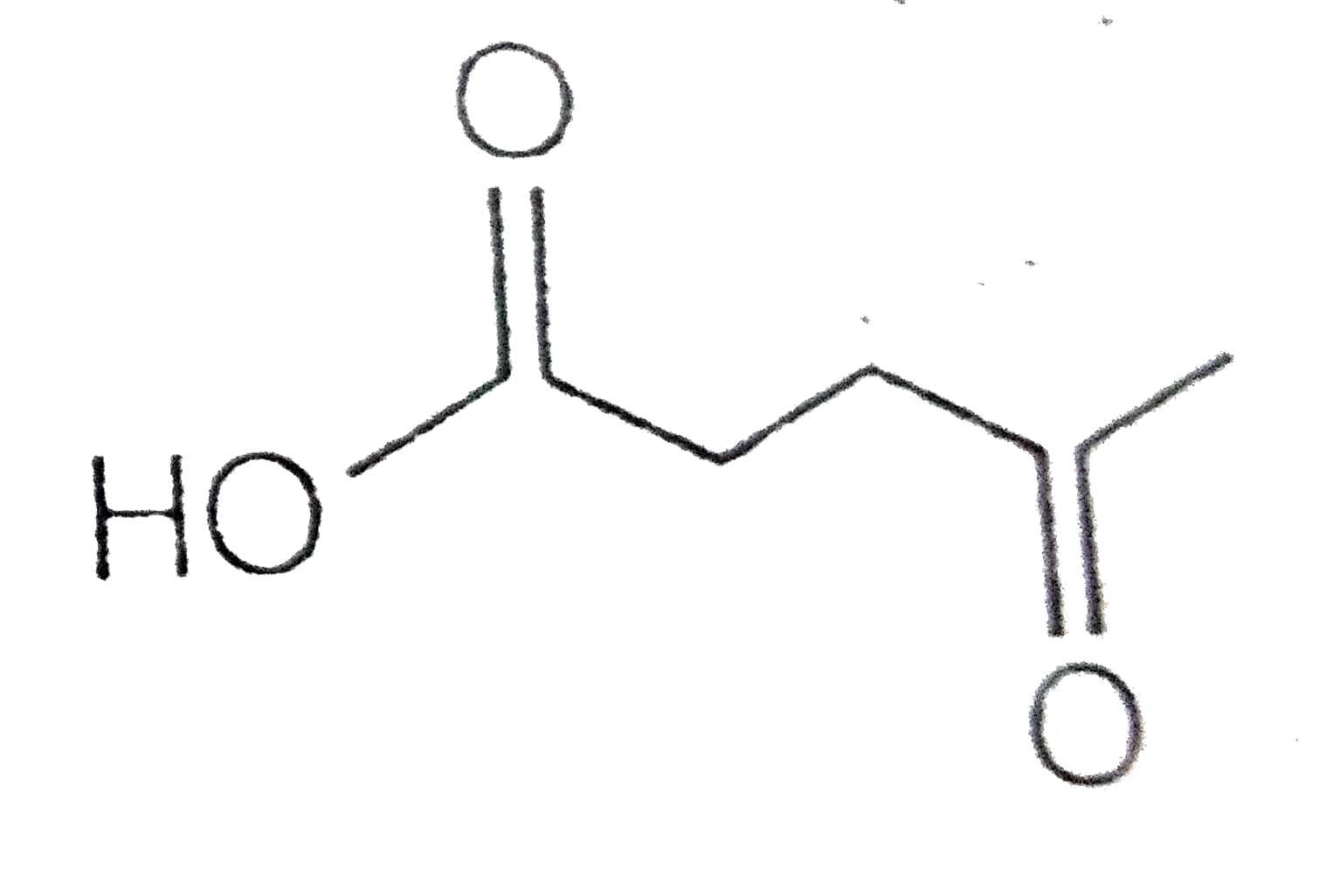
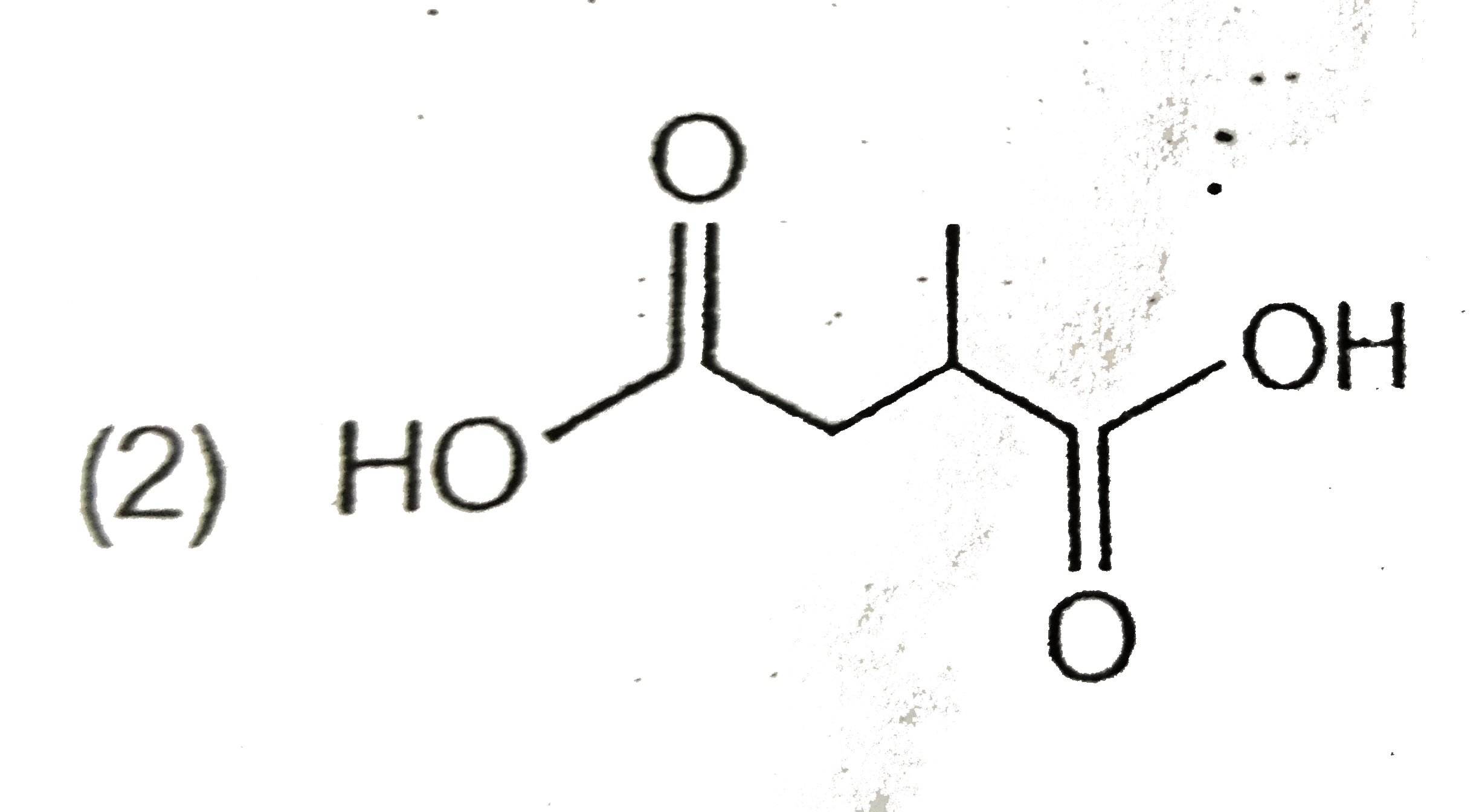
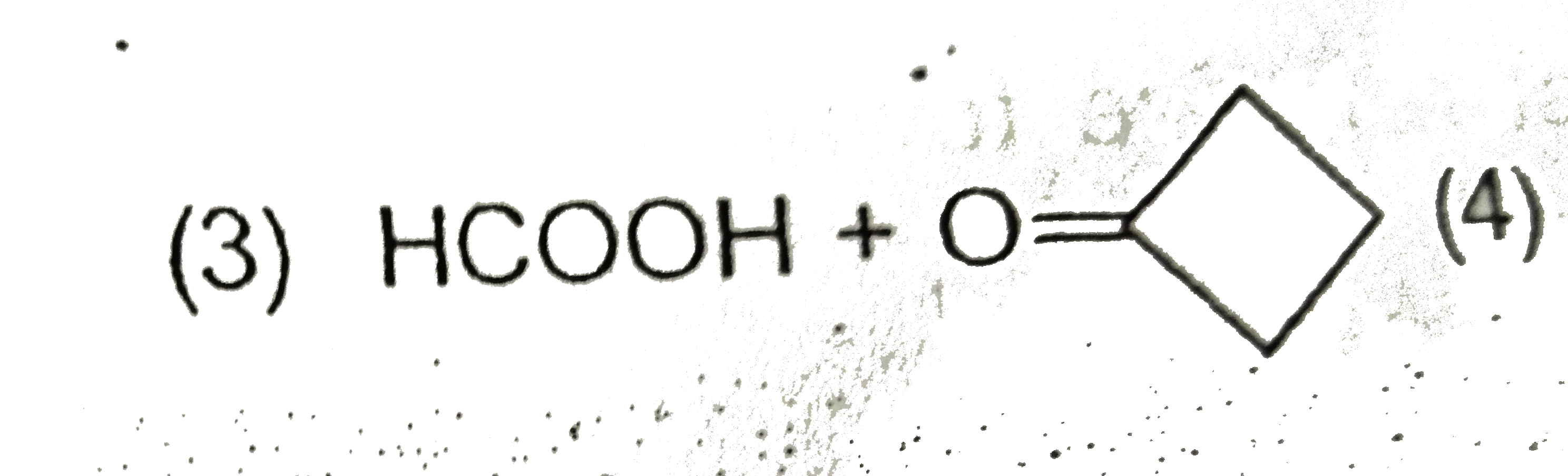
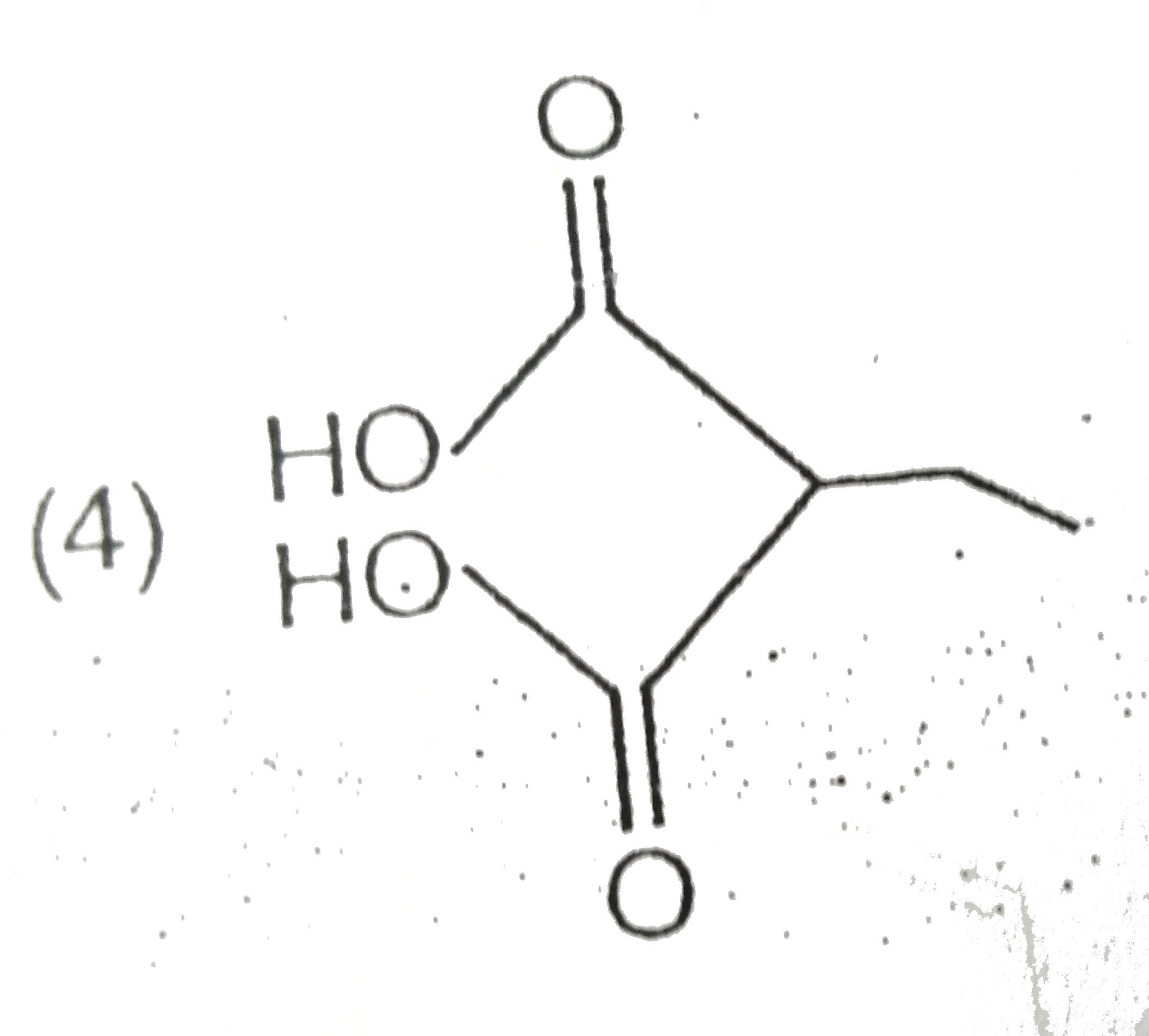
What would be the oxidative ozonolysis product of B ?

A

B

C

D

Text Solution

AI Generated Solution

The correct Answer is:

To solve the problem step by step, we will analyze the information given about the compounds A, B, and C, and determine the oxidative ozonolysis product of B. ### Step 1: Analyze Compound A - **Molecular Formula**: C₅H₉Cl - **Type**: This is an alkyl halide. - **Reactivity**: It does not react with bromine in CCl₄, indicating that it does not have a double bond (alkene) or a reactive site for electrophilic addition. **Hint**: Look for clues in the reactivity to determine the structure of compound A. ### Step 2: Determine the Degree of Unsaturation To find the degree of unsaturation (DU), we use the formula: \[ \text{DU} = \frac{C}{2} + \frac{H}{2} - \frac{X}{2} + 1 \] Where: - C = number of carbon atoms - H = number of hydrogen atoms - X = number of halogen atoms (Cl in this case) For A: \[ \text{DU} = \frac{5}{2} + \frac{9}{2} - \frac{1}{2} + 1 = 1 \] **Hint**: The degree of unsaturation indicates the presence of either a double bond or a ring structure. ### Step 3: Structure of Compound A Since the degree of unsaturation is 1 and it does not react with bromine, it suggests that compound A is likely a cyclic structure (a ring) with a chlorine atom. The most plausible structure is a cyclobutane derivative with a chlorine substituent. **Hint**: Consider cyclic structures when the degree of unsaturation indicates a ring. ### Step 4: Reaction with Strong Base When compound A reacts with a strong base like alcoholic KOH, it undergoes dehydrohalogenation to form compound B, which is an alkene. **Hint**: Dehydrohalogenation typically results in the formation of alkenes. ### Step 5: Analyze Compound B - **Molecular Formula**: C₅H₈ - **Reactivity**: It reacts with Baeyer's reagent (KMnO₄), indicating that it is an alkene. **Hint**: The reactivity with Baeyer's reagent suggests that compound B has a double bond that can be oxidized. ### Step 6: Reductive Ozonolysis of B Reductive ozonolysis of compound B will break the double bond and typically yield aldehydes or ketones. Given that B has the formula C₅H₈, it is likely to yield two aldehyde products upon reductive ozonolysis. **Hint**: Consider the structure of B to predict the products of ozonolysis. ### Step 7: Predict the Oxidative Ozonolysis Product of B In oxidative ozonolysis, the products are typically carboxylic acids instead of aldehydes. Therefore, if B undergoes oxidative ozonolysis, it will yield carboxylic acids. **Hint**: Remember that oxidative ozonolysis converts aldehydes to carboxylic acids. ### Conclusion The oxidative ozonolysis product of compound B will be a compound with the molecular formula C₅H₈O₂, which corresponds to two carboxylic acid groups formed from the cleavage of the double bond in B. **Final Answer**: The oxidative ozonolysis product of B is a compound with the molecular formula C₅H₈O₂ (two carboxylic acids).
Promotional Banner

Topper's Solved these Questions

  • HALOALKANES AND HALOARENES

    AAKASH INSTITUTE ENGLISH|Exercise Assignment (Section - E) ( Assertion - Reason type Questions )|7 Videos
  • HALOALKANES AND HALOARENES

    AAKASH INSTITUTE ENGLISH|Exercise Assignment (Section - F) (Matrix - Match Type Question )|4 Videos
  • HALOALKANES AND HALOARENES

    AAKASH INSTITUTE ENGLISH|Exercise Assignment (Section - C ) ( Objective Type Question(More than one options are correct ))|17 Videos
  • GENERAL PRINCIPLES AND PROCESSES OF ISOLATION OF ELEMENTS

    AAKASH INSTITUTE ENGLISH|Exercise Try Yourself|33 Videos
  • HYDROCARBONS

    AAKASH INSTITUTE ENGLISH|Exercise Assignment(Section - C) (Previous Years Questions)|60 Videos

Similar Questions

Explore conceptually related problems

A compound (A) has molecular formula C_(5)H_(9)CI It does not react with bromine in C CI_(4) On treatment with a strong base it produces a single compound (B) (B) has a molecular formula C_(5)H_(8) and reacts with Baeyer's reagent . Reductive ozonotysis of (B) produces a compound (C ) which has a molecular formula C_(5)H_(8) O_(2) formation of ( B) from (A) involves

A compound (A) has molecular formula C_(5)H_(9)Cl .It does not react with bromine in C Cl_(4) . On treatment with a strong base it produces a single compound (B), (B) has a molecular formula C_(5)H_(8) and reacts with Baeyer's reagent . Reductive ozonolysis of (B) produces a compound (C ) which has a molecular formula C_(5)H_(8) O_(2) On the basis of the given data what would be the structure of A ?

Pentane has the molecular formula C_(5)H_(12) . It has

Compound having molecular formula C_(5)H_(12)O cannot show

The compound having the molecular formula C_(3)H_(9)N can represent

Draw the isomers of a compound with the molecular formula C_(4)H_(4)O_(4)

Ethane, with the molecular formula C_(2)H_(6) has

A compound X has a molecular formula of C_(5)H_(10) . Write down the empirical formula of X.

How many acids and esters are possible for the compound with molecular formula, C_(4)H_(8)O_(2) ?

The number of metamers of the compound with molecular formula C_(5)H_(12)O is/are:
