Home
Class 12
CHEMISTRY
Which of the following dicarboxylic acid...

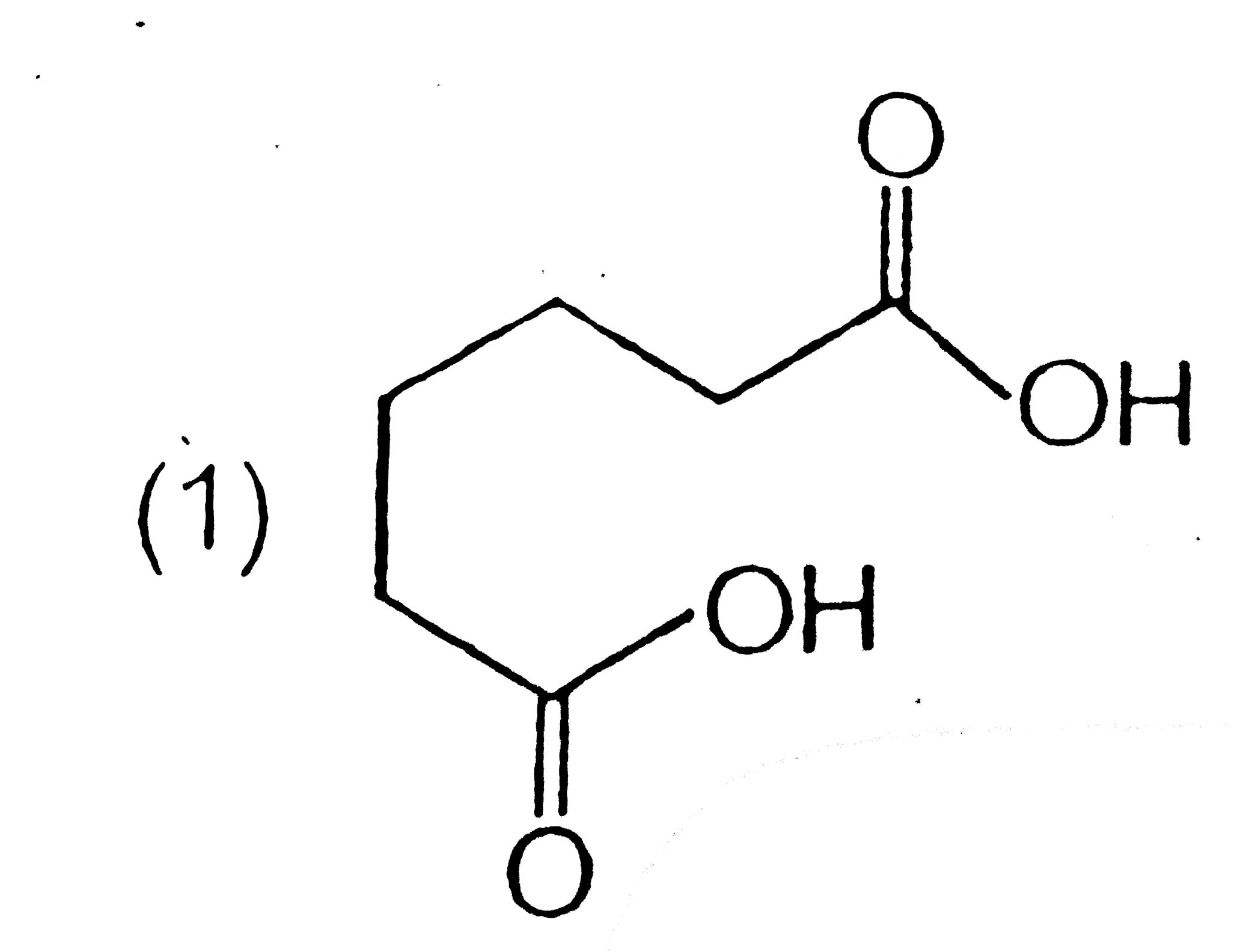
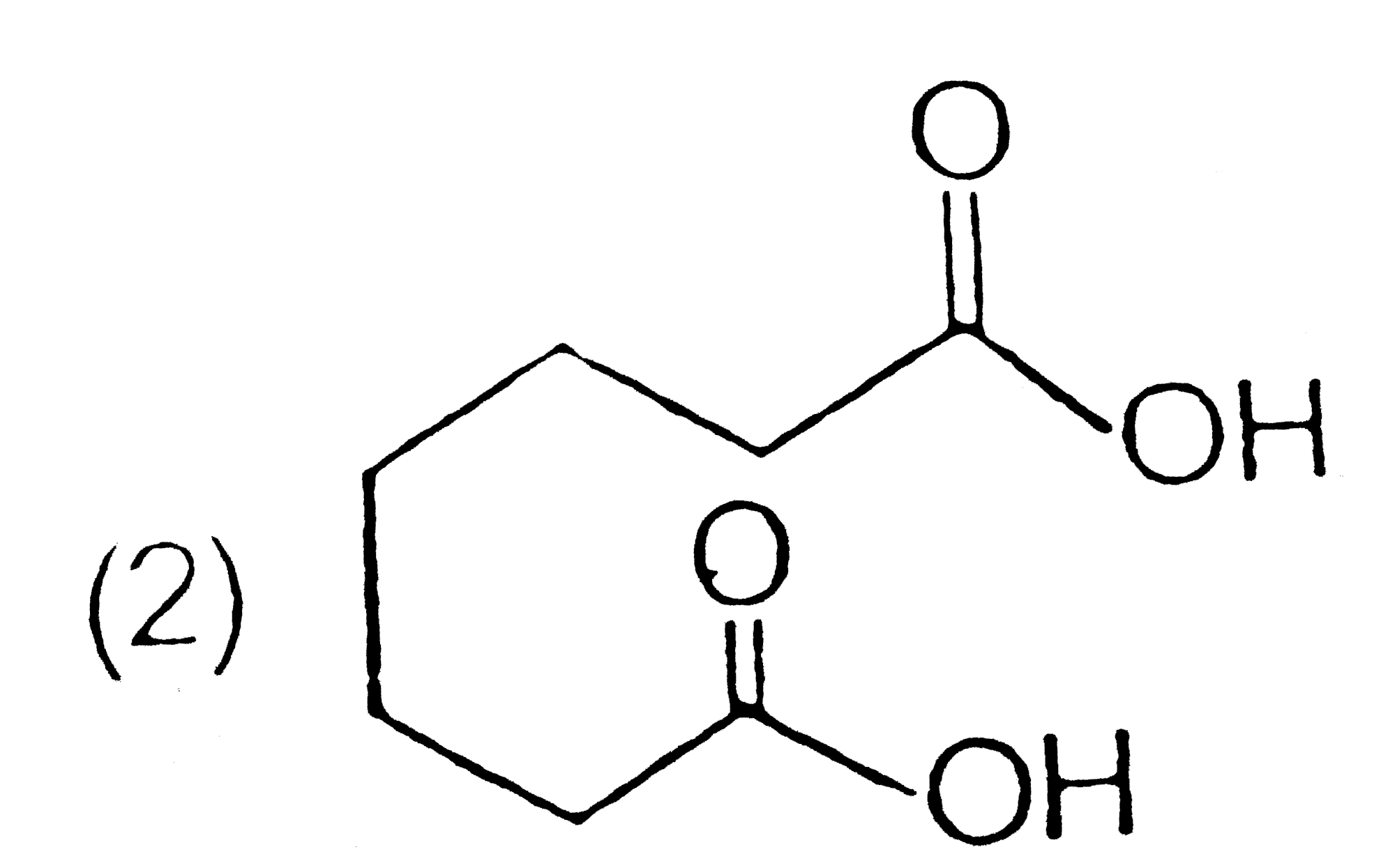
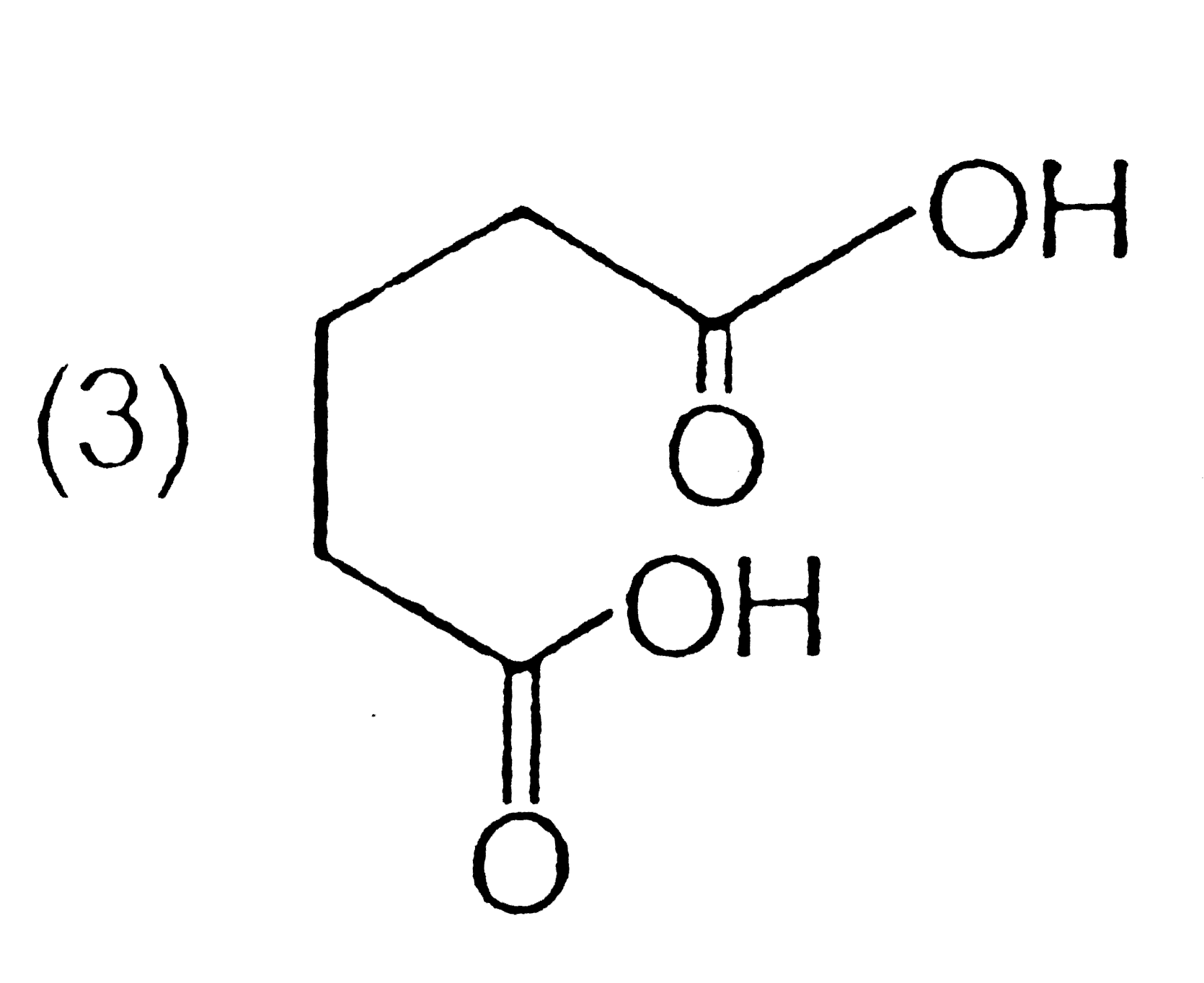
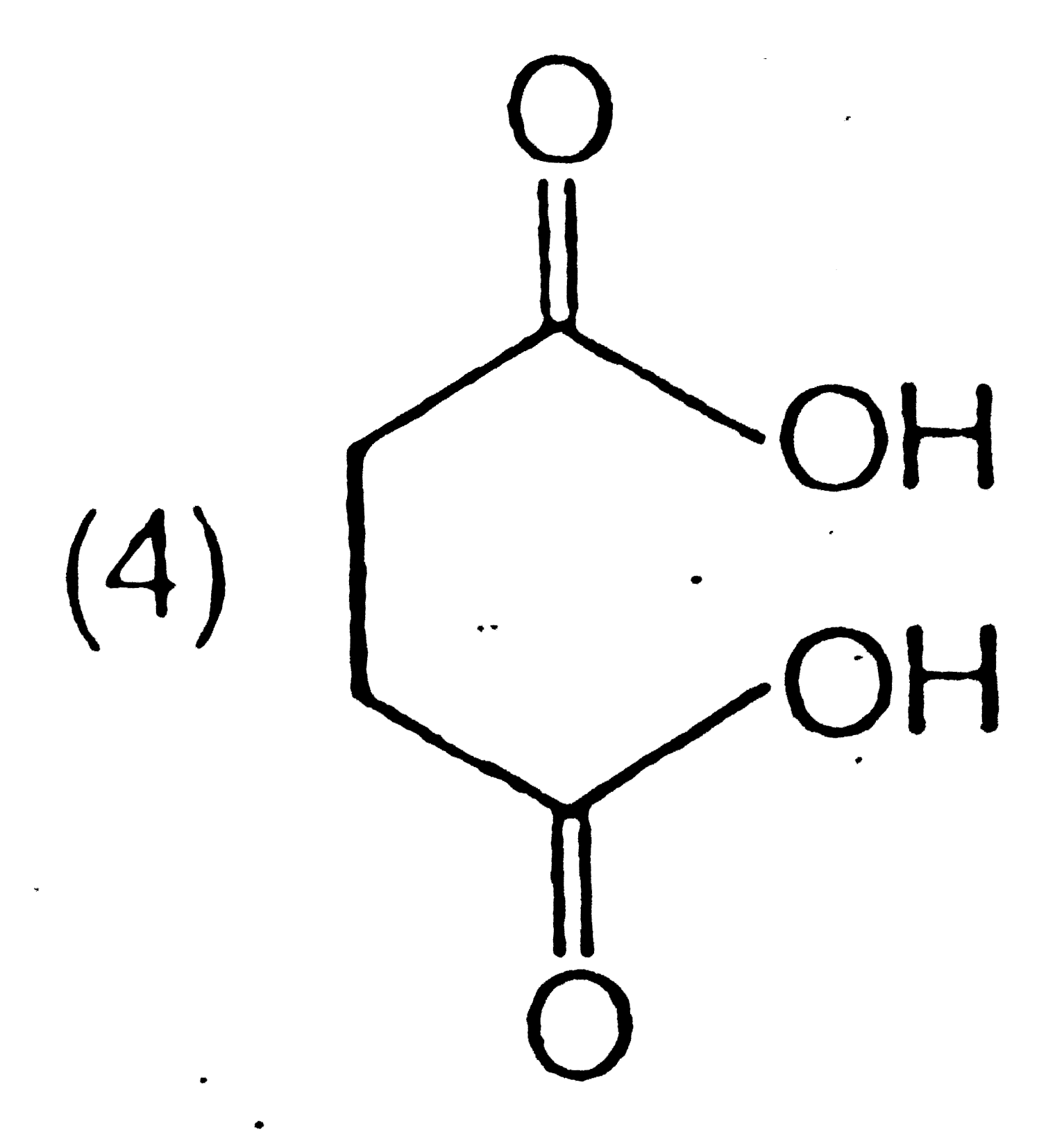
Which of the following dicarboxylic acid will give cycle alkanone on heating?

A

B

C

D

Text Solution

AI Generated Solution

The correct Answer is:

To determine which dicarboxylic acid will yield a cyclic alkanone upon heating, we can analyze the structure of each dicarboxylic acid and the mechanism of cyclization that occurs during heating. Let's go through the steps systematically. ### Step-by-Step Solution: 1. **Understanding Dicarboxylic Acids**: Dicarboxylic acids contain two carboxylic acid (-COOH) groups. When heated, they can undergo decarboxylation, which involves the loss of carbon dioxide (CO2) and can lead to the formation of cyclic compounds. 2. **Identifying the Structure**: For each option provided, we need to draw the structure of the dicarboxylic acid. This will help us visualize the potential for cyclization. 3. **Heating and Decarboxylation**: Upon heating, one of the carboxylic acid groups will lose CO2. The remaining carboxylate ion can then attack the carbonyl carbon of the other carboxylic acid group, leading to the formation of a cyclic compound. 4. **Cyclization Mechanism**: - **Alpha and Beta Position**: Identify the alpha (the carbon adjacent to the carboxylic group) and beta positions (the next carbon) in the molecule. The carbanion formed at the alpha position will attack the carbonyl carbon of the other carboxylic acid group. - **Ring Formation**: Depending on the number of carbons involved in the cyclization, we can predict the size of the ring formed (3-membered, 4-membered, 5-membered, or 6-membered). 5. **Evaluating Each Option**: - **Option 1**: Heating leads to the formation of a 5-membered ring (cyclopentanone). - **Option 2**: Heating leads to the formation of a 6-membered ring (cyclohexanone). - **Option 3**: Heating leads to a 4-membered ring, which is less stable and not preferred. - **Option 4**: Heating leads to a 3-membered ring, which is also unstable due to angle strain. 6. **Conclusion**: The dicarboxylic acids that can form stable cyclic alkanones upon heating are those that can form 5-membered or 6-membered rings. Among the options, the first and second options yield cyclopentanone and cyclohexanone, respectively. However, the formation of cyclopentanone is more favorable. ### Final Answer: The dicarboxylic acid that will give a cyclic alkanone upon heating is **Option 1**, which forms cyclopentanone.
Promotional Banner

Topper's Solved these Questions

  • ALDEHYDES, KETONES AND CARBOXYLIC ACIDS

    AAKASH INSTITUTE ENGLISH|Exercise Assignment (SECTION -D Linked Comprehension type Questions)|6 Videos
  • ALDEHYDES, KETONES AND CARBOXYLIC ACIDS

    AAKASH INSTITUTE ENGLISH|Exercise Assignment SECTION - E Assertion - Reason Type Questions)|7 Videos
  • ALDEHYDES, KETONES AND CARBOXYLIC ACIDS

    AAKASH INSTITUTE ENGLISH|Exercise Assignment (SECTION -B OBJECTIVE TYPES QUESTIONS (ONE OPTION IS CORRECT)|24 Videos
  • ALCOHOLS, PHENOLS AND ETHERS

    AAKASH INSTITUTE ENGLISH|Exercise Try Yourself|5 Videos
  • AMINES

    AAKASH INSTITUTE ENGLISH|Exercise Assignment Section -J (Aakash Challengers Questions)|9 Videos

Similar Questions

Explore conceptually related problems

Certain dicarboxylic acids spontaneously eliminate water when heated forming cycioc anhydirides. But for the reaction to be successfully. The cyclic anhydrides product must normally have a ring size of fivee or six members. There are two important reasons, first, the second carboxyl group can serve as the acid catalyst (by intramolecular proton transfer), as well as the nucleophile. And second, the high temperature involved reduce the need for catalyst. Which of the following dicarboxylic acid will not for cyclic anhydrides?

Tricarboxylic acids of Kerbs cycle are

Dicarboxylic acid cycle is also known as

Certain dicarboxylic acids spontaneously eliminate water when heated forming cycioc anhydirides. But for the reaction to be successfully. The cyclic anhydrides product must normally have a ring size of fivee or six members. There are two important reasons, first, the second carboxyl group can serve as the acid catalyst (by intramolecular proton transfer), as well as the nucleophile. And second, the high temperature involved reduce the need for catalyst. Which of the following dicarboxylic acid would you expect to form cyclic anhydride?

Which of the following reactions would give caproic acid ?

Which of the following carbonates do not give metal oxide on heating ?

Which of the following gives benzoic acid on oxidation :
