Home
Class 12
CHEMISTRY
In which of the following compounds , th...

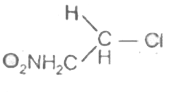
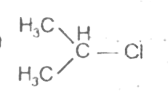
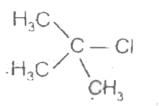
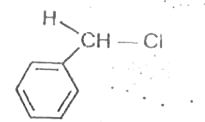
In which of the following compounds , the C - Cl bond ioniosation shall give most stable carbonium ion ?

A

B

C

D

Text Solution

AI Generated Solution

The correct Answer is:

To determine which compound will produce the most stable carbonium ion (carbocation) upon ionization of the C-Cl bond, we need to analyze the stability of the resulting carbocations formed from each compound. The stability of carbocations is influenced by the degree of substitution (primary, secondary, tertiary) and resonance effects. ### Step-by-Step Solution: 1. **Identify the Compounds**: - Let's denote the compounds as A, B, C, and D. We need to analyze the C-Cl bond in each compound and the carbocation that forms upon ionization. 2. **Understand Carbocation Stability**: - The stability of carbocations follows this order: - Tertiary (3°) > Secondary (2°) > Primary (1°) > Methyl (CH3+). - Tertiary carbocations are stabilized by hyperconjugation and inductive effects from adjacent alkyl groups. 3. **Analyze Each Compound**: - **Compound A**: When C-Cl bond breaks, it forms a primary carbocation (1°). - **Compound B**: When C-Cl bond breaks, it forms a secondary carbocation (2°). - **Compound C**: When C-Cl bond breaks, it forms a tertiary carbocation (3°). - **Compound D**: When C-Cl bond breaks, it forms a benzyl carbocation, which is stabilized by resonance. 4. **Compare Stability**: - **Tertiary Carbocation (Compound C)**: Highly stable due to three alkyl groups donating electron density. - **Benzyl Carbocation (Compound D)**: Stabilized by resonance, but less stable than a tertiary carbocation due to the lack of hyperconjugation. - **Secondary Carbocation (Compound B)**: Less stable than tertiary and benzyl. - **Primary Carbocation (Compound A)**: Least stable. 5. **Conclusion**: - The most stable carbocation is formed from **Compound C**, which is a tertiary carbocation. ### Final Answer: The compound that will give the most stable carbonium ion upon C-Cl bond ionization is **Compound C**.
Promotional Banner

Topper's Solved these Questions

  • HALOALKANES AND HALOARENES

    AAKASH INSTITUTE ENGLISH|Exercise ASSIGNMENT SECTION -D|15 Videos
  • HALOALKANES AND HALOARENES

    AAKASH INSTITUTE ENGLISH|Exercise ASSIGNMENT SECTION - B|25 Videos
  • GENERAL PRINCIPLES AND PROCESSES OF ISOLATION OF ELEMENTS

    AAKASH INSTITUTE ENGLISH|Exercise Try Yourself|33 Videos
  • HYDROCARBONS

    AAKASH INSTITUTE ENGLISH|Exercise Assignment(Section - C) (Previous Years Questions)|60 Videos

Similar Questions

Explore conceptually related problems

Most stable carbonium ion is :

Which of the following compounds is the most stable?

The most stable ion is:

Which of the following is most stable?

Which of the following is most stable ?

In which of the following C-Cl Bond ionisation shall give most stable ion ?

Which of the following compound is thermally most stable ?

AAKASH INSTITUTE ENGLISH-HALOALKANES AND HALOARENES -ASSIGNMENT SECTION - C
  1. Two possible stereostructures of CH(3)CHOH.COOH, which are optically a...

    Text Solution

    |

  2. In an S(N)1reaction on chiral centres, there is

    Text Solution

    |

  3. In which of the following compounds , the C - Cl bond ioniosation shal...

    Text Solution

    |

  4. What products are formed when the following compounds are treated with...

    Text Solution

    |

  5. CH2=CH2 + Br = Product , what is product?

    Text Solution

    |

  6. In the replacement reaction rarrC-I+MF rarr rarr C-F+MI The react...

    Text Solution

    |

  7. Which of the following compounds undergoes nucleophilic substitution r...

    Text Solution

    |

  8. Condiser the reactions, (i) (CH(3))(2)CH-CH(2)Broverset(C(2)H(5)OH)r...

    Text Solution

    |

  9. The correct order of increasing reactivity of C-X bond towards nucleop...

    Text Solution

    |

  10. Which one is most reactive towards S(N)1 reactions ?

    Text Solution

    |

  11. In the following reaction C(6)H(5)CH(2)Br underset(2.H(3)O)overset(1...

    Text Solution

    |

  12. Which of the following reactions is an example of nucleophilic substit...

    Text Solution

    |

  13. H(3)C-underset(CH(3))underset("| ")"CH"-CH-=CH(2)+HBrrarr(X) Here (...

    Text Solution

    |

  14. In a S(N^(2)) substitution reaction of the type R-Br+Cl^(-)overset("...

    Text Solution

    |

  15. If there is no rotation of plane polarized light by a compound in a sp...

    Text Solution

    |

  16. For the following: (a) I^(-) (b) Cl^(-) (c) Br^(-) The ...

    Text Solution

    |

  17. Which of the following undergoes nucleophilic substitution exclusively...

    Text Solution

    |

  18. The chirality of the compound

    Text Solution

    |

  19. C(5)H(11)Br+ NaCN rarr A overset(H(3)O^(+))(rarr) B + "NaOH" overset("...

    Text Solution

    |

  20. CD(2) = CH - CH(2) - Br is subjected to S(N)1 and S(N)2 reactions sepa...

    Text Solution

    |
