Home
Class 12
CHEMISTRY
Which of the following is the most stabl...

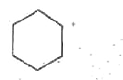
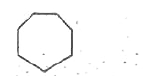
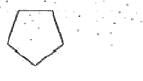
Which of the following is the most stable cycloalkane ?

A

B

C

D

Text Solution

AI Generated Solution

The correct Answer is:

To determine which cycloalkane is the most stable among the given options, we need to analyze the stability of different cycloalkanes based on their ring size and strain. ### Step-by-Step Solution: 1. **Identify the Cycloalkanes**: - The question provides different cycloalkanes: a 3-carbon ring (cyclopropane), a 5-carbon ring (cyclopentane), a 6-carbon ring (cyclohexane), and a 7-carbon ring (cycloheptane). 2. **Understand Ring Strain**: - Ring strain occurs in cyclic compounds due to the angles between the bonds being forced to deviate from their ideal values. The ideal bond angle for sp³ hybridized carbon atoms is 109.5 degrees. 3. **Analyze Each Cycloalkane**: - **Cyclopropane (3-membered ring)**: - The bond angles are approximately 60 degrees, which is far from the ideal angle. This leads to significant angle strain and torsional strain due to eclipsing hydrogen atoms. Therefore, cyclopropane is highly unstable. - **Cyclopentane (5-membered ring)**: - The bond angles are closer to 108 degrees, which is much closer to the ideal angle. There is some strain, but it is significantly lower than that in cyclopropane. - **Cyclohexane (6-membered ring)**: - The bond angles are approximately 109.5 degrees, which is ideal. Cyclohexane can adopt a chair conformation that minimizes strain, making it very stable. - **Cycloheptane (7-membered ring)**: - While it has more carbons, the angles are larger than 109.5 degrees, leading to some strain. The stability decreases as the ring size increases beyond six carbons. 4. **Conclusion**: - Among all the cycloalkanes analyzed, cyclohexane (6-membered ring) is the most stable due to its ideal bond angles and minimal strain. Therefore, the answer is **cyclohexane**. ### Final Answer: The most stable cycloalkane is **cyclohexane**.
Promotional Banner

Topper's Solved these Questions

  • HYDROCARBONS

    AAKASH INSTITUTE ENGLISH|Exercise Assignment(Section - A) (Obejctive type question)|26 Videos
  • HYDROCARBONS

    AAKASH INSTITUTE ENGLISH|Exercise Assignment(Section - B) (Obejctive type question)|5 Videos
  • HYDROCARBONS

    AAKASH INSTITUTE ENGLISH|Exercise Try yourself|78 Videos
  • HALOALKANES AND HALOARENES

    AAKASH INSTITUTE ENGLISH|Exercise ASSIGNMENT SECTION -D|15 Videos
  • HYDROGEN

    AAKASH INSTITUTE ENGLISH|Exercise ASSIGNMENT (SECTION - D) (Assertion-Reason Type question)|15 Videos

Similar Questions

Explore conceptually related problems

The most stable cycloalkane is

Which of the following is most stable ?

Which one of the following is most stable

Which of the following is most stable?

Which of the following ions is most stable ?

Which of the following is the most stable carbanion?

Which of the following ions is the most stable?

AAKASH INSTITUTE ENGLISH-HYDROCARBONS-Exercise
  1. Total number of conformations possible in cyclohexane is

    Text Solution

    |

  2. Conformations arise due to rotation around

    Text Solution

    |

  3. Which of the following is the most stable cycloalkane ?

    Text Solution

    |

  4. Bond angle in chair form of cyclohexane is

    Text Solution

    |

  5. Most stable conformation of n-butane is :

    Text Solution

    |

  6. Torsion strain is the repulsive interaction between

    Text Solution

    |

  7. Which form (s) of cyclohexane is/are free from angle strain?

    Text Solution

    |

  8. The number of axial hydrogen atoms in chair form of cyclohexane is

    Text Solution

    |

  9. Consider the given reaction CH(3)-underset(CH(3))underset(|)overset(...

    Text Solution

    |

  10. Ethylene reacts with S(2)Cl(2) to give

    Text Solution

    |

  11. Actylene reacts with ammonical Cu(2)Cl(2) to give precipitate of

    Text Solution

    |

  12. Identify the product in the reaction HC-=CH overset(K(2)Cr(2)O(7)+H(...

    Text Solution

    |

  13. Which of the following compound gives CO(2) on reductive ozonolysis-

    Text Solution

    |

  14. The carbon-carbon bond length in benzene molecule is:

    Text Solution

    |

  15. The product formed in the reaction, Product is

    Text Solution

    |

  16. Which of the following is the most reactive towards nucleophilic subst...

    Text Solution

    |

  17. Which of the following is aromatic in nature ?

    Text Solution

    |

  18. Which of the following is used for the preparation of benzene ?

    Text Solution

    |

  19. Which of the following is an examples of Friedel Crafts reaction ?

    Text Solution

    |

  20. Which of the following is aromatic hydrocarbon ?

    Text Solution

    |
