Text Solution
Verified by Experts



Topper's Solved these Questions
LAWS OF MOTION
ICSE|Exercise EXERCISE - 3(D)|17 VideosLAWS OF MOTION
ICSE|Exercise EXERCISE - 3(D) (Mutliple Choice type)|2 VideosLAWS OF MOTION
ICSE|Exercise EXERCISE - 3(C) Multiple Choice type|4 VideosICSE ANNUAL EXAMINATION -2020
ICSE|Exercise SECTION-II|45 VideosLIGHT
ICSE|Exercise TOPIC 2 Spherical Mirrors (4 Marks Questions )|9 Videos
Similar Questions
Explore conceptually related problems
ICSE-LAWS OF MOTION-EXERCISE - 3(C) (Numericals)
- A force of 10 N acts on a body of mass 5 kg. Find the acceleration pro...
Text Solution
|
- Calculate the magnitude of force which when applied on a body of mass ...
Text Solution
|
- A force of 10 N acts on a body of mass 2 kg for 3s , initially at rest...
Text Solution
|
- A force of 10 N acts on a body of mass 2 kg for 3s , initially at rest...
Text Solution
|
- A force acts for 10 s on a stationary body of mass 100 kg, after which...
Text Solution
|
- A force acts for 10 s on a stationary body of mass 100 kg, after which...
Text Solution
|
- A force acts for 10 s on a stationary body of mass 100 kg, after which...
Text Solution
|
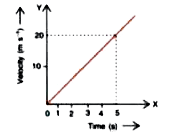
- Fig. shows the velocity-time graph of a particle of mass 100 g moving...
Text Solution
|
- A force causes an acceleration of 10 m s^(-2) in a body of mass 500 g....
Text Solution
|
- A cricket ball of mass 150 g moving at a speed of 25 ms^(-1) is brough...
Text Solution
|
- A force acts for 0.1 s on a body of mass 2 kg initially at rest. The f...
Text Solution
|
- A body of mass 500 g, initially at rest, is acted upon by a force whic...
Text Solution
|
- A car of mass 480 kg moving at a speed of 54 km per hour is stopped in...
Text Solution
|
- A car is moving with a uniform velocity 30 "ms"^(-1) . It is stopped i...
Text Solution
|
- A car is moving with a uniform velocity 30 "ms"^(-1) . It is stopped i...
Text Solution
|
- A car is moving with a uniform velocity 30 "ms"^(-1) . It is stopped i...
Text Solution
|
- A bullet of mass 50 g moving with an initial velocity 100 "m s"^(-1) ...
Text Solution
|
- A bullet of mass 50 g moving with an initial velocity 100 "m s"^(-1) ...
Text Solution
|
- A bullet of mass 50 g moving with an initial velocity 100 "m s"^(-1) ...
Text Solution
|
- A bullet of mass 50 g moving with an initial velocity 100 "m s"^(-1) ...
Text Solution
|