Home
Class 12
PHYSICS
A particle starts to move along a straig...

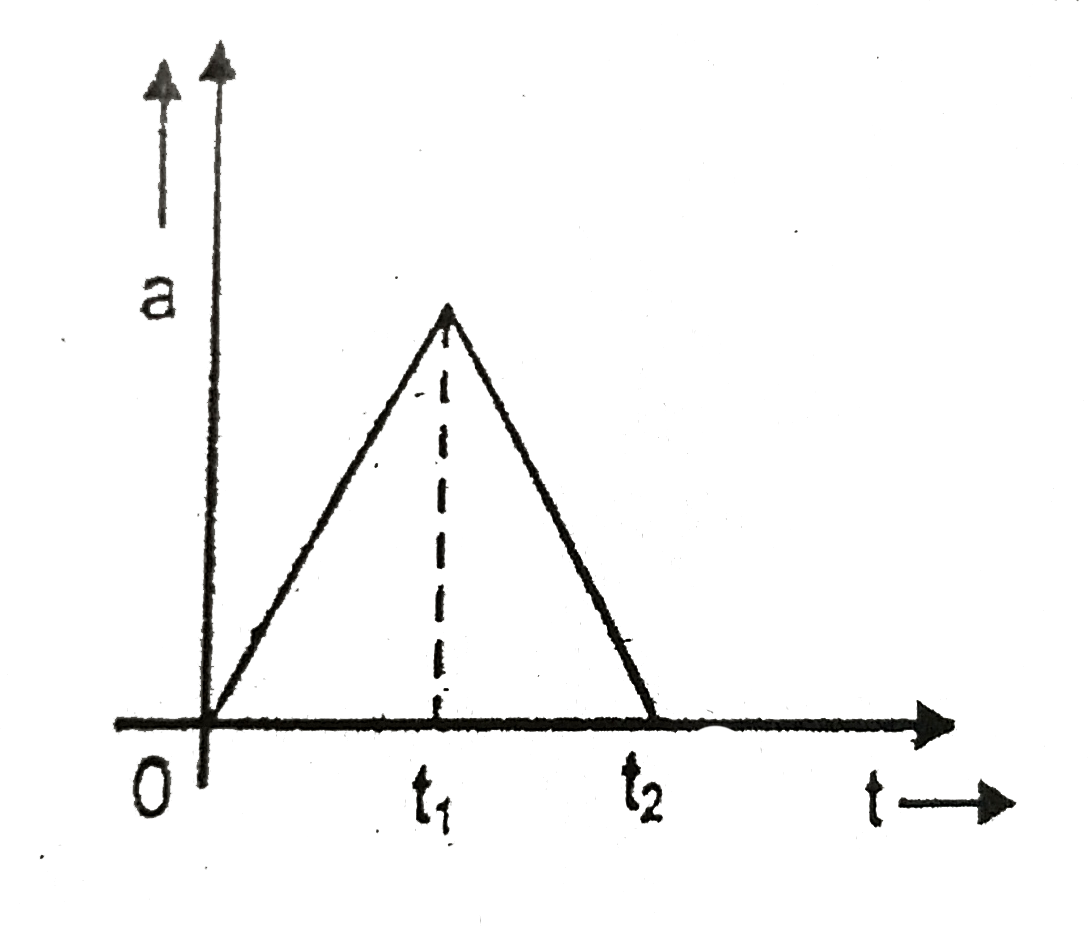
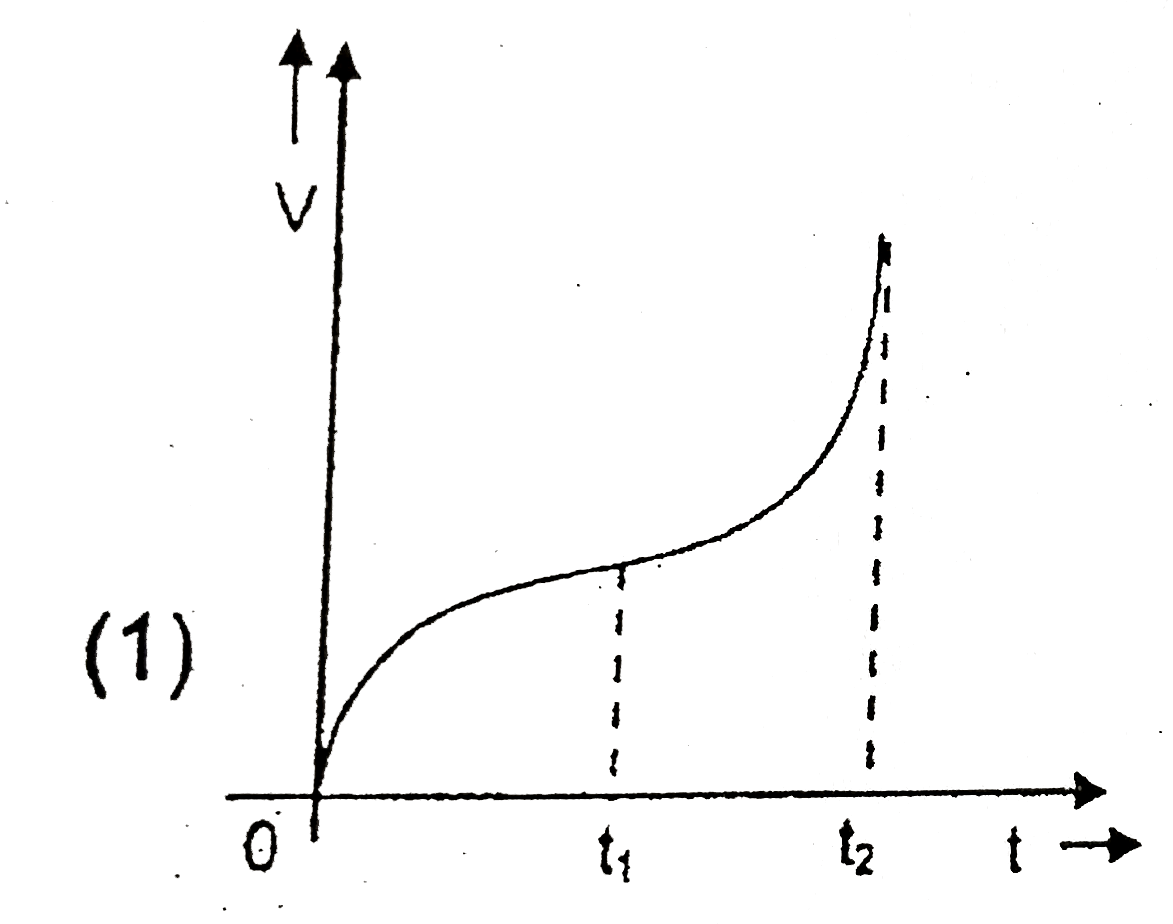
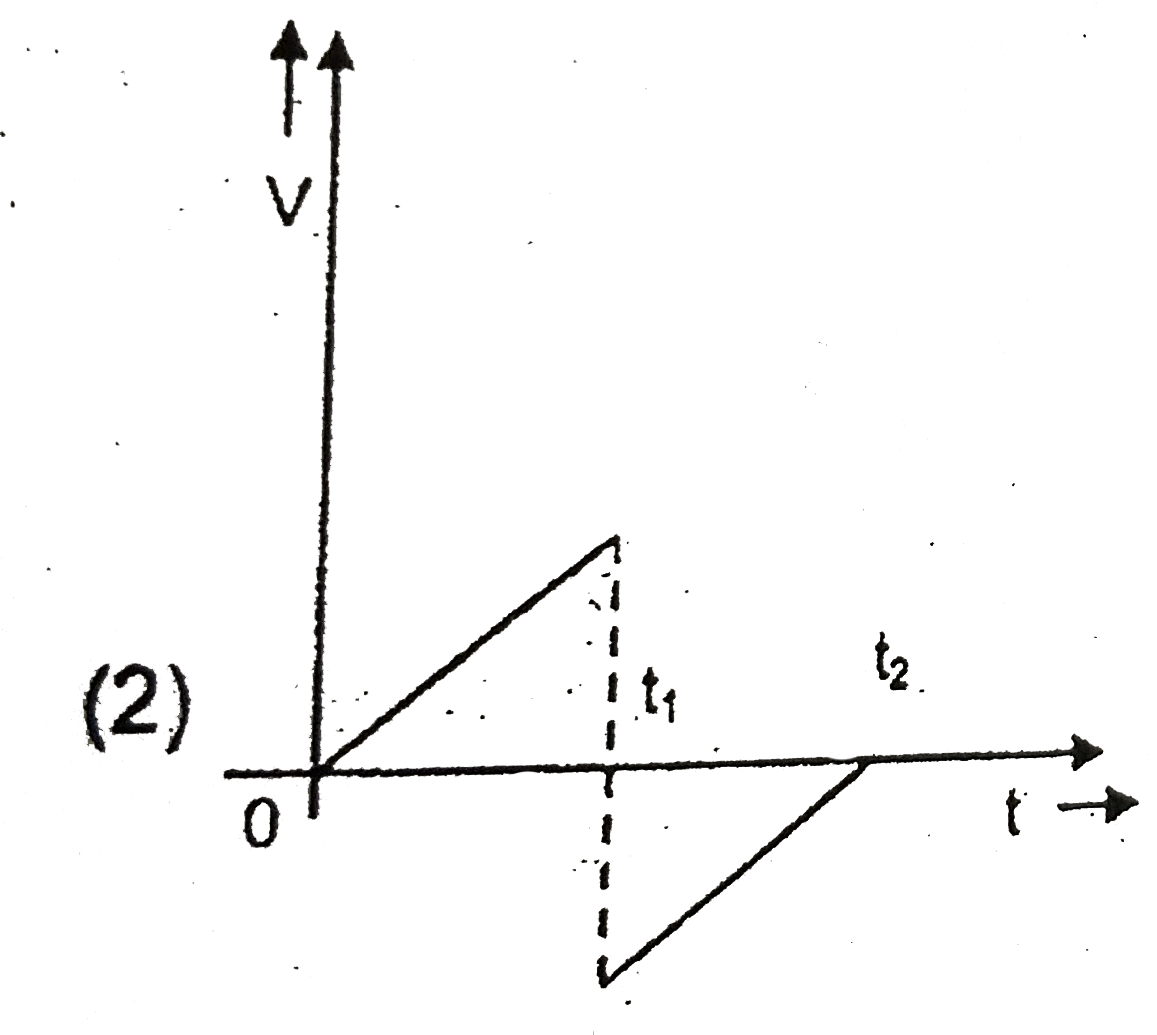
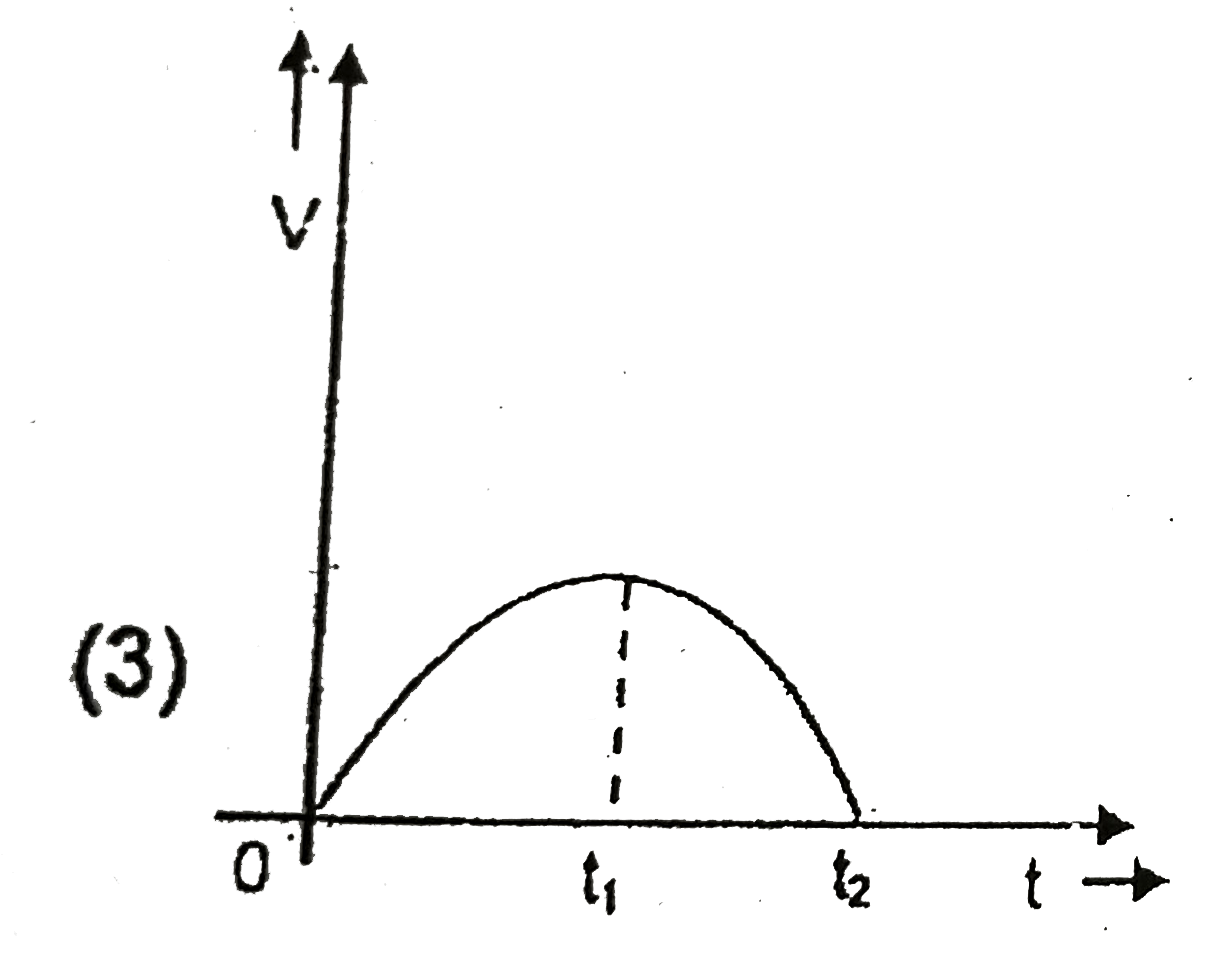
A particle starts to move along a straight line. The acceleration versus time graph of particle is as shown in figure. The correct velocity versus time graph is :

A

B

C

D

Text Solution

Verified by Experts

The correct Answer is:

D

A particle ………….
for t graph `:' "slope gt0` ltbgt For `0lt t lt t_(1) , (dv)/(dt)implies` increasing
for `t_(1)lt t lt t_(2) , (dv)/(dt) implies` "decreasing"
Promotional Banner

Topper's Solved these Questions

  • TEST PAPERS

    RESONANCE ENGLISH|Exercise PART - II PHYSICS|106 Videos
  • SIMPLE HARMONIC MOTION

    RESONANCE ENGLISH|Exercise Advanced Level Problems|13 Videos
  • TEST SERIES

    RESONANCE ENGLISH|Exercise PHYSICS|130 Videos

Similar Questions

Explore conceptually related problems

The velocity - time graph of a particle is as shown in figure

The acceleration versus time graph of a particle is shown in. The respective v-t graph of the particle is . .

The acceleration versus time graph of a particle moving in a straight line is show in. The velocity-time graph of the particle would be .

Velocity versus time graph of a body is shown in figure. It explains that

The acceleration versus time graph of a particle moving along a straight line is shown in the figure. Draw the respective velocity-time graph Given v=0 at t=0.

A particle starts motion from rest and moves along a straight line. Its acceleration-time graph is shown. Find out speed of particle at t=2s and at t=3s.

A particle moves in straight line. Acceleration of particle changes with velocity as showns in graph:

A particle is moving in a straight line whose acceleration versus time graph is given. Assume that initial velocity is in the direction of acceleration. Then which of the statement is correct between time t =0 to t = t_(0) . .

A particle is moving in a straight line. Particle was initially at rest. Acceleration versus time graph is shown in figure. Acceleration of particle is given by a=3sin pi t in m//s^(2) . The time (in s) when the particle comes to rest is

A graph of acceleration versus time of a particle starting from rest at t=0 is as shown in figure. The speed of the particle at t = 14s is

RESONANCE ENGLISH-TEST PAPERS-PHYSICS
  1. A bal is thrown vertically upwards from the ground. It crosses a point...

    Text Solution

    |

  2. int(0)^(pi//4) e^(x) (tan x+ sec^(2)x) dx

    Text Solution

    |

  3. A particle starts to move along a straight line. The acceleration vers...

    Text Solution

    |

  4. A semicircle of radius R = 5m with diameter AD as shown in figure. Two...

    Text Solution

    |

  5. A balloon is moving along with constant upward acceleration of 1 m//s^...

    Text Solution

    |

  6. If vecAxxvecB=vecC, then choose the incorrect option : [vecA and vecB ...

    Text Solution

    |

  7. A particle has an initial velocity of 9 m//s^(2) due east and a cons...

    Text Solution

    |

  8. An ant starts from point 'O' moving 50m due east, then 50m 30^(@) sout...

    Text Solution

    |

  9. A particle is projected in a smooth fixed square tube from point A. Th...

    Text Solution

    |

  10. The acceleration time graph of the motion of a particle from A to B is...

    Text Solution

    |

  11. If a stone is relased from a balloon moving upwards with certain veloc...

    Text Solution

    |

  12. The acceleration versus time graph for a particle moving along a strai...

    Text Solution

    |

  13. A particle can travel point A to B from two different path 1 and 2, as...

    Text Solution

    |

  14. Velocity of a particle moving along a straight line at any time 't' is...

    Text Solution

    |

  15. A particle moves with an initial velocity V(0) and retardation alpha v...

    Text Solution

    |

  16. A particle moves with an initial velocity V(0) and retardation alpha v...

    Text Solution

    |

  17. A particle moves with an initial velocity and retardation , where v i...

    Text Solution

    |

  18. If |vecA| = 4 and is constant. The value of vec, (dvecA)/(dt) can be ...

    Text Solution

    |

  19. A vector of magnitude sqrt2 coplanar with the vectors veca=hati+hatj+2...

    Text Solution

    |

  20. The resultant of vecA and vecB makes an angle alpha with vecA and beta...

    Text Solution

    |
