

Home
Class 12
PHYSICS
If a stone is relased from a balloon mov...

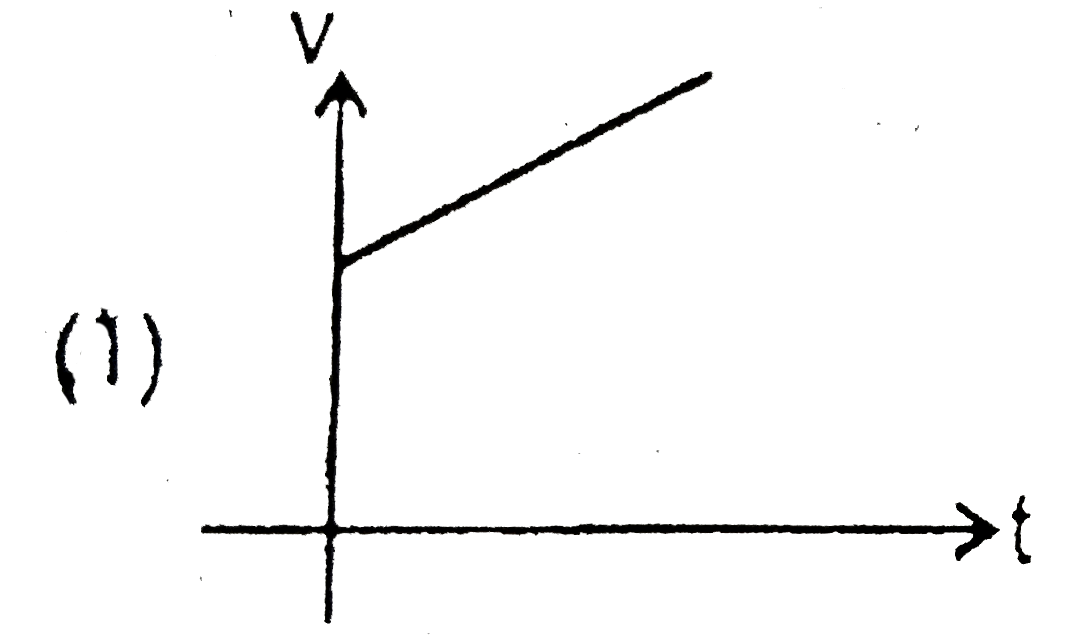
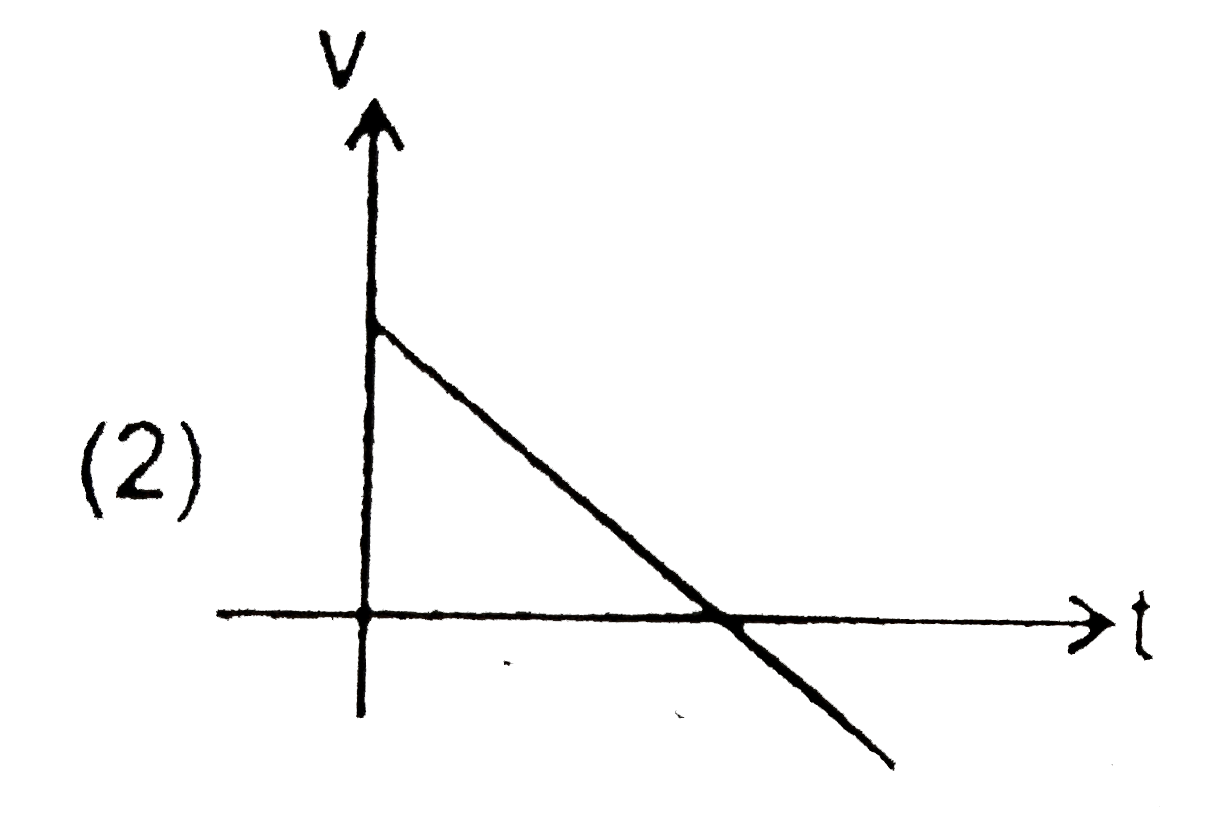
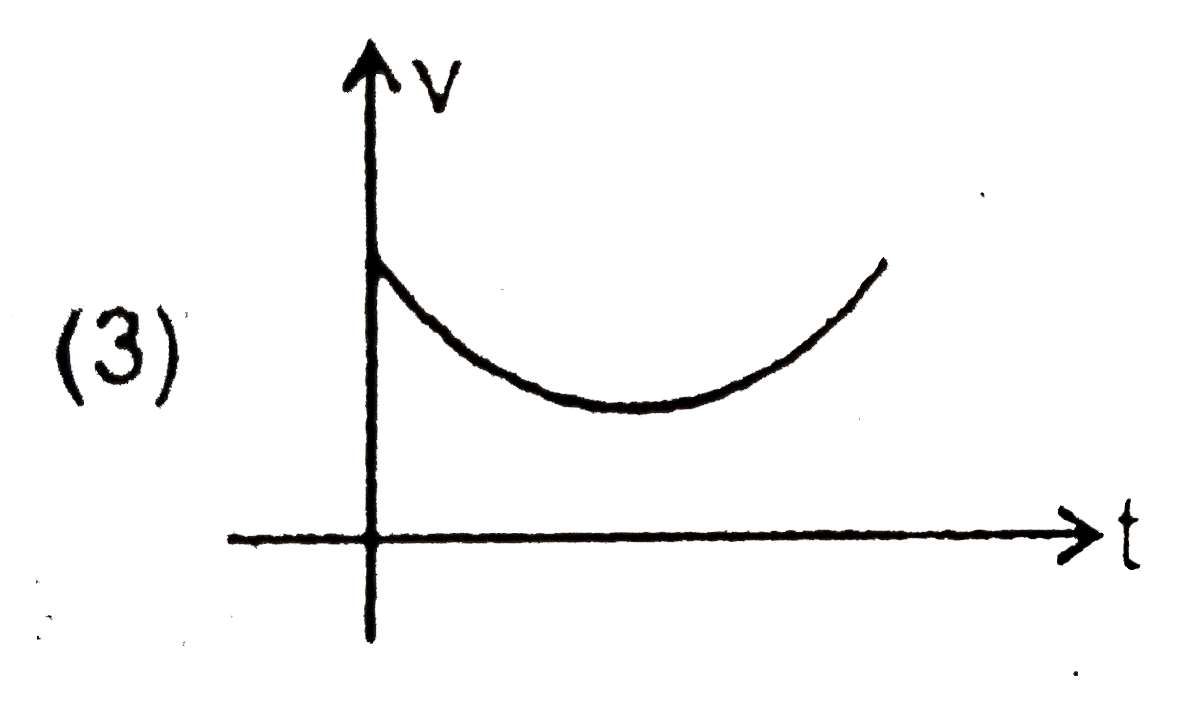
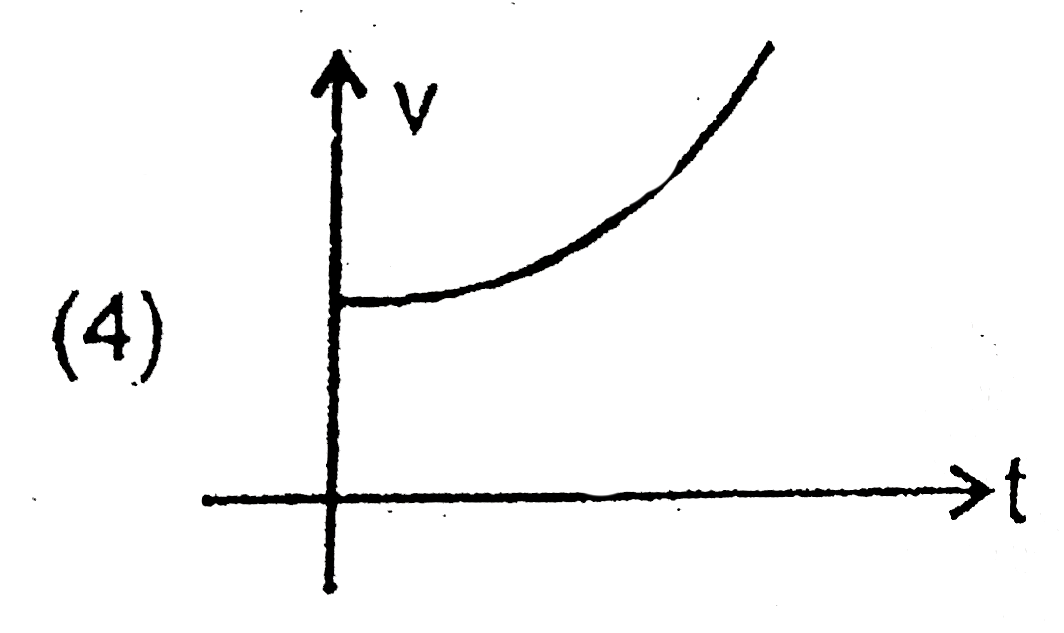
If a stone is relased from a balloon moving upwards with certain velocity `v_(0)` at certain height above earth's surface then velocity time curve of stone's motion can be best represented by : (g = constant)

A

B

C

D

Text Solution

AI Generated Solution

The correct Answer is:
To solve the problem, we need to analyze the motion of the stone after it is released from the balloon. Here’s a step-by-step breakdown of the solution: ### Step 1: Understand the Initial Conditions When the stone is released from the balloon, it has an initial upward velocity `v_0` (the same velocity as the balloon). **Hint:** Remember that the stone will initially continue moving in the direction it was moving at the moment of release. ### Step 2: Identify the Forces Acting on the Stone Once the stone is released, the only force acting on it is gravity, which pulls it downward with an acceleration `g`. **Hint:** The stone is no longer influenced by the balloon's motion after release; it is now in free fall. ### Step 3: Analyze the Motion of the Stone The stone will first move upward (since it has an initial upward velocity `v_0`), but as it ascends, the gravitational force will decelerate it until it reaches a maximum height where its velocity becomes zero. **Hint:** The stone's upward motion will continue until the gravitational force counteracts its initial velocity. ### Step 4: Determine the Velocity-Time Relationship 1. **Upward Motion:** The stone will move upward until it reaches its maximum height. During this phase, its velocity decreases from `v_0` to `0`. 2. **Downward Motion:** After reaching the maximum height, the stone will start falling back down, gaining speed in the downward direction (negative velocity). **Hint:** The velocity-time graph will show a decrease in velocity to zero and then a negative velocity as the stone falls back down. ### Step 5: Sketch the Velocity-Time Curve The velocity-time curve will start at `v_0`, decrease linearly to `0` (at the maximum height), and then continue to decrease into negative values as the stone falls back down. **Hint:** Since the acceleration due to gravity is constant, the velocity-time graph will be a straight line with a negative slope after the stone reaches its maximum height. ### Conclusion Based on the analysis, the velocity-time curve of the stone's motion can be best represented by option 2, which shows a positive initial velocity that decreases to zero and then becomes negative. **Final Answer:** The correct representation of the velocity-time curve is option 2.

To solve the problem, we need to analyze the motion of the stone after it is released from the balloon. Here’s a step-by-step breakdown of the solution: ### Step 1: Understand the Initial Conditions When the stone is released from the balloon, it has an initial upward velocity `v_0` (the same velocity as the balloon). **Hint:** Remember that the stone will initially continue moving in the direction it was moving at the moment of release. ### Step 2: Identify the Forces Acting on the Stone ...
Promotional Banner

Topper's Solved these Questions

  • TEST PAPERS

    RESONANCE ENGLISH|Exercise PART - II PHYSICS|106 Videos
  • SIMPLE HARMONIC MOTION

    RESONANCE ENGLISH|Exercise Advanced Level Problems|13 Videos
  • TEST SERIES

    RESONANCE ENGLISH|Exercise PHYSICS|130 Videos
RESONANCE ENGLISH-TEST PAPERS-PHYSICS
  1. A particle is projected in a smooth fixed square tube from point A. Th...

    Text Solution

    |

  2. The acceleration time graph of the motion of a particle from A to B is...

    Text Solution

    |

  3. If a stone is relased from a balloon moving upwards with certain veloc...

    Text Solution

    |

  4. The acceleration versus time graph for a particle moving along a strai...

    Text Solution

    |

  5. A particle can travel point A to B from two different path 1 and 2, as...

    Text Solution

    |

  6. Velocity of a particle moving along a straight line at any time 't' is...

    Text Solution

    |

  7. A particle moves with an initial velocity V(0) and retardation alpha v...

    Text Solution

    |

  8. A particle moves with an initial velocity V(0) and retardation alpha v...

    Text Solution

    |

  9. A particle moves with an initial velocity and retardation , where v i...

    Text Solution

    |

  10. If |vecA| = 4 and is constant. The value of vec, (dvecA)/(dt) can be ...

    Text Solution

    |

  11. A vector of magnitude sqrt2 coplanar with the vectors veca=hati+hatj+2...

    Text Solution

    |

  12. The resultant of vecA and vecB makes an angle alpha with vecA and beta...

    Text Solution

    |

  13. The value of cos0 cos1^(@)cos2^(@) ……………. cos179^(@) cos180^(@) is :

    Text Solution

    |

  14. Select the correct statement

    Text Solution

    |

  15. If veca = hati+hatj-2hatk, vecb=2hati-3hatj+hatk the value of (2veca+3...

    Text Solution

    |

  16. A vector may change when we :

    Text Solution

    |

  17. Select the statement about two vector vecA and vecB .

    Text Solution

    |

  18. A copper sphere is being heated. Its volume as a result of increasing ...

    Text Solution

    |

  19. The value of sec690^(@) is :

    Text Solution

    |

  20. A driver takes 0.20 s to apply the brakes after he sees a need for it....

    Text Solution

    |