Home
Class 11
PHYSICS
A mosquito with 8 legs stands on water s...

A mosquito with 8 legs stands on water surface and each leg makes depression of radius a. If the surface tension and angle of contact are T and zero respectively , then the weight of mosquito is

A

8T.a

B

`16 pi Ta`

C

`(Ta)/8`

D

`(Ta)/(16 pi)`

Text Solution

Verified by Experts

The correct Answer is:
B

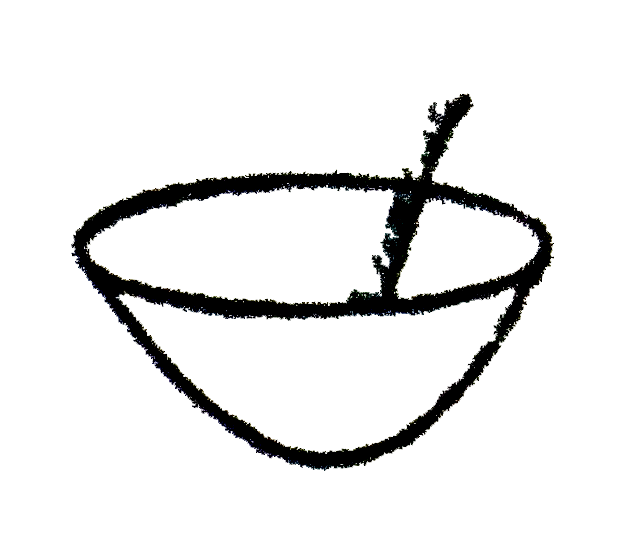
Figure shows one of the legs of the mosquito landing upon the water surface.
Therefore, `T.2piaxx8=W`=weight of the mosquito
Promotional Banner

Topper's Solved these Questions

  • FLUID MECHANICS

    RESONANCE ENGLISH|Exercise Examples|22 Videos
  • FLUID MECHANICS

    RESONANCE ENGLISH|Exercise Board Level Exercise|18 Videos
  • ELECTROSTATICS

    RESONANCE ENGLISH|Exercise Exercise|52 Videos
  • FULL TEST 1

    RESONANCE ENGLISH|Exercise Exercise|30 Videos

Similar Questions

Explore conceptually related problems

A cube of side a and mass on just floats on the surface of water as shown in the figure. The surface tension and density of water are T and rho_(w) respectively. If angle of contact between cube and water surface is zero, find the distance h (in metres) between the lower face of cube and surface of the water. (Take m=1kg, g=10ms^(-12), aT=10/4 unit and rho_(w)a^(2)g=10 unit)

If r and T are radius and surface tension of a spherical soap bubble respectively then find the charge needed to double the radius of bubble.

A long capillary tube of radius 0.2 mm is placed vertically inside a beaker of water. If the surface tension of water is 7.2xx10^(-2)N//m the angle of contact between glass and water is zero, then determine the height of the water column in the tube.

A uniform capillary tube of inner radius r is dipped vertically into a beaker filled with water. The water rises to a height h in the capillary tube above the water surface in the beaker. The surface tension of water is sigma . The angle of contact between water and the wall of the capillary tube is theta . Ignore the mass of water in the meniscus. Which of the following statements is (are) true?

A student writes the equation for the capillary rise of a liquid in a tube as h=(rhog)/(2Tcos theta) , where r is the radius of the capillary tube, rho is the density of liquid, T is the surface tension and theta is the angle of contact. Check the correctness of the equation using dimensional analysis?

The angle of contact between glass and water is 0^@ and water (surface tension 70 dyn//cm ) rises in a glass capillary up to 6 cm . Another liquid of surface tension 140 dyn//cm , angle of contact 60^@ and relative density 2 will rise in the same capillary up to

A number of droplets, each of radius r , combine to form a drop of radius R . If T is the surface tension, the rise in temperature will be

A vertical capillary is brought in contact with the water surface (surface tension = T). The radius of the capillary is r and the contact angle theta = 0^(@) . The increase in potential energy of the water (density =rho ) is

A thin metal disc of radius r floats on water surface and bends the surface downwards along the perimeter making an angle theta with vertical edge of the disc . If the disc displaces a weight of water W and surface tension of water is T , then the weight of metal disc is

An air bubble of radius r in water is at a depth h below the water surface at some instant. If P is atmospheric pressure, d and T are density and surface tension of water respectively . the pressure inside the bubble will be :

