Home
Class 11
PHYSICS
A fire hydrant delivers water of density...

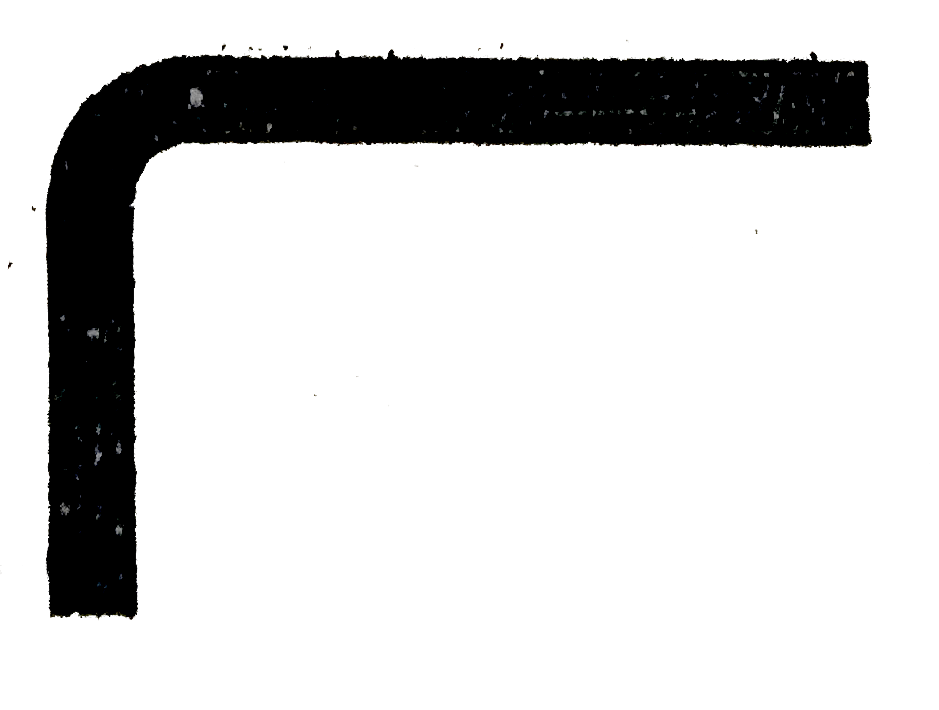
A fire hydrant delivers water of density `rho` at a volume rate L. The water travels vertically upward through the hydrant and then does `90^@` turn to emerge horizontally at speed V. The pipe and nozzle have uniform cross-seciton throughout. The force exerted by the water on the corner of the hydrant is

A

`rhoVL`

B

zero

C

`2rhoVL`

D

`sqrt(2)rhoVL`

Text Solution

Verified by Experts

The correct Answer is:

D
Promotional Banner

Topper's Solved these Questions

  • FLUID MECHANICS

    RESONANCE ENGLISH|Exercise Exercise- 2 PART - II|6 Videos
  • FLUID MECHANICS

    RESONANCE ENGLISH|Exercise Exercise- 2 PART - III|7 Videos
  • FLUID MECHANICS

    RESONANCE ENGLISH|Exercise Exercise- 1 PART - II Section (C)|5 Videos
  • ELECTROSTATICS

    RESONANCE ENGLISH|Exercise Exercise|52 Videos
  • FULL TEST 1

    RESONANCE ENGLISH|Exercise Exercise|30 Videos

Similar Questions

Explore conceptually related problems

A fire hydrant delivers water of density rho at a volume are L . The water travels vertically upward through the hydrant and then does 90^(@) turn to emerge horizontally at speed V . The pipe and nozzle have uniform cross-section through out. The force exerted by the water on the corner of the hydrant is

Water (density rho ) is flowing through the uniform tube of cross-sectional area A with a constant speed v as shown in the figure. Find the magnitude of force exerted by the water on the curved corner of the tube is (neglect viscous forces)

A liquid of density rho is flowing with a speed v through a pipe of cross sectional area A. The pipe is bent in the shape of a right angles as shown. What force should be exerted on the pipe at the corner to keep it fixed?

A liquid of density rho flows along a horizontal pipe of uniform cross-section A with a velocity v through a right angled bend as shown in fig. What force has to be exerted at the bend to hold the pipe in equilibrium ? .

A plate moves normally with the speed v_(1) towads a horizontal jet of uniform area of cross-section. The jet discharge water at the rate of volume V per second at a speed of v_(2) . The density of water is rho . Assume that water splashes along the surface of the plate ar right angles to the original motion. The magnitude of the force action on the plate due to the jet of water is

A plate moves normally with the speed v_(1) towads a horizontal jet of uniform area of cross-section. The jet discharge water at the rate of volume V per second at a speed of v_(2) . The density of water is rho . Assume that water splashes along the surface of the plate ar right angles to the original motion. The magnitude of the force action on the plate due to the jet of water is

A spray gun is shown in the figure where a piston pushes air out of a nozzle. A thin tube of uniform cross section is connected to the nozzle. The other end of the tube is in a small liquid container. As the piston pushes air through the nozzle, the liquid from the container rises into the nozzle and is sprayed out. For the spray gun shown, the radii of the piston and the nozzle are 20mm and 1mm respectively. The upper end of the container is open to the atmosphere. If the density of air is rho_a , and that of the liquid rho_l , then for a given piston speed the rate (volume per unit time) at which the liquid is sprayed will be proportional to

Liquid water coats an active (growing) icicle and extends up a short, narrow tube along the central axis. Because the water-ice interface must have a temperature of 0^(@) C, the water in the tube cannot lose energy through the sides of the icicle or down through the tip because there is no temperature change in those directions . It can lose energy and freeze only by sending energy up(through distance L) to the top of the icicle, where the temperature T_(r) can be below 0^(@) C. Take L=0.10m and T_(r) = -5^(@) C.Assume that the central tube and the upward conduction path both have crosse-sectional area A=0.5 m^(2) . The thermal conductivity of ice is 0.40 W //mcdotK , latent heat of fusion is L_(F)=4.0xx10^(5) J//K and the density of liquid water is 1000 kg //m^(3) . At what rate does the top of the tube move downward because of water freezing there?

Liquid water coats an active (growing) icicle and extends up a short, narrow tube along the central axis. Because the water-ice interface must have a temperature of 0^(@) C, the water in the tube cannot lose energy through the sides of the icicle or down through the tip because there is no temperature change in those directions . It can lose energy and freeze only by sending energy up(through distance L) to the top of the icicle, where the temperature T_(r) can be below 0^(@) C. Take L=0.10m and T_(r) = -5^(@) C.Assume that the central tube and the upward conduction path both have crosse-sectional area A=0.5 m^(2) . The thermal conductivity of ice is 0.40 W //mcdotK , latent heat of fusion is L_(F)=4.0xx10^(5) J//K and the density of liquid water is 1000 kg //m^(3) . The rate at which mass converted from liquid to ice at the top of the central tube is

Fluids at rest exert a normal force to the walls of the container or to the sruface of the Body immersed in the fluid. The pressure exerted by this force at a point inside the liqid is the sum of atmospheric pressure and a factor which depends on the density of the liquid, the acceleration due to gravity and the height of the liquid, above that point. The upthrust acting on a body immersed in a stationary liquid is the net force acting on the body in the upward direction. A number of phenomenon of liquids in motion can be explain by Bernoulli's theorem which relates the pressure, flow speed and height for flow of an ideal incompressible fluid. A container of large uniform corss sectional area. A resting on a horizontal surface holds two immiscible, non viscous and incompressile liquids of densities d and 2d , each of height H//2 as shown in the figure. The lower density liquid is open to the atmosphere having pressure P_(0) . Situation I: A homogeneous solid cylinder of length L(LltH//2) . cross sectional area A//5 is immersed such that it floats with its axis vertical at liquid -liquid interface with lenght L//4 in the denser liquid. The density of the solid is

RESONANCE ENGLISH-FLUID MECHANICS-Exercise- 2 PART - I
  1. A fire hydrant delivers water of density rho at a volume rate L. The w...

    Text Solution

    |

  2. A tube in vertical plane is shown in figure. It is filled with a liqui...

    Text Solution

    |

  3. A U-tube of base length l filled with the same volume of two liquids o...

    Text Solution

    |

  4. A narrow tube completely filled with a liquid is lying on a series of ...

    Text Solution

    |

  5. An open pan P filled with water (density rho(W)) is placed on a vertic...

    Text Solution

    |

  6. In the figure shown, water is filled in a symmetrical container. Four ...

    Text Solution

    |

  7. Figure shows a weighing-bridge, with a beaker P with water on one pan ...

    Text Solution

    |

  8. A cylindrical container of radius 'R' and height 'h' is completely fil...

    Text Solution

    |

  9. A uniform rod OB of length 1m, cross-sectional area 0.012 m^(2) and re...

    Text Solution

    |

  10. A non-uniform cylinder of mass m, length l and radius r has its centre...

    Text Solution

    |

  11. Assertion : A solid object of iron is dipped in water, both are at sam...

    Text Solution

    |

  12. A liquid is kept in a cylindrical vessel which is rotated along its ax...

    Text Solution

    |

  13. A block is partially immeresed in a liquid and the vessel is accelerat...

    Text Solution

    |

  14. A portion of a tube is shown in the figure. Fluid is flowing from cros...

    Text Solution

    |

  15. There is a small hole in the bottom of a fixed container containing a ...

    Text Solution

    |

  16. The velocity of the liquid coming out of a small hole of a vessel cont...

    Text Solution

    |

  17. Two water pipes of diameters 2 cm and 4 cm are connected in series i.e...

    Text Solution

    |

  18. A large open tank has two holes in the wall. One is a square hole of s...

    Text Solution

    |
