Home
Class 12
PHYSICS
A convex lens is cut into two parts in d...

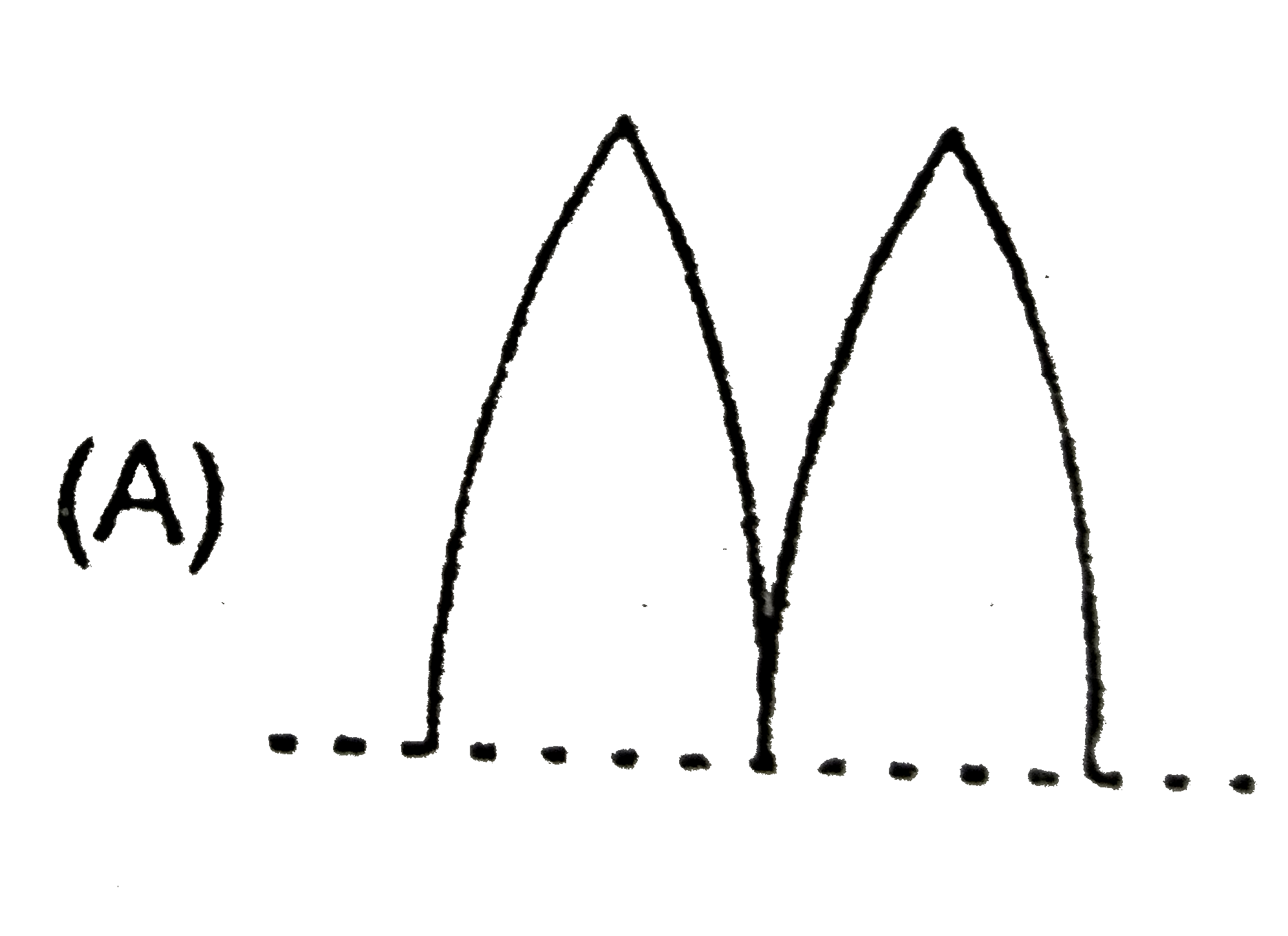
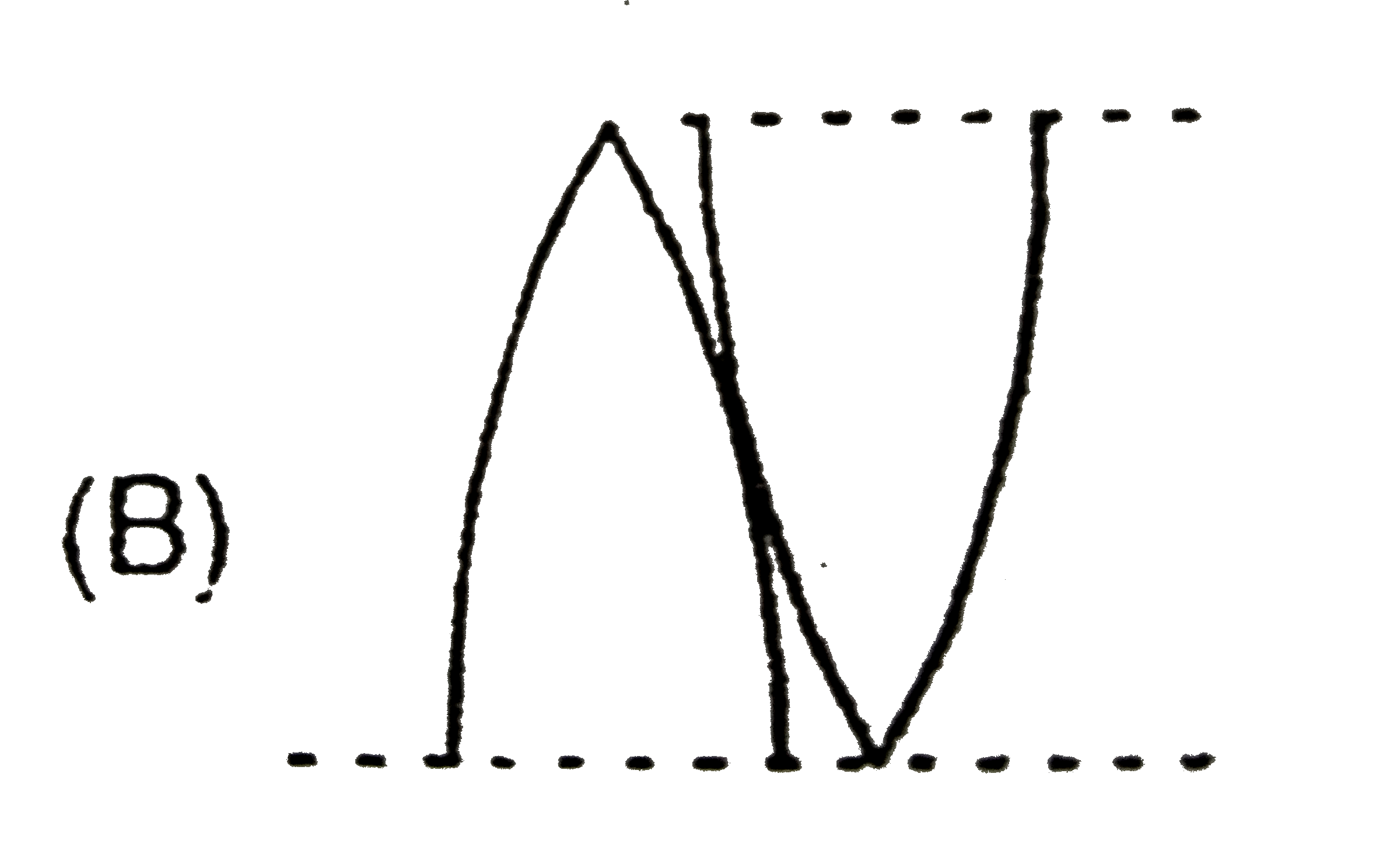
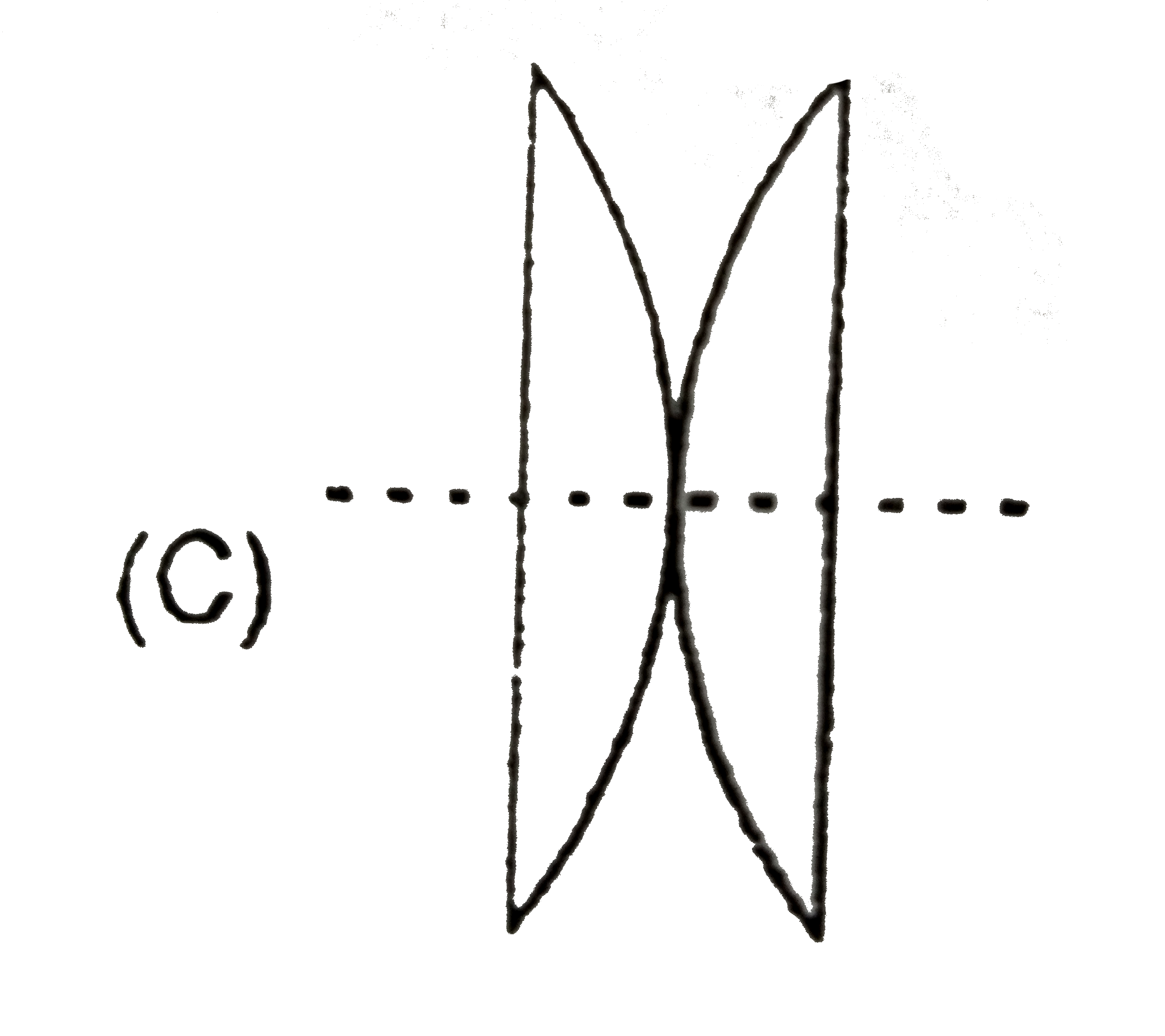
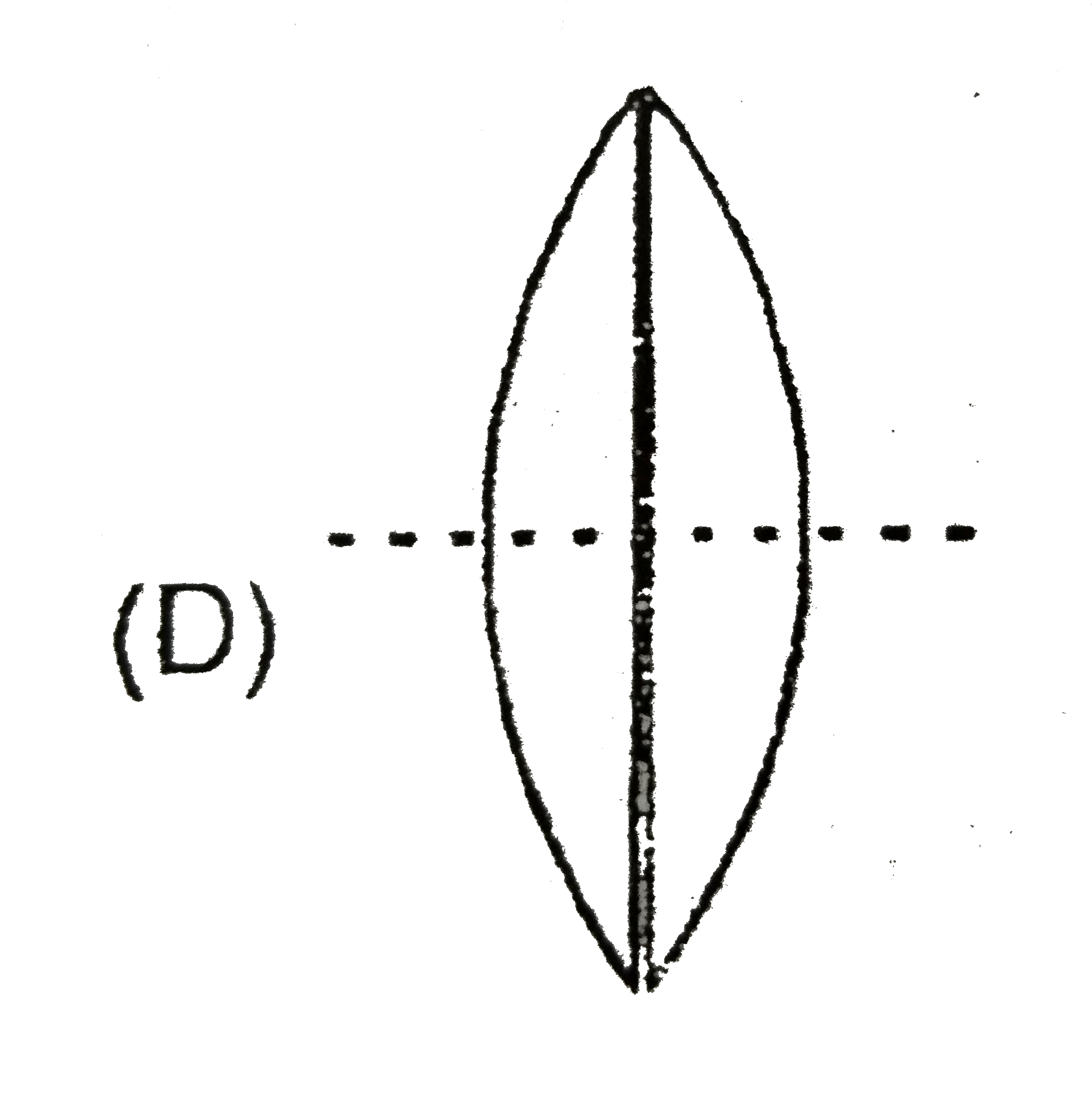
A convex lens is cut into two parts in different ways that are arranged in four manners, as shown. Which arrangement will give maximum optical power?

A

B

C

D

Text Solution

AI Generated Solution

The correct Answer is:

To determine which arrangement of the cut convex lens gives the maximum optical power, we will analyze the focal lengths of each arrangement and calculate their respective powers. The power \( P \) of a lens is given by the formula: \[ P = \frac{1}{f} \] where \( f \) is the focal length of the lens. The goal is to find the arrangement with the minimum focal length, as this will correspond to the maximum optical power. ### Step-by-Step Solution: 1. **Understanding the Lens Arrangement**: The convex lens is cut into two parts in different ways, and we need to analyze four different arrangements. 2. **Power and Focal Length Relationship**: Recall that the power of a lens is inversely proportional to its focal length. Thus, to maximize the power, we need to minimize the focal length. 3. **Analyzing Each Arrangement**: - **Arrangement 1**: - The two parts of the lens are arranged such that they work together. The effective focal length \( f_1 \) can be calculated as: \[ \frac{1}{f_1} = \frac{1}{f_1'} + \frac{1}{f_2'} \quad \text{(where \( f_1' \) and \( f_2' \) are the focal lengths of each half)} \] - For equal halves of a lens, if the original lens had a focal length \( f \), then each half will have a focal length of \( \frac{f}{2} \). Thus: \[ \frac{1}{f_1} = \frac{2}{f/2} = \frac{4}{f} \quad \Rightarrow \quad f_1 = \frac{f}{4} \] - **Arrangement 2**: - In this arrangement, one part acts like a mirror. Thus, the effective focal length \( f_2 \) becomes infinite, leading to: \[ P_2 = 0 \quad \text{(since \( f_2 = \infty \))} \] - **Arrangement 3**: - The two parts are arranged such that they are still effective. The effective focal length \( f_3 \) can be calculated similarly: \[ \frac{1}{f_3} = \frac{1}{f/2} + \frac{1}{f/2} = \frac{4}{f} \quad \Rightarrow \quad f_3 = \frac{f}{4} \] - **Arrangement 4**: - The two parts are arranged oppositely. The effective focal length \( f_4 \) can be calculated as: \[ \frac{1}{f_4} = \frac{1}{f/2} - \frac{1}{f/2} = 0 \quad \Rightarrow \quad f_4 = \infty \] 4. **Calculating Powers**: - For Arrangement 1 and 3, \( f = \frac{f}{4} \): \[ P_1 = P_3 = \frac{4}{f} \] - For Arrangement 2 and 4, \( f = \infty \): \[ P_2 = P_4 = 0 \] 5. **Conclusion**: The arrangements that yield the maximum optical power are Arrangement 1 and Arrangement 3, both having the same focal length and thus the same power. Therefore, the arrangement that gives maximum optical power is Arrangement 1 (or 3). ### Final Answer: **Arrangement 1 gives the maximum optical power.**

To determine which arrangement of the cut convex lens gives the maximum optical power, we will analyze the focal lengths of each arrangement and calculate their respective powers. The power \( P \) of a lens is given by the formula: \[ P = \frac{1}{f} \] where \( f \) is the focal length of the lens. The goal is to find the arrangement with the minimum focal length, as this will correspond to the maximum optical power. ...
Promotional Banner

Topper's Solved these Questions

  • TEST PAPERS

    RESONANCE ENGLISH|Exercise PART - II PHYSICS|106 Videos
  • SIMPLE HARMONIC MOTION

    RESONANCE ENGLISH|Exercise Advanced Level Problems|13 Videos
  • TEST SERIES

    RESONANCE ENGLISH|Exercise PHYSICS|130 Videos

Similar Questions

Explore conceptually related problems

Find the number of ways in which 12 different beads can be arranged to form a necklace.

If a symmetrical bi-concave thin lens is cut into two identical halves, and they are placed in different ways as shown, then

Find the number of ways in which 10 different diamonds can be arranged to make a necklace.

In the figure (i) a thin lens of focal length 10cm is shown. The lens is cut into two equal parts, and the parts are arranged as shown in the figure (ii). An object AB of height 1cm is placed at distance of 7.5cm from the arrangement. The height of the final image will be:

A convex lens of glass (mu=1.5) is formed by combining two surfaces of radii R_(1)=60 cm and R_(2)=30cm . It is cut into two parts in two different ways as shown in Figure . Find: a. the focal length of the lens. b. in figure (a), the focal length of left portion and that of the right portion. c. in figure (b), the focal length of the upper part and that of the lower part.

Two displacement vectors of same magnitude are arranged in the folllowing manner. Magnitude of resultant is maximum for

A man thinks about 4 arrangements as shown to raise two small bricks each having mass m. Which of the arrangement would take minimum time ?

A spring of stiffness constant k and natural length l is cut into two parts of length 3l//4 and l//4 , respectively, and an arrangement is made as shown in figure . If the mass is slightly displaced , find the time period of oscillation.

Give two different ways by which the product can be separated from the reactants.

A convex lens is cut in half along its principal axis and the two halves are separated by a distance of 12cm. An object is placed 6cm in front of the lens as shown in Figure., Two sharp images are formed on the screen placed 80cm from the object. What is the focal length of the lens?

RESONANCE ENGLISH-TEST PAPERS-PHYSICS
  1. A horizontal light ray passes through a prism (mu=1.5) of angle 4^(@)....

    Text Solution

    |

  2. Figure shows a object placed in front of a lens of focal length 10 cm,...

    Text Solution

    |

  3. A convex lens is cut into two parts in different ways that are arrange...

    Text Solution

    |

  4. The magnifying power of a telescope can be increased

    Text Solution

    |

  5. A red postage stamp is viewed in yellow (monochromatic) light. It appe...

    Text Solution

    |

  6. In a compound microscope

    Text Solution

    |

  7. An electromagnetic wave travelling through a transparent medium is giv...

    Text Solution

    |

  8. Two light waves travelling in same medium are given by E(1)=2sin(100pi...

    Text Solution

    |

  9. If young's double slit experiment is performed in water

    Text Solution

    |

  10. A point object is placed at a distance 20 cm from the focus of a conca...

    Text Solution

    |

  11. A small wooden rod of length 5mm is fixed at the bottom of the contain...

    Text Solution

    |

  12. A ray is incident on a sphere of refractive index sqrt(2) as shown in ...

    Text Solution

    |

  13. If the distance between two images formed by upper and lower part of t...

    Text Solution

    |

  14. The minimum magnifying power of a telescope is M. If focal length of i...

    Text Solution

    |

  15. The dispersive power of the material of a lens is 0.04 and the focal l...

    Text Solution

    |

  16. A thin prism of glass is placed in air and water respectively. If n(0)...

    Text Solution

    |

  17. A fiber of length 10cm is illuminated with light from an light emittin...

    Text Solution

    |

  18. Figure shows two coherent sources S(1) and S(2) vibrating in same phas...

    Text Solution

    |

  19. In Young's Double slit experiment, a thin glass mica strip of thicknes...

    Text Solution

    |

  20. In young's double-slit experiment, the slit are 2 mm apart and are ill...

    Text Solution

    |
