Home
Class 11
CHEMISTRY
In which reaction product formation take...

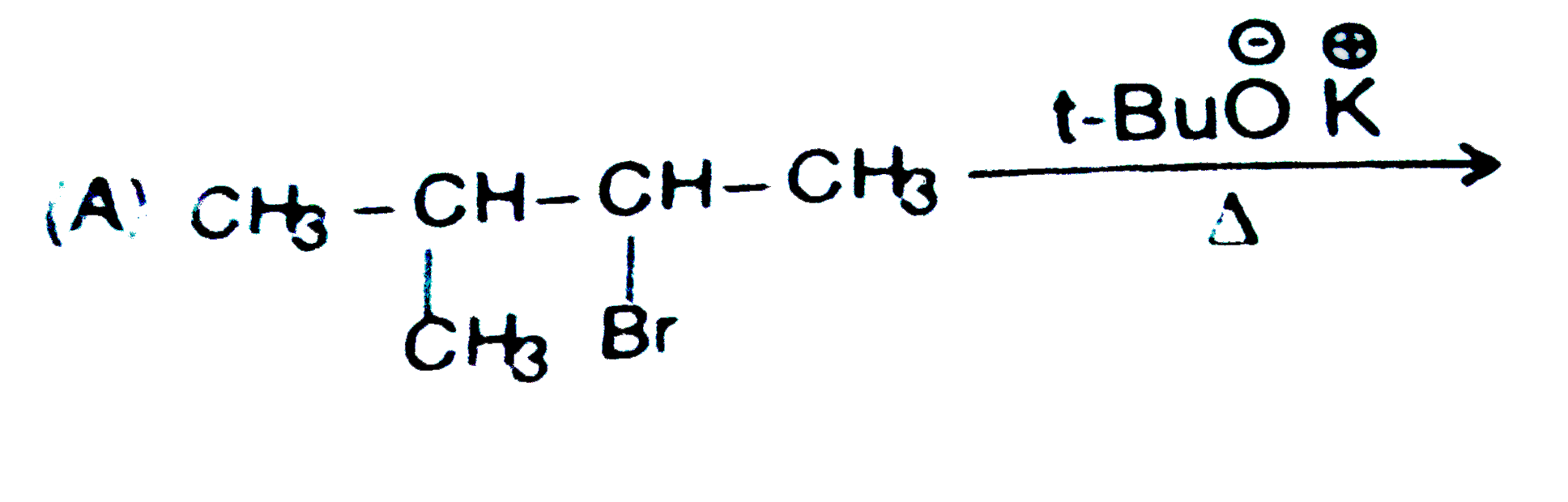
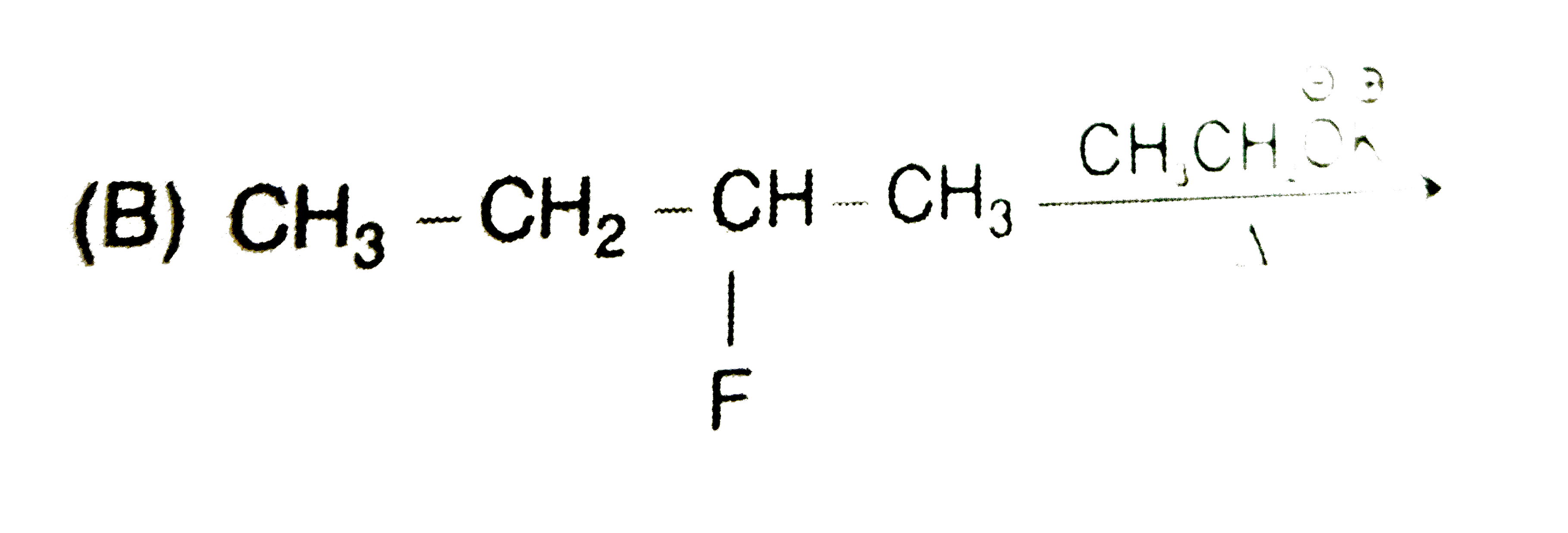
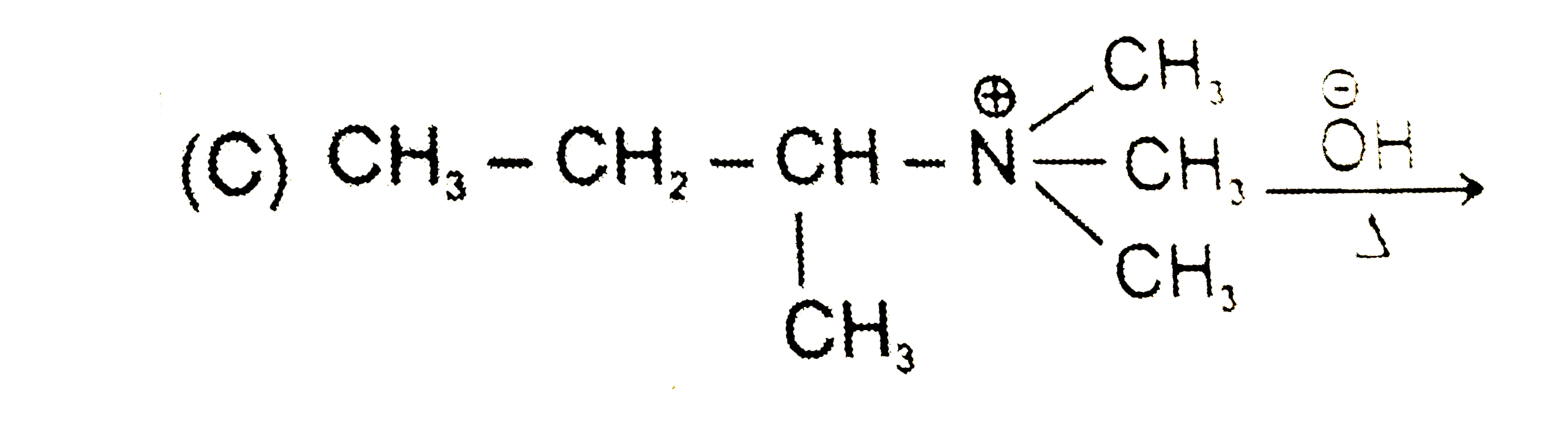
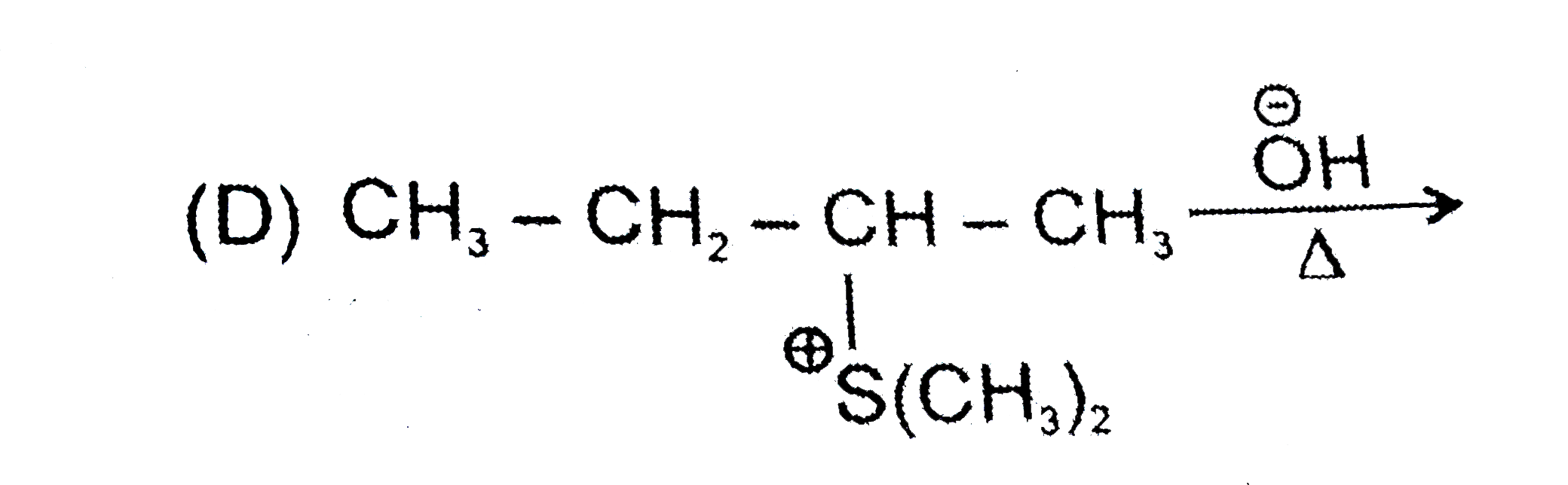
In which reaction product formation takes place by Hoffmann rule ?

A

B

C

D

Text Solution

AI Generated Solution

The correct Answer is:

To determine in which reaction product formation takes place by Hoffmann rule, we need to understand the Hoffmann rule itself. The Hoffmann rule states that in elimination reactions, the less substituted alkene is favored as the major product. This is in contrast to the Saytzeff rule, which states that the more substituted alkene is favored. ### Step-by-Step Solution: 1. **Identify the Reactions**: We need to analyze the given reactions to see which ones lead to the formation of less substituted alkenes. The reactions can be of E2 or E1 type. 2. **Reaction Types**: - **E2 Mechanism**: Involves a strong base that abstracts a proton while a leaving group departs simultaneously. - **E1 Mechanism**: Involves the formation of a carbocation intermediate followed by deprotonation. 3. **Analyze Each Reaction**: - **Reaction 1**: If we have a substrate that can undergo elimination with a strong base and the leaving group is good, we check the product formed. If it leads to a less substituted alkene, it follows the Hoffmann rule. - **Reaction 2**: Similar to the first, we look for the formation of a less substituted alkene. If a bad leaving group is involved, the reaction might proceed through a carbocation, leading to a Hoffmann product. - **Reaction 3**: If the reaction involves a quaternary amine and leads to a less substituted alkene, it also follows the Hoffmann rule. - **Reaction 4**: Again, if the product formed is a less substituted alkene due to the mechanism being E1CB or E2, it follows the Hoffmann rule. 4. **Conclusion**: After analyzing all reactions, we conclude that all the reactions listed yield products that are consistent with the Hoffmann rule, as they lead to less substituted alkenes. ### Final Answer: All the reactions mentioned in the question lead to product formation by the Hoffmann rule.
Promotional Banner

Topper's Solved these Questions

  • ORGANIC REACTION MECHANISMS-IV

    RESONANCE ENGLISH|Exercise Exercise-2 Part-4|8 Videos
  • ORGANIC REACTION MECHANISMS-IV

    RESONANCE ENGLISH|Exercise Exercise-3 Part-1|18 Videos
  • ORGANIC REACTION MECHANISMS-IV

    RESONANCE ENGLISH|Exercise Exercise-2 Part-2|7 Videos
  • ORGANIC REACTION MECHANISMS - II

    RESONANCE ENGLISH|Exercise APSP Part - 3|22 Videos
  • PERIODIC TABLE & PERIODICITY

    RESONANCE ENGLISH|Exercise ORGANIC CHEMISTRY(BASIC CONCEPTS)|27 Videos

Similar Questions

Explore conceptually related problems

In which reaction product formation takes place by Saytzeff rule

Micelles formation takes place

Syncytium formation takes place if

Pannus formation takes place in :-

Cyst formation takes place during

Formation of soil takes place by

Formation of organic matter takes place by

Nucleophilic aliphatic substitution reaction is mainly of two types: S_(N)1 and S_(N)2 . The S_(N)1 mechanism is a two step process. Reaction velocity of S_(N)1 reaction depends only on the concentration of the substrate. Since product formation takes place by the formation of carbocation, optically active substrate gives (+) and (-) forms of the product. In most of the cases the product usually consits of 5-20% inverted product and 80-95% racemised species. The more stable the carbocation, the greater is the proportion of racemisation. In solvolysis reaction, the more nucleophilic the solvent, the greater is the proportion of inversion. For the gives reaction, Which substrate will give maximum racemisation?
