Home
Class 11
CHEMISTRY
4-Oxobutanoic acid is reduced with Na-bo...

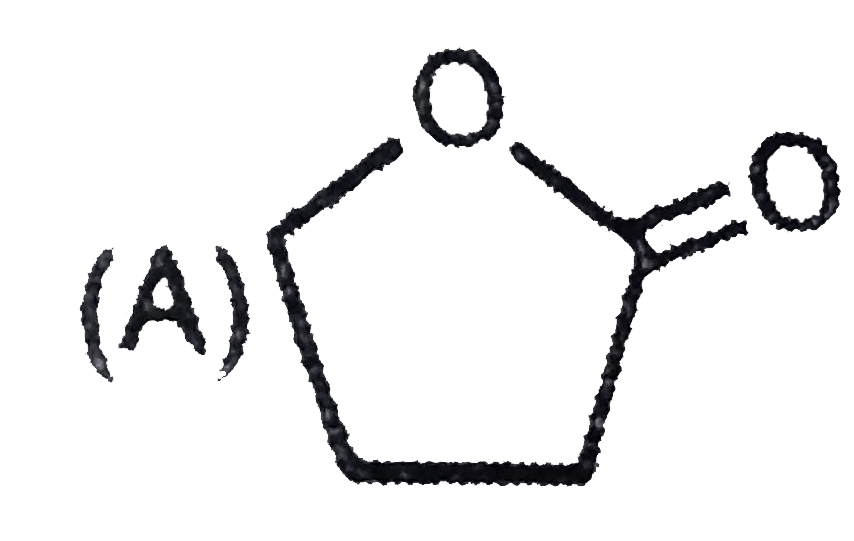
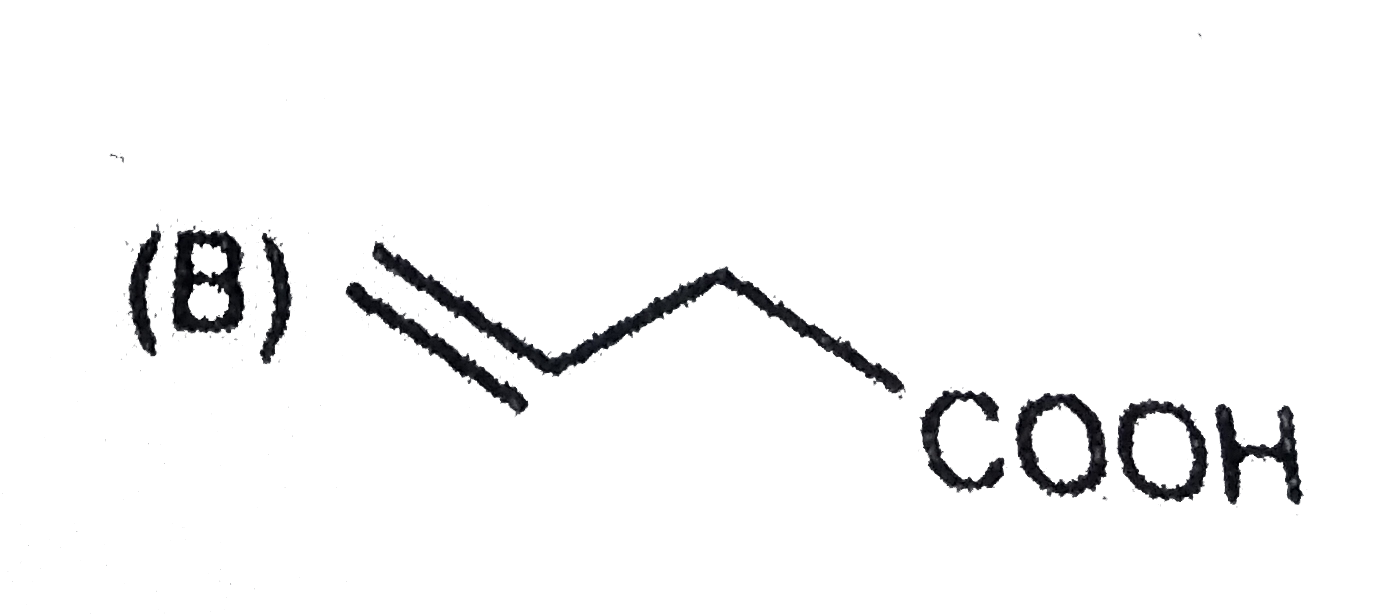
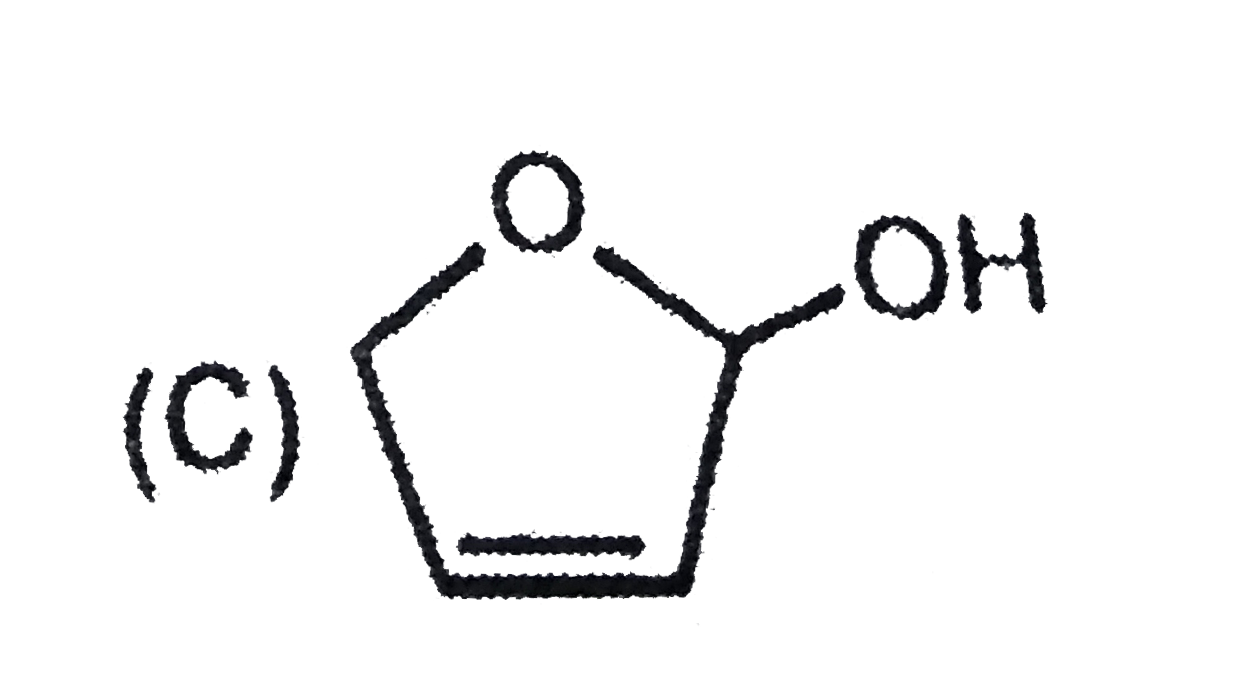
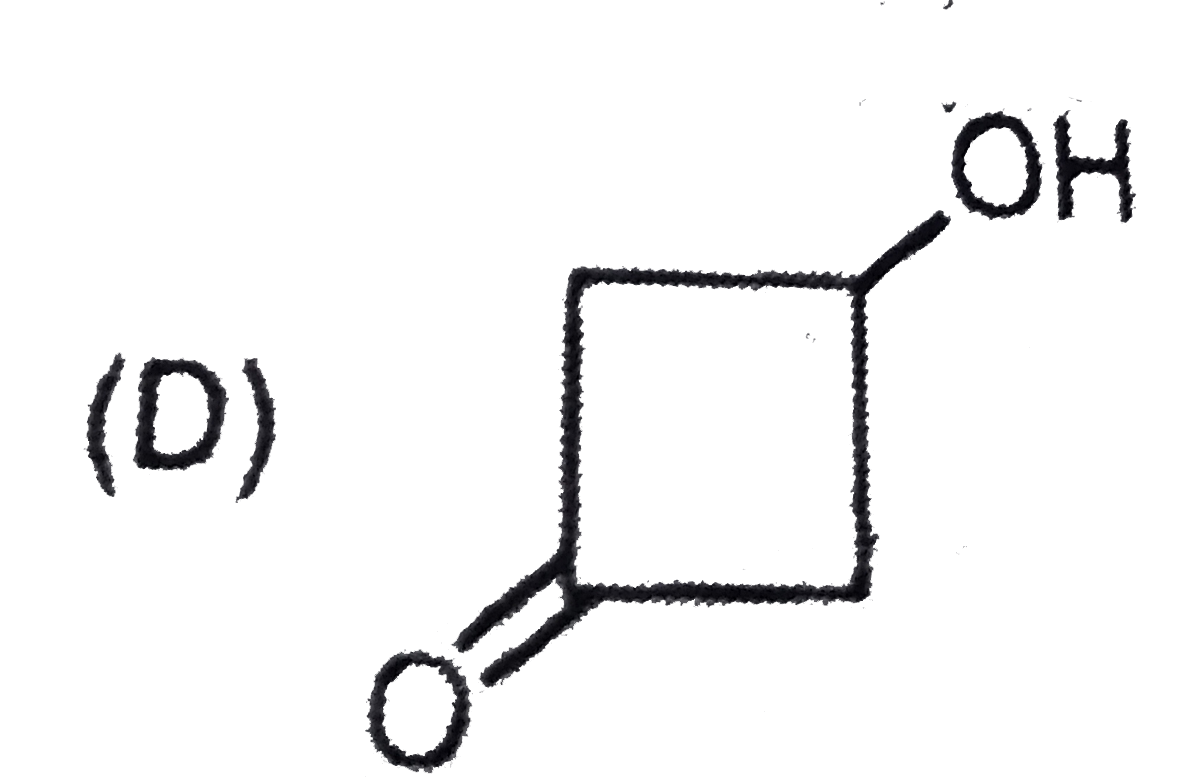
4-Oxobutanoic acid is reduced with Na-borohydride and the product is treated with aqueous acid. The final product is :

A

B

C

D

Text Solution

AI Generated Solution

The correct Answer is:

To solve the problem step by step, we will analyze the reduction of 4-oxobutanoic acid with sodium borohydride (NaBH4) and the subsequent treatment with aqueous acid. ### Step 1: Understand the structure of 4-Oxobutanoic Acid 4-Oxobutanoic acid has the following structure: - It is a four-carbon chain (butanoic acid) with a ketone group (C=O) at the 4th carbon. - The structure can be represented as: ``` HOOC-CH2-CH2-C(=O)-H ``` where the carbonyl group (C=O) is at the 4th position. ### Step 2: Reduction with Sodium Borohydride (NaBH4) When 4-oxobutanoic acid is treated with sodium borohydride, the ketone group (C=O) is reduced to an alcohol (C-OH). The reaction can be summarized as follows: - The ketone group is reduced to an alcohol, resulting in the formation of 4-hydroxybutanoic acid: ``` HOOC-CH2-CH2-CH(OH)-H ``` ### Step 3: Treatment with Aqueous Acid After the reduction, the product (4-hydroxybutanoic acid) is treated with aqueous acid. In this step: - The hydroxyl group (OH) can be protonated due to the acidic environment, making it a better leaving group. - The protonation leads to the formation of water (H2O) and the carbon atom that was attached to the hydroxyl group can form a double bond with the adjacent carbon atom. ### Step 4: Final Product Formation The final product after the treatment with aqueous acid will be: - The compound will lose the water molecule, resulting in the formation of a double bond between the second and third carbon atoms: ``` HOOC-CH=CH-COH ``` - The final product is 4-hydroxybut-2-enoic acid. ### Conclusion The final product after the reduction of 4-oxobutanoic acid with NaBH4 and subsequent treatment with aqueous acid is 4-hydroxybut-2-enoic acid. ### Final Answer The final product is 4-hydroxybut-2-enoic acid. ---
Promotional Banner

Topper's Solved these Questions

  • REDUCTION, OXIDATION & HYDROLYSIS REACTIONS

    RESONANCE ENGLISH|Exercise Part-III : High Level Problems (Subjective Questions)|6 Videos
  • REDUCTION, OXIDATION & HYDROLYSIS REACTIONS

    RESONANCE ENGLISH|Exercise Only One Option Correct Type|4 Videos
  • REDUCTION, OXIDATION & HYDROLYSIS REACTIONS

    RESONANCE ENGLISH|Exercise Additional problems for self Practice (Part-1)|30 Videos
  • PERIODIC TABLE & PERIODICITY

    RESONANCE ENGLISH|Exercise ORGANIC CHEMISTRY(BASIC CONCEPTS)|27 Videos
  • S BLOCK ELEMENTS

    RESONANCE ENGLISH|Exercise ORGANIC CHEMISTRY(Biomolecules & Polymer)|4 Videos

Similar Questions

Explore conceptually related problems

o-Chloroaniline is treated with a mixture of NaNO_2 and HCl and the product is reacted with cuprous bromide. The final product in the reaction will be

Propene is allowed to react with B_(2)D_(6) and the product is treated with acetic acid. The final product obtained is -

When glycol is heated with dicarboxylic acid, the products are:

If phthalic acid is treated with NH_(3) and then it is first heated weakly then strongly, the final product formed is

Pyruvic acid is a product of

Aniline is reacted with bromine water and the resulting product is treated with an aqueous solution of sodium nitrite in presence of dilute hydrochloric acid. The compound so formed is converted into. The compound so formed is converted into a tetrafluoroborate which is subsequently heated. The final product is

Acetylene is treated with excess sodium in liquid ammonia. The product is reacted with excess of methyl iodide. The final product is……………….

If acetylene is reacted with an excess of sodium metal in hexane and the reaction product is treated with 1-bromopropane , the final product will be

Pyruvic acid is the end product of

Uric acid is producted from the breakdown of

RESONANCE ENGLISH-REDUCTION, OXIDATION & HYDROLYSIS REACTIONS-Part-II : National Standard Examination in Chemistry
  1. The reaction, R(2)CO+4[H] underset("Conc. HCl")overset("Zn-Hg")rarr R(...

    Text Solution

    |

  2. Acetone will be obtained on ozonolysis of

    Text Solution

    |

  3. Which of the following are reducing agents among the following?

    Text Solution

    |

  4. Reduction of an isonitrile gives a

    Text Solution

    |

  5. Methane may be obtained from monochloromethane by

    Text Solution

    |

  6. The compound which does not react with lithium aluminium hydride is

    Text Solution

    |

  7. The compound which would yield 5- Oxo-2-methylhexanal on reductive ozo...

    Text Solution

    |

  8. Reduction of methylbenzoate (C(6)H(5)COOCH(3)) to benzyl alcohol (C(6)...

    Text Solution

    |

  9. Oxidation of cyclopentanol to cyclopentanone can be accomplished by us...

    Text Solution

    |

  10. Carbonyl compounds can generally be converted to hydrocarbons by

    Text Solution

    |

  11. Which of the following reagents would not be a good choice for reducin...

    Text Solution

    |

  12. Suggest the suitable reagent for the following transformation.

    Text Solution

    |

  13. An isocyanide on reduction with hydrogen in the presence of platinum g...

    Text Solution

    |

  14. Compound X (C(5)H(10)O) is a chiral alcohol. It is catalytically hydro...

    Text Solution

    |

  15. 4-Oxobutanoic acid is reduced with Na-borohydride and the product is t...

    Text Solution

    |

  16. A solution of sodium metal in liquid ammonia is strongly reducing due ...

    Text Solution

    |

  17. Which of the following statements is true for the reaction given below...

    Text Solution

    |

  18. Complete catalytic hydrogenation of napthalene gives decalin (C(10)H(1...

    Text Solution

    |

  19. Which of the following on treatment with hot concentrated acidified KM...

    Text Solution

    |

  20. The correct sequence of reagents from those listed below for the follo...

    Text Solution

    |
