Home
Class 11
CHEMISTRY
A compound (X ) gives fruity smell. [X] ...

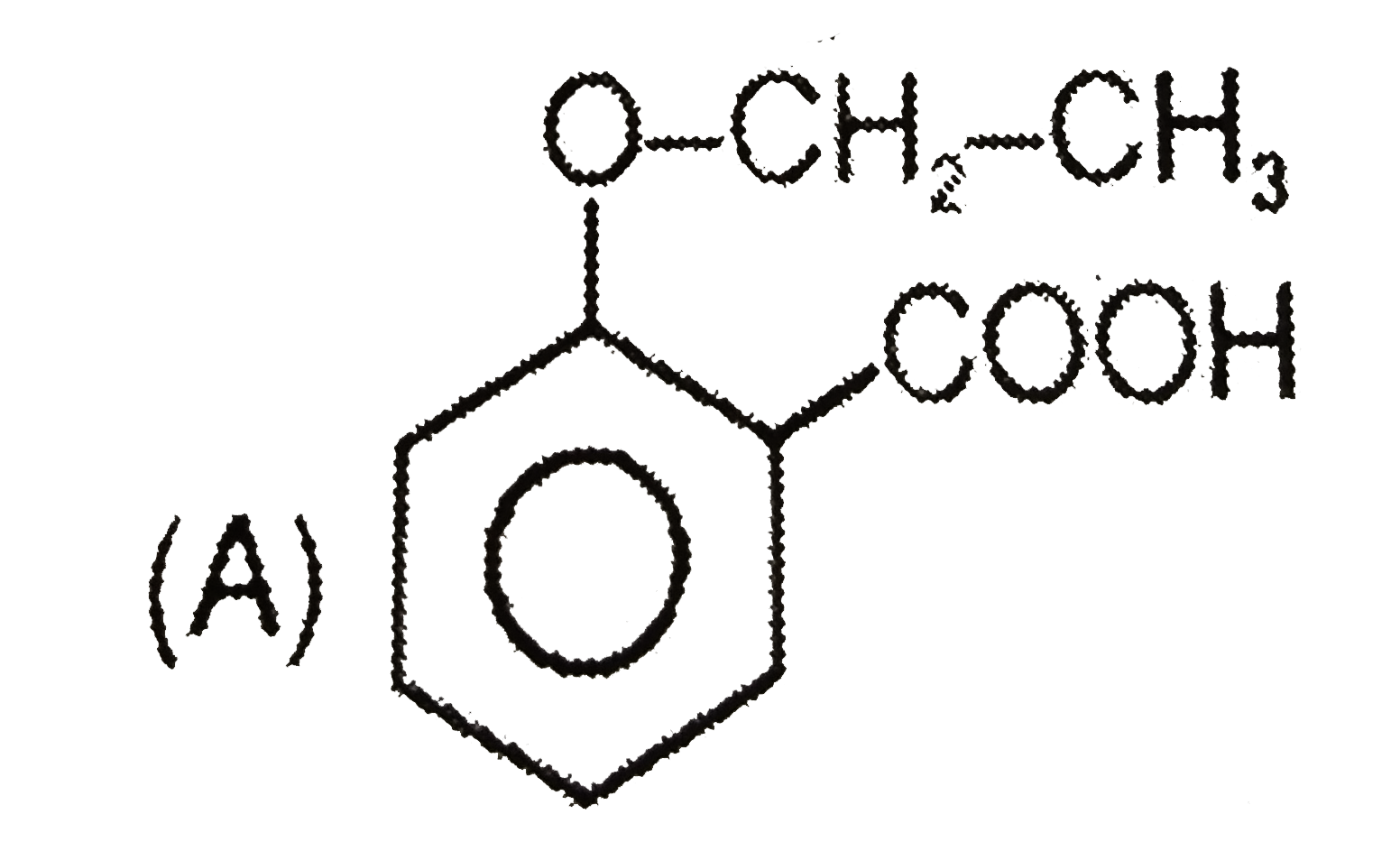
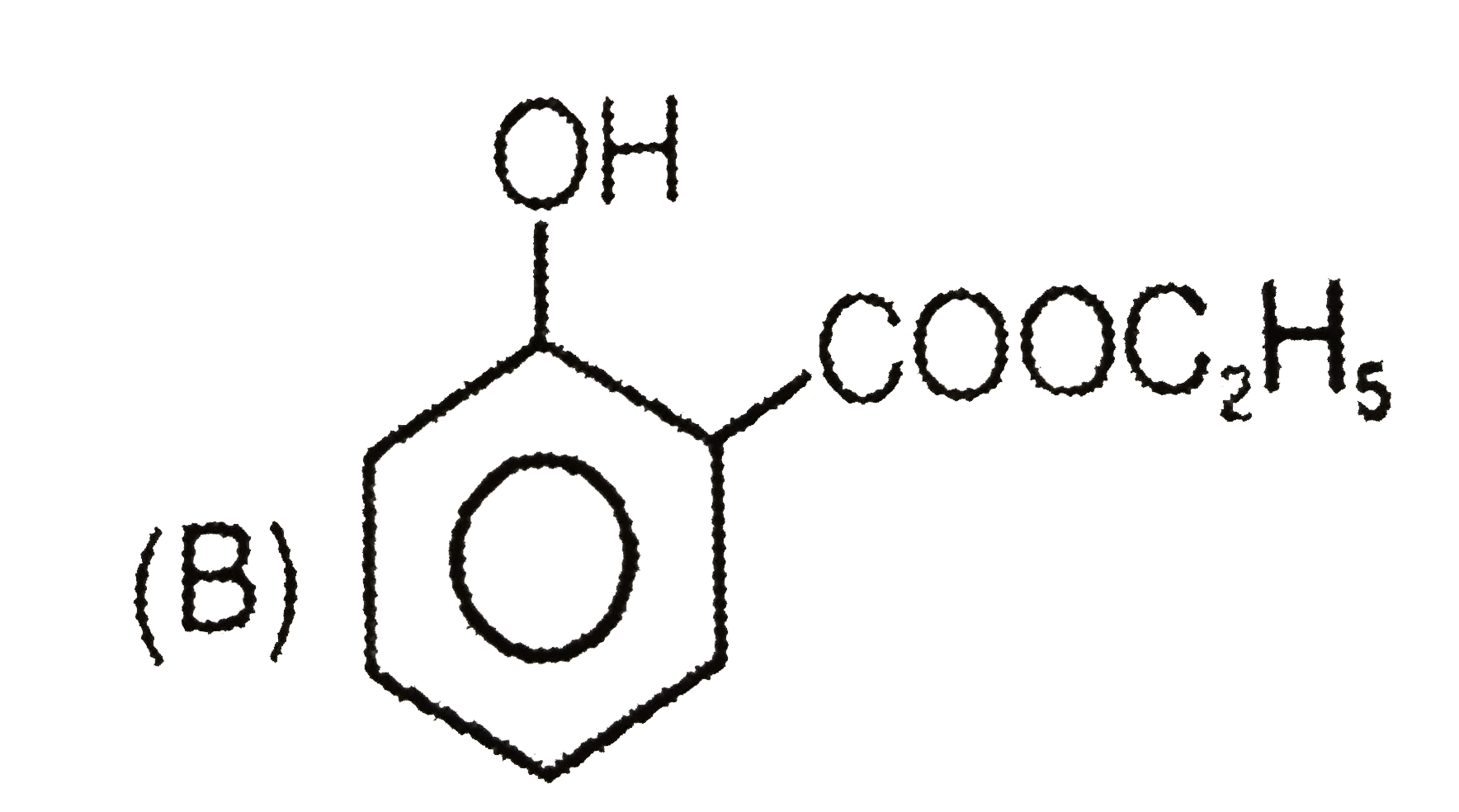
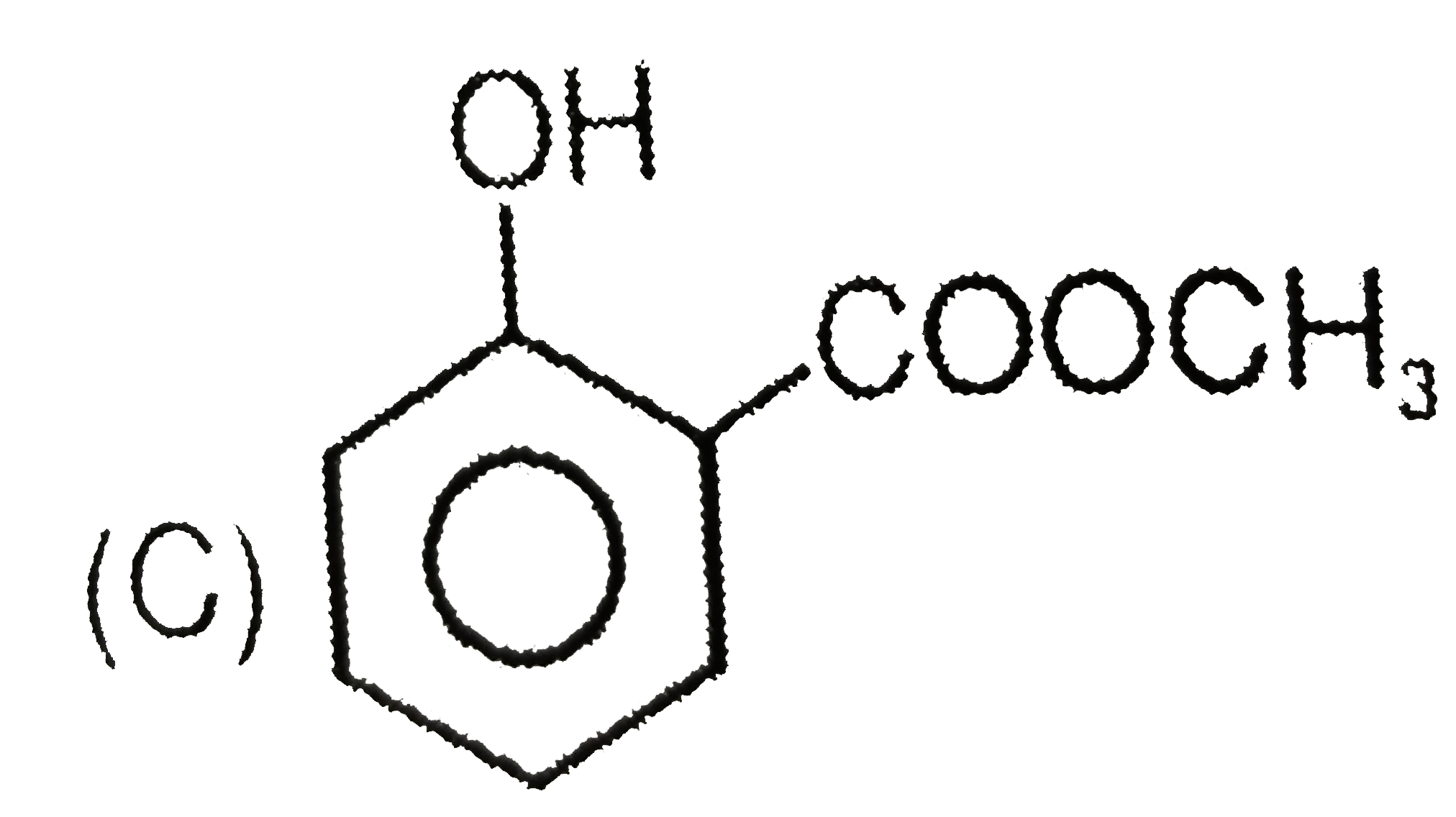
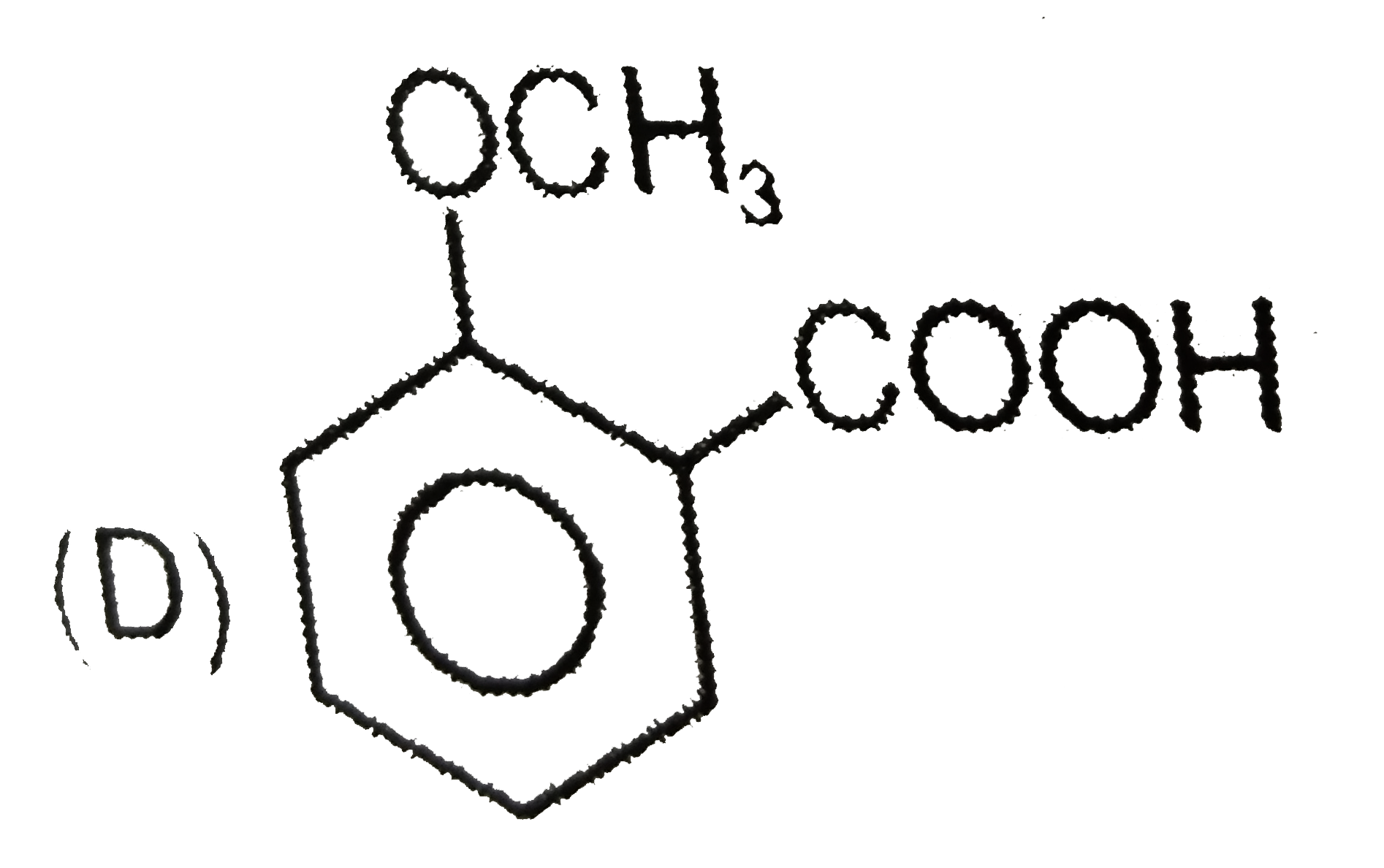
A compound (X ) gives fruity smell. [X] on hydrolysis gives an acid and alcohol . Acid give violet colour with neutral `FeCl_(3)` while alcohol give yellow precipitate on boiling with `I_(2)` and NaOH. (X) can be :

A

B

C

D

Text Solution

AI Generated Solution

The correct Answer is:

To solve the question regarding the compound (X) that gives a fruity smell and undergoes hydrolysis to yield an acid and alcohol, we can follow these steps: ### Step 1: Identify the characteristics of compound (X) - The compound (X) has a fruity smell, which is a characteristic of esters. Esters are known for their pleasant fruity aromas. **Hint:** Remember that esters are formed from the reaction of an alcohol and a carboxylic acid. ### Step 2: Understand the hydrolysis of (X) - Upon hydrolysis, compound (X) yields an acid and an alcohol. This is consistent with the behavior of esters, which hydrolyze to produce a carboxylic acid and an alcohol. **Hint:** Hydrolysis of esters typically involves the addition of water, breaking the ester bond to form an acid and an alcohol. ### Step 3: Analyze the properties of the acid - The acid produced from the hydrolysis gives a violet color with neutral FeCl₃. This indicates that the acid is likely a phenolic compound, as phenols react with FeCl₃ to produce a colored complex. **Hint:** Look for acids that are phenolic in nature, as they are known to give a color change with FeCl₃. ### Step 4: Analyze the properties of the alcohol - The alcohol produced gives a yellow precipitate on boiling with I₂ and NaOH. This suggests that the alcohol is likely a primary or secondary alcohol, as these can react with iodine in the presence of a base to form a yellow precipitate (iodoform reaction). **Hint:** The iodoform test is specific for methyl ketones and some alcohols, particularly those that can be oxidized to form a methyl ketone. ### Step 5: Determine the possible structure of (X) - Given that (X) is an ester that produces a phenolic acid and an alcohol that can undergo the iodoform reaction, we can deduce that (X) is likely an aromatic ester. A suitable candidate could be ethyl acetate or a similar compound. **Hint:** Consider common esters that fit the criteria of producing a phenolic acid and an alcohol upon hydrolysis. ### Conclusion Based on the analysis, the compound (X) can be identified as an ester that meets all the criteria described in the question. The correct option is likely to be one that represents an aromatic ester. **Final Answer:** The compound (X) can be identified as an aromatic ester, potentially ethyl acetate, which gives a fruity smell, and upon hydrolysis, yields a phenolic acid and an alcohol that reacts with iodine and NaOH.

To solve the question regarding the compound (X) that gives a fruity smell and undergoes hydrolysis to yield an acid and alcohol, we can follow these steps: ### Step 1: Identify the characteristics of compound (X) - The compound (X) has a fruity smell, which is a characteristic of esters. Esters are known for their pleasant fruity aromas. **Hint:** Remember that esters are formed from the reaction of an alcohol and a carboxylic acid. ### Step 2: Understand the hydrolysis of (X) ...
Promotional Banner

Topper's Solved these Questions

  • STRUCTURAL IDENTIFICATION & PRACTICAL ORGANIC CHEMISTRY

    RESONANCE ENGLISH|Exercise Additional theory|4 Videos
  • STRUCTURAL IDENTIFICATION & PRACTICAL ORGANIC CHEMISTRY

    RESONANCE ENGLISH|Exercise Additional Exercise|15 Videos
  • STRUCTURAL IDENTIFICATION & PRACTICAL ORGANIC CHEMISTRY

    RESONANCE ENGLISH|Exercise APSP|30 Videos
  • SOLID STATE

    RESONANCE ENGLISH|Exercise Part- IV|21 Videos
  • THERMODYNAMIC & THERMOCHEMISTRY

    RESONANCE ENGLISH|Exercise INORGANIC CHEMISTRY(P-Block Elements)|26 Videos

Similar Questions

Explore conceptually related problems

Neutral FeCl_(3) gives purple colour with

Phenol gives . . . . . . . . Colour with neutral FeCl_(3) solution :

A cyanohydrin of a compound X on hydrolysis gives lactic acid. The X is

Which of the following ketone will not give yellow precipitate with NaOH//I_(2) ?

Choose the correct option if compound X gives positive test with neutral FeCl_(3)

Alcoholic "AgNO"_(3) does not give precipitate with:

The adduct of a compound (A) with isopropyl magnesium halide on hydrolysis gives a tertiary alcohol. The compound (A) is:

Treatment of benzoic acid with Cl_(2)//FeCl_(3) will give

RESONANCE ENGLISH-STRUCTURAL IDENTIFICATION & PRACTICAL ORGANIC CHEMISTRY-Part-III
  1. Compound (X) and (Y) can be distinguished by

    Text Solution

    |

  2. A compound (X ) gives fruity smell. [X] on hydrolysis gives an acid an...

    Text Solution

    |

  3. Formic acid and Acetaldehyde can be distinguish by

    Text Solution

    |

  4. Correct statements (s) about is /are

    Text Solution

    |

  5. Correct statements (s) about is /are

    Text Solution

    |

  6. An organic compound "A" of molecular weight 120, gives Tollen's reagen...

    Text Solution

    |

  7. A hydrogen on oxidative ozonlysis produces Oxalic acid and Butanedioic...

    Text Solution

    |

  8. Farnesence is a compound found in the waxy coating of apples. On hydro...

    Text Solution

    |

  9. A compound P(C(5)H(6)) gives positive Bayer test and on hydrogentation...

    Text Solution

    |

  10. X' compound (C(4)H(8)O) decolorises bromine water react with I(2) & Na...

    Text Solution

    |

  11. Compounds I and II can be distinguished by using reagent. {:("(I)",,...

    Text Solution

    |

  12. Which of the following test will not be given by (Squaric acid)

    Text Solution

    |

  13. Which of the following compounds after complete hydrogenation will for...

    Text Solution

    |

  14. A organic compound having molecular formula C(3)H(4), react with sodiu...

    Text Solution

    |

  15. Compound P Liberates H(2) gas with Na metal. P gives the precipitate w...

    Text Solution

    |

  16. True statements is/are

    Text Solution

    |

  17. C(6)H(15)O(6)(P) underset(Zn, H(2)O)overset(O(3))rarrC(4)H(8)O(4)(Q) u...

    Text Solution

    |

  18. In how many reactions CO(2) gas is released out after reaction with Na...

    Text Solution

    |

  19. How many alkenes, alkynes and alkadienes can be hydrogenated to form I...

    Text Solution

    |

  20. How many acyclic structural isomeric carbonyl compound having molecula...

    Text Solution

    |
