Home
Class 11
CHEMISTRY
Aldehyde and ketones may be prepared by ...

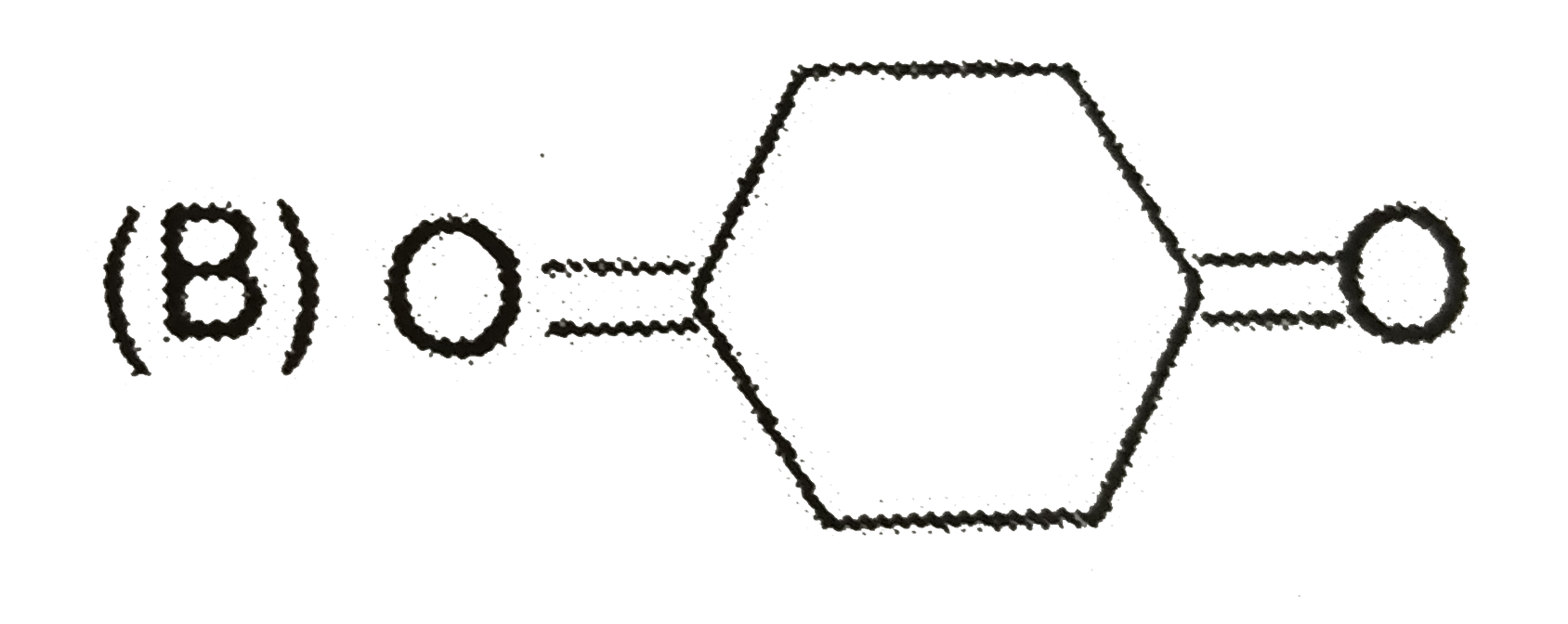
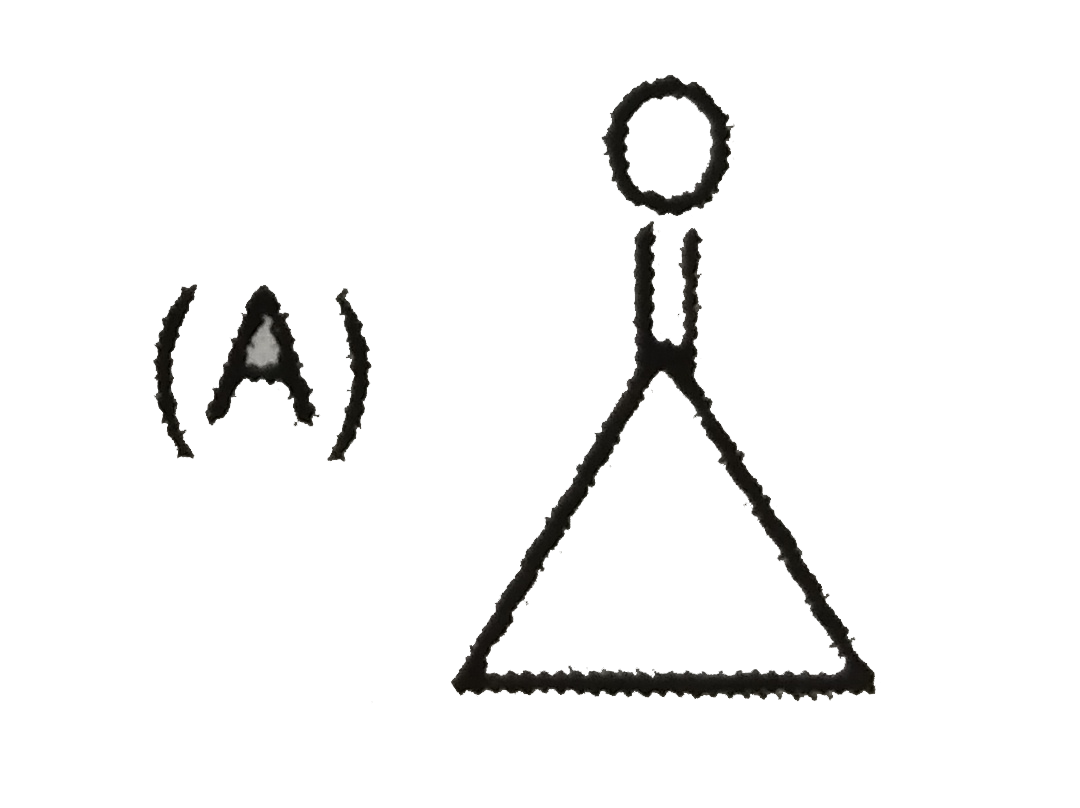
Aldehyde and ketones may be prepared by reductive cleavage of carbon-carbon double bonds. A particularly useful reagent for this purpose is ozone under reductive condition in the formation of carbonyl compounds.
products
Which of the following products is not formed in above reaction.

A

B

C

`H-underset(O)underset(||)(C)-H`

D

`CH_(3)-underset(O)underset(||)(C)-H`

Text Solution

Verified by Experts

The correct Answer is:

D

Promotional Banner

Topper's Solved these Questions

  • STRUCTURAL IDENTIFICATION & PRACTICAL ORGANIC CHEMISTRY

    RESONANCE ENGLISH|Exercise Additional theory|4 Videos
  • STRUCTURAL IDENTIFICATION & PRACTICAL ORGANIC CHEMISTRY

    RESONANCE ENGLISH|Exercise Additional Exercise|15 Videos
  • STRUCTURAL IDENTIFICATION & PRACTICAL ORGANIC CHEMISTRY

    RESONANCE ENGLISH|Exercise APSP|30 Videos
  • SOLID STATE

    RESONANCE ENGLISH|Exercise Part- IV|21 Videos
  • THERMODYNAMIC & THERMOCHEMISTRY

    RESONANCE ENGLISH|Exercise INORGANIC CHEMISTRY(P-Block Elements)|26 Videos

Similar Questions

Explore conceptually related problems

Sodium carbonate is prepared by Solvay process. Which of the following compounds is obtained as a by - product?

Which of the following options correctly describes the reagents , products and reaction conditions in the manufacturing of nitric acid using ostwald's process?

Aldehyde and ketones are specially susceptible susceptible to nucleophile addition because carbonyl group (due to electronegatvity different between carbon and oxygen). Positive charge on carbon makes it reactive towards the nucleophile. This addition is catalysed by acid. Reactivity of carbonyl compound towards nucleophilic addition increases in the electron deficience at carbonyl carbon. Thus, (-I.E.) group increase while (+I.E.) groups decrease the reactivity of carbonyl compound Which of the following is most reactve to give nucleophilic addition?

The following flow diagram represents the industrial preparation of nitric acid from ammonia. Which of the following options describes the reagents, products and reaction condition ?

Oxidation of ketones involves carbon-carbon bond cleavage. Name the products formed on oxidation of 2, 5-dimethylhexan-3-one.

Aldehydes and ketones are amphoteric. Thus they can act both as acids and bases. Under acidic conditions, the carbon of the protonated canbonyl group is much more electrophilic, reacting even with weak nucleopphilie. Carbonyl compound gives nucleophilic addition reaction. In this reaction the nucleophilic attack proceeds the elecrophilic attack. Carbonyl compounds gives nucleophilic addition with

Aldehydes and ketones are amphoteric. Thus they can act both as acids and bases. Under acidic conditions, the carbon of the protonated canbonyl group is much more electrophilic, reacting even with weak nucleopphilie. Carbonyl compound gives nucleophilic addition reaction. In this reaction the nucleophilic attack proceeds the elecrophilic attack. Which of the statements are//is correct?

RESONANCE ENGLISH-STRUCTURAL IDENTIFICATION & PRACTICAL ORGANIC CHEMISTRY-Part-III
  1. Farnesence is a compound found in the waxy coating of apples. On hydro...

    Text Solution

    |

  2. A compound P(C(5)H(6)) gives positive Bayer test and on hydrogentation...

    Text Solution

    |

  3. X' compound (C(4)H(8)O) decolorises bromine water react with I(2) & Na...

    Text Solution

    |

  4. Compounds I and II can be distinguished by using reagent. {:("(I)",,...

    Text Solution

    |

  5. Which of the following test will not be given by (Squaric acid)

    Text Solution

    |

  6. Which of the following compounds after complete hydrogenation will for...

    Text Solution

    |

  7. A organic compound having molecular formula C(3)H(4), react with sodiu...

    Text Solution

    |

  8. Compound P Liberates H(2) gas with Na metal. P gives the precipitate w...

    Text Solution

    |

  9. True statements is/are

    Text Solution

    |

  10. C(6)H(15)O(6)(P) underset(Zn, H(2)O)overset(O(3))rarrC(4)H(8)O(4)(Q) u...

    Text Solution

    |

  11. In how many reactions CO(2) gas is released out after reaction with Na...

    Text Solution

    |

  12. How many alkenes, alkynes and alkadienes can be hydrogenated to form I...

    Text Solution

    |

  13. How many acyclic structural isomeric carbonyl compound having molecula...

    Text Solution

    |

  14. Structural of Ascorbic acid is represented as follows How many of...

    Text Solution

    |

  15. Observe the following compounds

    Text Solution

    |

  16. n' number of alkenes yields 2,2,3,4,4- pentamethyl-pentane on catalyti...

    Text Solution

    |

  17. Aldehyde and ketones may be prepared by reductive cleavage of carbon-c...

    Text Solution

    |

  18. (X) overset(O(3)//Zn)underset(H(2)O)toCO(2)+CH(3)-underset(O)underset(...

    Text Solution

    |

  19. which of the following products is not formed in above reaction : prod...

    Text Solution

    |

  20. Match the column :

    Text Solution

    |