Home
Class 12
CHEMISTRY
The organic compound that gives followin...

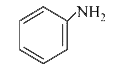
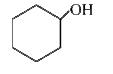
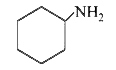
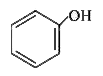
The organic compound that gives following qualitative analysis is :
`{:(,"Test","Inference"),((a),Dil.HCl,"Insoluble"),((b),NaOH" solution","soluble"),((c ),Br_(2)//"water","Decolourization"):}`

A

B

C

D

Text Solution

AI Generated Solution

The correct Answer is:

To determine the organic compound based on the qualitative analysis provided, we will analyze each of the tests and their inferences step by step. ### Step 1: Analyze the solubility in Dilute HCl - The compound is **insoluble** in dilute HCl. This suggests that the compound is not an acid or does not have acidic properties, as acids typically dissolve in dilute HCl. **Hint:** Consider the nature of the compound based on its solubility in acids. ### Step 2: Analyze the solubility in NaOH solution - The compound is **soluble** in NaOH solution. This indicates that the compound likely has acidic properties, as it can react with the base (NaOH) to form a soluble salt. **Hint:** Think about compounds that can react with bases to form soluble salts. ### Step 3: Analyze the reaction with Br2 water - The compound causes **decolorization** of Br2 water. This is a characteristic reaction of unsaturated compounds (like alkenes or phenols), which can react with bromine to form dibrominated products, leading to the loss of color. **Hint:** Unsaturated compounds typically undergo addition reactions with bromine. ### Step 4: Combine the observations - From the above steps, we have determined: - The compound is **insoluble in dilute HCl** (not an acid). - The compound is **soluble in NaOH** (indicates it is acidic). - The compound **decolorizes Br2 water** (indicates it is unsaturated). ### Step 5: Identify the possible compounds - The characteristics we have identified suggest that the compound is likely a phenol. Phenols are acidic (hence soluble in NaOH), and they have unsaturation (the benzene ring) which allows them to decolorize bromine water. **Hint:** Recall the properties of phenols and how they interact with bases and bromine. ### Conclusion Based on the qualitative analysis, the organic compound is **phenol**. It is insoluble in dilute HCl, soluble in NaOH, and decolorizes Br2 water. **Final Answer:** Phenol

To determine the organic compound based on the qualitative analysis provided, we will analyze each of the tests and their inferences step by step. ### Step 1: Analyze the solubility in Dilute HCl - The compound is **insoluble** in dilute HCl. This suggests that the compound is not an acid or does not have acidic properties, as acids typically dissolve in dilute HCl. **Hint:** Consider the nature of the compound based on its solubility in acids. ### Step 2: Analyze the solubility in NaOH solution ...
Promotional Banner

Topper's Solved these Questions

  • JEE MAIN REVISION TEST - 10| JEE -2020

    VMC MODULES ENGLISH|Exercise CHEMISTRY (SECTION 2)|5 Videos
  • JEE MAIN REVISION TEST - 13

    VMC MODULES ENGLISH|Exercise CHEMISTRY (SECTION 2)|5 Videos

Similar Questions

Explore conceptually related problems

The tests performed on compound X and their inferences are : {:(" Test"," Inference"),("(a) 2, 4 - DNP test","Coloured precipitate"),("(b) Iodoform test","Yellow precipitate"),("(c) Azo-dye test","No dye formation"):} Compound 'X' is :

The tests performed on compound X and their inferences are : {:(" Test"," Inference"),("(a) 2, 4 - DNP test","Coloured precipitate"),("(b) Iodoform test","Yellow precipitate"),("(c) Azo-dye test","No dye formation"):} Compound 'X' is :

Name the organic compound prepared by the following reactions: C_2H_5Br + KOH (alcoholic solution ) to

How many of the following compounds decolorise Br_(2) water solution ?

An organic compound X (C_(4)H_(8)O_(2)) gives positive test with NaOH and Phenopthalein. Structure of X will be:

Give reasons for the following : MgCl_(2) is soluble in water but insoluble in acetone, while methane is insoluble in water, but soluble in acetone.

A solution of a compound X in dilute HCl on treatment with a solution of BaCl_(2) gives a white precipitate of compound Y which is insoluble in conc. HNO_(3) and and conc. HCl . Compound X imparts golden yellow colour to the flame. underset(("immparts golden yellow colour"))(X("Solution in dilute HCl"))+BaCl_(2) to underset("White")(Y)underset("Conc. HCl")overset("Conc. "HNO_(3))to Insoluble What are compounds X and Y?

An organic compound containing C, H and O gives following observations: (i) It exists in two isomeric forms (A) and (B). (ii) 0.108 g of one of the isomers on combustion gave 0.308 g of CO_(2) and 0.072 g of H_(2)O (iii) (A) is insoluble in NaOH and NaHCO_(3) while (B) is soluble in NaOH. (iv) (A) reacts with Hl to give compound (C ) and (D). (C ) can be separated from (D) by ethanolic AgNO_(3) solution and (D) is soluble in NaOH. (v) (B) readily reacts with bromine water to give compound (E) of molecular formula C_(7)H_(5)OBr_(3) Compound (B) in the above passage is

An organic compound containing C, H and O gives following observations: (i) It exists in two isomeric forms (A) and (B). (ii) 0.108 g of one of the isomers on combustion gave 0.308 g of CO_(2) and 0.072 g of H_(2)O (iii) (A) is insoluble in NaOH and NaHCO_(3) while (B) is soluble in NaOH. (iv) (A) reacts with Hl to give compound (C ) and (D). (C ) can be separated from (D) by ethanolic AgNO_(3) solution and (D) is soluble in NaOH. (v) (B) readily reacts with bromine water to give compound (E) of molecular formula C_(7)H_(5)OBr_(3) Compound (A) is

VMC MODULES ENGLISH-JEE MAIN REVISION TEST - 12 -CHEMISTRY
  1. The major product of the following reaction is:

    Text Solution

    |

  2. Liquid ‘M’ and liquid ‘N’ form an ideal solution. The vapour pressures...

    Text Solution

    |

  3. The organic compound that gives following qualitative analysis is : ...

    Text Solution

    |

  4. The correct IUPAC name of the following compound is:

    Text Solution

    |

  5. Excessive release of CO(2) into the atmosphere result in :

    Text Solution

    |

  6. Which of the following statements is not true about sucrose?

    Text Solution

    |

  7. major product of the following reaction is : CH(3)CH=CHCO(2)CH(3) over...

    Text Solution

    |

  8. The degenerate orbitals of [Cr(H(2)O)(6)]^(3+) are:

    Text Solution

    |

  9. The major product of the following reaction is CH(3)C-=CH underset((ii...

    Text Solution

    |

  10. The increasing order of reactivity of the following compounds towards ...

    Text Solution

    |

  11. The one that will show optical activity is: (en = ethane-1,2-diamine)

    Text Solution

    |

  12. C(60) , an allotrope of carbon contains :

    Text Solution

    |

  13. Match the catalysts (column I) with products (Column II)

    Text Solution

    |

  14. The major product of the following reaction is:

    Text Solution

    |

  15. Consider the van der Waals constants, a and b, for the following gases...

    Text Solution

    |

  16. The aerosol is a kind of colloid in which :

    Text Solution

    |

  17. The correct order of the oxidation states of nitrogen in NO, N(2)O, N...

    Text Solution

    |

  18. Among the following, the molecule expected to be stabilized by anion f...

    Text Solution

    |

  19. For reaction, N(2)(g)+3H(2)(g) rarr 2NH(3)(g) , ratio of molecular ma...

    Text Solution

    |

  20. The number of water molecule(s) not coordinated to copper ion directly...

    Text Solution

    |
