Home
Class 12
CHEMISTRY
For a first order reaction A(g)rarr2B(g)...

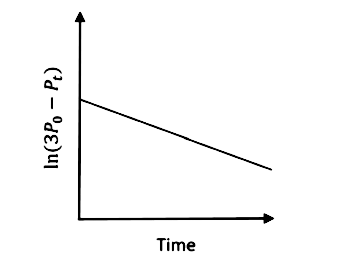
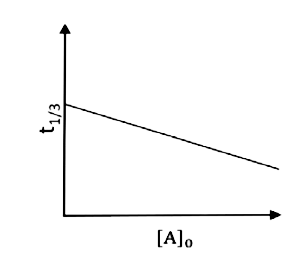
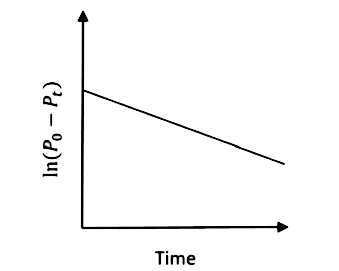
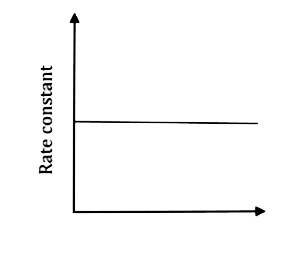
For a first order reaction `A(g)rarr2B(g)+C(g)` at constant volume and 300 K, the total pressure at the beginning (t=0) and at time t ae `P_(0) and P_(t)` respectively. Initially, only A is present with concentration `[A]_(0) and t_(1//3)` is the time required for the partial pressure of A to reach 1/3rd of its initial value. The correct options (s) is (are) :
(Assume that all these behave as ideal gases)

A

B

C

D

Text Solution

AI Generated Solution

The correct Answer is:

To solve the problem, we will analyze the first-order reaction given and derive the necessary relationships step by step. ### Step 1: Understand the Reaction The reaction is given as: \[ A(g) \rightarrow 2B(g) + C(g) \] Initially, only A is present with an initial pressure \( P_0 \). ### Step 2: Define Initial Conditions At \( t = 0 \): - Partial pressure of A, \( P_A(0) = P_0 \) - Partial pressures of B and C are both \( 0 \). ### Step 3: Define Conditions at Time \( t \) At time \( t \): - Let \( x \) be the change in pressure due to the reaction. - The partial pressure of A will be \( P_A(t) = P_0 - x \). - The partial pressure of B will be \( P_B(t) = 2x \) (since 2 moles of B are produced). - The partial pressure of C will be \( P_C(t) = x \). ### Step 4: Total Pressure at Time \( t \) The total pressure at time \( t \) is given by: \[ P_t = P_A(t) + P_B(t) + P_C(t) = (P_0 - x) + 2x + x = P_0 + 2x \] ### Step 5: Condition for \( t_{1/3} \) The time \( t_{1/3} \) is defined as the time required for the partial pressure of A to reach \( \frac{1}{3} P_0 \): \[ P_A(t_{1/3}) = P_0 - x = \frac{1}{3} P_0 \] From this, we can find \( x \): \[ P_0 - x = \frac{1}{3} P_0 \] \[ x = P_0 - \frac{1}{3} P_0 = \frac{2}{3} P_0 \] ### Step 6: Substitute \( x \) into Total Pressure Equation Substituting \( x \) into the total pressure equation: \[ P_t = P_0 + 2x = P_0 + 2 \left( \frac{2}{3} P_0 \right) = P_0 + \frac{4}{3} P_0 = \frac{7}{3} P_0 \] ### Step 7: Relate to Rate Constant For a first-order reaction, the rate constant \( k \) can be expressed as: \[ k = \frac{1}{t} \ln \left( \frac{P_0}{P_0 - x} \right) \] Using \( x = \frac{2}{3} P_0 \): \[ k = \frac{1}{t_{1/3}} \ln \left( \frac{P_0}{\frac{1}{3} P_0} \right) = \frac{1}{t_{1/3}} \ln(3) \] ### Step 8: Conclusion The options that do not depend on concentration are correct. The correct options are those that reflect the derived relationships, specifically those that are constants and do not vary with concentration.

To solve the problem, we will analyze the first-order reaction given and derive the necessary relationships step by step. ### Step 1: Understand the Reaction The reaction is given as: \[ A(g) \rightarrow 2B(g) + C(g) \] Initially, only A is present with an initial pressure \( P_0 \). ### Step 2: Define Initial Conditions ...
Promotional Banner

Topper's Solved these Questions

  • CHEMICAL KINETICS

    VMC MODULES ENGLISH|Exercise JEE Main (Archive)|56 Videos
  • CHEMICAL EQUILIBRIUM

    VMC MODULES ENGLISH|Exercise IN-CHAPTER EXERCISE - G|10 Videos
  • CHEMICAL THERMODYNAMICS

    VMC MODULES ENGLISH|Exercise IN - CHAPTER EXERCISE - L|10 Videos

Similar Questions

Explore conceptually related problems

For a first order gas phase reaction : A_((g)) to 2B_((g)) +C_((g)) P_(0) be initial pressure of A and P_(t) the total pressure at time 't'. Integrated rate equation is :

For the first order reaction A(g) rarr 2B(g) + C(g) , the initial pressure is P_(A) = 90 m Hg , the pressure after 10 minutes is found to be 180 mm Hg . The rate constant of the reaction is

Heat of reaction A(s) + B(g) rarr 2C(g) is 40 kJ at 300 K and constant volume. Hence, heat of reaction at constant pressure and at 300 K is,

K_(p) for the reaction A hArr B is 4. If initially only A is present then what will be the partial pressure of B after equilibrium ?

For a first order homogeneous gaseous reaction Ato 2B+C if the total pressure after time t was P_(1) and after long time (t to infty) was P_(infty) then K in terms of P_(t_(1)) P_(infty) t is

The reaction A(g) + 2B(g) to C(g) is an elementary reaction. In an experiment involving this reaction, the initial pressures of A and B are ​ P_A = 0.40 atm and P_B = 1.0 atm respectively. When P_C =0.3 atm, the rate of the reaction relative to the initial rate is:-

For a first order homogenous gaseous reaction, Ato2B+C then initial pressure was P_(i) while total pressure after time 't' was P_(t) . The right expression for the rate constants k in terms of P_(i),P_(t) and t is :

The reaction A(g) to B(g) + 2C(g) is a first-order reaction with a rate constant of 2.303 xx 10^(-3)s^(-1) . Strating with 0.1 moles of 'A' in a 2 litre vessel, find the concentration of A after 301 sec when the reaction is allowed to take place at constant pressure at 300 K.

Two containers of equal volume contain the same gas at pressure P_(1) and P_(2) and absolute temperature T_(1) and T_(2) , respectively. On joining the vessels, the gas reaches a common pressure P and common temperature T . The ratio P//T is equal to

Two containers of equal volume contain the same gas at pressure P_(1) and P_(2) and absolute temperature T_(1) and T_(2) , respectively. On joining the vessels, the gas reaches a common pressure P and common temperature T . The ratio P//T is equal to

VMC MODULES ENGLISH-CHEMICAL KINETICS -JEE Advanced (Archive)
  1. For the given reaction, A + B rarr Products Following data are given ...

    Text Solution

    |

  2. 2X(g) rarr 3Y(g)+2Z(g) {:("Time (in min)",0,100,200,):} |{:("Parti...

    Text Solution

    |

  3. Ag^(+) + NH(3) ltimplies [Ag(NH(3))]^(+), k(1)=6.8 xx 10^(-5) [Ag(NH...

    Text Solution

    |

  4. Conisder a reaction aG+bH rarr Products. When concentration of both th...

    Text Solution

    |

  5. Under the same reaction conditions, the intial concentration of 1.386 ...

    Text Solution

    |

  6. For a first order reaction A rarr P, the temperature (T) dependent rat...

    Text Solution

    |

  7. The concentration of R in the reaction R rarr P was measured as a func...

    Text Solution

    |

  8. For the first order reaction 2N(2)O(5)(g) rarr 4NO(2)(g) + O(2)(g)

    Text Solution

    |

  9. An organic compound undergoes first decompoistion. The time taken for ...

    Text Solution

    |

  10. In the reaction, P+Q rarr R+S the time taken for 75% reaction of P i...

    Text Solution

    |

  11. For the elementary reaction MrarrN, the rate of disappearance of M inc...

    Text Solution

    |

  12. A closed vessel with rigid walls contains 1 mole of .(92)^(238)U and 1...

    Text Solution

    |

  13. According to the Arrhenius equation,

    Text Solution

    |

  14. A plot of the number of neutrons (n) against the number of protons (p...

    Text Solution

    |

  15. In a bimolecular reaction, the steric factor P was experimentally dete...

    Text Solution

    |

  16. For a first order reaction A(g)rarr2B(g)+C(g) at constant volume and 3...

    Text Solution

    |

  17. For a first order reaction A(g) rarr 2B(g) + C(g) at constant volume a...

    Text Solution

    |

  18. In the decay sequence, {:(238),(92):}Uoverset(-x(1))rarr{:(234),(90)...

    Text Solution

    |

  19. Consider the kinetic data given in the following table for the reactio...

    Text Solution

    |

  20. The decomposition reaction 2N(2)O(5) (g) rarr 2N(2) O(4) (g) +O(2) (g)...

    Text Solution

    |
