Home
Class 11
PHYSICS
Two friends are sitting in a stationary ...

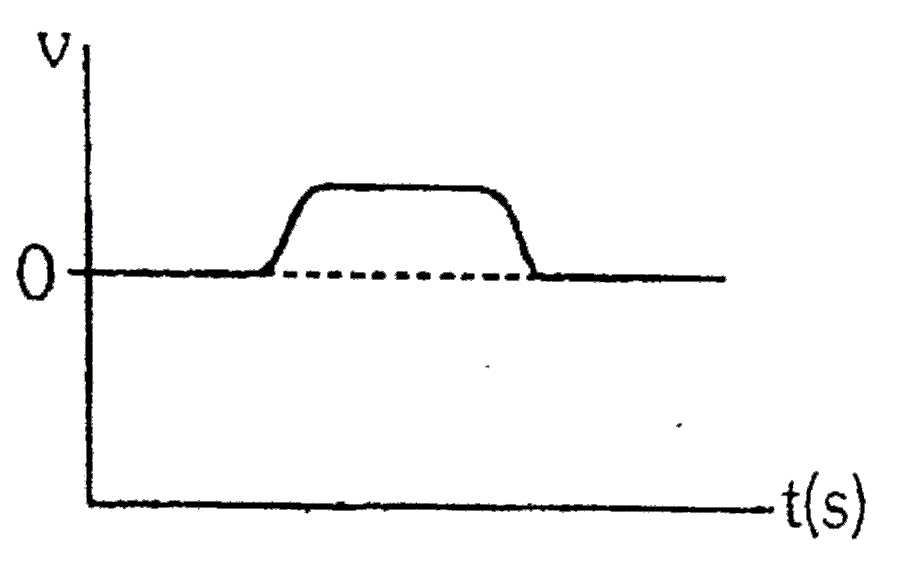
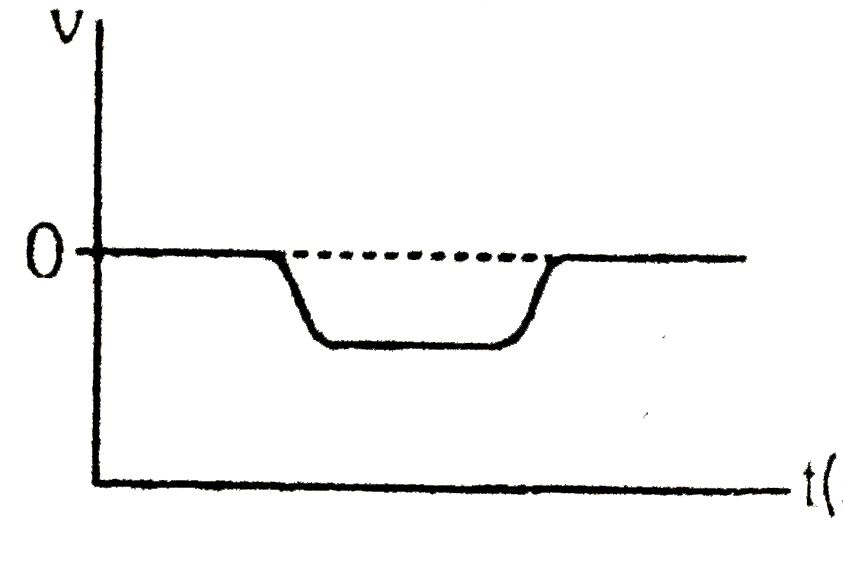
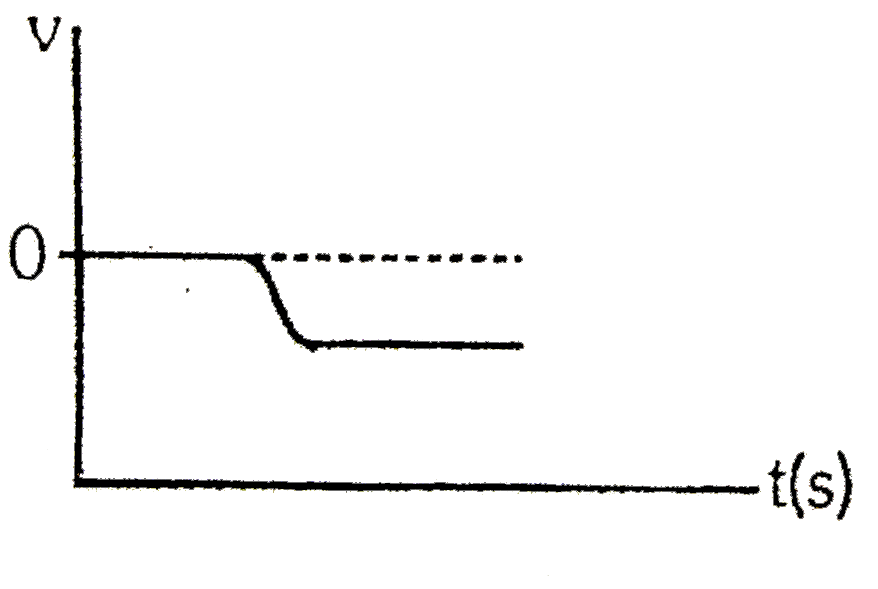
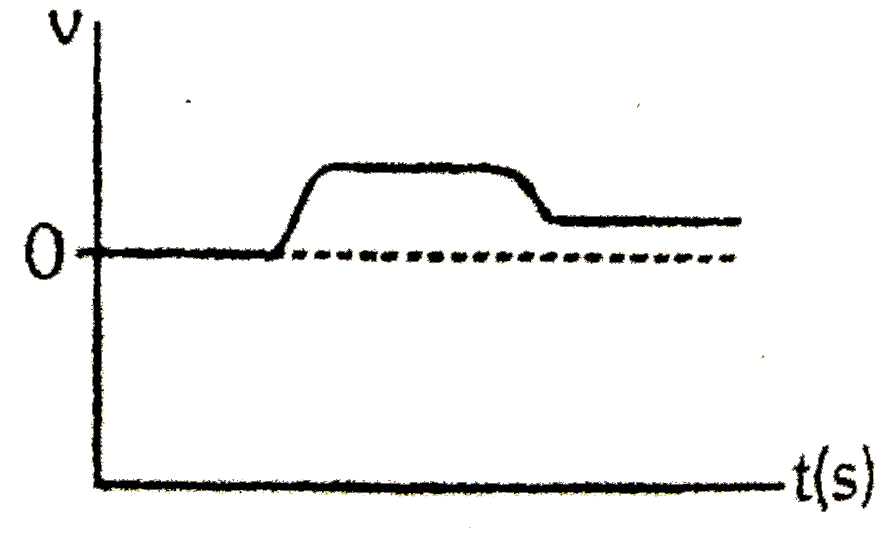
Two friends are sitting in a stationary boat. At `t = 30s` the person at the fromt tosses a sack to the person in the rear, who catches the sack `0.2 s` later. Which plot in figure shows the velocity of the boat as a fuction of time ? Positive velocity is forward, negative velocity is backward. Neglet any drag force on the boat from the water :-

A

B

C

D

Text Solution

Verified by Experts

The correct Answer is:

A
Promotional Banner

Topper's Solved these Questions

  • CENTRE OF MASS

    ALLEN |Exercise EXERCISE-II|43 Videos
  • CENTRE OF MASS

    ALLEN |Exercise EXERCISE-III|41 Videos
  • CENTRE OF MASS

    ALLEN |Exercise EXERCISE-V B|19 Videos
  • BASIC MATHEMATICS USED IN PHYSICS &VECTORS

    ALLEN |Exercise EXERCISE-IV ASSERTION & REASON|11 Videos
  • ELASTICITY, SURFACE TENSION AND FLUID MECHANICS

    ALLEN |Exercise Exercise 5 B (Integer Type Questions)|3 Videos

Similar Questions

Explore conceptually related problems

A circus wishes to develop a new clown act. Fig. (1) shows a diagram of the proposed setup. A clown will be shot out of a cannot with velocity v_(0) at a trajectory that makes an angle theta=45^(@) with the ground. At this angile, the clown will travell a maximum horizontal distance. The cannot will accelerate the clown by applying a constant force of 10, 000N over a very short time of 0.24s . The height above the ground at which the clown begins his trajectory is 10m . A large hoop is to be suspended from the celling by a massless cable at just the right place so that the clown will be able to dive through it when he reaches a maximum height above the ground. After passing through the hoop he will then continue on his trajectory until arriving at the safety net. Fig (2) shows a graph of the vertical component of the clown's velocity as a function of time between the cannon and the hoop. Since the velocity depends on the mass of the particular clown performing the act, the graph shows data for serveral different masses. The slope of the line segments plotted in figure 2 is a figure constant. Which one of the following physical quantities does this slope represent?

A circus wishes to develop a new clown act. Fig. (1) shows a diagram of the proposed setup. A clown will be shot out of a cannot with velocity v_(0) at a trajectory that makes an angle theta=45^(@) with the ground. At this angile, the clown will travell a maximum horizontal distance. The cannot will accelerate the clown by applying a constant force of 10, 000N over a very short time of 0.24s . The height above the ground at which the clown begins his trajectory is 10m . A large hoop is to be suspended from the celling by a massless cable at just the right place so that the clown will be able to dive through it when he reaches a maximum height above the ground. After passing through the hoop he will then continue on his trajectory until arriving at the safety net. Fig (2) shows a graph of the vertical component of the clown's velocity as a function of time between the cannon and the hoop. Since the velocity depends on the mass of the particular clown performing the act, the graph shows data for serveral different masses. From figure 2, approximately how much time will it take for clown with a mass of 60 kg to reach the safety net located 10 m below the height of the cannot?

A circus wishes to develop a new clown act. Fig. (1) shows a diagram of the proposed setup. A clown will be shot out of a cannot with velocity v_(0) at a trajectory that makes an angle theta=45^(@) with the ground. At this angile, the clown will travell a maximum horizontal distance. The cannot will accelerate the clown by applying a constant force of 10, 000N over a very short time of 0.24s . The height above the ground at which the clown begins his trajectory is 10m . A large hoop is to be suspended from the celling by a massless cable at just the right place so that the clown will be able to dive through it when he reaches a maximum height above the ground. After passing through the hoop he will then continue on his trajectory until arriving at the safety net. Fig (2) shows a graph of the vertical component of the clown's velocity as a function of time between the cannon and the hoop. Since the velocity depends on the mass of the particular clown performing the act, the graph shows data for serveral different masses. If the clown's mass is 80 kg , what initial velocity v_(0) will have as he leaves the cannot?

A circus wishes to develop a new clown act. Fig. (1) shows a diagram of the proposed setup. A clown will be shot out of a cannot with velocity v_(0) at a trajectory that makes an angle theta=45^(@) with the ground. At this angile, the clown will travell a maximum horizontal distance. The cannot will accelerate the clown by applying a constant force of 10, 000N over a very short time of 0.24s . The height above the ground at which the clown begins his trajectory is 10m . A large hoop is to be suspended from the celling by a massless cable at just the right place so that the clown will be able to dive through it when he reaches a maximum height above the ground. After passing through the hoop he will then continue on his trajectory until arriving at the safety net. Fig (2) shows a graph of the vertical component of the clown's velocity as a function of time between the cannon and the hoop. Since the velocity depends on the mass of the particular clown performing the act, the graph shows data for serveral different masses. If a clown holds on to hoop instead of passing through it, what is the position of the cable so that he doesn't hit his head on the ceiling as he swings upward?

A circus wishes to develop a new clown act. Fig. (1) shows a diagram of the proposed setup. A clown will be shot out of a cannot with velocity v_(0) at a trajectory that makes an angle theta=45^(@) with the ground. At this angile, the clown will travell a maximum horizontal distance. The cannot will accelerate the clown by applying a constant force of 10, 000N over a very short time of 0.24s . The height above the ground at which the clown begins his trajectory is 10m . A large hoop is to be suspended from the celling by a massless cable at just the right place so that the clown will be able to dive through it when he reaches a maximum height above the ground. After passing through the hoop he will then continue on his trajectory until arriving at the safety net. Fig (2) shows a graph of the vertical component of the clown's velocity as a function of time between the cannon and the hoop. Since the velocity depends on the mass of the particular clown performing the act, the graph shows data for serveral different masses. If the mass of a clown doubles, his initial kinetic energy, mv_(0)^(2)//2 , will :-

A circus wishes to develop a new clown act. Fig. (1) shows a diagram of the proposed setup. A clown will be shot out of a cannot with velocity v_(0) at a trajectory that makes an angle theta=45^(@) with the ground. At this angile, the clown will travell a maximum horizontal distance. The cannot will accelerate the clown by applying a constant force of 10, 000N over a very short time of 0.24s . The height above the ground at which the clown begins his trajectory is 10m . A large hoop is to be suspended from the celling by a massless cable at just the right place so that the clown will be able to dive through it when he reaches a maximum height above the ground. After passing through the hoop he will then continue on his trajectory until arriving at the safety net. Fig (2) shows a graph of the vertical component of the clown's velocity as a function of time between the cannon and the hoop. Since the velocity depends on the mass of the particular clown performing the act, the graph shows data for serveral different masses. If the angle the cannot makes with the horiaontal is increased from 45^(@) , the hoop will have to be

A car is moving on a straight road. The velocity of the car varies with time as shown in the figure. Initially (at t=0), the car was at x=0 , where, x is the position of the car at any time 't'. Average speed from t=0 to t=70 s will be :-

A car P is moving with a uniform speed 5sqrt3 m//s towards a carriage of mass 9 kg at rest kept on the rails at a point B as shown in figure. The height AC is 120 m. Cannon balls of 1 kg are fired from the car with an initial velocity 100m//s at an angle 30^@ with the horizontal. The first cannon hall hits the stationary carriage after a time t_0 and sticks to it. Determine t_0 . At t_0 , the second cannon ball is fired. Assume that the resistive force between the rails and the carriage is constant and ignore the vertical motion of the carriage throughout. If the second ball also hits and sticks to the carriage, what will be the horizontal velocity of the carriage just after the second impact?

A 100g block is connected to a horizontal massless spring of force constant 25.6 N//m . The block is free to oscillate on a horizontal fricationless surface. The block is displced by 3 cm from the equilibrium position, and at t = 0 , it si released from rest at x = 0 , The position-time graph of motion of the block is shown in figure. Let us now make a slight change to the initial conditions. At t = 0 , let the block be released from the same position with an initial velocity v_(1) = 64 cm//s . Position of the block as a function of time can be expressed as

A river 400 m wide is flowing at a rate of 2.0 m//s. A boat is sailing at a velocity of 10.0 m//s with respect to the water In a direction perpendicular to the river. (a) Find the time taken by the boat to reach the opposite bank. (b) How far from the point directly opposite to the starting point does the boat reach the opposite bank?

ALLEN -CENTRE OF MASS-EXERCISE-I
  1. Two blocks A(3 kg) and B(2 kg) resting on a smooth horizontal surface ...

    Text Solution

    |

  2. A shell is fired vertically upwards with a velocity v(1) from the deck...

    Text Solution

    |

  3. A shell is fired from a cannon with a velocity v (m//sec.) at an angle...

    Text Solution

    |

  4. A ball hits the floor and rebounds after an inelastic collision. In th...

    Text Solution

    |

  5. Three balls A, B and C are placed on a smooth horizontal surface. Give...

    Text Solution

    |

  6. A body of mass 1 kg strikes elastically with another body at rest and ...

    Text Solution

    |

  7. A small bucket of mass M kg is attached to a long inextensible cord of...

    Text Solution

    |

  8. In the figure shown, a particle P strikes the inclined smooth plane ho...

    Text Solution

    |

  9. A ball of mass 2m impinges directly on a ball of mass m, which is at r...

    Text Solution

    |

  10. A body of mass 2 kg is projected upward from the surface of the ground...

    Text Solution

    |

  11. A ball of mass 1 kg strikes a heavy platform, eleastically, moving upw...

    Text Solution

    |

  12. Two paricles of equal mass m go round a circle of radius R under the a...

    Text Solution

    |

  13. Two objects move in the same direction in a straight line. One moves w...

    Text Solution

    |

  14. A uniform rope of linear mass density lambda and length l is coiled on...

    Text Solution

    |

  15. A 10 g rubber ball and a 10g clay ball are each thrown at a wall with ...

    Text Solution

    |

  16. Two friends are sitting in a stationary boat. At t = 30s the person at...

    Text Solution

    |

  17. Two blocks, with masses m(1) 2.5 kg and m(2) = 14 kg, approach each ot...

    Text Solution

    |

  18. A small puck is sliding to the right with momentum vec(P)(1) on a hori...

    Text Solution

    |

  19. A smooth sphere is moving on a horizontal surface with velocity vector...

    Text Solution

    |

  20. A moving 2 kg ball with a speed of 2 ms^(-1) hits obliquely a stationa...

    Text Solution

    |
