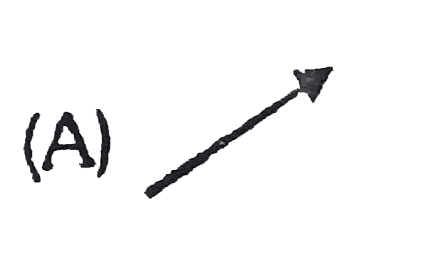
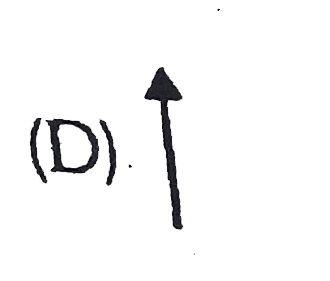
If `|hata-hatb|=sqrt(2)` then calculate the value of `|hat a+sqrt(3)hatb|`.
A
B
C
D
Text Solution
Verified by Experts
The correct Answer is:
B
As `|vec(B)/3|=|vec(C)/2|` so `vec(B)/3+vec(C)/2=-vec(A)/4` therefore `(3vec(A))/4+vec(B)/3+vec(C)/2=vec(A)/2`
Topper's Solved these Questions
BASIC MATHS
ALLEN |Exercise Exercise-02|53 Videos
BASIC MATHS
ALLEN |Exercise Exersice-03|7 Videos
AIIMS 2019
ALLEN |Exercise PHYSICS|39 Videos
CIRCULAR MOTION
ALLEN |Exercise EXERCISE (J-A)|6 Videos
Similar Questions
Explore conceptually related problems
If hata" and "hatb are non-collinear unit vectors and if |hata+hatb|=sqrt(3) , then the value of (2hata-5hatb).(3hata+hatb) is :-
If x=sqrt(2)-1 then find the value of ((1)/(x)-x)^(3) :-
If cos 2 theta =(sqrt(2)+1)( cos theta -(1)/(sqrt(2))) , then the value of theta is
If |hatAxxhatB|=-sqrt(3)hatA.hatB , then |hatA-hatB| =…………………..
The principle value of tan^(-1)(sqrt3) is ____
The diagonals of a parallelogram are expressed as vecA=5hati05hatj+3hatk and hatB=3hatj-2hatj-hatk . Calculate the magnitude of area of this parallelogram.
If |hata+hatb|=|hata-hatb| , then find the angle between veca and vecb
Calculate sqrt(0.99)
If the sqrt2 =1.4142 find the values of (1)/( sqrt2+ 1)
If hati-3hatj+5hatk bisects the angle between hata and -hati+2hatj+2hatk , where hata is a unit vector, then