Home
Class 12
MATHS
A solid sphere of mass m and radius R is...

A solid sphere of mass `m` and radius `R` is released from rest on an inclined plane as shown in figure. The coefficient of friction is `(tan theta)/7`. Find the angular velocity of the sphere at the bottom of the inclined plane (`AC=l`)

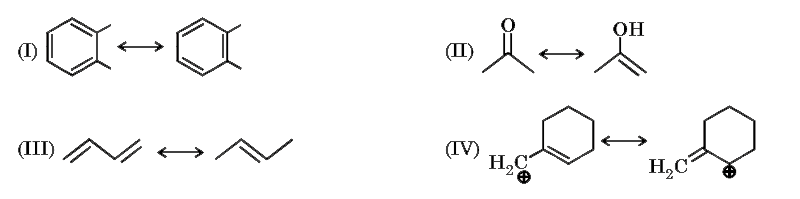
A

I,II,III

B

I,IV

C

II,III

D

I,III,IV

Text Solution

Verified by Experts

Promotional Banner

Topper's Solved these Questions

Similar Questions

Explore conceptually related problems

Three solid sphere of mass M and radius R are placed in contact as shown in figure. Find the potential energy of the system ?

Two blocks each of mass M are resting on a frictionless inclined plane as shown in fig then:

A block of mass m is lying on an inclined plane. The coefficient of friction between the plane and the block is mu . The force (F_(1)) required to move the block up the inclined plane will be:-

A body is slipping from an inclined plane of height h and length l . If the angle of inclination is theta , the time taken by the body to come from the top to the bottom of this inclined plane is

A solid cylinder of mass M and radius R rolls down an inclined plane of height h. The angular velocity of the cylinder when it reaches the bottom of the plane will be :

A solid sphere of diameter 0.1 m and 5 kg is rolling down an inclined plane with a speed of 4 m/s. The total kinetic energy of the sphere is :

A solid cylinder of mass M and radius R rolls without slipping down an inclined plane of length L and height h. What is the speed of its centre of mass when the cylinder reaches its bottom?

A solid cylinder is rolling down on an inclined plane of angle theta . The minimum value of the coefficient of friction between the plane and the cylinder to allow pure rolling

A solid sphere of mass m and radius R rotating about its diameter. A solid cylinder of the same mass and same radius is also rotating about its geometrical axis with an angular speed twice that of the sphere. The ratio of their kinetic energies of rotation ((E_("sphere"))/(E_("cylinder"))) will be = ..............

A solid sphere rolls without slipping on an inclined plane of angle theta . Find its linear acceleration in the direction parallel to the surface of the inclined plane.

ALLEN -TEST PAPERS-CHEMISTRY
  1. The potential difference applied ot an x ray tube is 5kV and current t...

    Text Solution

    |

  2. Angular velocity of a particle omega=(t^(2)+1) rad/s changes with time...

    Text Solution

    |

  3. A solid sphere of mass m and radius R is released from rest on an incl...

    Text Solution

    |

  4. An electron in a hydrogen like atom is in excited state and has total ...

    Text Solution

    |

  5. A wheel having moment of inertia 2kg-m^(2) about its axis rotates at 5...

    Text Solution

    |

  6. As shown in the figure rod of mass m and length l is hinged at O at on...

    Text Solution

    |

  7. A constant force acting at the centre of a uniform disk of radius r is...

    Text Solution

    |

  8. One mole of hydrogen assumed to be ideal, is adiabatically expanded fr...

    Text Solution

    |

  9. An ideal gas undergoes a cycle ABCA in which its pressure P, and volum...

    Text Solution

    |

  10. For an elementary reaction A(g)+B(g)+C(g)to2D(g) initial partial p...

    Text Solution

    |

  11. In a non stoichiometric compound Ni(0.9)O. Find the ratio of Ni^(2+) &...

    Text Solution

    |

  12. Volume vs Temperature graph of 3 moles of diatomic gas is as shown in ...

    Text Solution

    |

  13. Which one of the following property is amount independent

    Text Solution

    |

  14. In a facc lattice of atoms the number of atoms in one unit cell that a...

    Text Solution

    |

  15. In which of the following 3c-4e bond is present?

    Text Solution

    |

  16. Given the correct order of initials T or F for the following statement...

    Text Solution

    |

  17. Which is NOT correctly matched?

    Text Solution

    |

  18. Select the INCORRECT order.

    Text Solution

    |

  19. Consider the following conversions: N(2)toN(2)^(+) O(2) to O(2)^(+...

    Text Solution

    |

  20. Optically inactive molecule in the following?

    Text Solution

    |

