Home
Class 12
MATHS
Find the cube of (2a-3b)...

Find the cube of `(2a-3b)`

Text Solution

Verified by Experts

The correct Answer is:
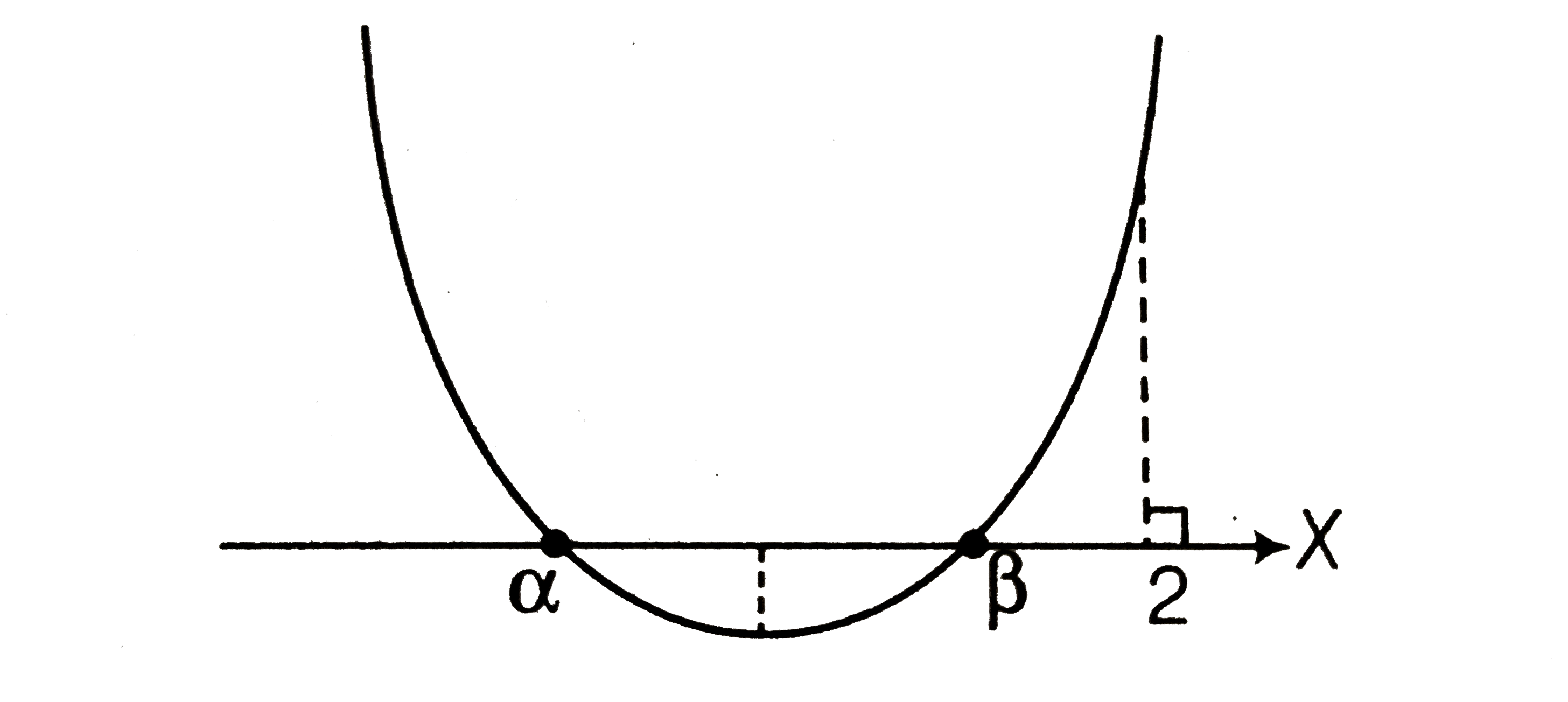
(i) `m epsilong (-oo,(7-sqrt(3))/2)` (ii) `m epsilon ((7+sqrt(33))/2,oo)` (iii) `m epsilon phi`
(iv) `m epsilon ((7-sqrt(3))/2,(11-sqrt(73))/2)uu((7+sqrt(33))/2,(11+sqrt(73))/2)`
(v) `m epsilon (0,3)` (vi) `m epsilon ((7-sqrt(3))/2,(7+sqrt(33))/2)`
(vii) `m epsilon ((7-sqrt(33))/2,(11-sqrt(73))/2)uu((7+sqrt(33))/2,(11+sqrt(73))/2)`
(viii) `m epsilon ((7-sqrt(3))/2,(7+sqrt(33))/2)uu((7+sqrt(3))/2,oo)`
(ix) `m epsilon (-oo,(7-sqrt(33))/2)uu((7-sqrt(33)/2,(7+sqrt(33))/2)`
(x) `m epsilon `((11-sqrt(73))/2,(7+sqrt(3))/2)`

`:'2x^(2)-2(2m+1)x+m(m+1)=0 [:'m epsilonR]`
`:.D=[-2(2m+1)]^(2)-8m(m+1)[D=b^(2)-4ac]`
`=4{(2m+1)^(2)-2m(m+1)}`
`=4(2m^(2)+2m+1)`
`=8(m^(2)+m+1/2)=8{(m+1/2)^(2)+1/4}gt0`
or `D gt0, AA m epsiolonR`……i
x coordinate of vertex `=-b/(2a)=(2(m+1))/4=(m+1/2)`.....ii
and let
`f(x)=x^(2)-(2m+1)x+1/2m(m+1)` ...........iii
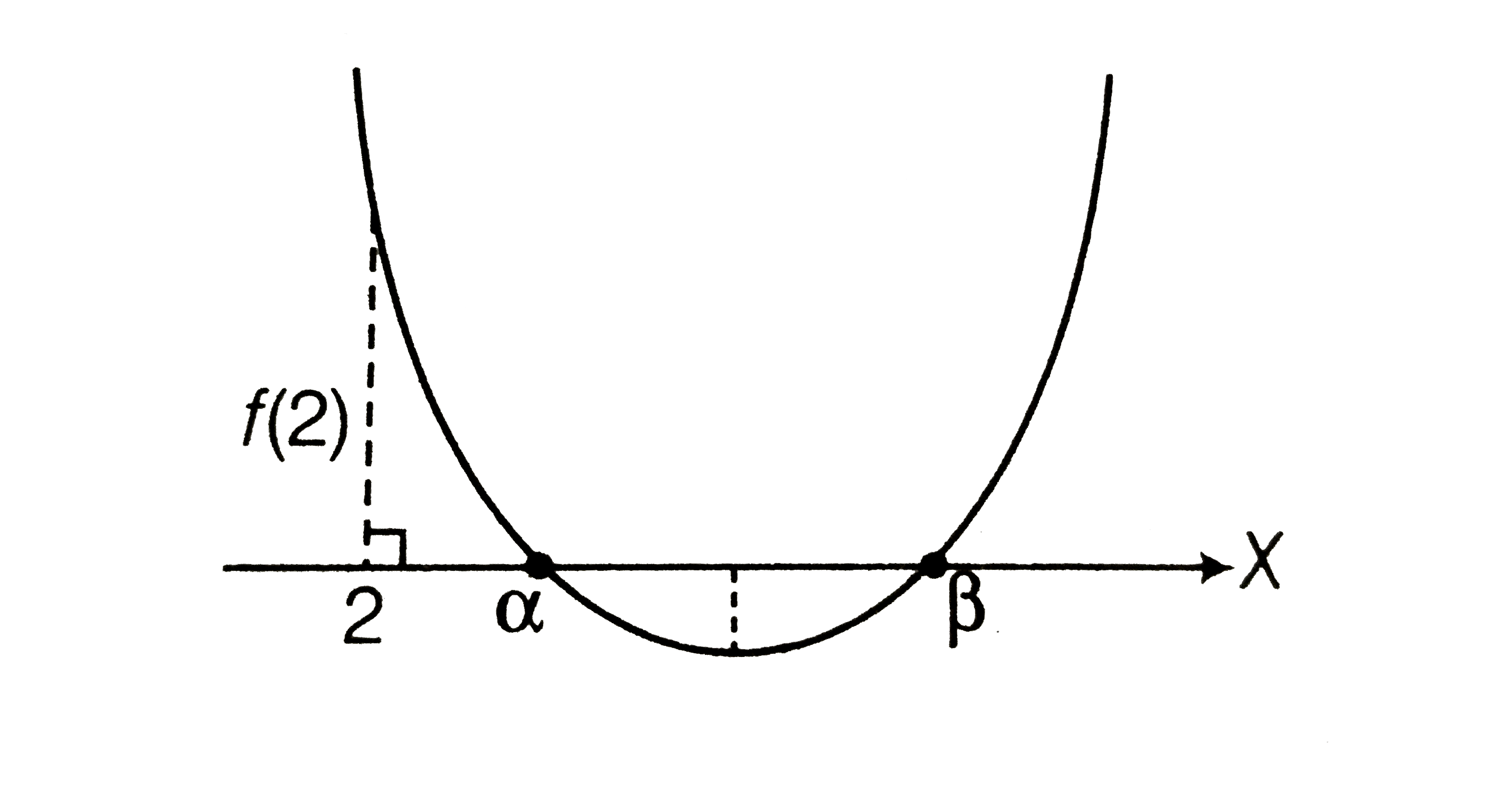
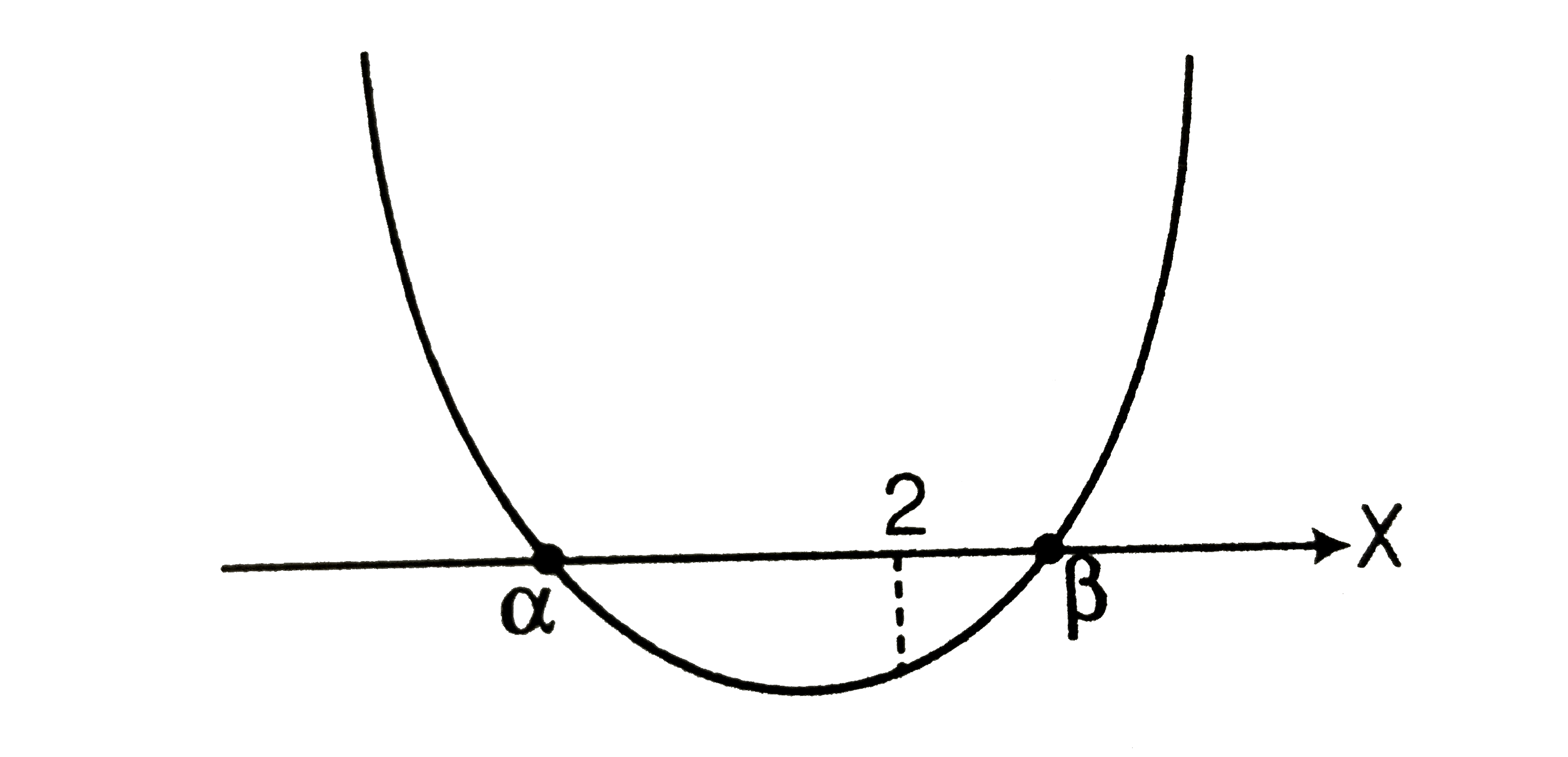
(i) Both roots are smaller than 2.

Consider the following cases:
Case I `Dge0`
`:. m epsilonR` [from Eq. (i) ]
CaseII x-coordinate of vertex `lt2`.
`impliesm+1/2lt0` [from Eq. (ii) ]
or `mlt3/2`
Case III `f(2)gt0`
`implies4-(2m+1)2+1/2m(m+1)gt0`

`impliesm^(2)-7m+4gt0`
`:.m epsilon(-oo,(7-sqrt(3))/2)uu((7+sqrt(33))/2,oo)`
Combining all cases we get
`m epsilon (-oo,(7-sqrt(3))/2)`
(ii) Both roots are greater than 2.
Consider the following cases.

Case I `Dge0`
`:. m epsilon R`[from Eq. (i)]
Case II x- coordinate of vertex `gt2`
`impliesm+1/2gt2`[ from Eq. (ii)]
`:.m gt3/2`
Case III `f(2)gt0`
`m epsilon (-oo,(7-sqrt(33))/2)uu(7+(sqrt(33))/2,oo)` [from part (a) ]
Combining all cases, we get
`m epsilon ((7+sqrt(33))/2,oo)`
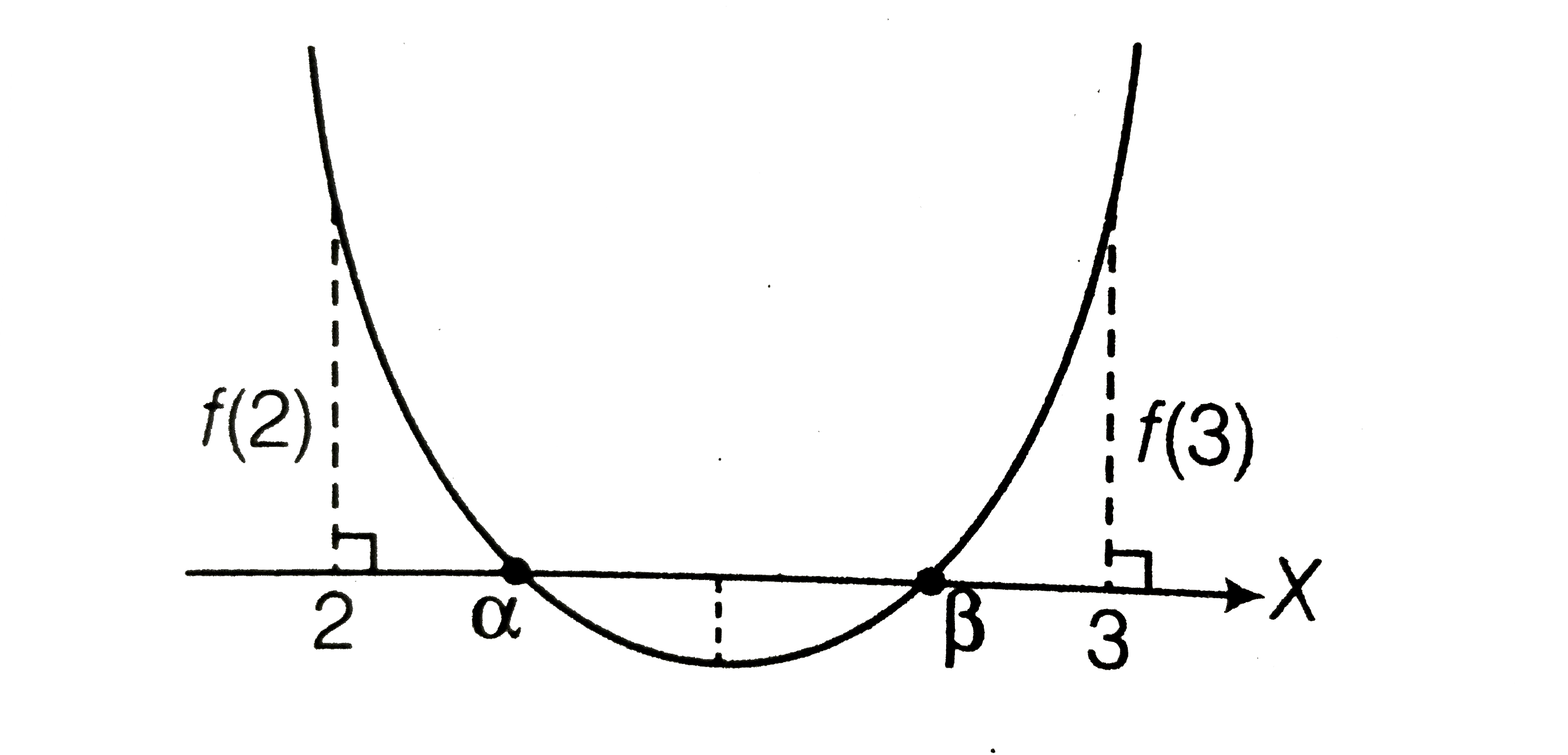
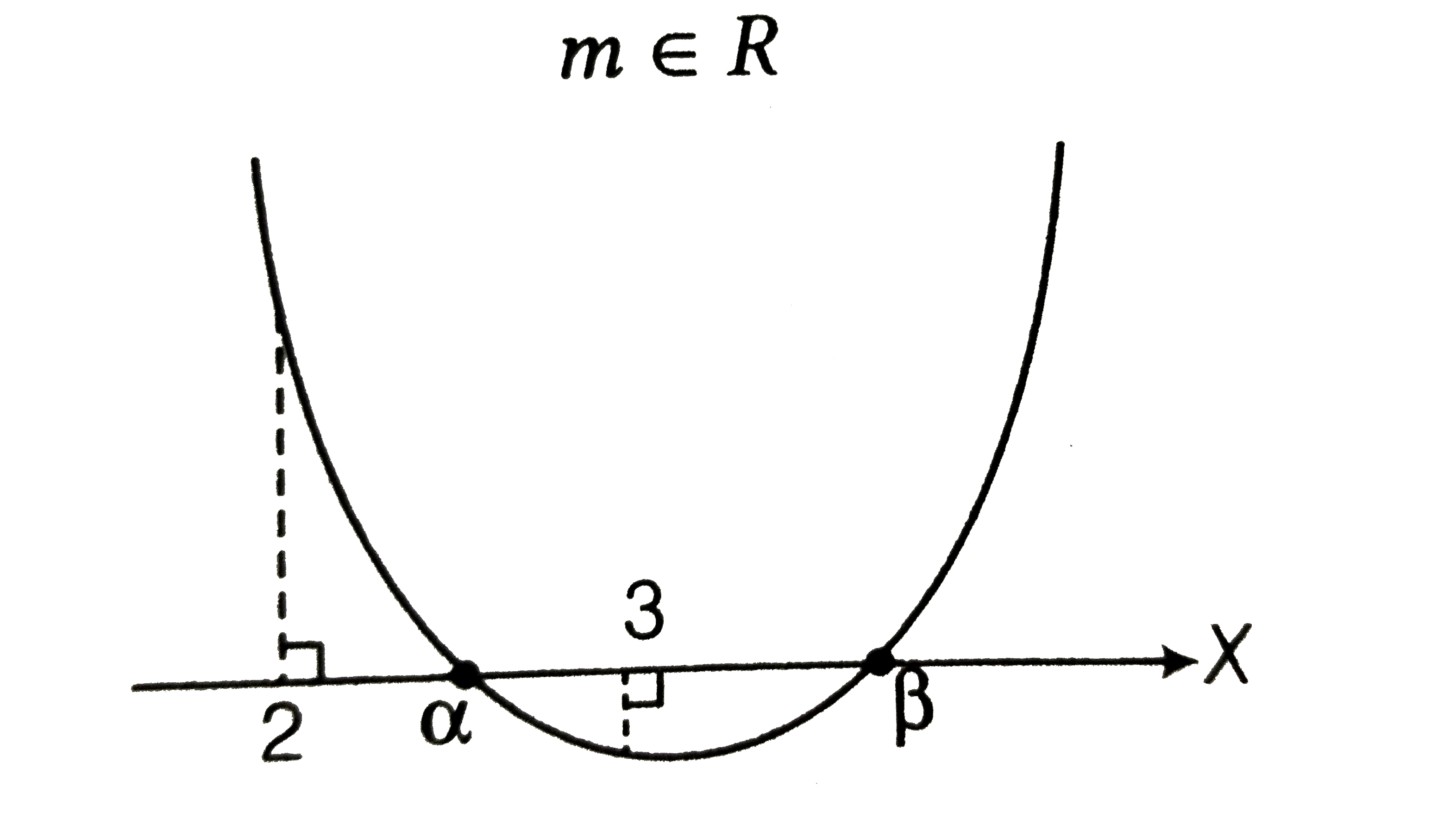
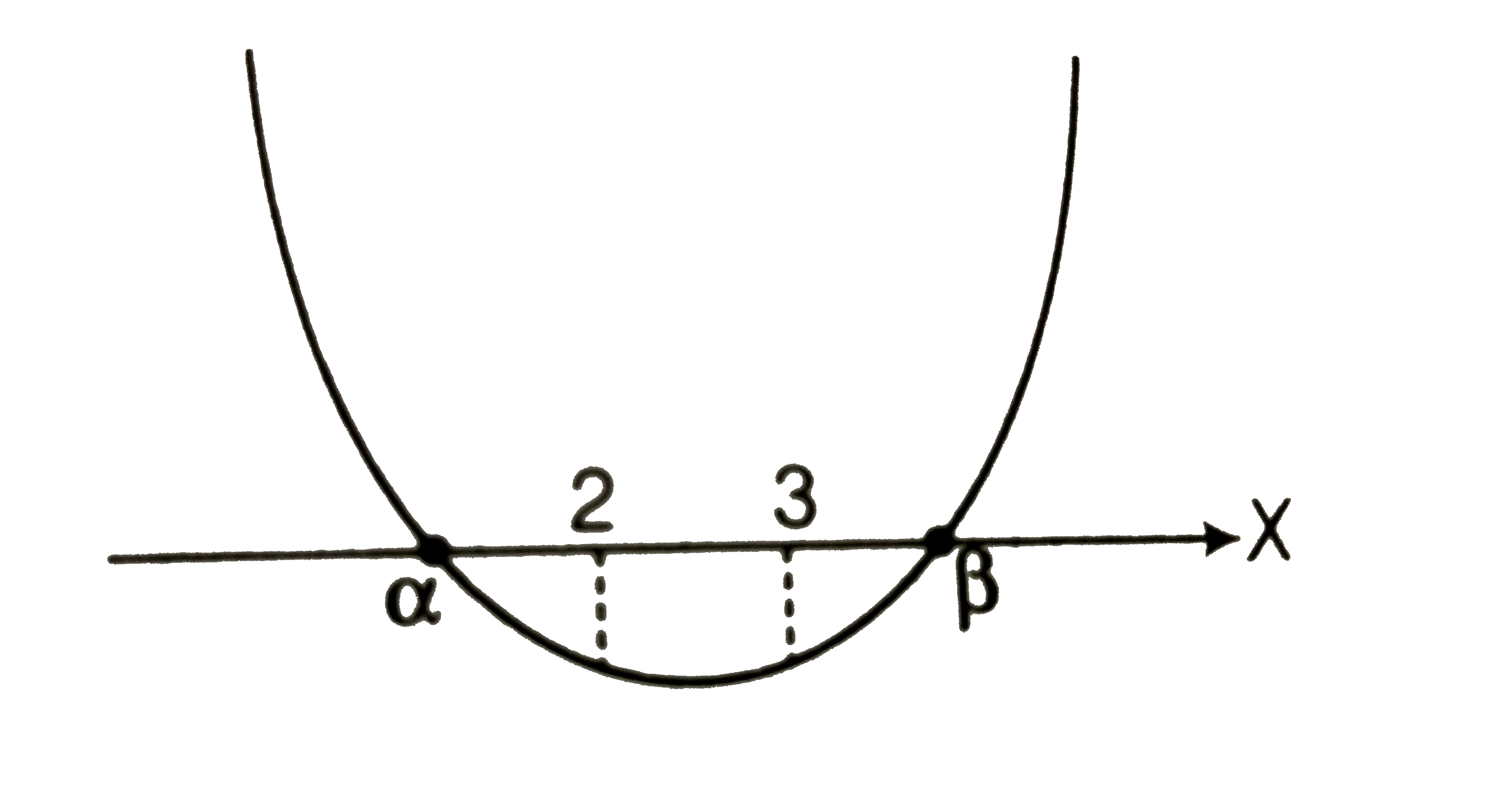
(iii) Both roots lie in the interval (2,3).
Consider the following cases:

CAse I `Dge0`
`:. m epsilonR` [from Eq. (i)]
Case II `f(2)gt0`
`:. m epsilon (-oo,(7-sqrt(3))/2)uu((7+sqrt(33))/2,oo)` [from part (a)]
Case Case III `f(3)gt0`
`implies9-3(2m+1)+1/2m(m+1)gt0`
or `m^(2)-11m+12gt0`
`:m epsilon (-oo,(11-sqrt(73))/2)uu((11+sqrt(73))/2,oo)`
Case IV `2ltx` -coordinate of vertex `lt3`
`implies2ltm+1/2lt3`
or `3/2ltmlt5/2` or `m epsilon (3/2,5/2)`
Combining allcases we get
`m epsilon phi`
(iv) Exactly one root lie in the interval (2,3).
Consiser the following cases:
Case I `Dgt0`
`:.m epsilon R` [from Eq (i) ]

Case II `f(2)f(3)lt0`
`(4-2(2m+1)+1/2m(m+1))`
`(9-3(2m+1)+1/2m(m+1))lt0`
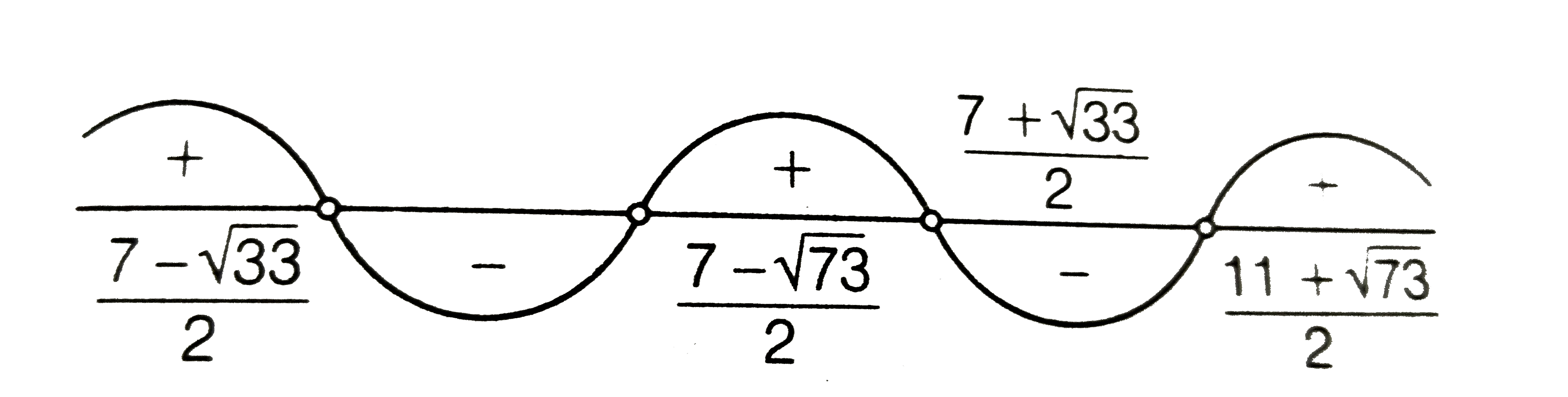
`implies(m^(2)-7m+4)(m^(2)-11m+12)lt0`
`implies(m-(7-sqrt(33))/2)(m-(7+sqrt(33))/2)`
`(m-(11-sqrt(73))/2)(m-(11+sqrt(73))/2)lt0`

`:. m epsilon ((7-sqrt(33))/2,(11-sqrt(33))/2)uu((7+sqrt(33))/2,(11+sqrt(73))/2)`
Combining all cases we get
`m epsilon `((7-sqrt(33))/2,(11-sqrt(73))/2))uu((7+sqrt(33))/2,(11+sqrt(73))/2)`
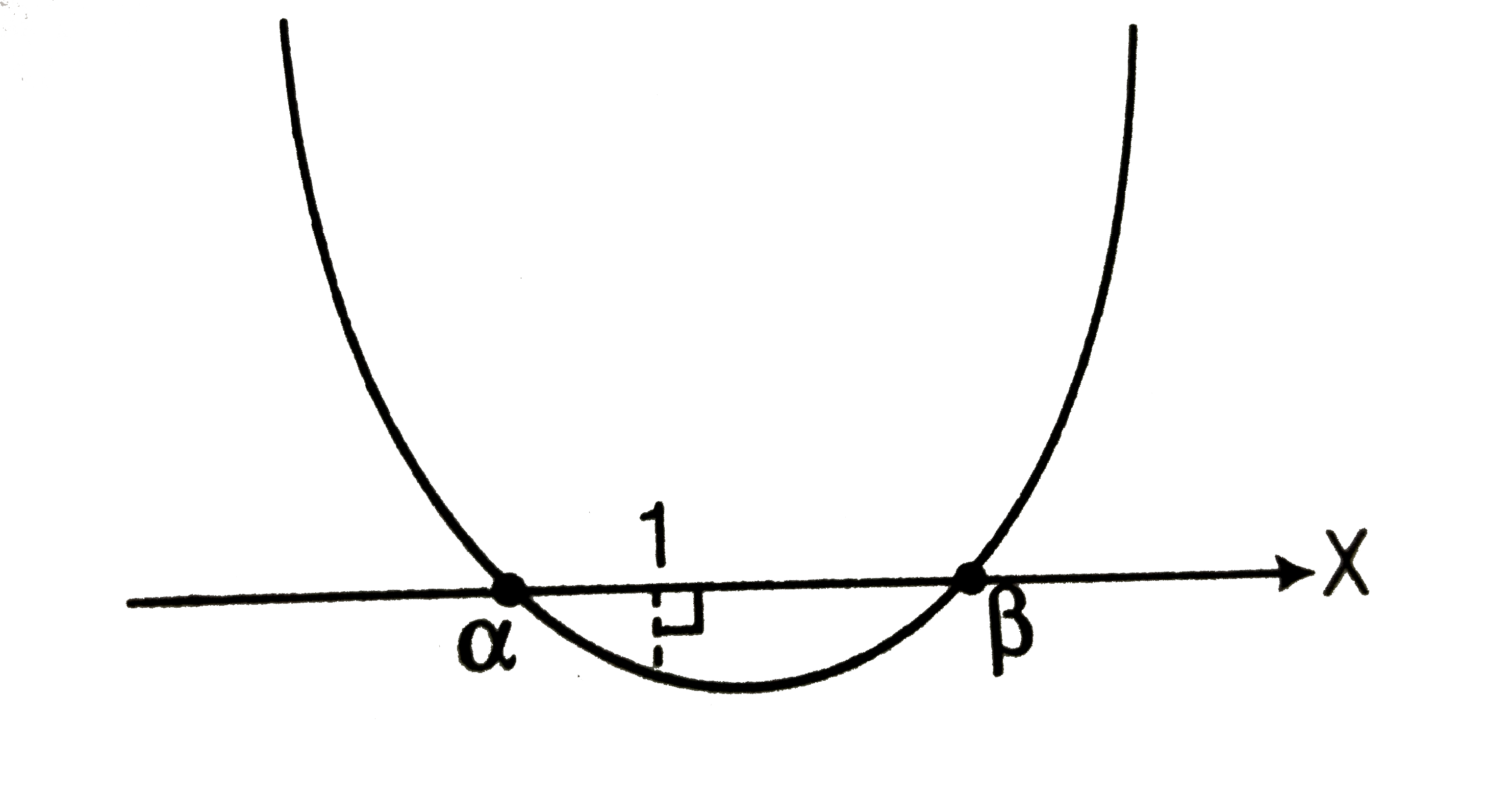
(v) One root is smaller than 1 and the other root is greater than 1.
Consiser the following cases.

Case I `Dgt0`
`:.m epsilonR` [from Eq. (i)]
Case II `f(1)lt0`
`implies1-(2+1)+1/2m(m+1)lt0` [from Eq. (iii) ]
`impliesm^(2)-3mlt0`
`impliesm(m-3)lt0`
`:.m epsilon (0,3)`
Combining both cases we get
` m epsilon(0,3)`
(vi) One root is greater than 3 and the other root is smaller than 2. ltbRgt Consiser the following cases

Case I `Dgt0`
`:. m epsion R` [from Eq. (i) ]
Case II `f(2)lt0`
`impliesm^(2)-8m+4lt0`
`:.(7-sqrt(33))/2ltmlt(7+sqrt(33))/2`
`:. m epsilon ((7-sqrt(33))/2ltm lt (7+sqrt(33))/2`
`:. M epsilon ((7-sqrt(33))/2,(7+sqrt(33))/2)`
Case III `f(3)lt0`
`impliesm^(2)-11m+12lt0`
`:.(11-sqrt(73))/2ltmlt (11+sqrt(73))/2`
`:. m epsilon ((11-sqrt(73))/2, (11+sqrt(73))/2)`
Combining all cases we get
`m epsilon ((7-sqrt(33))/2, (7+sqrt(33))/2)`
(vii) Atleast one root lies in the interval (2,3).
i.e. (d) `uu` (c)
`:.mepsilon((7-sqrt(33))/2,(11-sqrt(73))/2)uu((7+sqrt(33))/2,(11+sqrt(73))/2)`
(viii) At least one root is greater than 2.
i.e (Exactly one root is greater than 2) `uu` (Both roots are greater 2).

of (Exactly one root is greater than 2) `uu` (b)…..i
Consider the following cases:
Case I `Dgt0`
`:. m epsilon`[from Eq. (i)]
Case II `f(2)lt0`
`impliesm^(2)-7m+4lt0`
`:.m epsilon ((7-sqrt(33))/2,(7+sqrt(33))/2)`
Combining both cases we get
`m epsilon ((7-sqrt(33))/2,(7+sqrt(33))/2)`………ii
Finally from Eqs i and ii we get
` m epsilon ((7-sqrt(33))/2,(7+sqrt(33))/2)uu((7+sqrt(33))/2,oo)`
(ix) Atleast one root is smaller than 2.
i.e (Exactly one root is smaller then 2) `uu` (Both roots are smaller than2)
or (h) II `uu`(a)
We get `m epsilon (-oo,(7-sqrt(33))/2)uu((7-sqrt(33))/2,(7+sqrt(33))/2)`
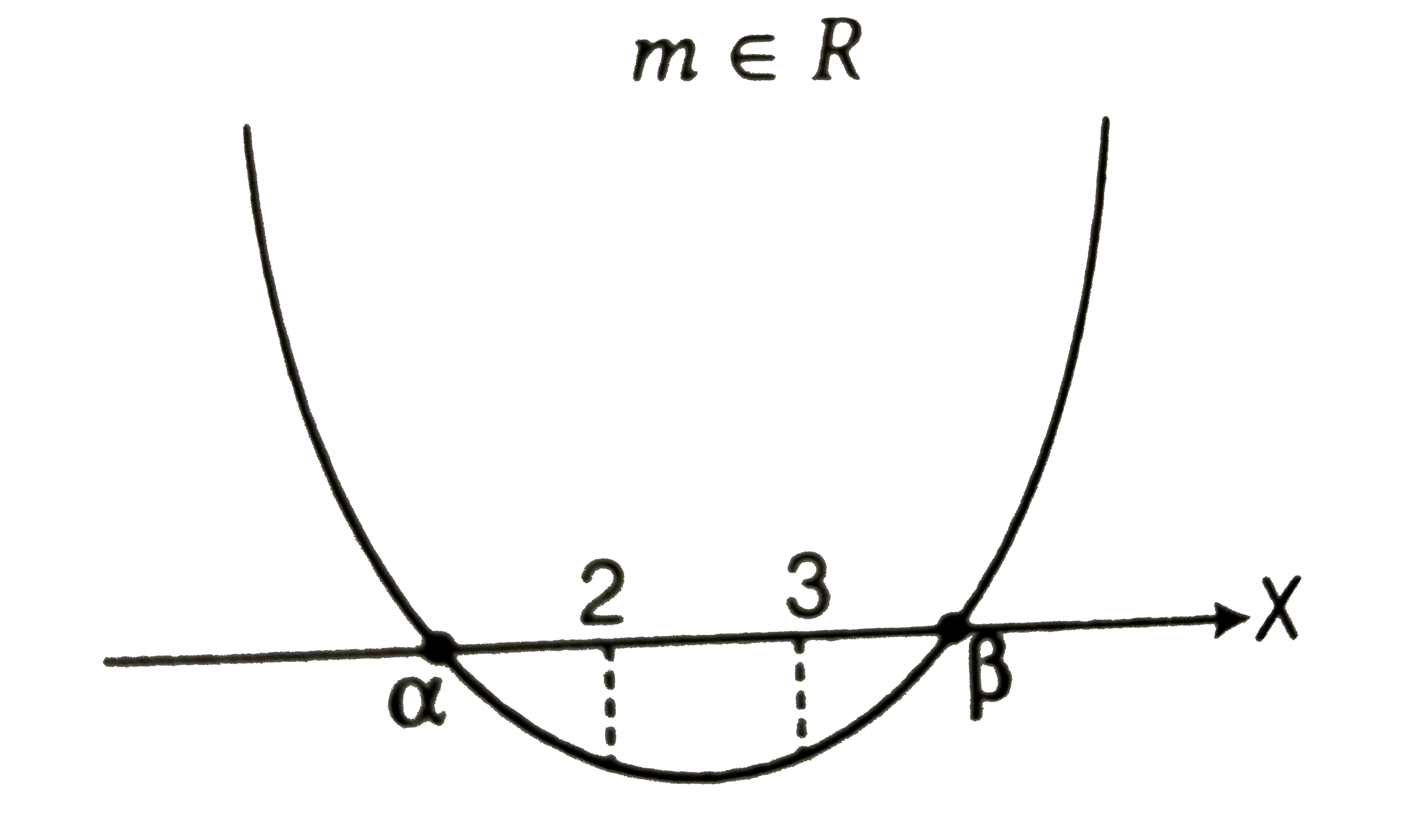
(x) Both 2 and 3 lie between `alpha` and `beta`
Consider the following cases:
Case `Dgt0`
`:. mepsilonR` [from Eq (i)]

Case II `f(2)lt0`
`impliesm^(2)-7m+4lt0`
`:. m epsilon ((7-sqrt(33))/2,(7+sqrt(33))/2)`
Case III `f(3)lt0`
`impliesm^(2)-11m+12lt0`
`:.m epsilon((11-sqrt(73))/2,(11+sqrt(73))/2)`
Combining all cases we get
`m epsilon ((11-sqrt(73))/2,(7+sqrt(33))/2)`
Promotional Banner

Topper's Solved these Questions

  • THEORY OF EQUATIONS

    ARIHANT MATHS|Exercise Exercise (Questions Asked In Previous 13 Years Exam)|35 Videos
  • THEORY OF EQUATIONS

    ARIHANT MATHS|Exercise Exercise (Statement I And Ii Type Questions)|7 Videos
  • THE STRAIGHT LINES

    ARIHANT MATHS|Exercise The Straight Lines Exercise 8 : (Questions Asked in Previous 13 years Exams)|1 Videos
  • THREE DIMENSIONAL COORDINATE SYSTEM

    ARIHANT MATHS|Exercise Three Dimensional Coordinate System Exercise 12 : Question Asked in Previous Years Exam|2 Videos

Similar Questions

Explore conceptually related problems

If a = 2, b = -3 then find the value of (a/(b))^(b)

If a = 2, b = -3 then find the value of (a/(b))^(a)

Find the value of a^(3)+a^(3)b+b^(3)+ab^(2) a=-2,b=-1

((a)/(b))=((-2)/(3))^(5)+((-2)/(3))^(4) , find the value of ((a)/(b))^(-3)

Find the cube root of 13824 by prime factorisation method.

Find the value of a^(3)+a^(3)b+b^(3)+ab^(2) a=-1,b=1

Without actually calculating the cubes, find the value of: (1/2)^3+(1/3)^3-(5/6)^3

Without actually calculating the cubes, find the value of: (0.2)^3-(0.3)^3+(0.1)^3

Find the cube root of 8000.

ARIHANT MATHS-THEORY OF EQUATIONS-Exercise (Subjective Type Questions)
  1. For what values of m the equation (1+m)x^(2)-2(1+3m)x+(1+8m)=0 has (m ...

    Text Solution

    |

  2. Find the cube of (2a-3b)

    Text Solution

    |

  3. If r is the ratio of the roots of the equation ax^2 + bx + c = 0 , sho...

    Text Solution

    |

  4. If the roots of the equation 1/ (x+p) + 1/ (x+q) = 1/r are equal in ma...

    Text Solution

    |

  5. If one root of the equation ax^2 + bx + c = 0 is equal to the n^(th) p...

    Text Solution

    |

  6. If alpha, beta be the roots of the equation ax^2 + bx + c= 0 and gamma...

    Text Solution

    |

  7. Show that the roots of the equation (a^(2)-bc)x^(2)+2(b^(2)-ac)x+c^(2)...

    Text Solution

    |

  8. If the equation x^(2)-px+q=0 and x^(2)-ax+b=0 have a comon root and th...

    Text Solution

    |

  9. If the equation x^(2)-2px+q=0 has two equal roots, then the equation (...

    Text Solution

    |

  10. Solve the equation x^(log(x)(x+3)^(2))=16.

    Text Solution

    |

  11. Solve the equation (2+sqrt(3))^(x^(2)-2x+1)+(2-sqrt(3))^(x^(2)-2x-1)=...

    Text Solution

    |

  12. Solve the equation x^(2)+(x/(x-1))^(2)=8

    Text Solution

    |

  13. Find number of solutions of the equation sqrt((x+8)+2sqrt(x+7))+sqrt((...

    Text Solution

    |

  14. Find value of x if x^2+5|x|+6=0

    Text Solution

    |

  15. Solve x^(2)+2x-3

    Text Solution

    |

  16. Solve the system x^(2)-2|x|=0

    Text Solution

    |

  17. If alpha, beta, gamma are the roots of the cubic x^(3)-px^(2)+qx-r=0 ...

    Text Solution

    |

  18. If A(1),A(2),A(3),...,A(n),a(1),a(2),a(3),...a(n),a,b,c in R show that...

    Text Solution

    |

  19. One root of the quadratic equation x^(2)-12x+a=0 is thrice the other....

    Text Solution

    |

  20. If [x] is the integral part of a real number x. Then solve [2x]-[x+1]=...

    Text Solution

    |