Home
Class 12
PHYSICS
A man inside a freely falling box throws...

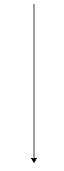
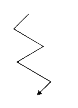
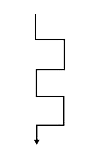
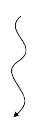
A man inside a freely falling box throws a heavy ball towards a side wall. The ball keeps on bouncing between the opposite walls of the box. We neglect air resistance and friciton. Which of the following figures depicts the motion of the centre of mass of the entire system (man, the ball and the box)?

A

B

C

D

Text Solution

AI Generated Solution

The correct Answer is:

To solve the problem, we need to analyze the motion of the center of mass of the entire system, which consists of the man, the ball, and the box, as they fall freely under the influence of gravity. ### Step-by-Step Solution: 1. **Understanding the System**: - We have a man inside a box that is falling freely. The man throws a heavy ball towards one of the walls of the box. - The entire system (man + ball + box) is in free fall, meaning they are all accelerating downwards at the same rate due to gravity. 2. **Identifying Forces**: - The only external force acting on the entire system is the gravitational force (mg), where m is the total mass of the system (man + box + ball) and g is the acceleration due to gravity. - Since there are no other external forces acting on the system (we neglect air resistance and friction), the motion of the center of mass will be influenced solely by this gravitational force. 3. **Motion of the Center of Mass**: - In a freely falling system, the center of mass of the system will also fall freely under the influence of gravity. - The center of mass will move downward with the same acceleration as the rest of the system, which is g (acceleration due to gravity). 4. **Bouncing of the Ball**: - While the ball bounces between the walls of the box, the horizontal motion does not affect the vertical motion of the center of mass. - The center of mass will continue to move downward as the ball bounces back and forth, but there will be no net horizontal movement of the center of mass since the forces acting in the horizontal direction are internal to the system. 5. **Conclusion**: - Therefore, the motion of the center of mass of the entire system will be a downward motion, and it will not move horizontally. - The correct depiction of the motion of the center of mass is that it moves straight down. ### Final Answer: The center of mass of the entire system (man, ball, and box) will move downward.

To solve the problem, we need to analyze the motion of the center of mass of the entire system, which consists of the man, the ball, and the box, as they fall freely under the influence of gravity. ### Step-by-Step Solution: 1. **Understanding the System**: - We have a man inside a box that is falling freely. The man throws a heavy ball towards one of the walls of the box. - The entire system (man + ball + box) is in free fall, meaning they are all accelerating downwards at the same rate due to gravity. ...
Promotional Banner

Topper's Solved these Questions

  • QUESTION PAPER 2013

    KVPY PREVIOUS YEAR|Exercise PART-II (PHYSICS)|5 Videos
  • QUESTION PAPER 2013

    KVPY PREVIOUS YEAR|Exercise PART-I ( PHYSICS)|20 Videos
  • MOCK TEST 9

    KVPY PREVIOUS YEAR|Exercise EXERCISE|19 Videos
  • QUESTION PAPER 2020

    KVPY PREVIOUS YEAR|Exercise PART-I : PHYSICS |50 Videos

Similar Questions

Explore conceptually related problems

Which of the following graphs depicts the variation of KE of a ball bouncing on a horizontal floor with height ? (Neglect air resistances)

Two friends A and B (each weighing 40 kg) are sitting on a frictionless pltform some distance d apart. A rolls a ball of mass 4 kg on the platform towrds B which B catches. Then B rolls the ball towards A and A catches it. The ball keeps on moving back and forth between A and B. The ball has a fixed speed of 5 m/s on the platform. a. Find the speed of A after he rolls the ball for the first time. b. Find the speed of A after he cathces teh ball for the first time. c. Find the speed s of A and B after the ball has made 5 round trips and is held by A. d. How many times can A roll theball? e. where is the centre of mas the system A+B+ ball at the end of the nth trip?

A ball kept in a close box moves in the box making collisions with the walls. The box is kept on a smooth surface. The velocity of the centre of mass

A fielder in a cricket match throws ball from the boundary line to thhe wicket keeper. The ball describes a partabolic path. Which of the following quantities remain constant during the motion in air? (Neglecting air resistance)

A heavy block A is made to move uniformly along a smooth floor with velocity V = 0.01 m/s towards left. A ball of mass m = 50 g is projected towards the block with a velocity of u = 100 m/s. The ball keeps bouncing back and forth between the block A and fixed wall B. Each of the collisions is elastic. After the ball has made 1000 collisions with the block and wall each, the distance between the block and the wall was found to be L = 1.2 m . Calculate the average force being experienced by the block due to collision at this instant. All collision are instantaneous

A large , heavy box is sliding without friction down a smooth plane of inclination theta . From a point P on the bottom of the box , a particle is projected inside the box . The initial speed of the particle with respect to the box is u , and the direction of projection makes an angle alpha with the bottom as shown in Figure . (a) Find the distance along the bottom of the box between the point of projection p and the point Q where the particle lands . ( Assume that the particle does not hit any other surface of the box . Neglect air resistance .) (b) If the horizontal displacement of the particle as seen by an observer on the ground is zero , find the speed of the box with respect to the ground at the instant when particle was projected .

A ball is thrown horizontally from a height with a certain initial velocity at time t = 0. The ball bounces repeatedly from the ground with the coefficient of restitution less than 1 as shown. Neglect air resistance and taking the upward direction as positive, which figure qualitatively depicts the vertical component of the balls velocity (V_y) as a function of time (t)?

A person standing on the roof of a building throws a ball vertically upward at an instant t = 0 . The ball leaves his hand with an upward speed 20 m/s and it is then in free fall. The ball rises to a certain height and then moves down. On its way down, the ball just misses to hit the roof of the building and keeps falling towards the earth. the ball hits earth at t = 5 sec. considering that (i) the vertically upward direction is the positive Y-direction (ii) the position of ball at t = 0 is the origin (iii) the ball does not rebound and comes to rest at the same place where it hits earth and (iv) air resistance is negligible. (Take g = 10 m//s^(2) ) Position -time graph for the given motion of the ball is :
