Home
Class 12
CHEMISTRY
Which of the following will undergo self...

Which of the following will undergo self aldol reaction on heating with dil. NaOH

A

B

C

Methanol

D

Pivaldehyde

Text Solution

AI Generated Solution

The correct Answer is:

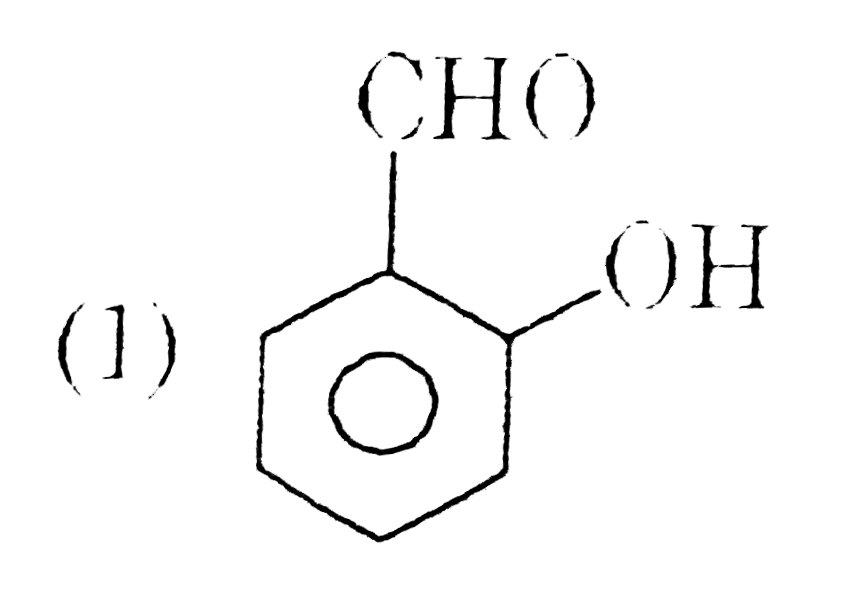
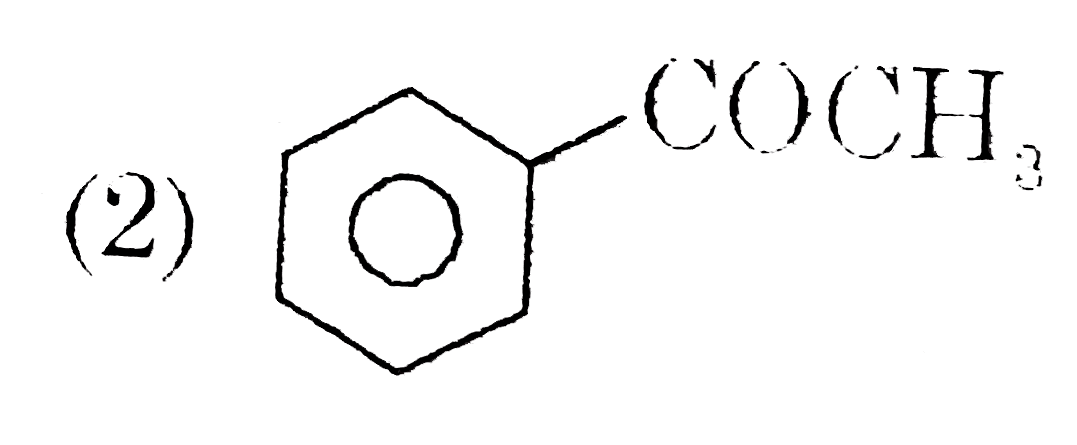
To determine which of the given compounds will undergo a self-aldol reaction when heated with dilute NaOH, we need to analyze each compound for the presence of alpha hydrogens. The self-aldol reaction occurs when a compound has at least one alpha hydrogen that can participate in the reaction. ### Step-by-Step Solution: 1. **Identify the Compounds**: We have several compounds to analyze. Let's denote them as follows: - Option 1: Hydroxybenzaldehyde (Benzaldehyde with a hydroxyl group) - Option 2: A ketone with three alpha hydrogens - Option 3: Methanol - Option 4: Pivaldehyde 2. **Check for Alpha Hydrogens**: - **Option 1 (Hydroxybenzaldehyde)**: - Structure: This compound has a benzaldehyde group with a hydroxyl (-OH) group at the alpha position. - Alpha Hydrogens: There are no alpha hydrogens present because the carbon adjacent to the carbonyl carbon (the alpha carbon) is bonded to a hydroxyl group instead of hydrogen. - Conclusion: **Cannot undergo self-aldol reaction**. - **Option 2 (Ketone)**: - Structure: This compound is a ketone with three alpha hydrogens. - Alpha Hydrogens: Since it has three alpha hydrogens, it can undergo a self-aldol reaction. - Conclusion: **Can undergo self-aldol reaction**. - **Option 3 (Methanol)**: - Structure: Methanol is an alcohol. - Alpha Hydrogens: Methanol does not have a carbonyl group; therefore, it cannot undergo a self-aldol reaction. - Conclusion: **Cannot undergo self-aldol reaction**. - **Option 4 (Pivaldehyde)**: - Structure: Pivaldehyde has a carbonyl group but is connected to three other carbons. - Alpha Hydrogens: There are no alpha hydrogens present on the carbon adjacent to the carbonyl carbon. - Conclusion: **Cannot undergo self-aldol reaction**. 3. **Final Conclusion**: The only compound that can undergo a self-aldol reaction when heated with dilute NaOH is **Option 2 (the ketone with three alpha hydrogens)**. ### Summary: The compound that will undergo a self-aldol reaction on heating with dilute NaOH is **Option 2**.

To determine which of the given compounds will undergo a self-aldol reaction when heated with dilute NaOH, we need to analyze each compound for the presence of alpha hydrogens. The self-aldol reaction occurs when a compound has at least one alpha hydrogen that can participate in the reaction. ### Step-by-Step Solution: 1. **Identify the Compounds**: We have several compounds to analyze. Let's denote them as follows: - Option 1: Hydroxybenzaldehyde (Benzaldehyde with a hydroxyl group) - Option 2: A ketone with three alpha hydrogens ...
Promotional Banner

Topper's Solved these Questions

Similar Questions

Explore conceptually related problems

Which of the following will undergo aldol condensation ?

Which of the following will undergo addition reactions ?

Which of the following will not undergo aldol condensation ?

Which of the following will not undergo aldol condensation ?

Which of the following undergoes mustard oil reaction ?

Which of the following will not undergo aldol condensation-

Which of the following will not undergo aldol condensation-

ALLEN-TEST PAPERS-part-2 Chemistry
  1. A and B respectively are

    Text Solution

    |

  2. C(2)H(5)Cl+Naunderset(-NaCI)overset("dry ether")(rarr)A. How many isom...

    Text Solution

    |

  3. Which of the following will undergo self aldol reaction on heating wit...

    Text Solution

    |

  4. Calculate the percentage of SN^(-1) product, if (R )-2-Chloro butane o...

    Text Solution

    |

  5. CH(3)-CHO & C(6)H(5)-CO-CH(3) can reacts similarly with

    Text Solution

    |

  6. overset(HI)underset("low temp")rarr product are

    Text Solution

    |

  7. The major product of the following reaction will be

    Text Solution

    |

  8. The suitable reagent to convert CH(3)-CH=CH-CHO into CH(3)-CH(2)-CH(2...

    Text Solution

    |

  9. In the reaction sequence CH(2)=CH(2)underset(C Cl(4))overset(HBr)(ra...

    Text Solution

    |

  10. Determine the potential of the following cell: Pt|H2(g,0.1 "bar")|H^...

    Text Solution

    |

  11. The Boyle temperature of three gases are given in the table : {:("Ga...

    Text Solution

    |

  12. If 250 mL of N(2) over water at 30^(@)C and a total pressure of 740 t...

    Text Solution

    |

  13. If the density of a mixture of O(2)&N(2) at N.T.P. is 1.258 g//l. The...

    Text Solution

    |

  14. An element X having vapour density equal to 40 in gaseous state underg...

    Text Solution

    |

  15. It was found that in 30 unit cells of ZnS, four atoms are of trivalent...

    Text Solution

    |

  16. A 45 ml mixture of hydrogen and oxygen is sparked to form liquid water...

    Text Solution

    |

  17. H(2)O(2)+2KIoverset(40% "yield")rarrI(2)+2KOH H(2)O(2)+2KMnO(4)+3H(2...

    Text Solution

    |

  18. In the reaction, I(2)+2S(2)O(3)^(2-) rarr 2I^(-)+S(4)O(6)^(2-).

    Text Solution

    |

  19. conductometric titration curve of a equimolar mixture of a HCl and HCN...

    Text Solution

    |

  20. 100 ml 0.04 M HA (K(a)=10^(-5)) and 100 mI 0.8 M HB (K(a) = 10^(-6)) ...

    Text Solution

    |
