A
B
C
D
Text Solution
Verified by Experts
The correct Answer is:
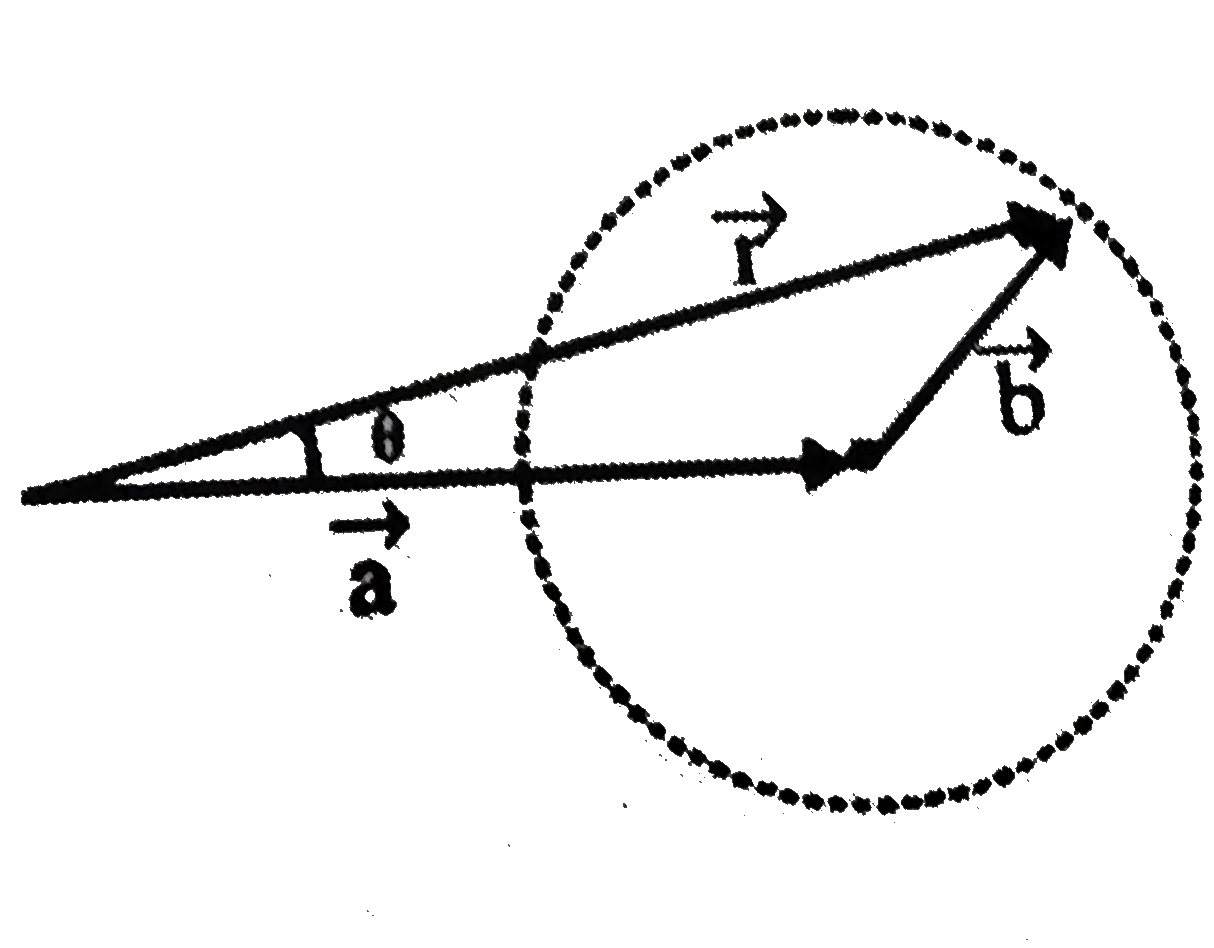
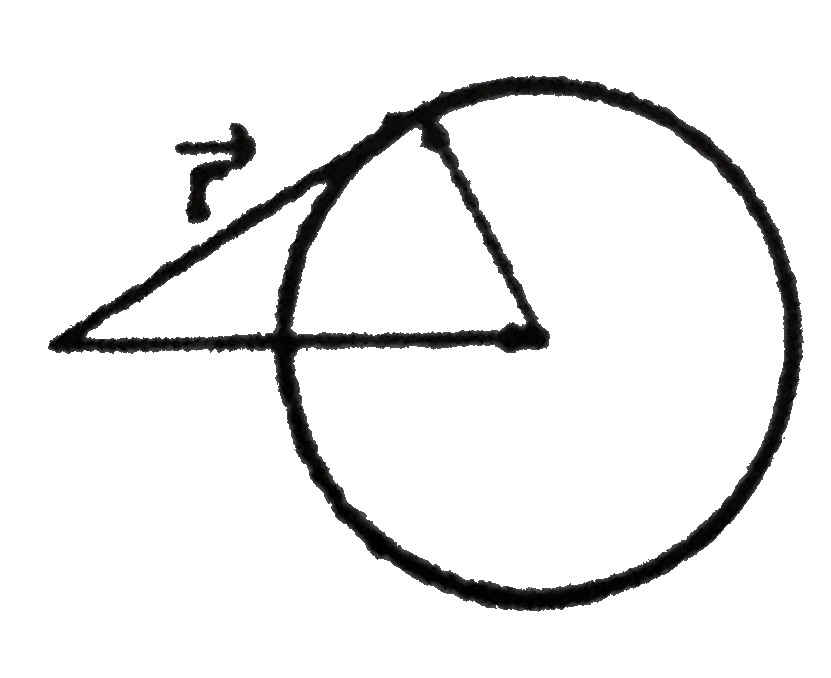 Angle between `vec(r)` and `vec(b)` is maximum when `vec(r)` is tangent to circle.


Topper's Solved these Questions
UNIT & DIMENSIONS, BASIC MATHS AND VECTOR
ALLEN|Exercise Exercise (S-1)|20 VideosUNIT & DIMENSIONS, BASIC MATHS AND VECTOR
ALLEN|Exercise Exercise (S-2)|7 VideosUNIT & DIMENSIONS, BASIC MATHS AND VECTOR
ALLEN|Exercise Exercise (J-A)|7 VideosTEST PAPERS
ALLEN|Exercise MATHS|14 VideosWAVE OPTICS
ALLEN|Exercise Exercise 2 (Previous Year Questions)|7 Videos
Similar Questions
Explore conceptually related problems
ALLEN-UNIT & DIMENSIONS, BASIC MATHS AND VECTOR -Solved Examples
- Two displacement vectors of same magnitude are arranged in the folllow...
Text Solution
|
- Two vectors vec(P) " and "vec(Q) are added, the magnitude of resulta...
Text Solution
|
- Three forces are acting on a body to make it in equilibrium , which se...
Text Solution
|
- Keeping one vector constant, if direction of other to be added in the ...
Text Solution
|
- If vec(A)=2hati+hatj+hatk " and " vecB=10hati+5hatj+5hatk, if the magn...
Text Solution
|
- The component of vec(A)=hati+hatj+5hatk perpendicular to vec(B)=3hati+...
Text Solution
|
- Solve the equation -x^(2)+ 5x+6=0
Text Solution
|