

Home
Class 12
CHEMISTRY
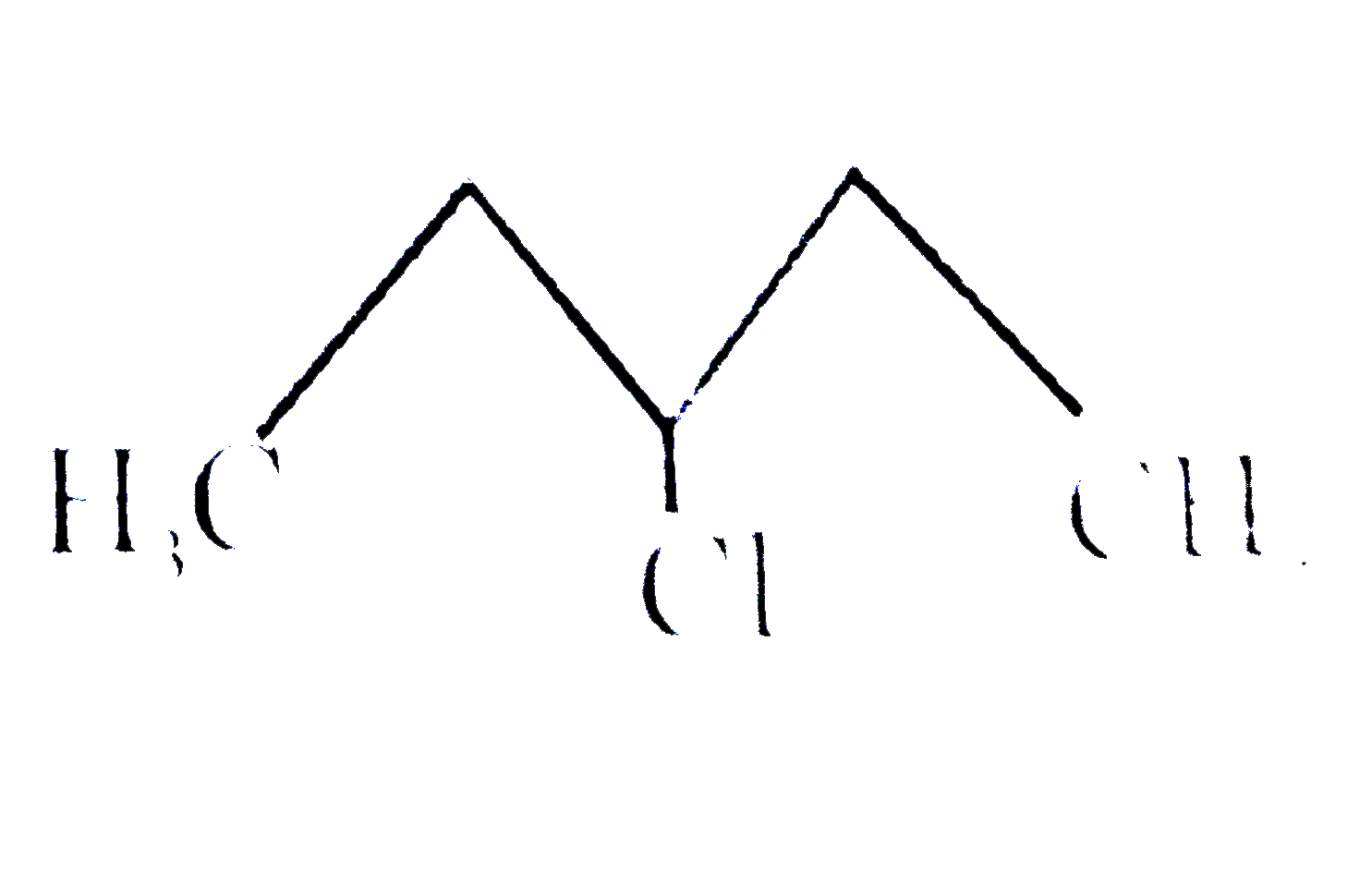
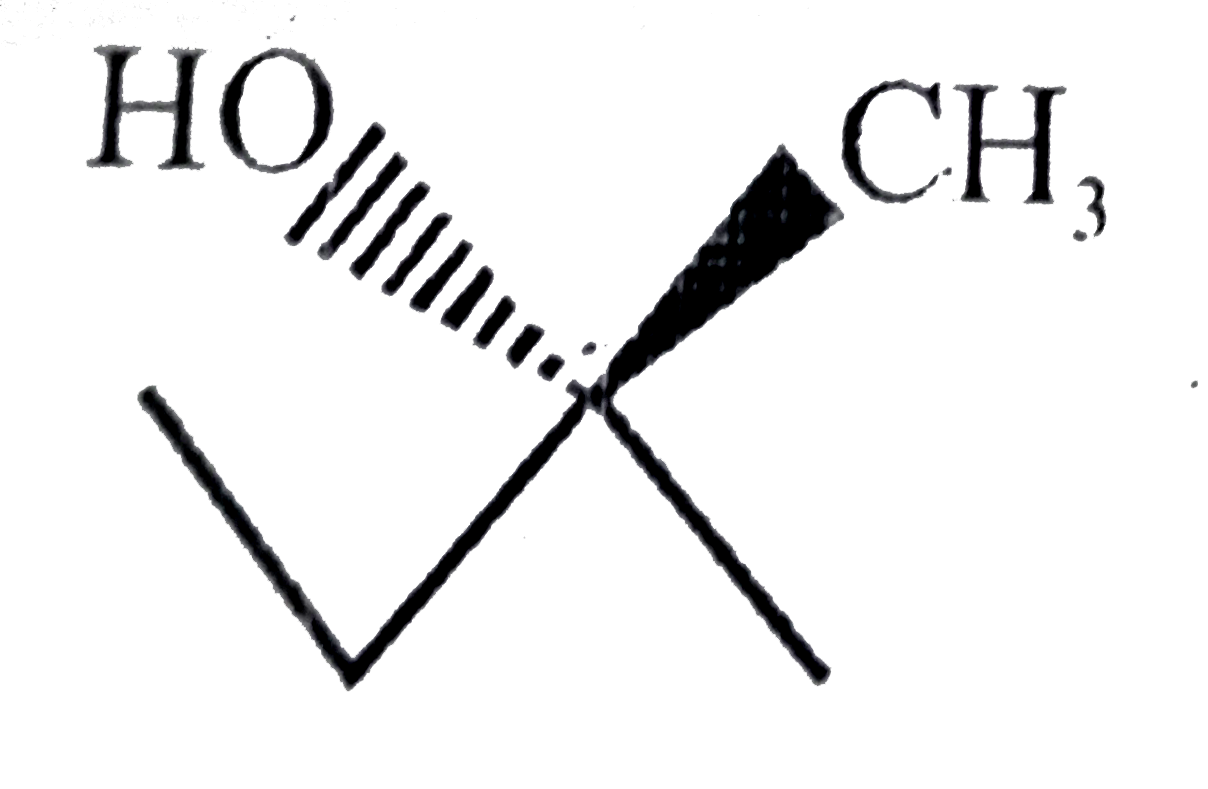
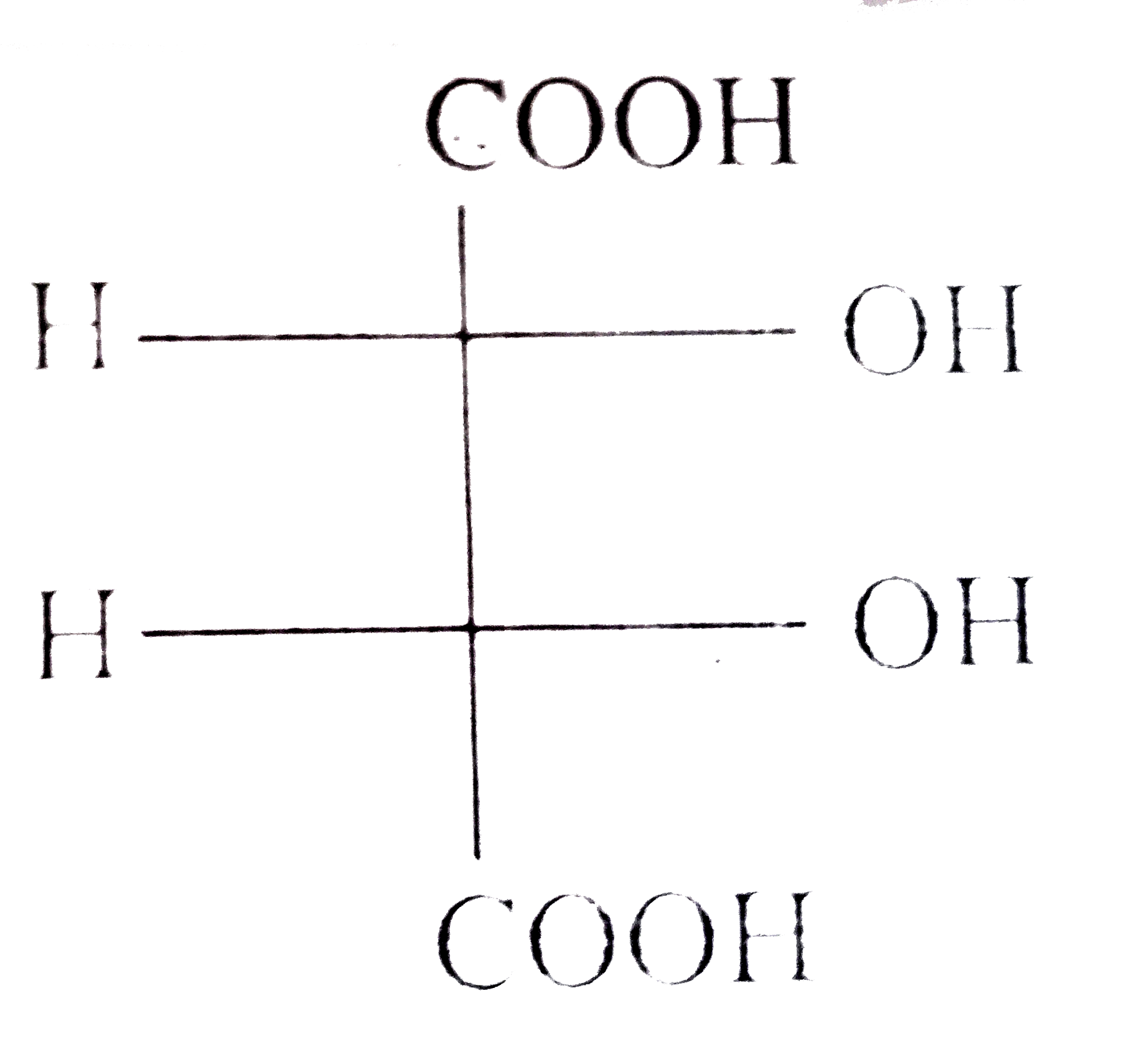
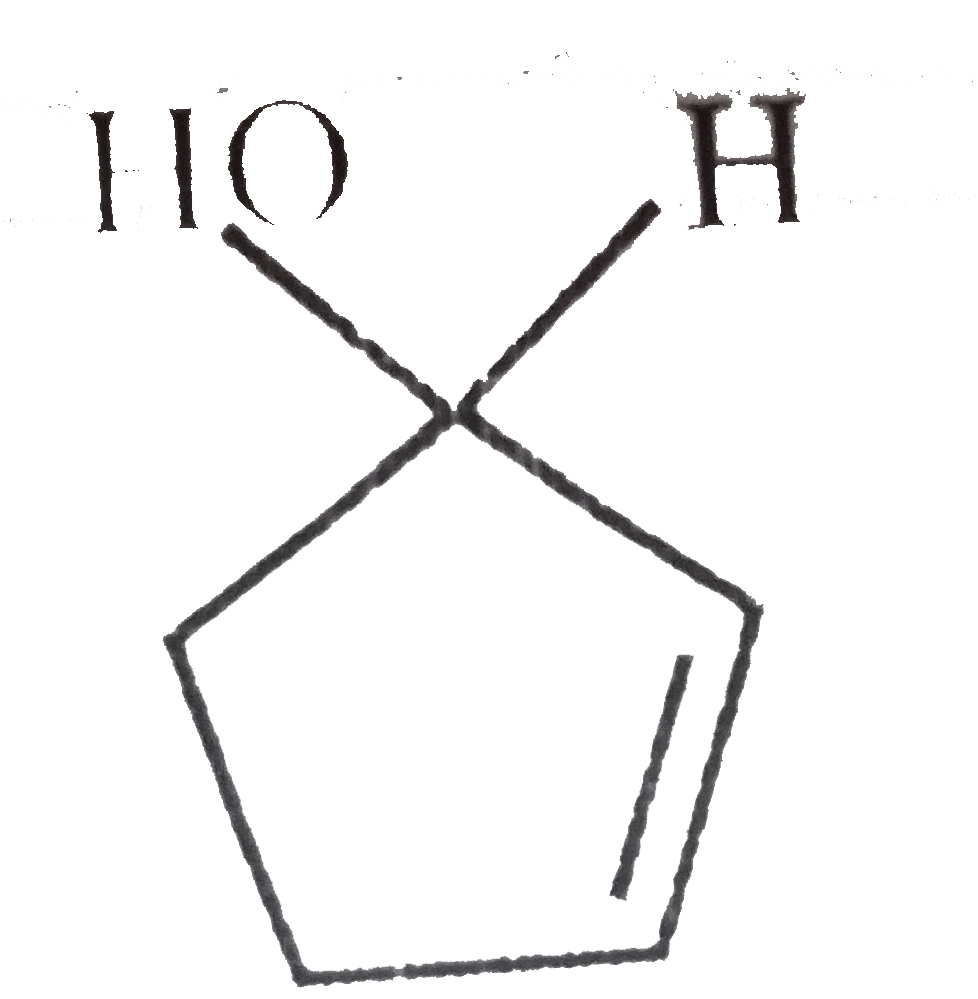
Which is optically active :-...

Which is optically active :-

A

B

C

D

Text Solution

AI Generated Solution

The correct Answer is:
To determine which compound is optically active, we need to identify the presence of a chiral carbon in each compound. A chiral carbon is defined as a carbon atom that is bonded to four different substituents or groups. Let's analyze the compounds step by step. ### Step-by-Step Solution: 1. **Identify the Compounds**: Let's denote the four compounds as A, B, C, and D. 2. **Analyze Compound A**: - Structure: CH3-CH(Cl)-CH2-CH3 - Check for chiral carbon: The carbon atom attached to Cl is bonded to two hydrogen atoms (CH2), which means it is not chiral. - Conclusion: Compound A is **not optically active**. 3. **Analyze Compound B**: - Structure: CH3-CH(OH)-CH(CH3)-CH3 - Check for chiral carbon: The carbon with the OH group is attached to two CH3 groups, making it not chiral. - Conclusion: Compound B is **not optically active**. 4. **Analyze Compound C**: - Structure: COOH-CH(OH)-H - Check for chiral carbon: The central carbon is bonded to four different groups: COOH, OH, H, and another carbon (in the context of the molecule). - Conclusion: Compound C is **optically active** because it has a chiral carbon. 5. **Analyze Compound D**: - Structure: OH-CH=CH2 - Check for chiral carbon: The carbon in the double bond (C=C) cannot be chiral since it is bonded to two hydrogen atoms. - Conclusion: Compound D is **not optically active**. ### Final Conclusion: Among the given compounds, **Compound C is the only optically active compound**. ---
Promotional Banner

Topper's Solved these Questions

Similar Questions

Explore conceptually related problems

The following compounds are given to you 2-Bromopentane,2-Bromo-2-methylbutane,1-Bromopentane (a) Write the compound which is most reactive towards S_(N)2 reaction. (b) Write the compound which is optically active. (c). Write the compound which is most reactive towards beta -elimination reaction.

Following compounds are given to you : 2-Bromopentane, 2-Bromo-2-methylbutane, 1-Bromopentane (i) Write the compound which is most reactive towards S_(N) 2 reaction (ii) Write the compound which is optically active (iii) Write the compound which is most reactive towards beta -elimination reaction

Which one is optically active aromatic ether ?

Two possible stereostructures of CH_(3)CHOH.COOH , which are optically active, are called:

Two possible stereostructures of CH_(3)CHOH.COOH , which are optically active, are called:

Compound (A), C_(8)H_(6)NOBr , is optically active. Reduction of (A) gives (B) which reacts with nitrouos acid to form (C), dihydric alcohol. Benzene sulphonyl chloride reacts with (B) to give a product soluble in NaOH. Hydrolysis of (A) gives (D) which is an optically active acid. (A) does not give any precipitate with aqueous AgNO_(3) . Controlled oxidation of (A) gives monobromo benzoic acid. Compound (A) on reaction with Br_(2)//Fe gives only one compound. Identify (A), (B), (C), and (D).

Which optically active compound on reduction with LiAlH_(4) will give optically inactive compound?

Which of these molecule is optically active ?

Which of the following biphenyl is optical active:

What is optical activity ?

ALLEN-TEST PAPER 3-CHEMISTRY
  1. Which is favourable for homolysis :-

    Text Solution

    |

  2. Which of the following has plane of symmetry:-

    Text Solution

    |

  3. Which is optically active :-

    Text Solution

    |

  4. Given molecules are:-

    Text Solution

    |

  5. Which of the following is correct

    Text Solution

    |

  6. PQ(2) dissociates as PQ2 (g)hArrPQ(g)+Q(g) The initial pressure ...

    Text Solution

    |

  7. P hArr Q, K1 1/3RhArr 1/3Q,K2 2R hArr 2S, K3 P hArr S, K4 =? ...

    Text Solution

    |

  8. In the reaction , A(s) +B(g) + "heat" hArr 2C(s) + 2D(g) at equili...

    Text Solution

    |

  9. For which of the following gaseous reactions, the relationship log KC/...

    Text Solution

    |

  10. At which temperature, P C K K KP/KC value will be 1/4 for dissociatio...

    Text Solution

    |

  11. Equilibrium constants for (a) N2 + O2 hArr 2NO and (b) NO + 1/2O2 hArr...

    Text Solution

    |

  12. At t^@C temperature, the observed vapour density of A is 17.5 for the ...

    Text Solution

    |

  13. For the reaction A((s)) + 2B((g)) ƒhArr 3C((g)) . At constant pressur...

    Text Solution

    |

  14. Which of following does not show common ion effect ?

    Text Solution

    |

  15. For the reaction 3A(g)+B(g) hArr 2C(g) at a given temperature , Kc=9.0...

    Text Solution

    |

  16. When A2 and B2 are allowed to react, the equilibrium constant of the r...

    Text Solution

    |

  17. The dissociation constant fo acetic acid at a given temperature is 1.6...

    Text Solution

    |

  18. 6.0 g weak acid HA (mol.mass=60 g/mol.) is dissolved in water and form...

    Text Solution

    |

  19. PbOhArrPb+1/2O2, K=2xx10^(-1) ZnOhArr +1/2 O2 K=2xx10^2 CuOhArr +...

    Text Solution

    |

  20. The value of K(c) for the reaction 3O(2)(g) hArr 2O(2)(g) is 2.0 xx 10...

    Text Solution

    |