Home
Class 11
CHEMISTRY
Dehydrohalogenation by strong base is sl...

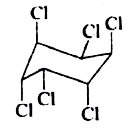
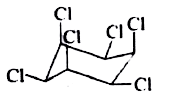
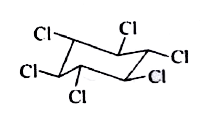
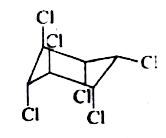
Dehydrohalogenation by strong base is slowest in:

A

B

C

D

Text Solution

Verified by Experts

The correct Answer is:

C

Compound Chas all equatorial substituent, hence, it is most stable and undergo elimination with slowest state.
Promotional Banner

Topper's Solved these Questions

  • ISOMERISM AND REACTION MECHANISM

    BRILLIANT PUBLICATION|Exercise LEVEL-II |40 Videos
  • ISOMERISM AND REACTION MECHANISM

    BRILLIANT PUBLICATION|Exercise LEVEL - III |8 Videos
  • HYDROGEN

    BRILLIANT PUBLICATION|Exercise LEVEL -III ( Linked Comprehension Type)|8 Videos
  • ORGANIC CHEMISTRY : SOME BASIC PRINCIPLES - PART I (NOMENCLATURE)

    BRILLIANT PUBLICATION|Exercise LEVEL-III|45 Videos

Similar Questions

Explore conceptually related problems

Which of the following compounds undergoes dehydrohalogenation most easily on heating with alc. KOH?

Assertion : Eventhough HF is a weak acid heat liberated during neutralisation with a strong base is more than 57 kJ mol^(-1) Reason : Hydration energy of F-is very large

Identify the possible alkenes that would be formed on dehydrohalogenation of the following organic halides with alcoholic KOH. Also identify the major alkene formed 1-chloropentane

Identify the possible alkenes that would be formed on dehydrohalogenation of the following organic halides with alcoholic KOH. Also identify the major alkene formed 2-chloropentane

Identify the possible alkenes that would be formed on dehydrohalogenation of the following organic halides with alcoholic KOH. Also identify the major alkene formed 2-chloro-2-methyl butane .

Which is correct when SN^(2) v/s E_(2) : primary alkyl halide favours substitution whereas tertiary alkyl halide favours elimination, high temperature favours elimination reaction, strong, bases with less nucleophilicity ( bar(N)H_(2), bar(O)R etc.) favours elimination whereas weak, bases with strong nuclephilicity ( Br-,I^(-) etc.) favours SN^(2) , all
