Home
Class 11
CHEMISTRY
For a closed container containing 10 mol...

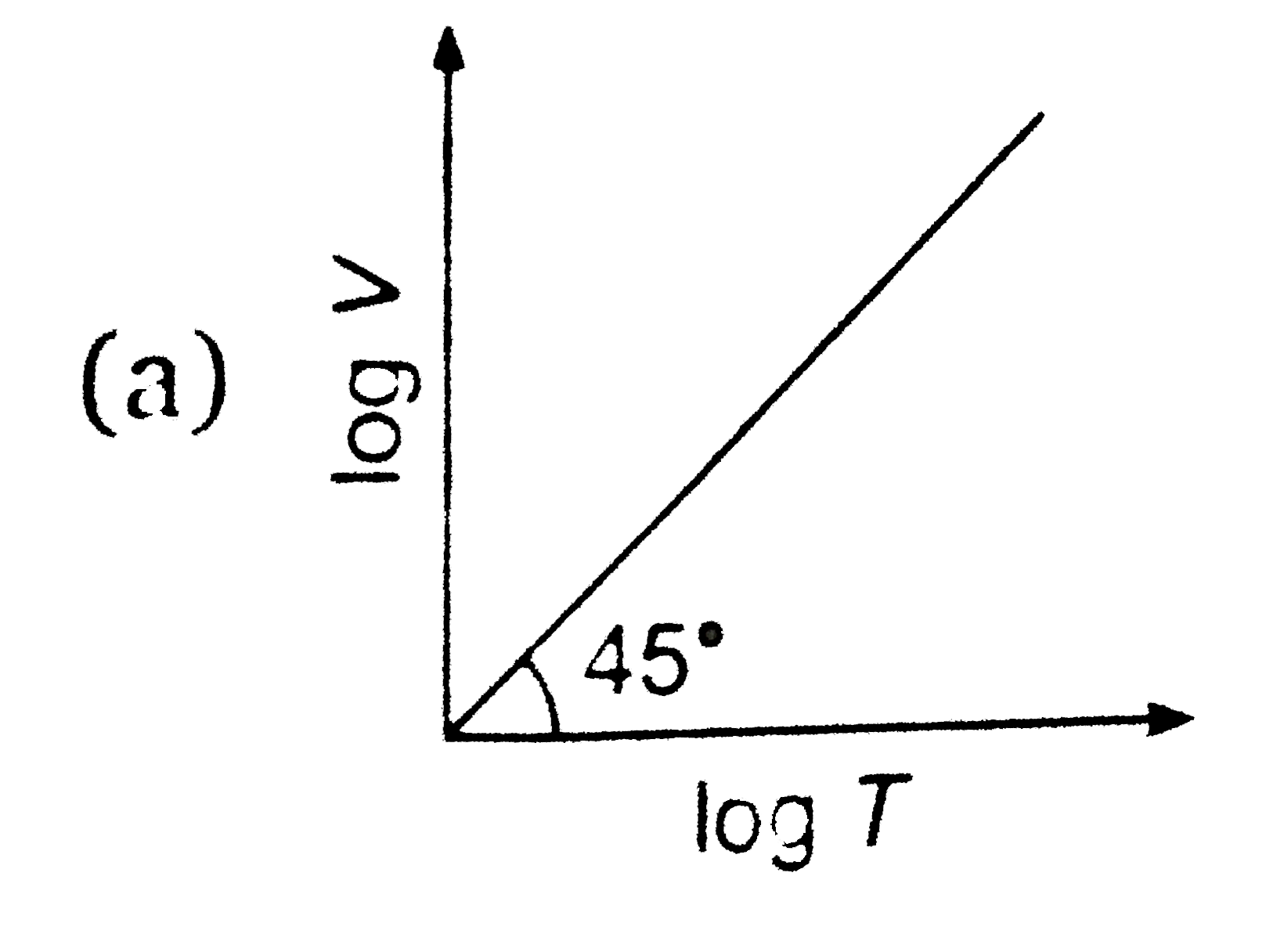
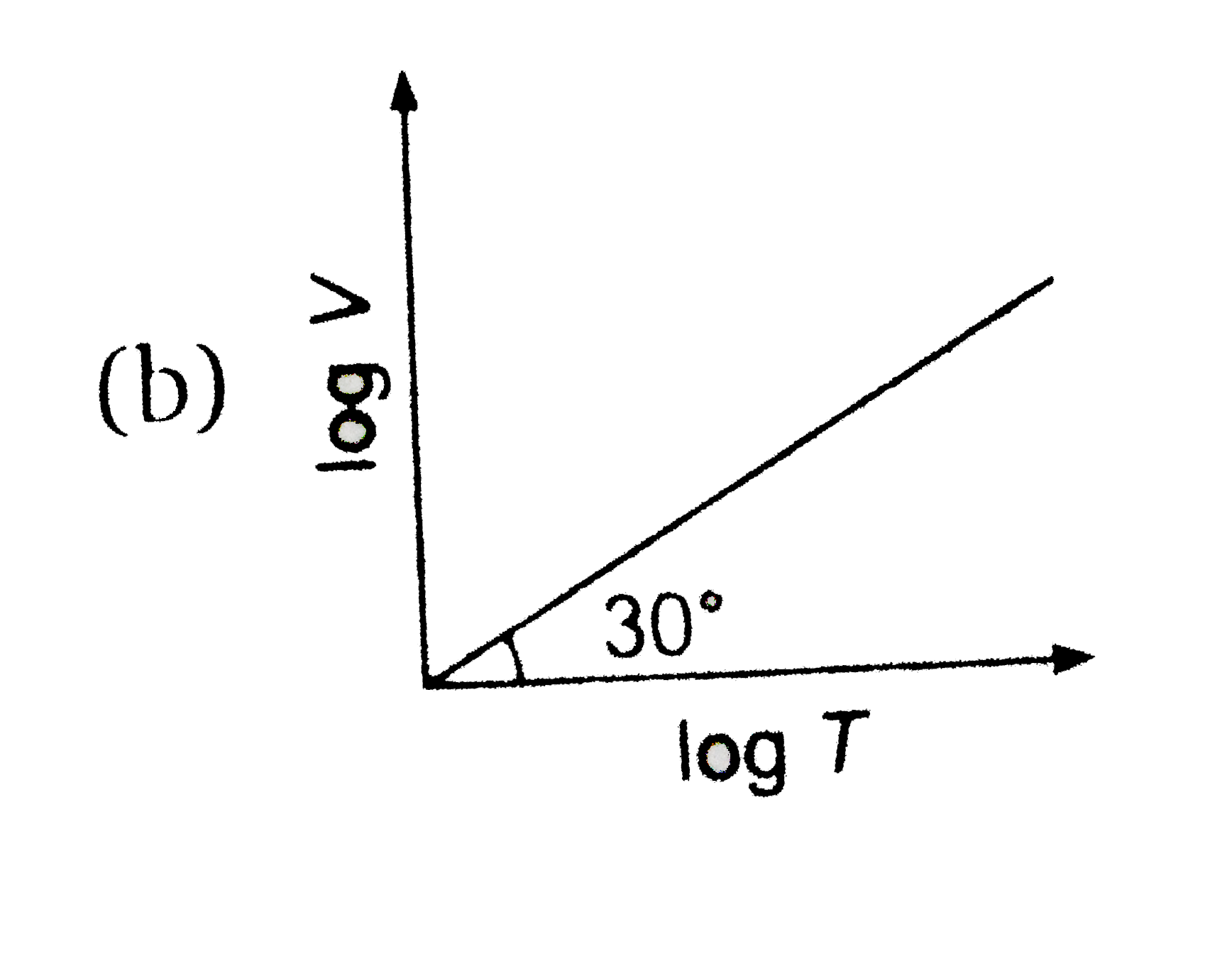
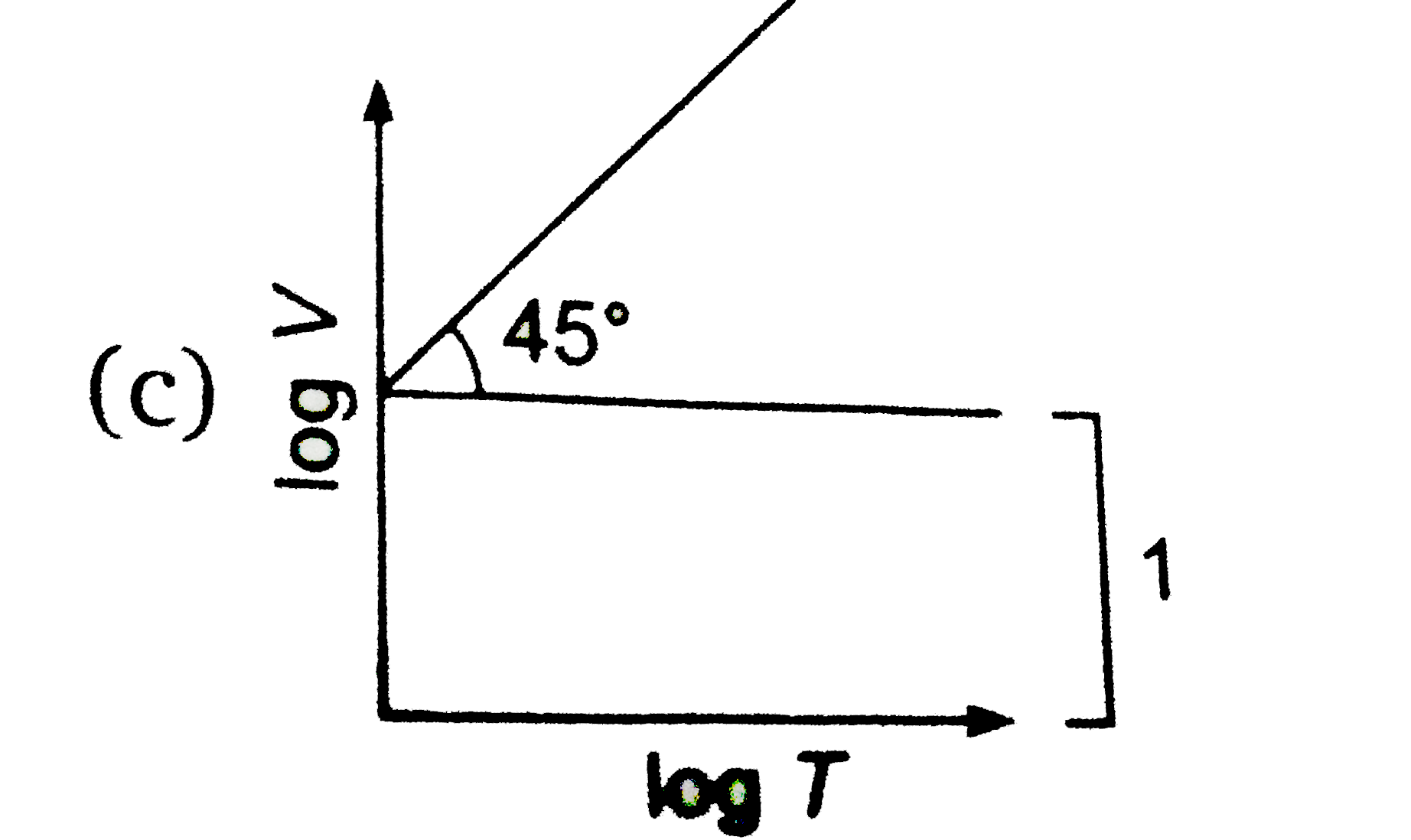
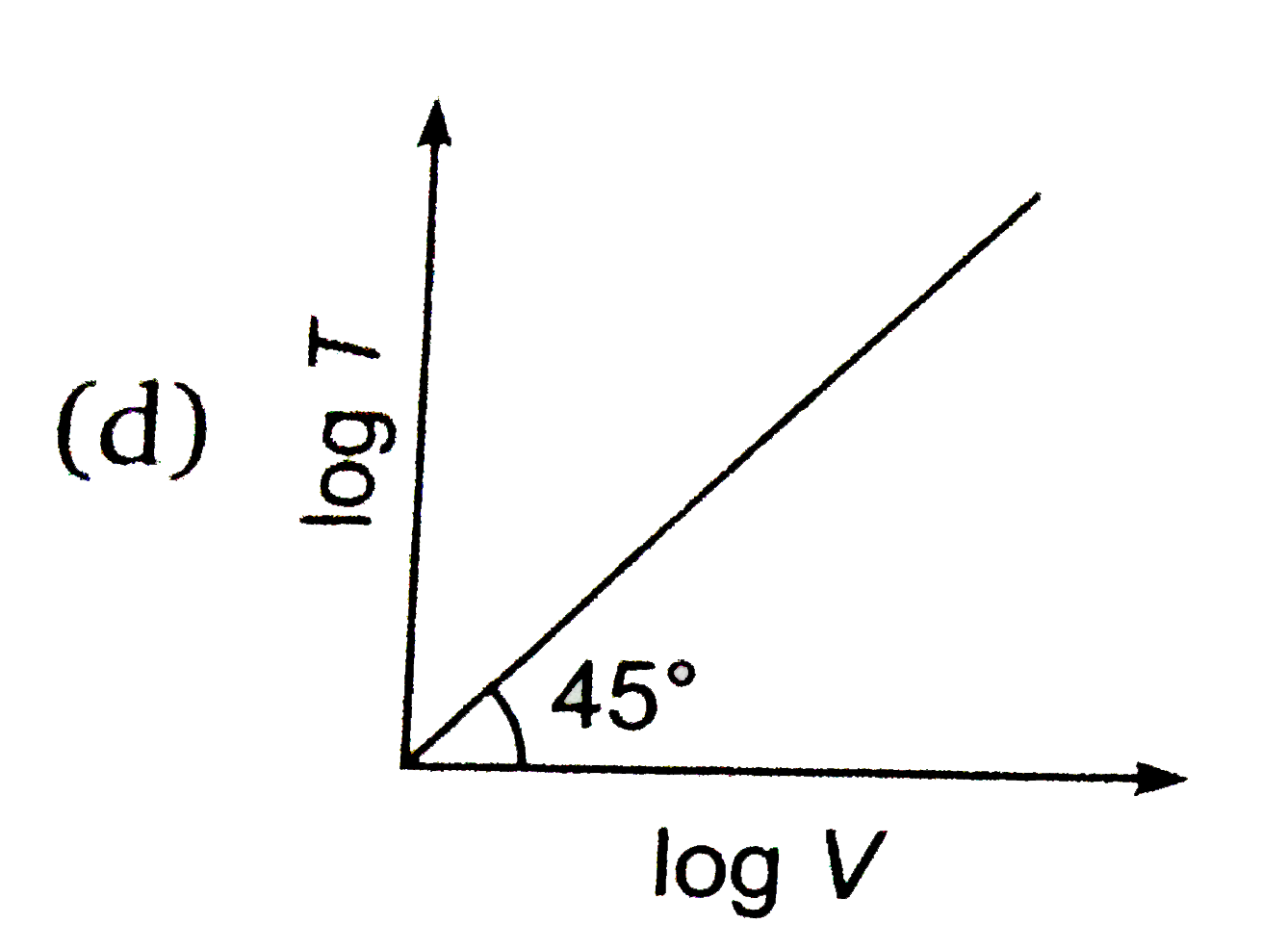
For a closed container containing 10 moles of an ideal gas, at constant pressure of `0.82` atm, which graph correctly represent, variation of log V us log T where volume is in litre and temp. in kelvin :

A

B

C

D

Text Solution

Verified by Experts

The correct Answer is:

a

(a) `V=(nRT)/(P)=(10xx0.0821xxT)/(0.821)`
`V=T`
`"log"V="log"T`
`"slope"=1`
`theta=45^(@) `
Promotional Banner

Topper's Solved these Questions

  • GASEOUS STATE

    NARENDRA AWASTHI|Exercise Level 1 (Q.31 To Q.60)|1 Videos
  • GASEOUS STATE

    NARENDRA AWASTHI|Exercise Level 1 (Q.121 To Q.150)|1 Videos
  • ELECTROCHEMISTRY

    NARENDRA AWASTHI|Exercise Level 3 - Subjective Problems|1 Videos
  • IONIC EEQUILIBRIUM

    NARENDRA AWASTHI|Exercise Assertin-Reason Type Questions|1 Videos

Similar Questions

Explore conceptually related problems

A graph is ploted between log V and log T for two moles of gas at constant pressure of 0.0821 atm. [V and T are in litres and kelvin]. Then which of the following is/are correct

At 27^@C , one mole of an ideal gas exerted a pressure of 0.821 atmospheres. What is its volume in litres ? (R = 0.082 "lit-atm/mol"^(-1) K^(-1))

One mole of an ideal gas for which C_(V)= 3//2R heated at a constant pressure of 1 atm from 25^(0)C "to" 100^(0)C What will be the amount of work done in the process?

The value of a cylinder containing initially 10L of an ideal gas at 25 atm and 25^(@)C is opened to the atmosphere, where the pressure is 760 torr and the temperature is 25^(@)C . Assuming that the process is isothermal the work in L-atm in the process is:

A quantity of 4.0 moles of an ideal gas at 20^(@)C expands isothermally against a constant pressure of 2.0 atm from 1.0 L to 10.0L. What is the entropy change of the system (in cals)?

Draw the P-T and V-T diagrams of an isochoric process of n moles of an ideal gas from pressure P_(0) , volume V_(0) to pressure 4P_(0) , indicating the pressures, and temperatures, of the gas, in the initial and the final states.
