Home
Class 11
CHEMISTRY
Following represents the Maxwell distrib...

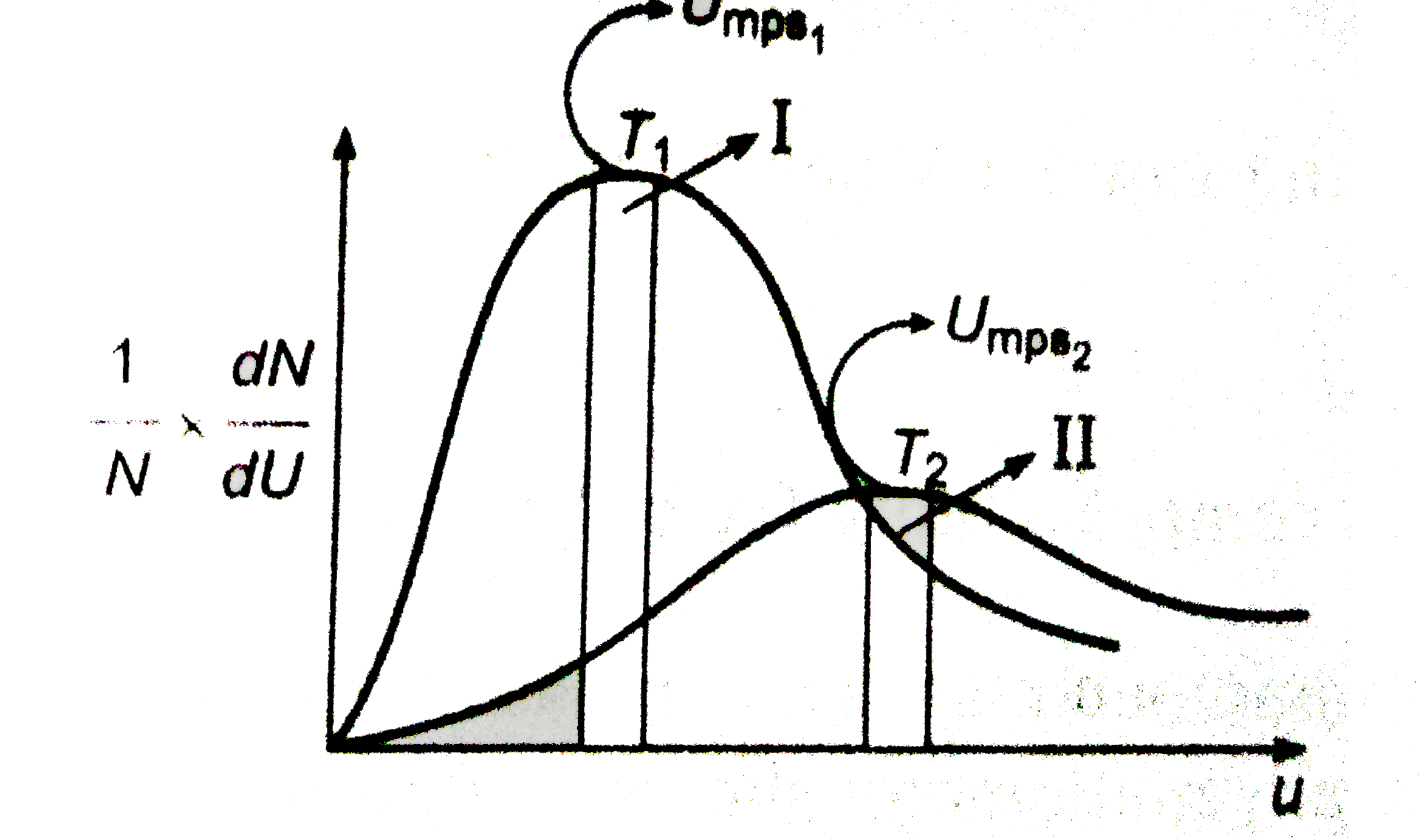
Following represents the Maxwell distribution curve for an ideal gas at two temperature `T_(1)` and `T_(2)` . Which of the following option(s) is/are true?

A

Total area under the two curves is independent to moles of gas

B

`u_(mp)` decrease as temperature decreases

C

`T_(1)gtT_(2)` and hence higher the temperature, sharper the curve

D

The fraction of molecules having speed `u_(mp)` decreases as temperature increases

Text Solution

Verified by Experts

The correct Answer is:

a,b,d

(a,b,d) (A) `:'` area under the curve gives fraction of molecules and total area is constant.
(B) `u_(mp)` decreases with decrease in temperature.
(C) `T_(2)` is higher temperature
(D) As seen from graph, `:.` A,B,D
Promotional Banner

Topper's Solved these Questions

  • GASEOUS STATE

    NARENDRA AWASTHI|Exercise Level 1 (Q.31 To Q.60)|1 Videos
  • GASEOUS STATE

    NARENDRA AWASTHI|Exercise Level 1 (Q.121 To Q.150)|1 Videos
  • ELECTROCHEMISTRY

    NARENDRA AWASTHI|Exercise Level 3 - Subjective Problems|1 Videos
  • IONIC EEQUILIBRIUM

    NARENDRA AWASTHI|Exercise Assertin-Reason Type Questions|1 Videos

Similar Questions

Explore conceptually related problems

Diagram shows a graph between pressure and density for an ideal gas at two temperatures T_1 and T_2 which is correct

The given figure shows the maxwell distribution of molecular speeds of a gas at three different temperature T_(1),T_(2) and T_(3) . The correct order of temperature is

Which of the following diagaram correctly represents the Boltzmann distribution of molecular speeds at two temperatures T_1 and T_2 where T_2 >T_1 ? (Proportion of molecules = f, molecular speed = v)

The given figure shows the Maxwell distribution of molecular speeds of a gas at three different temperatures T_1, T_2 and T_3 . The correct order of temperatures is:

The mean translational kinetic energy of a molecule of an ideal gas at temperature T K is

Which of the following correctly represent the behaviour of an ideal gas

In the above case, if their final temperatures are T_(1),T_(2) and T_(3) . Then .
