Home
Class 12
CHEMISTRY
above reaction is an example of Nucleoph...


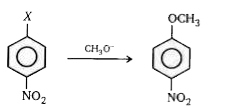
above reaction is an example of Nucleophilic aromatic substitution. Which of the following halide (-X) is most readily replaced.

A

`_F`

B

`-Cl`

C

`-Br`

D

`-I`

Text Solution

Verified by Experts

The correct Answer is:
A

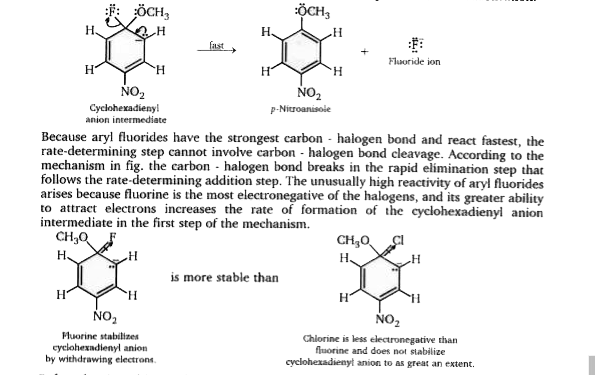
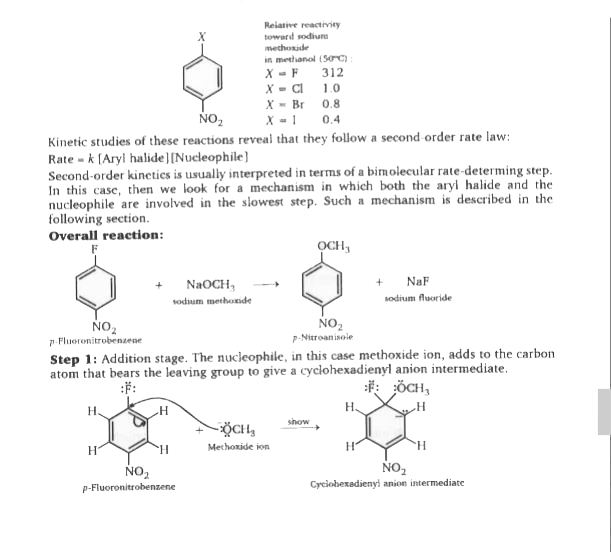
Fluoride is the most reactive leaving group in nucleophilic aromatic substitution, iodide the least reactive.

Step 2: Elimination stage. Loss of halide from the cyclohexadienyl intermediate restores the aromaticity of the ring and gives the product of nucleophilic aromatic substitution.

Before leaving this mechanistic discussion, we should mention that the addition elimination mechanism for nucleophilic aromatic substitution illustrates a principle worth remembering. The words activating and deactivating as applied to substituent effects in organic chemistry are without meaning when they stand alone. When we say that group is activating or deactivating, we need to specify the reaction type that is being considered. A nitro group is a strongly deactivating substituent in electrophilic aromatic substitution, where it markedly destabilizes the key cyclohexadienyl cation intermediate.
Promotional Banner

Topper's Solved these Questions

  • AROMATIC COMPOUNDS

    MS CHOUHAN|Exercise LEVEL-2|11 Videos
  • AROMATIC COMPOUNDS

    MS CHOUHAN|Exercise LEVEL-2 (COMPREHENSION)|16 Videos
  • AMINES

    MS CHOUHAN|Exercise Level-2|1 Videos
  • BIOMOLECULES

    MS CHOUHAN|Exercise LEVEL - 2|5 Videos

Similar Questions

Explore conceptually related problems

Which of the following hydroge halide is most volatile?

Which of the following nitrogen halides is most stable?

Which one of the following halides is most reactive for S_N2 reaction

With respect to the electrophilic aromatic substitution of benzene which of the following is not true?

Which of the following reactions is an example of nucleophilic substitution reaction?

Which of the following is an example of electrophilic substitution?

Which of the following is an example of electrophilic substitution?

Which of the following compounds do not readily give SN^2 reaction