Home
Class 12
CHEMISTRY
Nucleophilic Aromatic substitution (SN(A...

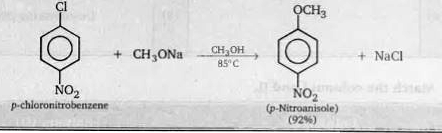
Nucleophilic Aromatic substitution `(SN_(Ar))` :
A substituted benzene derivative containing-`NO_2` and Cl group at p-position is subjected to Nu-substitution.

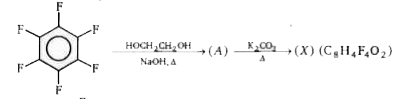
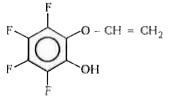
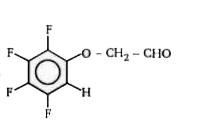
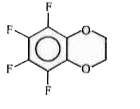
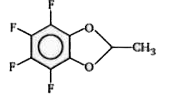
The cumulative effect of their fluorine activate the rings of penta and hexa fluorobenzene toward nucleophilic aromatic substitution. What is compound X in the following synthesis ?

A

B

C

D

Text Solution

Verified by Experts

The correct Answer is:

C

Basic `S_N Ar`
Promotional Banner

Topper's Solved these Questions

  • AROMATIC COMPOUNDS

    MS CHOUHAN|Exercise LEVEL-2 (SUBJECTIVE PROBLEMS)|3 Videos
  • AROMATIC COMPOUNDS

    MS CHOUHAN|Exercise LEVEL-2|11 Videos
  • AMINES

    MS CHOUHAN|Exercise Level-2|1 Videos
  • BIOMOLECULES

    MS CHOUHAN|Exercise LEVEL - 2|5 Videos

Similar Questions

Explore conceptually related problems

Discuss the effect of nitro group in chloro benzene towards nucleophilic substitution reaction.

Which one of the following is benzene ring activating group towards electrophilic substitution?

A group which deactivates the benzene ring towards electrophilic substitution but directs the incoming group towards o - and p- positions is

Which of the following is the most activating in electrophilic aromatic substitution? -NO_2 " " - NH_2 " "-NHCOCH_3 " "-CN

What is the orientation effect of aldehydic and ketonic group when attached to aromatic ring towards electrophilic substitution reactions?

(A) Anisole is more reactive than phenol towards electrophilic aromatic substitution reactions (R) -OCH_3 group is more ring activating than -OH group present on benzene ring

The typical reaction of benzene and other aromatic compounds is electrophilic substitution. Presence of electron donating group activates the ring towards electrophilic substitution, while presence of electron withdrawing group deactivates the ring towards electrophilic substitution but at the same time activates the ring towards nucleophilic substitution. Some groups are predominantly meta directing and all of these are deactivating. Except halogen, most of the o- and p- directing groups are activating groups. (E.A.S = Electrophilic aromatic substation) Presence of nitro group in benzene ring:

The typical reaction of benzene and other aromatic compounds is electrophilic substitution. Presence of electron donating group activates the ring towards electrophilic substitution, while presence of electron withdrawing group deactivates the ring towards electrophilic substitution but at the same time activates the ring towards nucleophilic substitution. Some groups are predominantly meta directing and all of these are deactivating. Except halogen, most of the o- and p- directing groups are activating groups. (E.A.S = Electrophilic aromatic substation) The reaction of toluene with Cl_2 in presence of FeCl_3 gives predominantly:

Explain the fact that in aryl alkyl ethers (i) the alkoxy group activates the benzene ring towards electrophilic substitution and (ii) it directs the incoming substituents to ortho and para positions in benzene ring.

(A): p-Nitrochlorobenzene is more reactive than chlorobenzene in nucleophilic substitution reactions. (R): Electron withdrawing groups like - NO_2 , increase the reactivity of haloarenes in nucleophilic substitution.
