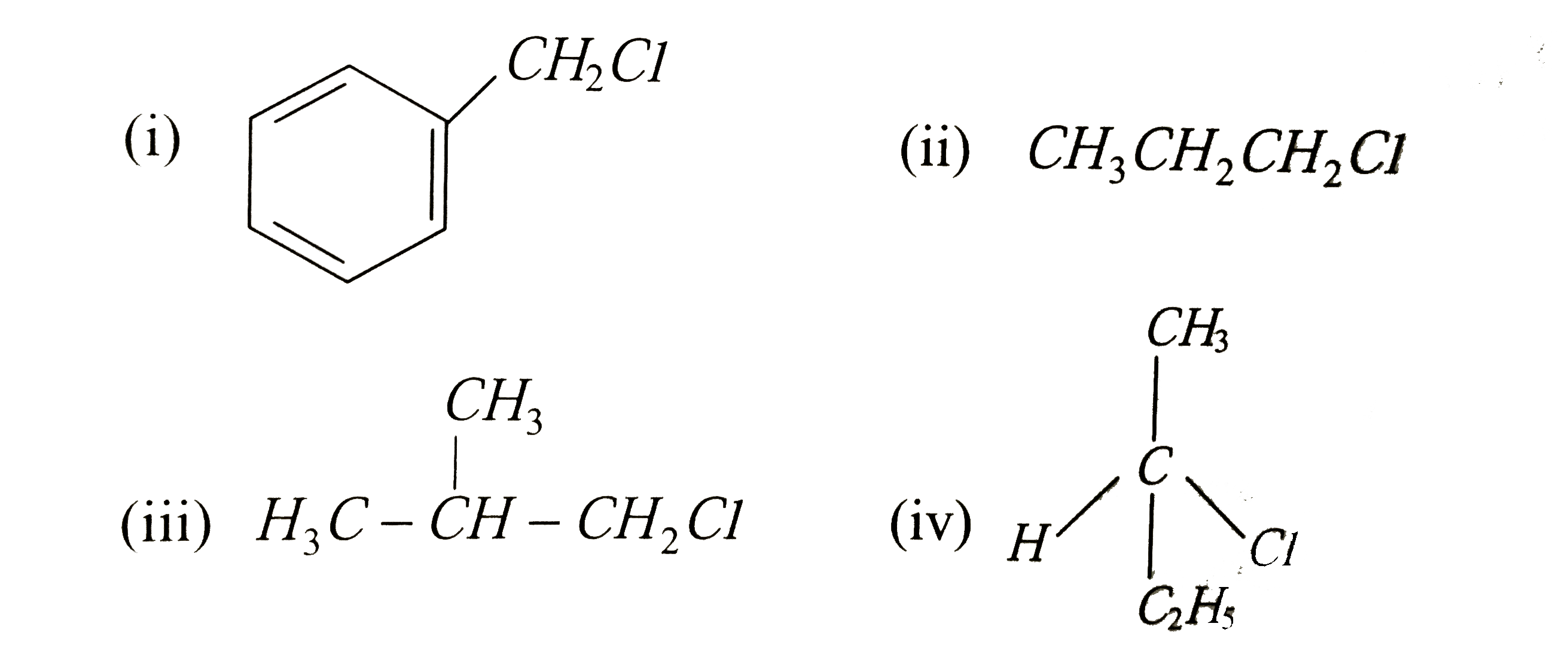
A
B
C
D
Text Solution
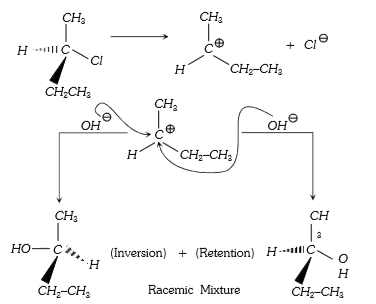
Verified by Experts
The correct Answer is:



Topper's Solved these Questions
GENERAL ORGANIC CHEMISTRY
ERRORLESS|Exercise ASSERTION AND REASON|14 VideosGENERAL ORGANIC CHEMISTRY
ERRORLESS|Exercise NCERT BASED QUESTIONS (Structural and Stereo Isomerism )|99 VideosENVIRONMENTAL CHEMISTRY
ERRORLESS|Exercise ASSERTION & REASON|7 VideosHYDROCARBONS
ERRORLESS|Exercise ASSERTION & REASON|18 Videos
Similar Questions
Explore conceptually related problems
ERRORLESS-GENERAL ORGANIC CHEMISTRY -PAST YEARS QUESTIONS
- Which of the following pairs of compounds are enantiomers?
Text Solution
|
- Match the following Column A to Column B
Text Solution
|
- Which of the following is not chiral?
Text Solution
|
- The number of enantiomers of the compound CH(3)CHBrCHBrCOOH is
Text Solution
|
- How many stereoisomerse does this molecule has? CH(3)CH=CHCH(2)CHBrC...
Text Solution
|
- Among the following which one can have a meso form?
Text Solution
|
- If there is no rotation of plane polarized light by a compound in a sp...
Text Solution
|
- Which of the following acids does not exhibit optical isomerism?
Text Solution
|
- Two possible stereostructures of CH(3)CHOH.COOH, which are optically a...
Text Solution
|
- From the following figure, the correct observation is :-
Text Solution
|
- Which of the following compounds will undergo racemisation when soluti...
Text Solution
|
- On chiral centre there is always ........... in S(N)^(1) reaction
Text Solution
|
- Which of the following biphenyls is optically active?
Text Solution
|
- The correct corresponding order of names of four aldoses with configur...
Text Solution
|
- The isomers which can be converted into another forms by rotations of ...
Text Solution
|
- Which of the following hydride is capable of showing conformations ?
Text Solution
|
- Which one of the following pairs represent stereoisomerism?
Text Solution
|
- The type of isomerism found in urea molecule is
Text Solution
|
- A tertiary butyl carbocation is more stable than a secondary butyl car...
Text Solution
|
- The compound which shows metamerism is:
Text Solution
|